
Iranian cuisine offers vibrant flavors through dishes like kabab koobideh and jeweled rice. You’ll notice the rich use of Persian spices such as saffron, sumac, and cinnamon, which enhance natural ingredients and create aromatic, colorful plates. Traditional techniques like grilling over open flames and layering saffron-infused rice highlight centuries of culinary history. Exploring these recipes reveals more about Iran’s cultural pride and sophisticated flavors—if you continue, you’ll uncover even more culinary treasures.
Key Takeaways
- Kabab Koobideh is a traditional Iranian grilled minced meat kebab seasoned with spices and onions.
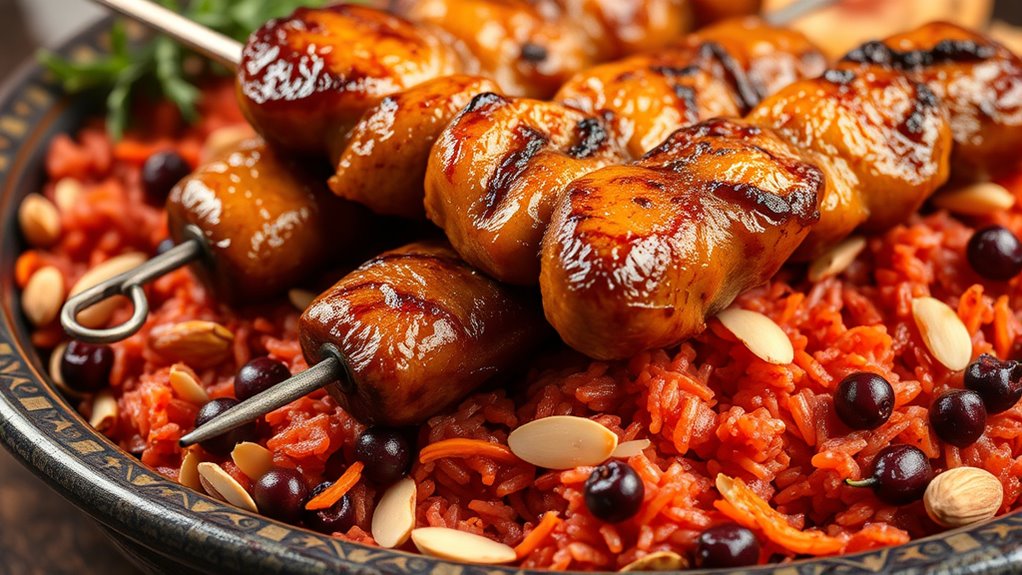
- Jeweled Rice is a vibrant dish layered with saffron, nuts, dried fruits, and aromatic Persian spices.
- Both dishes showcase Iran’s rich use of spices like saffron, turmeric, and cinnamon to enhance natural flavors.
- Traditional techniques involve grilling over open flames and slow layering to preserve authentic flavors.
- These dishes reflect Iran’s cultural heritage, emphasizing balance, aroma, and vibrant presentation.
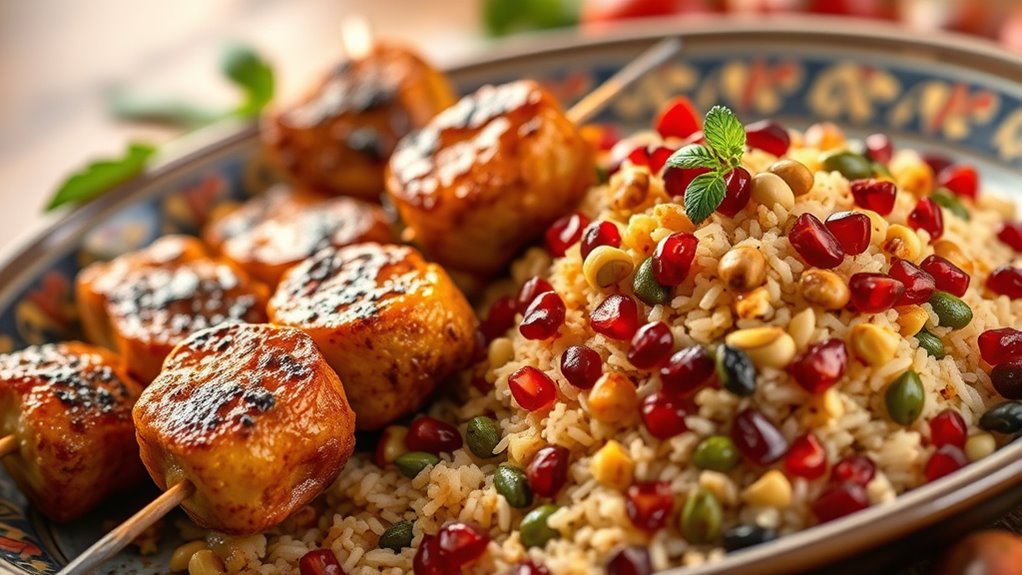
Have you ever wondered what makes Iranian cuisine so rich and flavorful? The answer lies in its masterful use of Persian spices and traditional cooking techniques that have been passed down through generations. These elements combine to create dishes that are not only delicious but also deeply rooted in history and culture. When you taste a perfectly grilled kabab koobideh or a beautifully decorated jeweled rice, you’re experiencing a culinary heritage that emphasizes balance, aroma, and vibrant color.
Persian spices play a pivotal role in elevating the flavors of Iranian dishes. Ingredients like turmeric, cumin, cinnamon, sumac, and saffron are common in many recipes. These spices aren’t just added for taste; they’re carefully chosen to enhance the natural flavors of the main ingredients. For example, in kabab koobideh, a popular minced meat kebab, spices are blended into the meat mixture to create a harmonious blend of savory and aromatic notes. Saffron, known for its distinct aroma and golden hue, is often used in rice dishes like jeweled rice, imparting a luxurious flavor that elevates the dish’s visual appeal and taste.
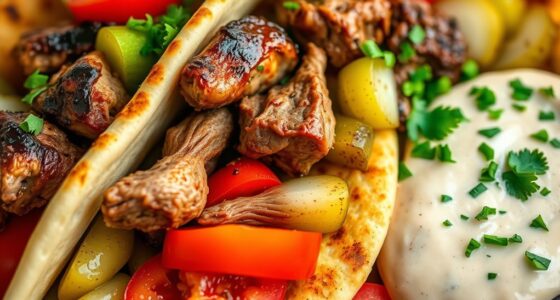
Traditional cooking techniques are equally essential to Iranian cuisine. Whether it’s grilling kebabs over open flames or steaming rice in a special pot called a damkhu, these methods preserve the authenticity of each dish. When preparing kabab koobideh, you start by mixing finely ground meat with onions, spices, and sometimes a touch of oil, then mold it onto skewers and grill it over charcoal. This method ensures the meat remains tender and develops a smoky flavor that’s hard to replicate with modern appliances. In making jeweled rice, you layer saffron-infused rice with a variety of nuts, dried fruits, and edible gold or silver leaves, cooking it slowly to allow the flavors to meld and the grains to become perfectly fluffy.
The beauty of Iranian cuisine lies in its slow, deliberate approach to cooking, which allows each flavor to develop fully. Every step, from marinating meat to layering rice, reflects a deep respect for tradition. When you prepare or enjoy these dishes, you’re engaging with centuries of culinary wisdom. The use of Persian spices and traditional techniques isn’t just about creating tasty food—it’s about celebrating a rich cultural heritage. This meticulous process results in dishes that are memorable, vibrant, and full of character, inviting you to experience the heart of Iran with every bite.
Frequently Asked Questions
What Are the Traditional Spices Used in Kabab Koobideh?
For kabab koobideh, you typically use a spice blending that includes cumin, sumac, and turmeric to enhance the flavor. You might also add a touch of cinnamon or paprika for extra depth. These spices work together to boost aroma and taste, making your kebabs more flavorful and aromatic. Incorporating these traditional spices is key to authentic flavor enhancement, giving your kabab koobideh that distinctive Iranian taste.
How Is Jeweled Rice Traditionally Served During Iranian Celebrations?
Did you know that jeweled rice, also called “polow-e shirin,” is a centerpiece at over 80% of Iranian celebrations? You’ll find it served with a festive presentation, often garnished with dried fruits, nuts, and saffron for vibrant color. Its cultural significance lies in symbolizing abundance and joy, making it more than just a dish. When you serve jeweled rice, you honor tradition and add a stunning visual to special occasions.
What Are the Key Differences Between Kabab Koobideh and Other Kebabs?
You’ll notice that Kabab Koobideh differs from other kebabs mainly in preparation techniques and regional variations. It uses finely ground beef or lamb mixed with onions and spices, then grilled on skewers, giving it a juicy, tender texture. Unlike thicker or marinated kebabs, Koobideh is quick to cook and often served with rice or bread. Regional variations may include different spice blends or meat ratios, but the core method remains consistent.
Can Jeweled Rice Be Prepared Vegetarian-Friendly?
Certainly, you can make jeweled rice more inclusive with thoughtful vegetarian adaptations. By substituting traditional ingredients like sautéed vegetables, dried fruits, and nuts for the meat and non-vegetarian additions, you create a vibrant, colorful dish that appeals to all. These ingredient substitutions allow you to enjoy the visual and flavor richness of jeweled rice while respecting vegetarian preferences, making it a versatile centerpiece for any meal.
What Are Common Side Dishes Paired With These Iranian Dishes?
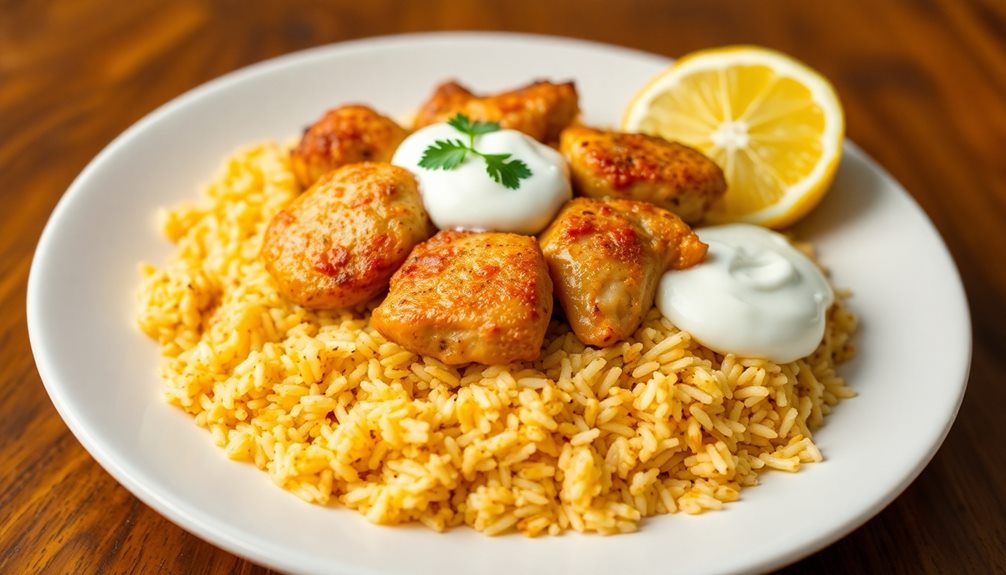
You often pair these dishes with fresh herbs like parsley, mint, and cilantro to add brightness. Persian yogurt, served as a cooling side or dip, complements the rich flavors perfectly. You might also include pickles or grilled vegetables for variety. These sides balance the savory, spiced kababs and jeweled rice, enhancing your meal with fresh, tangy, and crunchy textures that highlight authentic Iranian flavors.
Conclusion
So, savor the sensational synergy of savory kabab koobideh and the stunning sparkle of jeweled rice. Immerse yourself in delicious dishes that dance with flavor and flair, bringing Persian plates to life. Whether you’re a beginner or a seasoned foodie, these dishes deliver delight and discovery. Embrace the experience, enjoy every bite, and let the vibrant, flavorful feast foster fun, friends, and fantastic memories. Persian cuisine promises passion, palate-pleasing perfection, and plenty of unforgettable moments!