Middle Eastern mezze offers a vibrant selection of small, shareable dishes like hummus, baba ganoush, and labneh that emphasize communal dining and rich flavors. You’ll enjoy creamy hummus made from chickpeas and tahini, smoky baba ganoush crafted from roasted eggplants, and tangy labneh served with olive oil or herbs. These dishes promote connection and tradition, making every meal a celebration of hospitality. Keep exploring to discover more about these delicious, cultural favorites.
Key Takeaways
- Hummus, Baba Ganoush, and Labneh are essential Middle Eastern mezze dishes, emphasizing communal sharing and vibrant flavors.
- Hummus is a creamy chickpea and tahini dip, often garnished with olive oil and spices.
- Baba Ganoush features smoky roasted eggplant blended with tahini, lemon, and garlic for a rich, velvety spread.
- Labneh is strained yogurt cheese served as a tangy, creamy dip, typically topped with herbs or olive oil.
- These dishes highlight Mediterranean herbs and ingredients, fostering social, communal dining experiences.
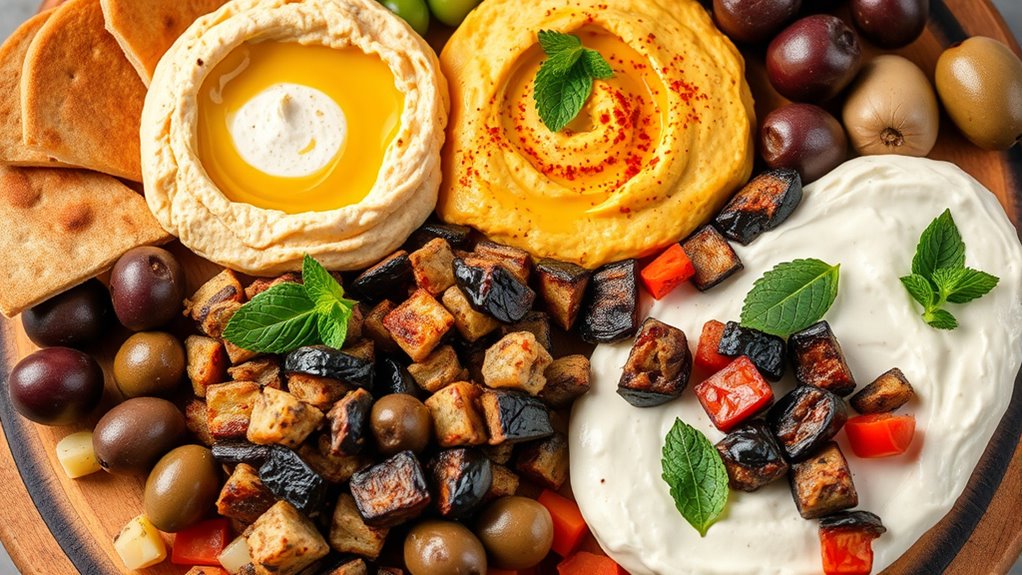
Middle Eastern mezze is a vibrant collection of small dishes that bring people together to share and enjoy a variety of flavors. When you gather around a mezze platter, you’re immersing yourself in a world of Mediterranean flavor profiles, where herbs, spices, and fresh ingredients combine to create bold, lively tastes. These dishes are designed to be shared, encouraging conversation and connection among friends and family. Traditional serving customs emphasize communal eating, with mezze laid out on a central table, allowing everyone to sample multiple items at once. You’ll often find the dishes arranged beautifully, reflecting both cultural heritage and a sense of hospitality.
Middle Eastern mezze celebrates shared flavors and rich traditions in a vibrant, communal dining experience
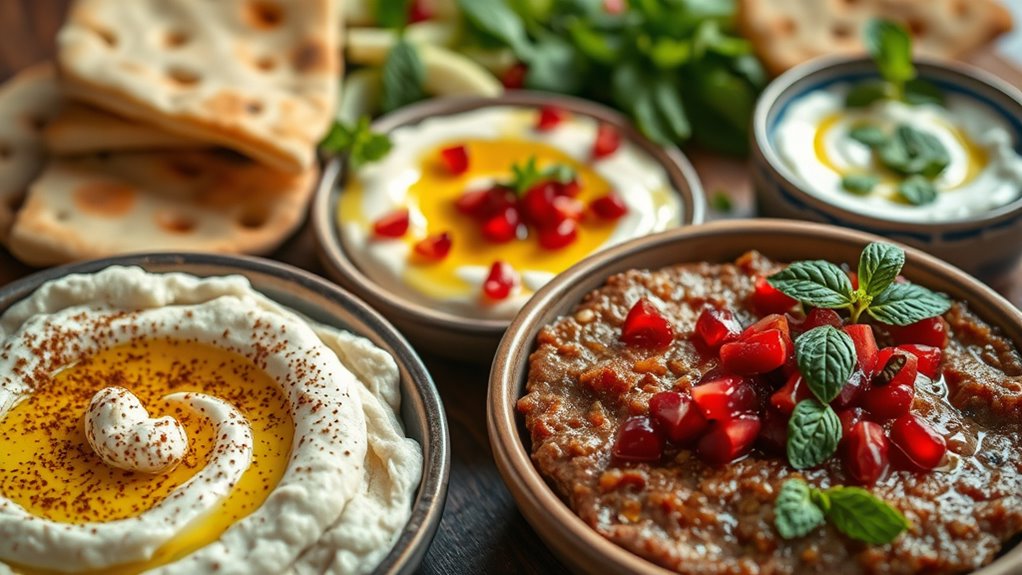
Hummus is a cornerstone of Middle Eastern mezze, offering a creamy, savory dip made from blended chickpeas, tahini, lemon juice, and garlic. Its smooth texture and nutty flavor embody the essence of Mediterranean cuisine, where simplicity and freshness are key. When served, hummus is typically accompanied by warm pita bread or fresh vegetables like cucumber and bell peppers, inviting you to dip and savor each bite. The tradition is to present it in a shallow dish, often topped with a drizzle of olive oil, a sprinkle of paprika, or chopped herbs, making it as visually appealing as it is delicious.
Baba ganoush adds a smoky depth to your mezze experience. Made from roasted eggplants, tahini, lemon, and garlic, it offers a complex flavor profile that balances earthiness with tanginess. Its velvety texture makes it perfect for spreading on bread or serving as a dip. Traditional serving customs call for baba ganoush to be presented in a communal bowl, often garnished with pomegranate seeds, parsley, or a splash of olive oil. You’ll find it alongside other dips, encouraging you to explore different textures and flavors, all while adhering to longstanding customs of sharing food to foster warmth and friendship.
Labneh, a strained yogurt cheese, provides a tangy, creamy option that complements the other mezze dishes. It’s often served with a drizzle of olive oil, a sprinkle of za’atar, or fresh herbs, and is typically accompanied by warm flatbread or vegetables. In traditional settings, labneh is presented in a small bowl, inviting you to scoop it up with bread or vegetables, emphasizing the custom of sharing and communal enjoyment. Its versatility means you can enjoy it as a dip or a spread, adding a cooling, satisfying element to your mezze spread.
Together, these dishes exemplify the spirit of Middle Eastern mezze—rich in flavor, rooted in tradition, and designed to bring people together through shared tastes and customs.
Top picks for "middle eastern mezze"
Open Amazon search results for this keyword.
As an affiliate, we earn on qualifying purchases.
Frequently Asked Questions
What Are the Origins of Middle Eastern Mezze Dishes?
You’ll find that Middle Eastern mezze dishes have rich origins shaped by historical influences and culinary diversity. These dishes evolved through centuries of trade, conquest, and cultural exchange across the Middle East and Mediterranean. Each region adds its unique twist, blending ingredients and techniques from diverse traditions. This blend of history and diversity creates the vibrant, flavorful mezze that you enjoy today, reflecting a long, interconnected culinary story.
How Are Traditional Ingredients for Hummus and Baba Ganoush Sourced?
You source traditional ingredients for hummus and baba ganoush through local farming and sustainable sourcing. Chickpeas and tahini are often obtained from nearby farms that prioritize organic practices, ensuring freshness and quality. Eggplants for baba ganoush are harvested sustainably, supporting eco-friendly agriculture. By choosing local and sustainable sources, you preserve authentic flavors while reducing environmental impact, making your mezze both delicious and eco-conscious.
Are There Regional Variations in Mezze Recipes Across the Middle East?
Yes, you’ll notice regional variations in mezze recipes across the Middle East. In some areas, local spices like sumac or za’atar add unique flavors, while presentation styles differ—some serve mezze in intricate platters, others as simple bowls. You might find thicker tahini in Lebanon or smoky flavor in Syrian baba ganoush, reflecting local tastes and traditions. These regional touches make each mezze experience distinct and authentic.
How Can Mezze Be Adapted for Vegan or Gluten-Free Diets?
You can easily adapt mezze for vegan or gluten-free diets by using vegan substitutions like tahini instead of dairy-based ingredients and ensuring your bread or crackers are gluten-free. Many recipes naturally suit these diets, such as hummus and baba ganoush, which are already vegan and gluten-free. Just double-check labels and swap out any ingredients that contain animal products or gluten to enjoy a delicious, inclusive mezze platter.
What Are the Best Accompaniments or Drinks to Serve With Mezze?
You should pair mezze with crisp white wines or light reds to enhance its flavors. Traditional beverages like Ayran or mint lemonade work wonderfully, offering invigorating contrasts. For a more indulgent touch, try pairing with a dry rosé or sparkling wine. These accompaniments balance the richness of dips like hummus and baba ganoush, creating a delightful experience. Keep drinks chilled, and enjoy the vibrant flavors of your mezze platter.
Conclusion
As you savor the creamy hummus and smoky baba ganoush, remember that these dishes are more than just appetizers—they’re a gateway to Middle Eastern culture. While they might seem simple, their rich flavors tell stories of tradition and history. So, in every bite, experience the contrast between everyday ingredients and extraordinary heritage. Embrace the mezze, and let each flavor remind you that sometimes, the smallest dishes hold the deepest stories.