
TL;DR

Get kitchen staples and gadgets delivered free with Prime
- Fast, free delivery on millions of items
- Prime Video, Amazon Music and more included
- Member-only deals all year
Food safety experts issued specific guidelines for post-hurricane recovery, emphasizing the need to discard food exposed to floodwater or prolonged power outages. The guidance details proper sanitization for metal and ceramic items while mandating the disposal of porous materials like wood and plastic. Consumers are urged to rely on bottled or treated water and to consult official hotlines for clarification.
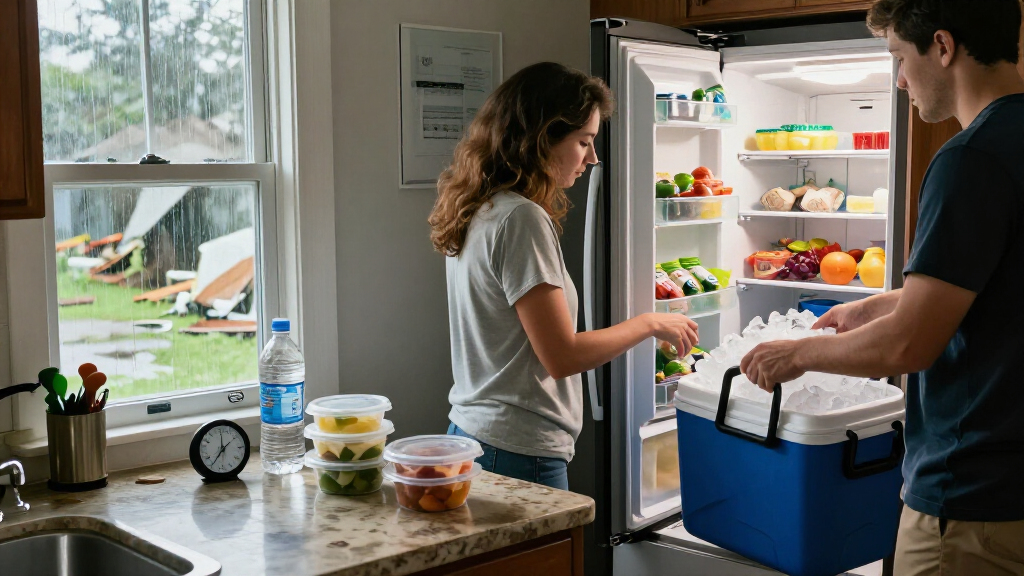
The guidance specifies that if power has been out for several days, all food in refrigerators and freezers should be thrown away. Officials advise against using sensory checks, such as smell or taste, to determine if items are safe. Instead, residents should consult official charts that list which foods are safe to keep and which must be discarded after extended periods without refrigeration. This distinction is vital because pathogenic bacteria can grow to dangerous levels without altering the food’s appearance or odor.
Regarding floodwater contact, the report states that any food not in a waterproof container must be discarded. This includes items in containers with screw caps, snap lids, pull tops, and crimped caps, as these are not watertight. However, undamaged commercially prepared foods in all-metal cans and retort pouches can be saved if they are cleaned according to the FSIS Consumer’s Guide to Food Safety. This exception allows for the salvage of certain shelf-stable goods, provided they have not been compromised by the flood’s contaminants.
For utensils and dishes, the protocol differs by material. Metal pans, utensils, and ceramic dishes that touched floodwater should be washed with hot soapy water, rinsed, and then sanitized. Sanitization requires boiling them in clean water or soaking them for 15 minutes in a solution of one tablespoon of unscented liquid chlorine bleach per gallon of drinking water. Conversely, wooden cutting boards, plastic utensils, baby bottle nipples, and pacifiers cannot be sanitized effectively after flood contact and must be thrown away.
Preventing Illness During Recovery
This guidance addresses health risks associated with post-hurricane environments. Floodwater often contains sewage, chemicals, and debris, serving as a vector for waterborne and foodborne diseases. By defining what can be saved and what must be discarded, the guidelines aim to prevent outbreaks of gastrointestinal illness in communities affected by infrastructure damage. Adhering to these steps is intended to reduce the burden on local healthcare systems during the crisis.
As an affiliate, we earn on qualifying purchases.Products Worth Considering

Vitamix Propel Series 510 Professional-Grade Blender, Black

Vitamix Ascent X2 SmartPrep Kitchen System, Black

Vitamix 64 oz Low-Profile Blender Container with SELF-DETECT, BPA-Free
Official Channels for Verification
The recommendations align with established protocols from the U.S. Department of Agriculture and the FDA. For residents uncertain about specific items, the Meat and Poultry Hotline (1-888-674-6854) remains available Monday through Friday, 10 a.m. to 6 p.m. EDT. This service provides access to experts who can clarify ambiguous cases, such as the safety of specific packaged goods or the effectiveness of home sanitization methods. The hotline availability reflects government protocols for addressing uncertainties in disaster scenarios.
Ambiguities in Salvageable Items
While the guidelines are clear on major categories, individual judgment remains necessary for items like retort pouches or metal cans. The term “undamaged” requires visual inspection, which can be subjective in low-light conditions or when cans are covered in mud. It is not yet clear how long specific commercial packaging materials can withstand submersion before microscopic breaches occur. Additionally, the guidance does not specify if glass jars with rubber seals are salvageable, leaving a gap in knowledge for home-canned goods owners.
Monitoring for Outbreaks
Public health officials will likely monitor local hospitals for spikes in diarrheal illness or botulism cases in the coming weeks. Residents are advised to keep receipts for discarded food for potential insurance claims. As power grids stabilize, the focus will shift to verifying the safety of municipal water supplies. Consumers should continue to rely on bottled or boiled water until local authorities declare tap water safe to drink.
Key Questions
Can I eat food from a sealed can that was in floodwater?
Yes, but only if the can is undamaged and made of metal. You must remove labels, wash the can with hot soapy water, rinse it, and sanitize it by boiling or using a bleach solution before opening. If the can is bulging, rusted, or punctured, discard it.
Is bottled water safe if the cap was touched by floodwater?
No. The guidance states that screw caps are not waterproof. If floodwater touched the cap or the bottle’s opening, the water inside should be considered contaminated. Discard the bottle or drink only water from a source confirmed to be safe.
How do I sanitize a wooden cutting board after a flood?
You cannot. Wooden cutting boards are porous and can absorb floodwater and pathogens. They cannot be effectively sanitized and must be discarded to prevent illness.
What is the bleach ratio for sanitizing dishes?
Mix one tablespoon of unscented liquid chlorine bleach with one gallon of drinking water. Immerse the washed and rinsed dishes in this solution for 15 minutes before air-drying.
Source: rss