
TL;DR
Energy experts cited in a home-energy report say appliances that generate heat, including electric ovens and tumble dryers, can use substantial electricity, while the cost of any appliance depends on its power and how long it runs. The report also warns that a predicted 28% rise in the January 2027 energy price cap is not confirmed; it is a forecast attributed to energy suppliers.
A home-energy report has compared the electricity use of six common kitchen appliances, with experts saying heat-producing devices such as ovens and tumble dryers can be costly to run. The report also cites predictions from British Gas, EDF and E.ON of a 28% rise in the January 2027 energy price cap, but that figure is a forecast, not a confirmed change.

Get kitchen staples and gadgets delivered free with Prime
- Fast, free delivery on millions of items
- Prime Video, Amazon Music and more included
- Member-only deals all year
The six appliances highlighted are tumble dryers, electric ovens, washing machines, dishwashers, fridge-freezers and kettles. The source gives approximate power ranges for several: tumble dryers at about 2 to 5.5 kilowatts, ovens at 2 to 4 kW, washing machines at 0.3 to 2.1 kW and dishwashers at 0.5 to 1.5 kW. These figures describe power, not a fixed amount of electricity used per cycle or a bill amount.
Actual energy use depends on how long an appliance runs, its settings, model and condition. For example, a kettle may draw considerable power while heating water, but it usually runs for only a short time. A fridge-freezer uses power over longer periods, so its age and efficiency can matter. The source does not give a single comparable consumption figure for all six appliances.
Renewables specialist Martyn Fowler recommends using eco settings on washing machines and dishwashers, which can take longer but generally use less electricity and water, according to his comments in the report. For laundry, he advises spinning out as much water as possible before drying and considering a heat-pump dryer when replacing an older model. He also suggests checking insulation and draughts if an electric heater is being used regularly to compensate for a cold room.
6 Common Kitchen Appliances And Their Energy Use
Power ratings show how quickly appliances use electricity; running time, settings and efficiency shape total use and cost.
Six appliances, different routines
The report highlights these appliances, but does not provide comparable power ranges for every one.
Tumble dryers and ovens
Both can draw substantial power while operating; total use depends on how long and how often they run.
Washers and dishwashers
Loads, temperatures and cycle choices affect electricity use.
Kettles
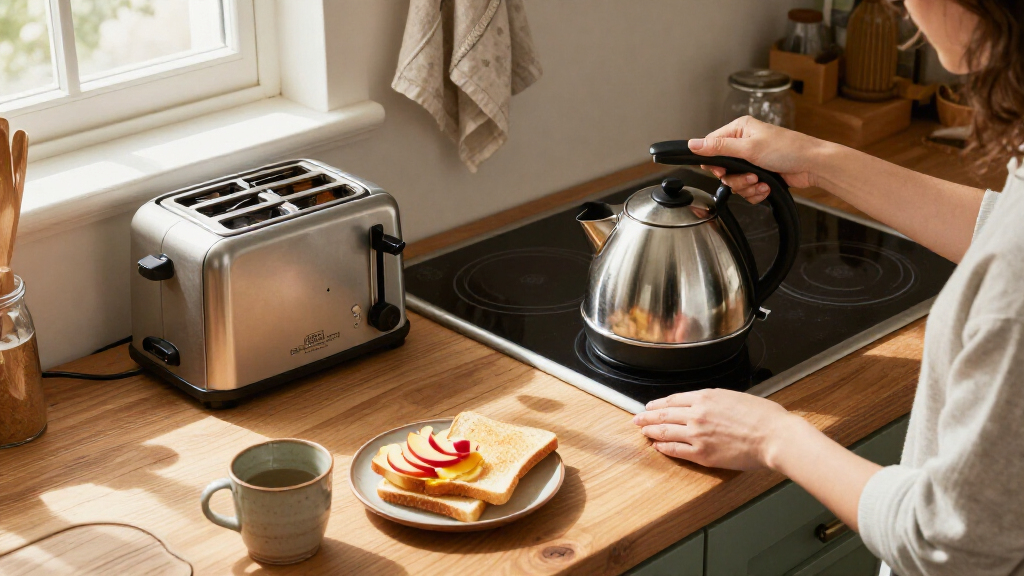
They may draw considerable power briefly. Boil only the water you need.
Fridge-freezers
They run over longer periods, so age and efficiency can matter.
Power is not the whole bill
Total electricity use builds over time, and household cost also depends on the tariff.
A rating describes electricity use while an appliance is operating.
Longer or more frequent use adds to total consumption.
The same usage can lead to different costs in different homes.
Practical ways to use less
The report’s expert advice focuses on settings, laundry habits and appliance efficiency.
- Use eco settings on washing machines and dishwashers; they can take longer while generally using less electricity and water.
- Spin more water out of laundry before tumble-drying.
- When replacing an older dryer, consider a heat-pump model.
- Check energy labels and manuals, and address draughts if a room regularly needs an electric heater.
Why Running Time Matters
The appliance list is useful because it shifts attention from wattage alone to how long and how often equipment runs. Power ratings indicate the rate at which an appliance uses electricity while operating; total consumption is measured in kilowatt-hours and accumulates over time. Household costs then depend on the tariff and usage, so the same appliance can have very different running costs in different homes.
That distinction can help households focus on repeated or extended use rather than assuming every high-wattage item has the same effect on bills. Fowler gives the example of a 2,000-watt heater running for five hours, which uses 10 kWh. He estimates that doing so each evening would cost around £75 a month, but that estimate relies on his assumed usage and electricity price; it is not a universal bill figure.
Manan Shah, co-founder of Solar4Good UK, makes a similar point about kettles: using a lot of power for a few minutes is different from running an appliance for hours. He says boiling only the water needed may help, while describing old fridge-freezers and heat-producing appliances as bigger areas to examine. The practical message is to check actual use and appliance labels rather than infer household costs from a broad category alone.
Products Worth Considering

De'Longhi Classic Signature Espresso Machine with Adjustable Milk Frother

Ninja French Door Premier 10-in-1 Air Fry Oven, 20.3 Qt, Stainless Steel, FO101

Le Creuset Alpine Enameled Cast Iron Fondue Set, 2.5 qt., Nuit
As an affiliate, we earn on qualifying purchases.
The Six Appliances Compared
The source groups the appliances by their typical role in the home: some generate heat to cook or dry, while others operate in short bursts or maintain food storage continuously. It reports approximate wattage ranges for four of the six items, but does not supply a matching range for fridge-freezers or kettles. As a result, the material does not support a precise ranking of all six by total energy consumption.
Its figures are also not presented as controlled measurements of particular models. Energy use varies with capacity, load size, temperature, cycle choice and appliance age. A washing-machine cycle, for instance, may use different amounts depending on whether the user selects a hot or eco wash. A dishwasher’s energy use likewise depends on programme and load.
The report’s pricing discussion is tied to a forecast for January 2027. British Gas, EDF and E.ON are named as suppliers whose predictions point to a 28% increase in the price cap. No official confirmation, forecast methodology, current cap value or precise bill impact is provided in the supplied material, so the figure should not be treated as an established future price.
““A 2,000-watt heater running for five hours will use 10kWh of electricity.””
— Martyn Fowler, founder of Elite Renewables
What the Figures Do Not Show
The reported wattage ranges do not establish how much electricity a typical household uses for each appliance over a month, nor do they show a standard cost per cycle. The source does not specify test conditions, models or a common comparison period. It also gives no comparable consumption figures for two items in the six-appliance list, fridge-freezers and kettles.
The projected 28% price-cap rise for January 2027 is attributed to supplier predictions in the source, not to a confirmed decision by the energy regulator. The basis, timing and eventual scale of any change remain unclear from the material provided. Individual bills would also depend on consumption, tariff and other charges.
Check Use Before Replacing
For now, households can compare appliance labels and manuals, review how often equipment runs, and use suitable eco or lower-temperature programmes. The report’s recommendations include removing more water from laundry before tumble-drying, boiling only the amount of water needed, and looking at draught-proofing or insulation where a room repeatedly needs an electric heater.
Anyone considering a replacement should compare energy-efficiency information and expected use rather than relying on a headline wattage alone. The next clear development on household costs will be an official update to the price cap; until then, the cited January 2027 increase remains a forecast. The source provides no date for a formal decision.
Key Questions
Which of the six appliances can use the most electricity?
The source identifies tumble dryers and electric ovens among the higher-power appliances, reporting approximate ranges of 2–5.5 kW and 2–4 kW respectively. Total use still depends on how long and how often each appliance operates, so the figures do not establish a universal cost ranking.
Does a high wattage always mean a high bill?
No. Wattage measures power while an appliance is running. Electricity consumption depends on power multiplied by operating time, and the bill also depends on the household’s tariff. A kettle may use substantial power briefly, while a fridge-freezer runs over much longer periods.
What changes does the report recommend?
Martyn Fowler advises using eco settings on washing machines and dishwashers, spinning more water out of laundry before drying, and considering a heat-pump dryer when replacing an appliance. He also recommends addressing draughts or insulation if a room regularly needs an electric heater.
Is the predicted January 2027 price-cap rise confirmed?
No. The source attributes a 28% increase to predictions by British Gas, EDF and E.ON. It does not report an official confirmation, so the figure should be treated as a forecast.
Source: idealhome.co.uk