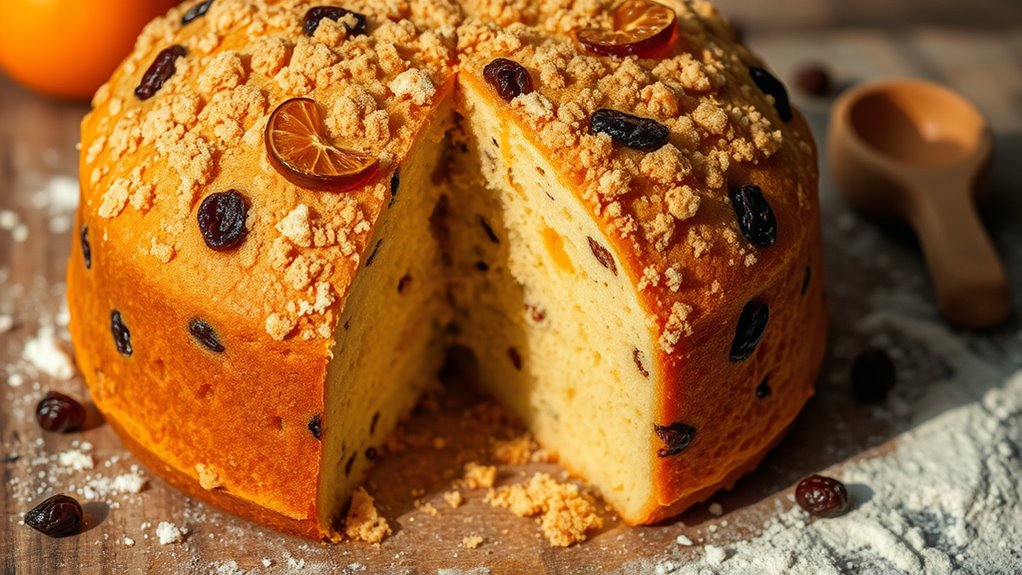

Italian panettone is a festive bread from Milan, symbolizing Italy’s holiday traditions with its fluffy texture and fruity flavors. It has a rich history dating back centuries, representing craftsmanship and celebration. Making it involves patience, precision, and a few key steps like fermenting and careful baking. The process results in a beautifully risen, fragrant bread perfect for sharing. If you want to discover more about its story and a simple recipe, keep exploring further.
Key Takeaways
- Panettone is a traditional Italian holiday bread originating from Milan, symbolizing festive celebrations and family gatherings.
- It features a fluffy texture, rich aroma, and sweet, fruity flavor with candied fruits and raisins.
- The recipe involves multiple fermentation stages using a sourdough starter or preferment for depth of flavor.
- Proper mixing, kneading, and slow baking in parchment-lined molds create its tall, domed shape.
- Cooling fully before slicing preserves its delicate structure, making it a perfect festive treat or gift.
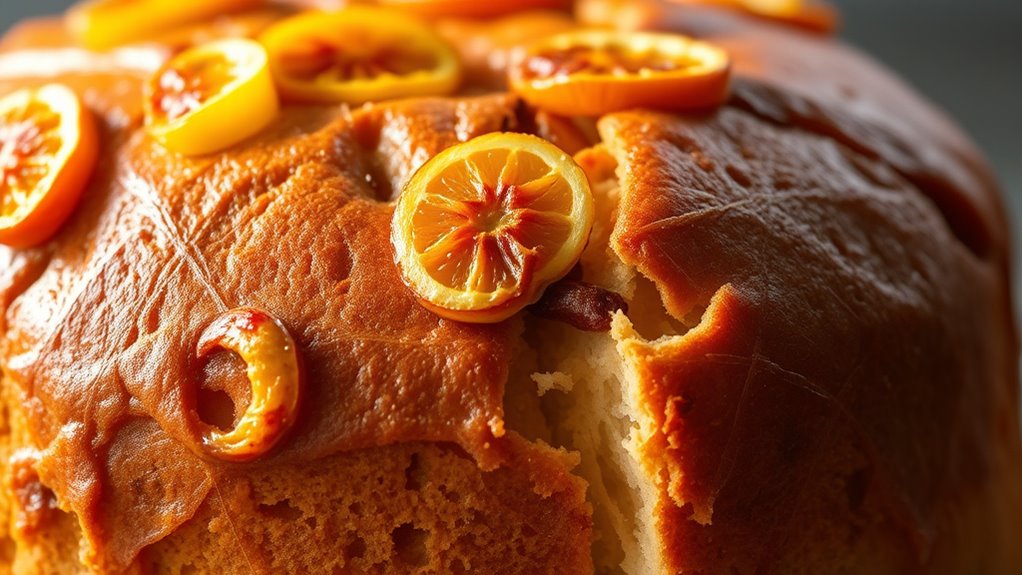
Italian Panettone is a beloved holiday bread that has become a symbol of Italy’s festive traditions. During the holiday season, you’ll notice it on tables across the country, often gifted to friends and family. Its fluffy texture, rich aroma, and sweet, fruity flavor make it a standout treat. Understanding its history and mastering the baking techniques can deepen your appreciation and help you create an authentic panettone at home.
Italian Panettone is a festive favorite, cherished for its fluffy texture and rich, fruity aroma during the holidays.
This bread’s roots trace back centuries, originally crafted in Milan as a luxurious holiday specialty. Over time, panettone transformed from a regional delicacy into a national symbol of celebration. It’s closely tied to festive traditions, where families gather to enjoy slices with coffee or wine. The process of making panettone is intricate, reflecting the importance Italians place on tradition. From choosing the right ingredients to the careful baking process, each step is about honoring history while creating a bread that embodies the spirit of the season.
When you start baking panettone, focus on your baking techniques. The dough requires patience and precision, as it involves multiple fermentation stages. First, you prepare a sourdough starter or preferment, which acts as the foundation. Then, you incorporate high-quality flour, eggs, butter, sugar, and candied fruits or raisins. Mixing these ingredients thoroughly and kneading the dough properly is essential to develop the gluten structure that gives panettone its characteristic airy interior. You’ll need to let the dough rise slowly, often for several hours or even overnight, to develop flavor and texture. This slow fermentation is key to achieving the bread’s soft crumb and rich aroma.
As you approach baking, make sure your oven is at the right temperature, and use a paper or parchment-lined mold to give the panettone its traditional tall, domed shape. Gently place the dough inside and bake until golden brown and a skewer inserted into the center comes out clean. The entire process may seem lengthy, but the effort pays off when you see the beautifully risen, fragrant bread. Additionally, optimal angles for baking can influence the bread’s rise and texture. The final step is to let it cool completely before slicing, which helps maintain its delicate texture.
Frequently Asked Questions
What Are the Key Differences Between Traditional and Modern Panettone?
Traditional panettone uses simpler ingredients like natural yeast, dried fruits, and a longer fermentation process, giving it an authentic, dense texture. Modern versions often incorporate ingredient variations, such as added flavorings, different flours, or shortcuts like yeast mixes, resulting in a lighter, fluffier bread. You’ll notice these differences in texture, flavor, and preparation style, with traditional emphasizing authenticity and modern embracing innovation and convenience.
How Long Does Homemade Panettone Stay Fresh?
Homemade panettone stays fresh for about 2 to 3 days at room temperature if stored properly. Did you know that storing it in an airtight container can extend its shelf life by a day? To keep it delicious longer, wrap it tightly in plastic wrap and place it in a cool, dry place. For longer storage, consider freezing it, then thawing at room temperature before enjoying.
Can Panettone Be Made Gluten-Free?
Yes, you can make panettone gluten-free by using gluten-free flour blends and gluten-free leavening agents. Explore gluten-free alternatives like rice flour, almond flour, or a specialized gluten-free bread mix to mimic the traditional texture. While wheat-free options are available, verify your ingredients are certified gluten-free to avoid cross-contamination. With some adjustments, you’ll enjoy a delicious, festive panettone that caters to gluten sensitivities.
What Are Common Mistakes to Avoid When Baking Panettone?
Don’t let your panettone fall flat like a deflated balloon—avoid overmixing the dough and sticking to correct proofing times. Overmixing can develop tough gluten, while rushing proofing prevents proper rise and airy texture. Think of it as nurturing a delicate bloom; patience and precision matter. Keep a gentle hand, trust your timing, and you’ll create a light, fluffy panettone that’s worth every effort.
How Can I Store Panettone to Maintain Its Quality?
To preserve freshness, store your Panettone properly by wrapping it tightly in plastic wrap or aluminum foil. Keep it in a cool, dry place away from direct sunlight, ideally at room temperature. For longer storage, you can freeze it wrapped securely, then thaw at room temperature before enjoying. Proper Panettone storage prevents it from drying out or becoming stale, ensuring you enjoy its delicious flavor for days.
Conclusion
Now that you’ve learned the rich history and simple steps to make your own Italian panettone, you hold a piece of tradition in your hands. It’s more than just bread; it’s a celebration of craftsmanship and love. As the golden aroma fills your home, remember that this humble loaf connects you to centuries of Italian warmth and joy. In every bite, you taste history, family, and the sweet promise of the holidays.