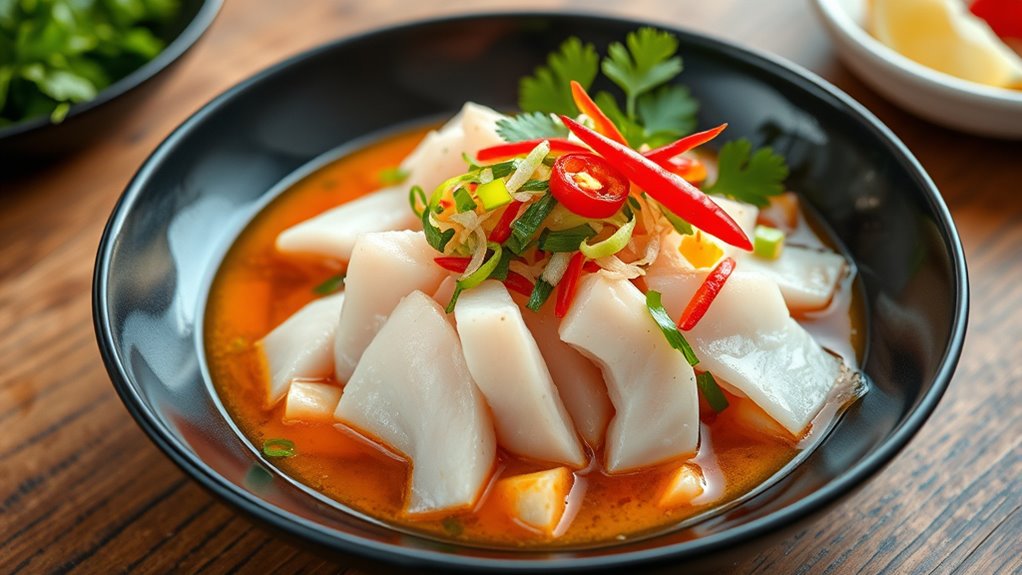
Nikkei ceviche is a exciting fusion where Peruvian freshness mixes with Japanese flavors, showcasing cultural exchange and culinary innovation. You’ll notice traditional raw fish marinated in lime juice, topped with Japanese ingredients like soy sauce, sesame oil, or mirin. This blend creates a balanced, complex flavor profile that elevates the classic dish with new textures and tastes. If you keep exploring, you’ll discover more about how this dish embodies global culinary creativity.
Key Takeaways
- Nikkei ceviche blends Peruvian freshness with Japanese umami flavors, showcasing culinary fusion.
- It incorporates Japanese ingredients like soy sauce, mirin, and sesame oil into traditional ceviche.
- The dish exemplifies cultural exchange, originating from Japanese immigrants in Peru.
- Innovative techniques elevate ceviche, creating complex textures and a balanced flavor profile.
- Nikkei ceviche symbolizes global culinary evolution, merging East and West traditions creatively.
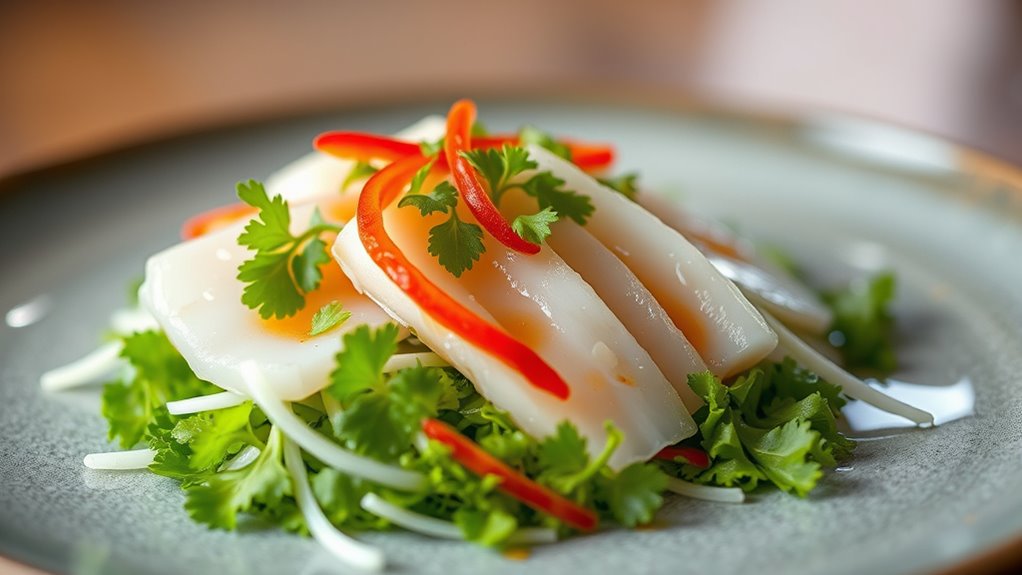
Peruvian-Japanese “Nikkei” Ceviche seamlessly blends two rich culinary traditions, creating a vibrant dish that highlights the best of both worlds. This dish exemplifies cultural fusion, where flavors and techniques from Peru and Japan come together in a harmonious way. As you prepare or enjoy Nikkei ceviche, you’re witnessing culinary innovation at its finest—an inventive twist that redefines traditional recipes and celebrates cross-cultural creativity. The foundation of this dish is classic Peruvian ceviche, using fresh, raw fish marinated in lime juice, but it’s elevated by Japanese influences like soy sauce, mirin, and sesame oil. These ingredients introduce umami depth and a subtle sweetness that’s not typical in traditional ceviche, offering a new dimension to the dish.
You’ll notice how the Japanese elements subtly transform the flavor profile, adding complexity without overpowering the freshness of the fish. The fusion is deliberate and balanced, showcasing how two culinary worlds can complement each other. This innovation stems from a long history of cultural exchange between Peru and Japan, particularly among Japanese immigrants who settled in Peru and brought their culinary traditions with them. Over time, chefs began experimenting with combining these two cuisines, resulting in dishes like Nikkei ceviche that push the boundaries of conventional notions of ceviche and sushi alike.
When you taste Nikkei ceviche, you experience not just a blend of ingredients but a story of adaptability and creativity. The dish demonstrates how culinary innovation thrives when different traditions are merged thoughtfully. Instead of sticking to the usual, cooks introduce Japanese ingredients to enhance the flavor, create new textures, and appeal to a broader palate. The result is a dish that’s both familiar and novel, appealing to those who appreciate the culinary arts’ endless possibilities.
This cultural fusion isn’t just about mixing ingredients; it’s about respecting and celebrating each tradition’s core while exploring new ways to present them. You’ll find that the use of Japanese condiments and cooking techniques elevates traditional ceviche into a sophisticated, multi-layered experience. As you savor Nikkei ceviche, you become part of a culinary dialogue—one that respects history but isn’t afraid to innovate. It’s a perfect example of how culinary borders can dissolve, allowing new flavors to emerge and enriching the global food landscape. Incorporating innovative culinary techniques like marination with Japanese ingredients further enhances the depth and complexity of this fusion dish.
Frequently Asked Questions
How Did the Nikkei Ceviche Originate Historically?
You might find that Nikkei ceviche originated through a historical fusion of Peruvian and Japanese cultures, driven by immigration and trade in the early 20th century. This cultural exchange led Japanese immigrants in Peru to adapt traditional ceviche with Japanese ingredients and techniques. As a result, Nikkei ceviche emerged as a unique culinary expression, blending flavors from both cultures and reflecting a rich history of cross-cultural influence.
Are There Regional Variations of Nikkei Ceviche Across Peru and Japan?
You’ll be surprised to find that nikkei ceviche isn’t just one uniform dish. It’s a culinary chameleon, adapting with regional flavor tweaks and local ingredient variations across Peru and Japan. In Peru, you might savor a tangy twist with local citrus, while Japan adds subtle umami with soy or miso. These regional differences keep nikkei ceviche exciting, proving it’s less a recipe and more a delicious cultural dialogue.
What Traditional Ingredients Are Essential in Authentic Nikkei Ceviche?
In authentic nikkei ceviche, essential ingredients include fresh raw fish like salmon or sea bass, lime or yuzu juice for acidity, and soy sauce to add umami. You’ll also find fusion flavors from ingredients like ginger, garlic, and cilantro, which blend traditional Japanese and Peruvian culinary techniques. These elements create a vibrant, balanced dish that highlights both cultures’ culinary traditions while embracing modern innovation.
How Does the Flavor Profile Differ From Classic Peruvian or Japanese Ceviche?
You’ll notice that Nikkei ceviche offers a unique flavor fusion, blending tangy Peruvian citrus with Japanese umami-rich ingredients like soy sauce. Unlike classic Peruvian ceviche’s bright citrus or Japanese versions’ delicate fish and rice, Nikkei emphasizes a balanced ingredient harmony, combining acidity, saltiness, and subtle sweetness. This creates a complex, vibrant taste that’s both invigorating and savory, appealing to diverse palates and showcasing cultural culinary innovation.
Can Nikkei Ceviche Be Adapted for Vegetarian or Vegan Diets?
Yes, you can adapt Nikkei ceviche for vegetarian or vegan diets by using plant-based alternatives like tofu, mushrooms, or hearts of palm instead of fish. To achieve authentic flavor adaptations, marinate these ingredients in citrus, soy sauce, and ginger, mimicking traditional seasonings. You can also add avocado or seaweed for added texture and flavor, making the dish both satisfying and true to the vibrant Nikkei style.
Conclusion
As you savor each bite of this Nikkei ceviche, it’s like tasting a harmonious dance between two worlds. The tangy citrus, tender fish, and subtle soy notes blend seamlessly, creating a flavor that’s both vibrant and comforting. Just as East and West come together beautifully in this dish, so can your love for diverse cuisines expand your palate. Embrace the fusion—it’s a culinary journey that’s as exciting as watching sunrise over two horizons.