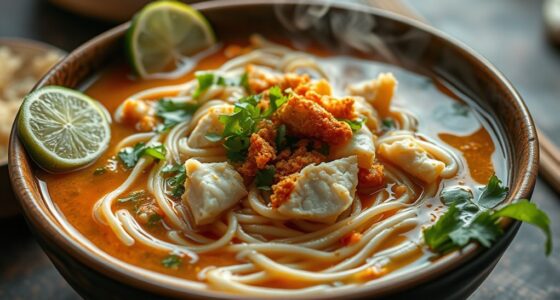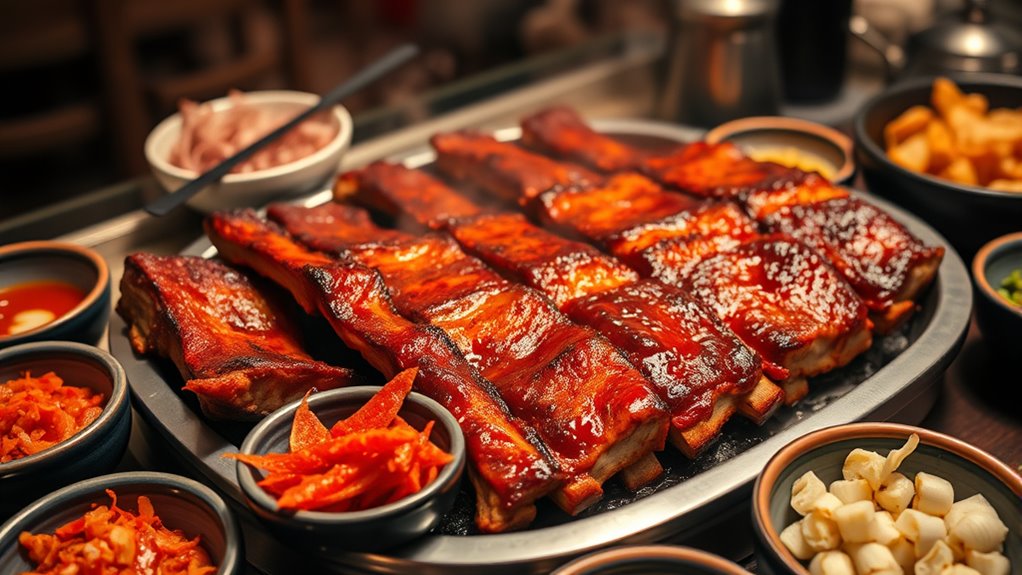
Korean cuisine showcases bold flavors through age-old fermentation techniques like making kimchi, a tangy, spicy staple rich in probiotics, and through vibrant dishes like Korean barbecue, which features marinated and smoky grilled meats. These dishes reflect Korea’s culinary history and cultural pride. Colorful presentations and innovative fusion creations keep the cuisine exciting today. If you want to explore the rich traditions and modern twists behind these iconic foods, there’s plenty more to discover.
Key Takeaways
- Kimchi is a traditional Korean fermented vegetable dish, rich in probiotics and vital to Korean culinary identity.
- Korean BBQ features marinated or grilled meats, highlighting smoky flavors and modern fusion techniques.
- Colorful presentation and vibrant garnishes enhance the visual appeal of authentic Korean dishes.
- Modern chefs blend traditional flavors with international influences, creating innovative fusion dishes.
- Respect for age-old fermentation methods coexists with culinary evolution, maintaining Korea’s rich food heritage.

Have you ever wondered what makes Korean cuisine so vibrant and distinctive? It all starts with a deep respect for traditional fermentation techniques, which have been passed down through generations. This process transforms simple ingredients into complex, flavorful staples like kimchi, a staple side dish that embodies the essence of Korean culinary heritage. Traditional fermentation involves carefully fermenting vegetables, primarily Napa cabbage and radishes, in salt and spices over weeks or even months. This slow, natural process not only preserves the vegetables but also enhances their flavor, giving kimchi its signature tangy, spicy, and umami-rich profile. The art of fermentation in Korea isn’t just about preservation; it’s about crafting foods that are rich in probiotics and health benefits, a practice that’s deeply rooted in cultural tradition. Color accuracy plays a significant role in presenting these dishes authentically, especially when showcasing the vibrant reds and greens of kimchi and garnishes.
Yet, Korean cuisine isn’t stuck in the past. It has embraced modern fusion, blending traditional flavors with contemporary culinary trends to appeal to a global palate. This fusion has led to exciting innovations like kimchi tacos, kimchi burgers, and even kimchi-infused pasta, where the tangy, spicy notes of fermentation complement ingredients from different cuisines. Similarly, Korean BBQ has evolved beyond its roots, incorporating international grilling techniques and marinades while keeping the core elements of marinated meats and smoky flavors. Modern fusion restaurants often experiment with ingredients like cheese, Southern-style sauces, or even plant-based substitutes, creating a new wave of Korean-inspired dishes that feel fresh and inventive.
Despite these modern adaptations, the heart of Korean cuisine remains in its respect for tradition. Many chefs and home cooks still prepare kimchi following age-old recipes, ensuring the authenticity and depth of flavor that history has cultivated. This harmonious blend of traditional fermentation and modern fusion reflects Korea’s culinary evolution—respecting its roots while boldly exploring new tastes and techniques. Whether you’re savoring a classic bowl of kimchi or biting into a fusion-inspired kimchi taco, you’re experiencing a cuisine that balances history and innovation. It’s this dynamic interplay between honoring tradition and embracing change that makes Korean food so exciting and endlessly enjoyable for anyone enthusiastic to explore its rich flavors.

Masontops Complete Mason Jar Fermentation Kit – Pickle Kit, Sauerkraut Making Kit Kimchi Container – Fermentation Airlock Lids Wide Mouth Mason Jars
MASONTOPS COMPLETE MASON JAR FERMENTATION KIT: Includes all the tools needed to turn your ordinary wide mouth mason…
As an affiliate, we earn on qualifying purchases.
As an affiliate, we earn on qualifying purchases.
Frequently Asked Questions
What Are the Health Benefits of Traditional Korean Dishes?
You’ll enjoy numerous health benefits from traditional Korean dishes, thanks to their fermentation process and rich nutritional profile. Fermented foods like kimchi boost your gut health by introducing beneficial probiotics, which aid digestion and strengthen immunity. These dishes are also packed with vitamins, minerals, and antioxidants, supporting overall wellness. Incorporating Korean cuisine into your diet can enhance your digestion, provide essential nutrients, and promote a balanced, healthy lifestyle.
How Has Korean Cuisine Evolved Over the Centuries?
Korean cuisine has evolved so dramatically, you’d think it’s a culinary superhero saving your taste buds! Thanks to historical influences, like Chinese and Japanese flavors, plus culinary innovations, Korea’s dishes have transformed from simple staple foods into vibrant, sophisticated creations. Today, you experience a perfect blend of tradition and modern flair. This evolution keeps Korean food exciting, making every bite a delicious journey through history and innovation.
What Are Regional Differences in Korean BBQ Styles?
You’ll notice regional differences in Korean BBQ styles through distinct flavors and grilling techniques. In Seoul, you might enjoy leaner cuts and quick grilling, emphasizing freshness. In contrast, Jeju features richer, marinated meats, often cooked slowly over charcoal to enhance smoky flavors. Jeolla Province offers hearty, seasoned meats with bold sauces, while Gangwon prefers simpler, salt-based seasonings that highlight natural flavors. Each region’s unique approach creates a diverse BBQ experience.
How Is Kimchi Traditionally Fermented?
You start kimchi’s fermentation process by salting cabbage and other vegetables to draw out moisture. Then, you mix in seasonings like chili, garlic, and ginger before packing everything into jars. As it ferments, beneficial probiotics develop, offering probiotic benefits that support your gut health. The fermentation can take days or weeks, depending on your taste preference, resulting in the tangy, flavorful kimchi enjoyed in Korean cuisine.
What Are Common Pairings With Korean BBQ?
Pairing with Korean BBQ is perfect for passionate palates. You’ll want to plunge into diverse side dish varieties like spicy kimchi, savory salads, and sizzling steamed rice. Marination techniques enhance the meat’s flavor, pairing beautifully with tangy, zesty kimchi. Crunchy kimchi complements grilled meats, while mild rice balances bold flavors. Together, these elements create a mouthwatering, memorable meal that celebrates the vibrant, versatile world of Korean cuisine.

TECHEF – Stovetop Korean BBQ Non-Stick Grill Pan with Agni Portable Gas Stove Burner, Made in Korea (Set w/BBQ Scissors)
Complete Cooking Set: Comes with the TECHEF Agni Portable Stove, a premium Korean BBQ Grill Pan, and BBQ…
As an affiliate, we earn on qualifying purchases.
As an affiliate, we earn on qualifying purchases.
Conclusion
Now that you’ve explored Korean dishes like kimchi and BBQ, you’re ready to experience their vibrant flavors firsthand. Imagine hosting a dinner and sharing a sizzling Korean BBQ with friends, each bite bursting with tradition. Just like a traveler who tried authentic kimchi in Seoul and fell in love, you can bring that excitement home. Immerse yourself in Korean cuisine, and let its rich history and bold tastes become part of your culinary journey.
Korean cooking utensils set
As an affiliate, we earn on qualifying purchases.
As an affiliate, we earn on qualifying purchases.

Mulroman Instant Kimchi Kit, Instant Napa Cabbage Kimchi, 6 Servings 350g After Cooking, Make in Just 5 Minutes
Convenient Kimchi Kit: Make delicious, authentic Korean Kimchi in just 5 minutes with this easy-to-use kit.
As an affiliate, we earn on qualifying purchases.
As an affiliate, we earn on qualifying purchases.