Exploring Chilean cuisine reveals a vibrant mix of regional flavors and traditional techniques. Empanadas, filled with locally sourced ingredients like minced beef, olives, and raisins, showcase regional twists and hearty textures. Pebre salsa, made from fresh cilantro, onions, and tomatoes, adds a bright, tangy touch to meals. These dishes reflect Chile’s rich history and diverse geography. Keep going to discover how each bite carries the country’s cultural essence and culinary heritage.
Key Takeaways
- Chilean cuisine features regional flavors, with empanadas and pebre salsa highlighting local ingredients and traditional techniques.
- Empanadas are a staple, filled with hearty ingredients like beef, onions, olives, and sometimes regional cheeses or spices.
- Pebre salsa is a fresh, tangy condiment made from cilantro, onions, tomatoes, and lemon or vinegar, balancing rich dishes.
- Regional variations influence both empanada fillings and pebre ingredients, showcasing Chile’s diverse geography and agricultural bounty.
- These dishes reflect Chile’s cultural heritage, connecting culinary traditions with history, geography, and local produce.
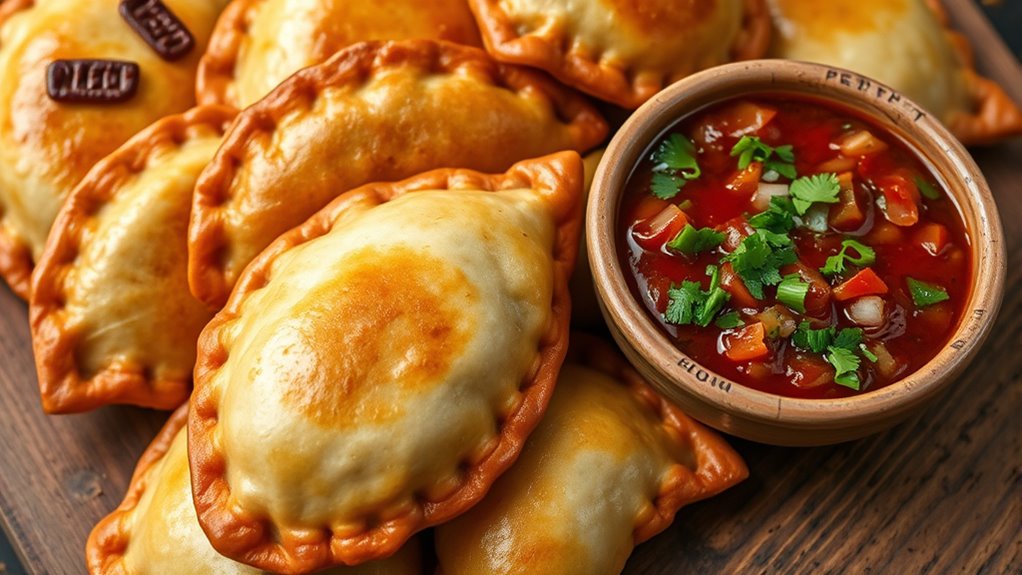
Have you ever wondered what makes Chilean cuisine uniquely flavorful? It’s a rich tapestry woven from traditional cooking techniques and regional flavors that reflect the country’s diverse geography and history. When you immerse yourself in dishes like empanadas and pebre salsa, you’re experiencing more than just food—you’re tasting centuries of cultural influences and local ingredients that define the Chilean culinary identity. Traditional cooking methods play an essential role here, often passed down through generations, preserving the essence of regional flavors that make each bite memorable. From the arid north to the lush south, each region adds its unique touch, creating a vibrant mosaic of tastes and textures. The use of authentic ingredients and regional variations enhances the overall color accuracy and authenticity of these dishes, connecting you more deeply to Chilean culinary traditions.
Empanadas are a prime example of this culinary heritage. These savory pastries are a staple across Chile, filled with ingredients that vary from place to place but always emphasize hearty, local flavors. You’ll find them packed with pino, a mixture of minced beef, onions, olives, and raisins, blending sweet and savory elements that showcase traditional cooking. The preparation involves a careful process: making the dough from scratch, often with lard or butter, then filling it generously before baking or frying to perfection. This dish embodies regional flavors—each region might tweak the filling slightly, adding regional cheeses or spices, yet the core remains rooted in tradition. Eating an empanada isn’t just about satisfying hunger; it’s about connecting with a long-standing culinary practice that highlights the country’s agricultural bounty and cultural roots.
Empanadas showcase Chile’s culinary heritage with hearty fillings and traditional preparation techniques.
Pebre salsa complements empanadas beautifully, serving as a fresh, flavorful accompaniment. Made from chopped cilantro, onions, tomatoes, and a splash of lemon or vinegar, pebre captures the vibrant, garden-fresh flavors typical of Chilean cooking. Its bright, tangy profile balances the richness of the empanada and adds a layer of complexity to the meal. The ingredients are often sourced locally, emphasizing regional flavors that vary from coastal to inland areas. For example, coastal regions might include more seafood-based ingredients, while inland areas focus on fresh vegetables from fertile valleys. The preparation of pebre is quick but precise—chopping everything finely and mixing it together to allow the flavors to meld. This salsa isn’t just a condiment; it’s a reflection of Chile’s farm-to-table tradition, showcasing the country’s fresh produce and vibrant culinary spirit.
In exploring Chilean cuisine through dishes like empanadas and pebre, you’re experiencing more than just flavors—you’re engaging with a cultural narrative rooted in traditional cooking and regional diversity. Each bite offers a taste of history, geography, and local ingenuity, making your culinary journey through Chile both authentic and unforgettable.
Frequently Asked Questions
What Are the Regional Variations of Empanadas in Chile?
You’ll find regional variations of empanadas across Chile, with different fillings and cooking techniques. In the north, they often feature seafood, while the central regions favor beef or cheese. In the south, you might encounter empanadas with wild game or berries. Cooking methods also differ—baked in some areas, fried in others—reflecting local tastes and traditions. These regional twists make Chilean empanadas uniquely diverse and delicious.
How Is Pebre Salsa Traditionally Served in Chilean Meals?
Did you know that pebre salsa is a staple in over 80% of Chilean households? It’s traditionally served as a condiment accompaniment alongside empanadas, grilled meats, or bread. You’ll often see it on the side of meals, adding fresh flavor and spice. Chileans love to enjoy pebre with simple, hearty dishes, making it a key part of their traditional serving methods and enhancing their overall dining experience.
Are There Vegetarian or Vegan Options for Empanadas?
Yes, you can find vegetarian fillings like cheese, spinach, or mushroom, and vegan options such as lentils, tofu, or veggie mixes for empanadas. Many places now offer these alternatives, so you don’t have to miss out on enjoying this Chilean classic. Whether you’re vegetarian or vegan, you’ll find delicious empanadas that suit your dietary preferences, making your experience more inclusive and flavorful.
What Are Some Common Drinks Paired With Chilean Empanadas and Pebre?
You’ll find that Chilean wine pairings perfectly complement empanadas and pebre, especially crisp Sauvignon Blanc or smooth Carmenère. Traditional beverages like Mote con Huesillo and Cola de Mono also suit the flavors well. If you prefer non-alcoholic options, try chicha or herbal infusions. These drinks enhance your experience, balancing the savory fillings and tangy salsa for a genuine Chilean taste.
How Has Chilean Cuisine Evolved Over the Past Century?
You might think Chilean cuisine stayed the same, but it’s actually a delicious mix of cultural influences and modernization trends. Over the past century, traditional flavors have evolved, blending indigenous ingredients with global trends. Modern chefs experiment with fusion dishes, making old favorites like empanadas and pebre salsa more innovative. So, your taste buds are in for a journey—Chile’s culinary scene keeps changing while still honoring its rich history.
Conclusion
Imagine stepping into a bustling Chilean mercado, where the aroma of empanadas and the tang of pebre salsa beckon you. Just like these vibrant flavors tell a story of tradition and passion, exploring Chilean cuisine opens a window to its rich culture. Embrace the journey—each bite is a delicious chapter waiting to be discovered. So, next time you taste these dishes, remember you’re savoring more than food; you’re experiencing a lively, heartfelt heritage.