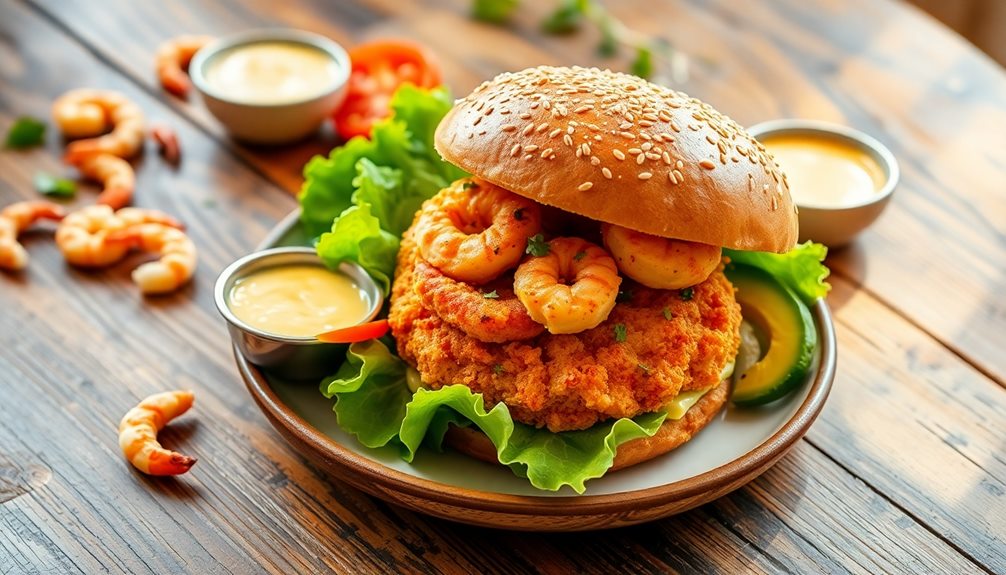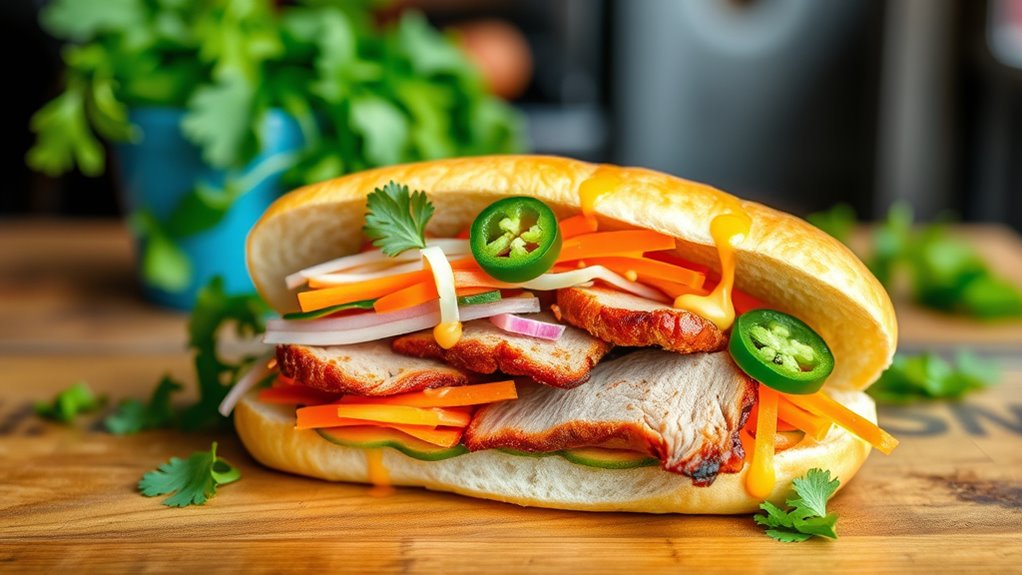

To explore Vietnamese cuisine at home, try making bánh mì sandwiches filled with regional ingredients like pickled vegetables, fresh herbs, and savory meats. Use a crusty baguette to capture the colonial influence and layer flavors with spicy condiments, pâté, or mayonnaise. Customize it with ingredients from different regions to create your own authentic experience. Keep exploring, and you’ll discover how these simple sandwiches tell a rich culinary story worth trying yourself.
Key Takeaways
- Understand the regional variations of bánh mì, including North Vietnamese pickled vegetables and Southern spicy herbs.
- Use authentic ingredients like crusty baguette, Vietnamese meats, fresh herbs, and pickled vegetables for an authentic taste.
- Incorporate colonial influences by blending French-style baguettes with Vietnamese fillings and condiments.
- Experiment with regional flavors, sauces, and herbs to personalize your bánh mì and explore Vietnam’s culinary diversity.
- Pair your homemade bánh mì with refreshing beverages to enhance the cultural and sensory experience.

A bánh mì sandwich is a perfect example of Vietnamese cuisine‘s vibrant blend of flavors and textures. When you make it at home, you get to explore the rich tapestry of regional ingredients that define this iconic dish. Each region in Vietnam brings its own twist, from the pickled vegetables of the North to the spicy herbs of the South. Understanding the culinary history behind bánh mì helps you appreciate why certain ingredients are included and how they’ve evolved over time. This knowledge guides you in selecting authentic components, making your homemade version truly representative of Vietnam’s culinary traditions.
A bánh mì showcases Vietnam’s vibrant regional flavors and culinary history.
To start, focus on sourcing the right ingredients that reflect Vietnam’s regional diversity. For the bread, a crisp baguette with a light, airy crumb is essential—fundamentally introduced by French colonists, yet adapted over generations. The fillings typically include a combination of savory meats like pork, chicken, or pâté, often seasoned with garlic, lemongrass, and fish sauce, which are staples in Vietnamese cooking. Vegetables play a key role, with pickled daikon and carrots adding tang and crunch, while fresh herbs like cilantro, basil, and mint introduce brightness and aroma. Chili peppers and mayonnaise or pâté spread on the bread provide spice and creaminess, balancing the flavors.
Understanding the culinary history of bánh mì enriches your experience. It’s more than just a sandwich; it’s a reflection of Vietnam’s colonial past, indigenous ingredients, and cultural exchanges. The French influence is evident in the baguette, but Vietnamese flavors and ingredients have been layered in to make it uniquely their own. Over time, street vendors and home cooks have adapted bánh mì to include regional ingredients, giving each variation its distinct character. Knowing this history encourages you to experiment with ingredients that resonate with your taste and local availability, whether that means adding a dash of sriracha for heat or using locally sourced meats and vegetables. Additionally, awareness of juice tips and tricks, such as using freshly squeezed or bottled juice, can inspire you to serve refreshing beverages alongside your bánh mì for a more complete meal.
Making bánh mì at home allows you to connect with this culinary history and regional diversity. You can choose ingredients that tell a story—perhaps incorporating a spicy chili sauce from the Central Highlands or using herbs native to your area. The process becomes a journey through Vietnam’s food landscape, where each bite offers a taste of its vibrant culture. In essence, crafting your own bánh mì becomes a celebration of Vietnamese culinary history and regional flavors, inviting you to savor its rich heritage with every delicious, crunchy, tangy, and fragrant bite.
Top picks for "explor vietnamese cuisine"
Open Amazon search results for this keyword.
As an affiliate, we earn on qualifying purchases.
Frequently Asked Questions
Can I Substitute Traditional Vietnamese Ingredients With Local Alternatives?
Yes, you can definitely do ingredient swaps for flavor substitutions when making bánh mì at home. Use local alternatives like grilled chicken instead of traditional pork, or substitute pickled vegetables with store-bought pickles or fresh slaw. For bread, opt for a baguette if authentic bánh mì bread isn’t available. These substitutions will still give you a tasty sandwich, though it might have a slightly different flavor profile.
What Are the Best Bread Types for Authentic Bánh Mì?
It’s no coincidence that a crispy, airy baguette is ideal for bánh mì, capturing its authentic texture. If you prefer gluten-free options, consider sourdough alternatives or gluten-free baguettes that mimic that light crispness. Look for bread with a thin, crusty exterior and a soft interior, which holds the fillings well. Your local bakery might surprise you with suitable options, ensuring your bánh mì remains truly authentic and delicious.
How Long Can I Store Homemade Bánh Mì Fillings?
You can store homemade bánh mì fillings in an airtight container in the refrigerator for up to 3 to 4 days. For food preservation and storage safety, make sure to keep the fillings chilled and consume them within this timeframe. If you want to keep them longer, consider freezing them for up to 1 to 2 months, but always reheat thoroughly before eating to guarantee safety.
Are There Vegetarian or Vegan Bánh Mì Options?
Yes, you can enjoy vegetarian or vegan bánh mì options. You might use vegan protein options like marinated tofu, tempeh, or seitan as the filling. For spreads, opt for dairy-free options such as hummus, vegan mayo, or avocado. These alternatives keep your bánh mì flavorful and satisfying while aligning with a plant-based diet. Feel free to customize your sandwich with fresh vegetables and herbs for an authentic taste.
What Are Some Regional Variations of Bánh Mì in Vietnam?
You’ll find regional flavors and street variations of bánh mì across Vietnam, each offering a unique twist. In Hanoi, the sandwiches often feature pate, cold cuts, and pickled vegetables, emphasizing rich, savory flavors. In Ho Chi Minh City, street vendors add a mix of grilled meats or seafood, with vibrant herbs and spicy condiments. Central Vietnam’s bánh mì might include local ingredients like pork belly or seafood, reflecting diverse regional tastes.
Conclusion
Now that you’ve mastered making bánh mì sandwiches at home, you can impress friends with authentic flavors anytime. Imagine yourself savoring this perfect blend of crispy bread, savory meats, and fresh herbs—just like a street vendor in Saigon. With a pinch of your own creativity, you’ll keep this culinary adventure alive. So go ahead, whip up your own bánh mì and enjoy a taste of Vietnam’s vibrant culture—no time machine required!