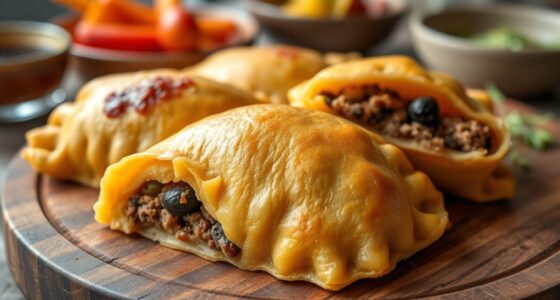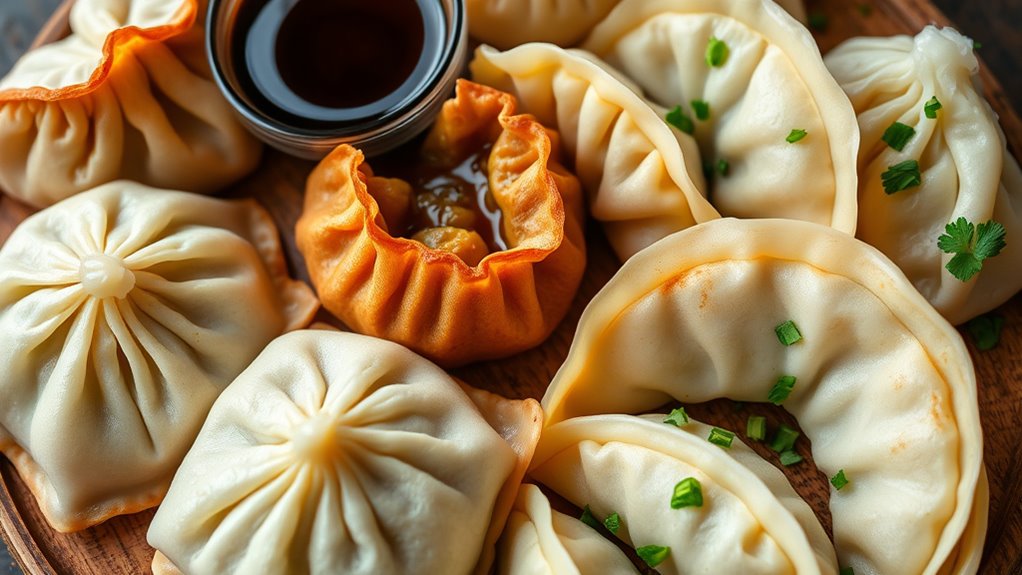

The world of dumplings offers a rich variety you can explore, from Polish pierogi filled with potatoes and cheese to Japanese gyoza with ground pork and garlic. You’ll find Himalayan momo with spicy meats or vegetables, reflecting regional flavors. Each type represents local ingredients and cultural influences, showcasing innovation through fusion fillings and techniques. If you’re curious about these diverse styles and their stories, there’s much more to discover beyond the surface.
Key Takeaways
- Dumplings are a diverse culinary tradition worldwide, each with unique regional fillings, ingredients, and wrapping techniques.
- Varieties like pierogi, gyoza, and momo reflect local flavors, ingredients, and cultural influences.
- Fusion innovations blend global flavors, expanding the traditional boundaries of dumpling fillings.
- Regional differences showcase local tastes, history, and agricultural products through distinct styles and techniques.
- Dumplings serve as cultural symbols, connecting diverse communities through shared enjoyment and culinary heritage.
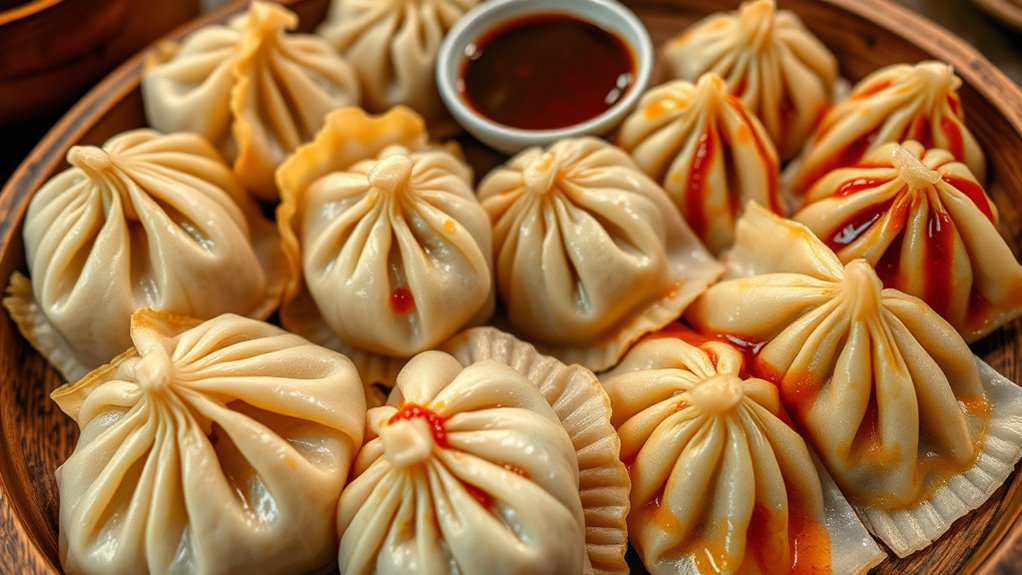
Dumplings are a beloved culinary tradition found in many cultures around the world, each with its unique flavors and techniques. Whether you’re biting into a delicate gyoza, a hearty pierogi, or a spicy momo, you’re tasting centuries of tradition and regional influence. One of the most exciting aspects of dumplings is their endless variety of fillings, especially fusion fillings that blend flavors from different cuisines. Imagine combining the richness of a Chinese pork and cabbage dumpling with the bold spices of Indian curry—these innovative fusion fillings push the boundaries of traditional recipes, offering new taste experiences. They reflect the creativity of cooks who adapt and experiment, making dumplings not just comfort food but also a canvas for culinary innovation. Regional variations further showcase how local ingredients and cultural preferences shape dumpling styles, giving each type its distinct identity. For example, in Eastern Europe, pierogi are often filled with potatoes, cheese, or fruit, reflecting local agricultural products and sweet or savory preferences. In contrast, Japanese gyoza typically feature ground pork, cabbage, and garlic, with a thinner wrapper that’s pan-fried to perfection. Meanwhile, Himalayan momo might include fillings like spicy meats or vegetables, influenced by the flavors of Nepal and Tibet. These regional variations demonstrate how dumplings adapt to local tastes and ingredients, making each version a reflection of its cultural environment. Additionally, the wrapping techniques used in different regions contribute to the unique texture and appearance of each type. When you explore different kinds of dumplings, you notice how the fillings tell a story about the region’s history, available ingredients, and culinary influences. You might find yourself savoring a Polish pierogi filled with wild mushrooms, or a Korean mandu with kimchi and beef, each offering a taste of local tradition. The versatility of dumplings allows for endless customization, whether you prefer vegetarian, seafood, or meat-based fillings, and the choice of spices and seasonings further enhances their regional character. As you try different types, you’ll see how fusion fillings and regional variations make dumplings dynamic and adaptable, keeping them relevant and beloved across generations. Their ability to incorporate global flavors while honoring local customs makes dumplings a true culinary bridge, connecting cultures through shared enjoyment. So, whether you’re making them at home or savoring them at a street stall, you’re part of a rich, evolving tradition that celebrates diversity, creativity, and comfort in every bite.
Top picks for "world dumpling pierogi"
Open Amazon search results for this keyword.
As an affiliate, we earn on qualifying purchases.
Frequently Asked Questions
What Is the History Behind the Origin of Dumplings Worldwide?
Dumplings have a rich history shaped by diplomatic history and culinary evolution. You’ll find their origins trace back thousands of years in China, where they symbolized prosperity. As trade routes expanded, dumplings spread globally, adapting to local flavors. Their evolution reflects cultural exchanges and diplomatic ties, making them more than just food—they’re a history of connection and innovation. You can see how each region adds its unique touch, enriching the global dumpling story.
How Are Different Dumpling Dough Recipes Prepared?
You might think dumpling dough recipes are simple, but they reveal cultural nuances through dough mixing techniques. For instance, some use flour and water kneaded until smooth, others incorporate eggs or fats for elasticity. Filling preparation methods also influence dough choice—softer doughs suit steamed dumplings, while firmer ones work well for frying. Exploring these variations shows how ingredients and techniques shape each dumpling’s unique texture and flavor.
What Are the Health Benefits of Consuming Dumplings Regularly?
Eating dumplings regularly can boost your nutritional value by providing essential nutrients like protein, vitamins, and minerals from the fillings. They also support digestion benefits because the dough and fillings contain fiber and probiotics that help your gut stay healthy. Plus, when prepared with fresh ingredients, dumplings make a tasty, wholesome addition to your diet, offering energy and supporting overall well-being.
Which Regional Variations of Dumplings Are Most Popular Globally?
Imagine a world map dotted with tiny dumpling icons, each representing a regional style. You’ll find Gyoza from Japan, Pierogi from Poland, and Momo from Tibet, each with unique filling and folding techniques. These regional styles hold deep cultural significance, making them popular globally. As you try them, you’ll see how these dumplings connect cultures through tradition and flavor, mesmerizing food lovers everywhere.
How Can I Make Gluten-Free Dumplings at Home?
To make gluten-free dumplings at home, start with gluten-free flour like rice or tapioca flour. Mix it with warm water and a pinch of salt to form a dough. Use an alternative binding agent, such as xanthan gum or mashed potatoes, to help hold the dumplings together. Roll out the dough, fill with your favorite ingredients, then steam, boil, or pan-fry for delicious gluten-free dumplings.
Conclusion
Just like dumplings, life is a delicate balance of wrapping up traditions and embracing new flavors. Each fold holds stories of culture, resilience, and hope—reminding you that unity can be found in diversity. As you savor these bites, see them as symbols of connection, blending different worlds into one satisfying experience. Embrace the journey of discovery, knowing that every dumpling you enjoy is a small act of unity in a world craving understanding.