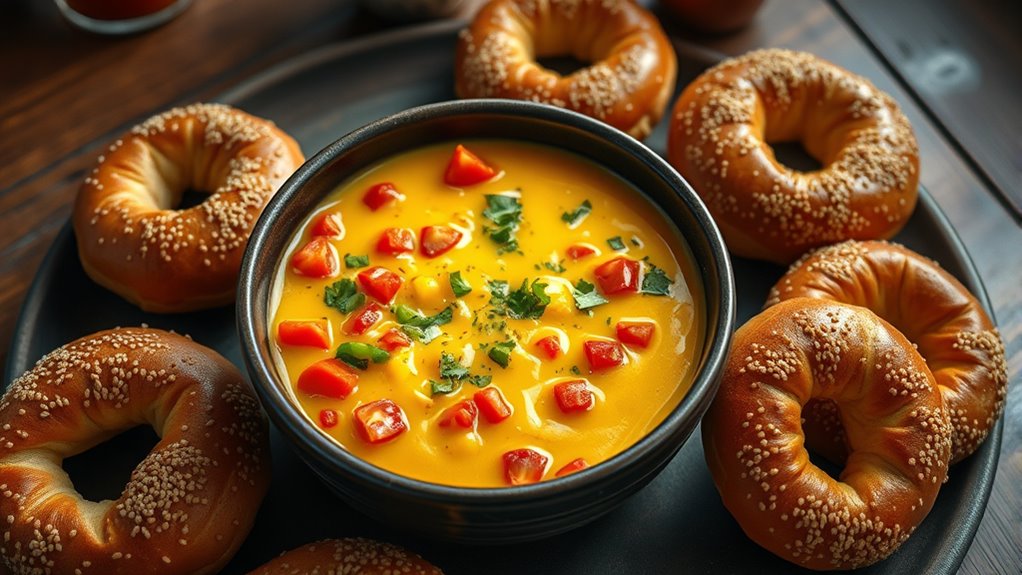

A Turkish breakfast spread featuring menemen and simit offers a vibrant taste of culture and tradition. Menemen, a flavorful egg scramble with regional herbs and spices, brings warmth and connection to your table, while simit’s chewy, sesame-crusted bread symbolizes Turkey’s rich culinary history. Both dishes reflect regional diversity and social gathering, embodying hospitality and shared moments. Keep exploring to discover more about these iconic staples and their cultural significance.
Key Takeaways
- Menemen is a regional Turkish egg scramble with ingredients like tomatoes, peppers, and herbs, symbolizing local flavors and traditions.
- Simit is a iconic Turkish bread with a chewy texture and crunchy crust, often enjoyed with cheese, tea, or spreads.
- The Turkish breakfast spread emphasizes community, hospitality, and shared moments, reflecting regional and cultural diversity.
- Menemen’s quick preparation and versatility make it a staple, fostering family bonds and social connection.
- Simit represents Turkish street life and social interaction, commonly sold by vendors and paired with various accompaniments.

Have you ever wondered what makes Turkish breakfast so irresistible? It’s not just the delicious flavors but also the cultural significance behind each dish. Turkish breakfast isn’t merely a meal; it’s a cherished tradition that brings people together, celebrating community, family, and hospitality. Menemen, a flavorful egg scramble, and simit, a sesame-crusted bread, are two staple components that embody this rich cultural tapestry. Their popularity isn’t uniform across Turkey; instead, they showcase regional variations that reflect local tastes and ingredients. For example, in the Aegean region, you might find menemen with a touch of fresh herbs like oregano or thyme, while in southeastern Turkey, it could include more spicy peppers or tomatoes. These subtle differences highlight how deeply regional flavors influence the national breakfast culture.
Turkish breakfast varies regionally, highlighting local flavors and culinary traditions across Turkey.
Menemen holds a special place in Turkish households because it’s quick to prepare, versatile, and full of flavor. When you sit down to enjoy menemen, you’re partaking in a dish that’s been passed down through generations, often with family gathered around. It’s typically made with eggs, tomatoes, green peppers, and onions, cooked gently in olive oil or butter. You might find variations that include cheese or spices, depending on the region or personal preference. The act of making menemen isn’t just about nourishment; it’s a ritual that fosters connection, whether it’s a leisurely weekend breakfast or a weekday start. Its cultural significance extends beyond the kitchen, symbolizing warmth, hospitality, and shared moments. Additionally, the regional ingredients and techniques used in menemen highlight the regional diversity within Turkish cuisine.
Simit, on the other hand, is more than just bread. It’s a symbol of Turkish street life and social interaction. As you bite into a crispy, sesame-coated simit, you’re experiencing a tradition rooted in history and regional variations. In Istanbul, vendors sell simit from street carts, often paired with a slice of cheese or a cup of Turkish tea, creating a simple yet satisfying snack. In other regions, you might find different twists—sometimes topped with molasses or served alongside fresh vegetables. The process of baking simit involves a specific technique, giving it a distinctive chewy texture and crunchy crust. Its cultural significance lies in its role as a common breakfast item, enjoyed by people from all walks of life, whether in bustling markets or quiet neighborhoods.
Together, menemen and simit represent more than just food—they embody Turkish culture, regional diversity, and the joy of communal dining. When you partake in this breakfast spread, you’re experiencing a tradition that’s deeply rooted in history and regional expression. Each bite connects you to the people and places that have shaped Turkish breakfast into what it is today—vibrant, diverse, and full of meaning.
Top picks for "turkish breakfast spread"
Open Amazon search results for this keyword.
As an affiliate, we earn on qualifying purchases.
Frequently Asked Questions
What Are the Origins of Menemen?
You’ll find that menemen originated in Turkey, evolving as a staple of Turkish breakfast traditions. Its roots trace back to the coastal regions, where fresh tomatoes, peppers, and eggs became a simple yet flavorful dish. The cultural significance of menemen lies in its communal aspect, often shared among family and friends. It embodies Turkish hospitality, emphasizing the importance of sharing a hearty, delicious meal that connects people and preserves tradition.
How Is Authentic Turkish Simit Made?
Think of making authentic Turkish simit like crafting a piece of art; it starts with simple ingredients like flour, water, sugar, yeast, and sesame seeds. Traditional baking involves kneading the dough until smooth, shaping it into rings, then coating with sesame seeds before baking. This process gives simit its unique crispy crust and chewy interior, making it a beloved staple that’s both traditional and timeless.
Can Menemen Be Made Vegan?
Yes, you can make menemen vegan by using plant-based substitutions. Instead of eggs, try tofu scramble or chickpea flour for a similar texture. You can also add vibrant, plant-based toppings like tomatoes, peppers, spinach, and onions to enhance flavor. Season with turmeric, nutritional yeast, or kala namak for an eggy taste. This way, you enjoy a delicious, plant-based menemen without compromising on flavor or tradition.
What Are Common Variations of the Turkish Breakfast?
Imagine your breakfast as a canvas, where regional flavor and modern twists create vibrant masterpieces. Common variations include adding cheese, herbs, or spicy peppers to menemen, or serving it with fresh olives and tomatoes. In coastal areas, seafood often graces the table, while urban households might incorporate avocado or feta for a contemporary touch. These adaptations let you enjoy Turkish breakfast with a unique, personalized flair every morning.
How Do You Properly Serve Menemen and Simit?
To serve menemen and simit properly, follow traditional presentation and serving etiquette. Place the menemen in a hot, shallow dish, garnished with fresh herbs and served with crusty bread for dipping. Present the simit on a platter, ideally with a side of fresh vegetables or cheese. Serve everything on a wooden or ceramic tray, ensuring each item is accessible. Keep the dishes warm and encourage sharing to honor the communal spirit of Turkish breakfast.
Conclusion
As you savor the vibrant flavors of menemen and fresh simit, remember that Turkish breakfast isn’t just about food—it’s about connecting with tradition and community. Some say sharing a meal like this fosters unity, proving that simple acts can create lasting bonds. So, next time you enjoy this spread, consider it more than nourishment; it’s a reminder that embracing tradition can deepen your sense of belonging and enrich your everyday life.