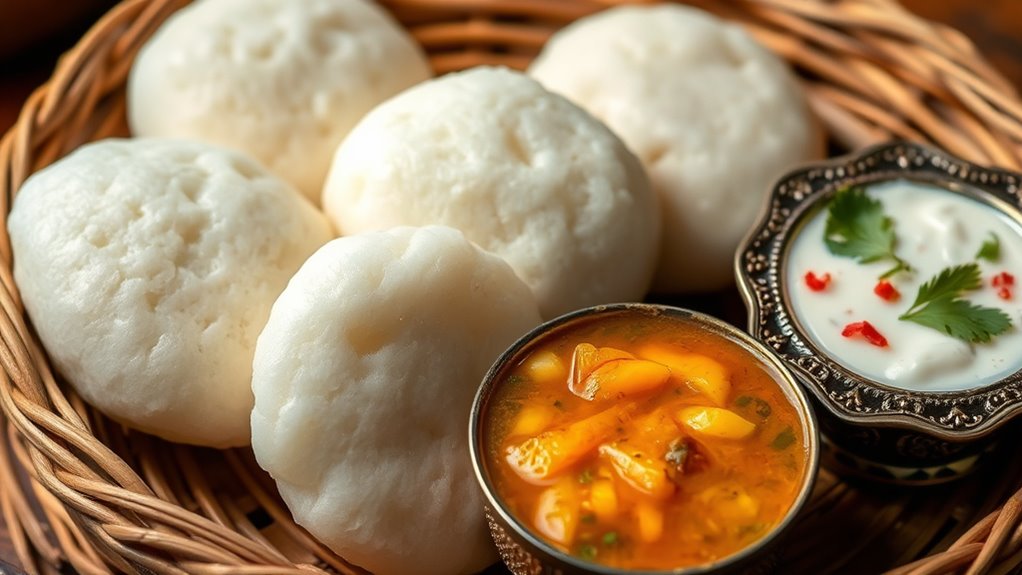

South Indian cuisine features iconic dishes like idli, sambar, and coconut chutney. Idli are soft, steamed rice cakes made from fermented batter, while sambar is a spicy, tangy lentil stew with vegetables. Coconut chutney offers a cool, creamy complement to these flavors. These dishes showcase traditional fermentation, spices, and fresh ingredients that have been passed down through generations. Exploring more will reveal the rich culinary artistry behind these beloved staples.
Key Takeaways
- Idli are soft, steamed rice and urad dal cakes, often served with sambar and coconut chutney.
- Sambar is a spicy, tangy lentil stew cooked with vegetables, commonly paired with idli and dosa.
- Coconut chutney is a cooling, creamy side made from fresh coconut, green chilies, and spices.
- These dishes are staple components of South Indian breakfast and festive meals.
- Their preparation emphasizes fermentation, blending flavors, and traditional cooking techniques.

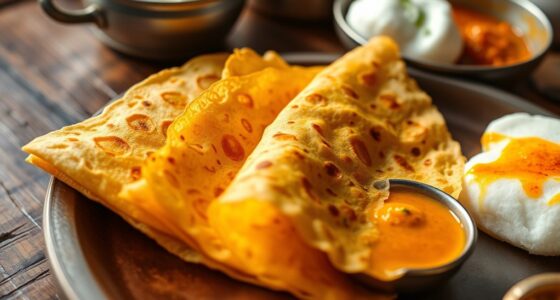
South Indian cuisine offers a vibrant and diverse array of flavors that reflect the rich cultural heritage of the region. One of the most iconic dishes you’ll encounter is dosa, a thin, crispy pancake made from fermented rice and urad dal (black gram). When exploring dosa varieties, you’ll find options like masala dosa, stuffed with spiced potatoes, or paper dosa, which is extra thin and crispy. The process of making these dosas involves traditional cooking techniques that have been passed down through generations. You soak rice and lentils, grind them into a smooth batter, and allow it to ferment overnight, resulting in a tangy flavor and perfect texture. This fermentation process is vital, as it develops the dosa’s characteristic lightness and crispness. When cooked, the batter transforms into a golden, lacy edge with a soft interior, ideal for filling with various tasty fillings.
You might also try different dosa styles that highlight the regional culinary artistry. For instance, rava dosa uses semolina instead of rice, resulting in a slightly different texture and flavor. Another variation is the set dosa, which is smaller and softer, often served in a stack with spicy chutneys. Regardless of the type, the traditional cooking techniques involve spreading the batter thinly on a hot griddle and cooking it until crispy, often flipping it to ensure even cooking. The skill lies in achieving the perfect balance of crispness and softness, which is a hallmark of authentic dosas. These techniques require experience, patience, and a good understanding of heat control—skills that chefs have refined over centuries.
Mastering dosa techniques involves spreading batter thinly on a hot griddle for perfect crispness and softness.
As you enjoy your dosa, you’ll notice how it pairs beautifully with classic South Indian accompaniments like sambar— a spicy, tangy lentil stew filled with vegetables—and coconut chutney, which adds a fresh, cooling contrast. The combination of crispy dosa with these flavorful sides creates a harmonious meal that’s both satisfying and light. The rich flavors of the sambar, with its blend of tamarind and spices, complement the subtle fermentation taste of the dosa, while the coconut chutney’s creamy texture balances the dish perfectly.
In essence, mastering dosa varieties using traditional cooking techniques allows you to appreciate the depth of South Indian culinary craftsmanship. It’s about more than just eating; it’s about experiencing a centuries-old tradition that celebrates simple ingredients transformed into a culinary art form. The next time you indulge in a crispy dosa, remember the careful fermentation, the precise cooking, and the cultural significance behind every bite.
Frequently Asked Questions
What Are the Traditional Variations of Idli Across South Indian Regions?
You’ll find that traditional idli varies across South Indian regions, shaped by regional ingredients and cultural influences. In Tamil Nadu, you get plain white idlis, while Karnataka offers ragi idlis made from millet. Andhra Pradesh features spicy variants with chili, and Kerala adds coconut for extra flavor. These differences reflect local tastes and available ingredients, making each region’s idli unique while maintaining its core steamed rice or millet base.
How Is Sambar Prepared Differently in Tamil Nadu and Kerala?
Imagine a flavorful river flowing through two lands. In Tamil Nadu, sambar is a hearty stew simmered with regional spices like coriander and lentils, often thickened and served with a burst of tangy tamarind. In Kerala, it’s lighter, with coconut and a splash of coconut oil, cooked with a different blend of spices, giving it a subtly sweet aroma. Your taste buds will sense the unique regional techniques shaping each version.
What Are Alternative Ingredients for Coconut Chutney for Allergies?
If you’re allergic to coconut, try dairy substitutes like yogurt or tahini for creaminess, or use roasted gram flour for a nut-free option. You can also blend ripe tomatoes or roasted bell peppers to add flavor and moisture. These alternatives keep your chutney delicious and safe, allowing you to enjoy it without worries. Experiment with these ingredients to find a tasty, allergy-friendly version suited for your needs.
How Do Age and Diet Influence the Choice of South Indian Breakfast Foods?
As you age, your digestion changes, making certain South Indian breakfast foods more suitable than others. You might find lighter, easily digestible options better, especially if you have dietary restrictions or sensitivities. Younger you might enjoy spicy or heavy dishes, but now, selecting foods that support your current digestion and health needs becomes essential. Stay mindful of these changes, and your mornings will remain both flavorful and gentle on your stomach.
What Are Common Accompaniments Served With Idli and Sambar?
You typically enjoy idli and sambar with dipping sauces like coconut chutney or tomato chutney. Some people also serve side salads, such as chopped onions, tomatoes, or a simple vegetable salad, to add freshness and crunch. These accompaniments enhance the flavors and textures of your meal, making it more satisfying. Feel free to experiment with different dipping sauces and side salads to find your perfect combination.
Conclusion
South Indian cuisine offers a delightful mix of flavors, from fluffy idlis to savory sambar and coconut chutney. These dishes not only tantalize your taste buds but also reflect the rich cultural heritage of the region. Did you know that over 60% of South Indians consume idli daily? Embrace these traditional flavors and experience a cuisine that’s both delicious and deeply rooted in history. Plunge into, and let your palate explore this vibrant culinary world!