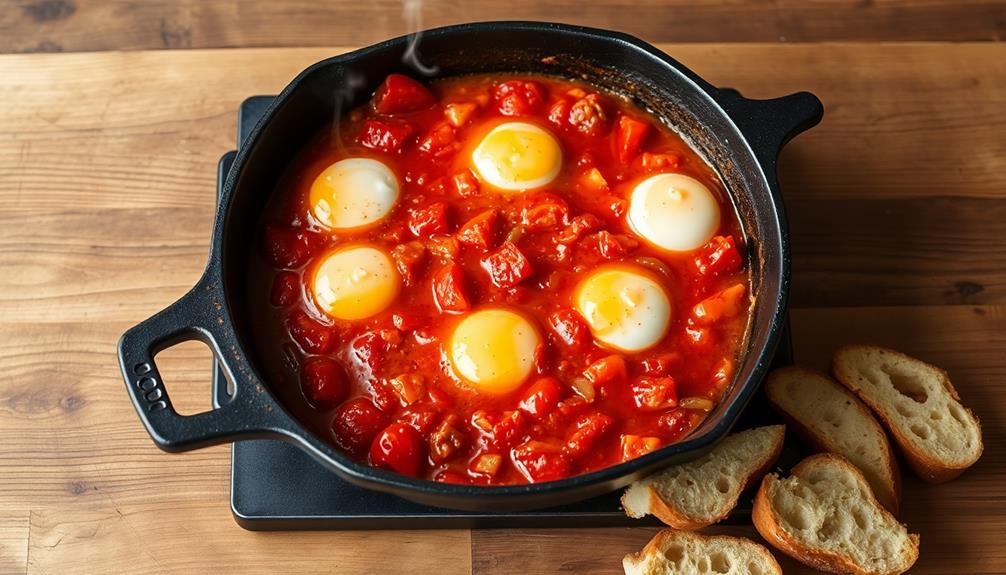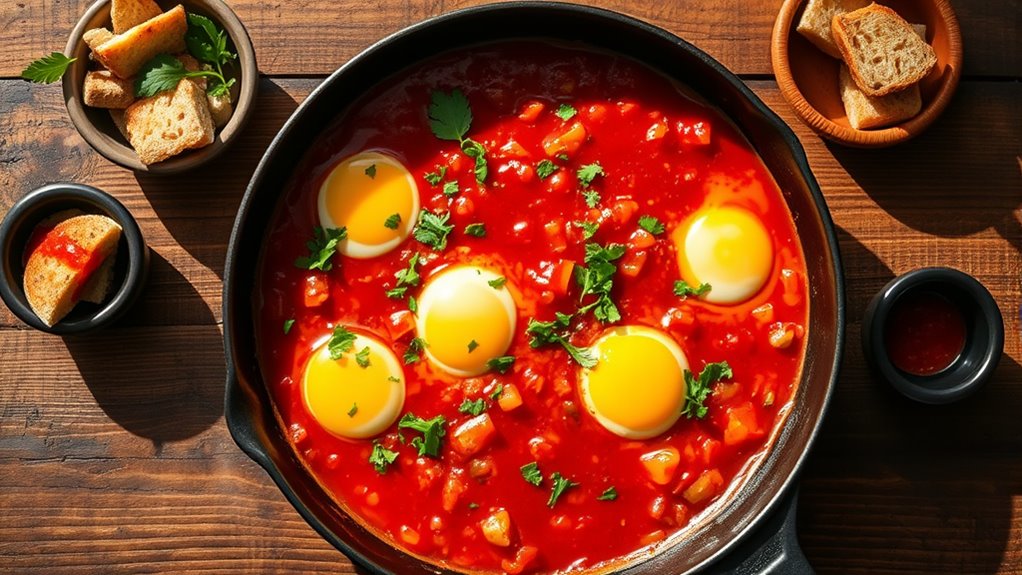

Shakshuka offers a world of delicious variations based on regional flavors and toppings. You can spice it up with cumin, paprika, or harissa for heat, or keep it milder with fresh herbs like parsley or cilantro. Toppings differ across regions, from olives and preserved lemon to feta and fried eggs, reflecting local traditions. The dish’s flexibility lets you personalize it to your taste and pantry. Keep exploring to discover how you can craft your own unique shakshuka experience.
Key Takeaways
- Traditional shakshuka features cumin, paprika, and chili powder, but regional variations include cinnamon, harissa, or coriander for unique flavors.
- Toppings vary globally, such as fresh herbs in Israel, preserved lemon in North Africa, olives in Tunisia, and feta in the Middle East.
- Regional influences shape shakshuka’s flavor profile, with ingredients like harissa, preserved lemon, or labneh reflecting local culinary traditions.
- Customizations include milder options with herbs and lemon or spicier versions with harissa or cayenne, tailored to taste and region.
- The dish’s versatility allows for personalized and cultural variations, celebrating its rich heritage and diverse global adaptations.

Shakshuka, a beloved Middle Eastern breakfast dish, has gained popularity worldwide for its bold flavors and comforting warmth. When making shakshuka, you have the opportunity to explore a variety of spice combinations that define its character. Traditional recipes often feature a blend of cumin, paprika, and chili powder, creating a smoky, mildly spicy base. But depending on the region or personal preference, you can adjust these spices—adding cinnamon for sweetness, harissa for heat, or coriander for earthiness. The key is balancing the spices to enhance the rich tomato sauce without overpowering the delicate eggs. As you experiment with different spice mixes, you’ll discover how each variation shifts the dish’s flavor profile, making it uniquely yours. Additionally, understanding how dream symbols relate to personal experiences can inspire new culinary ideas or reflect your cultural influences, enriching your appreciation of regional dishes like shakshuka.
Regional toppings also play a significant role in shaping shakshuka’s identity. In Israel, it’s common to sprinkle fresh herbs like cilantro or parsley on top, adding brightness and freshness. North African versions might incorporate preserved lemon or a drizzle of harissa for extra heat and tang. In Tunisia, you might find it served with olives or a dash of harissa oil, giving it a savory, slightly spicy kick. Middle Eastern countries often add crumbled feta or labneh, which adds creaminess and a salty contrast to the tomato sauce. You can also top shakshuka with sliced onions, pickled vegetables, or even a fried egg for added texture and flavor. These regional toppings are not just garnishes—they’re integral ingredients that reflect local tastes and culinary traditions.
As you prepare shakshuka, think about how these regional toppings and spice combinations can influence the final dish. For instance, if you prefer a milder, herb-forward version, focus on fresh parsley, cumin, and a touch of lemon juice. If you’re craving something spicier, incorporate harissa or cayenne pepper, and top it with spicy olives or pickled vegetables. The versatility of shakshuka allows you to customize it based on what’s available in your pantry or what regional flavors inspire you. The beauty of this dish is its adaptability—each variation tells a story and offers a new taste experience. So, don’t hesitate to experiment with different spice combinations and toppings; this way, you’ll craft a shakshuka that’s perfectly suited to your palate while honoring its rich, regional roots.
Top picks for "global breakfast shakshuka"
Open Amazon search results for this keyword.
As an affiliate, we earn on qualifying purchases.
Frequently Asked Questions
What Are the Origins of Shakshuka?
You’ll find that shakshuka’s origins trace back to North Africa, with strong Mediterranean influences shaping its flavors. Its historical origins are often linked to the Ottoman Empire and Arab cuisine, spreading across the Middle East and North Africa. You can see how the dish evolved through regional adaptations, blending spices and ingredients from different cultures. This rich history makes shakshuka a beloved, flavorful breakfast that connects you to centuries of culinary tradition.
Can Shakshuka Be Made Vegan?
Yes, you can make shakshuka vegan by replacing eggs with plant-based protein options like tofu or chickpeas. Use vegan cheese alternatives to add creaminess and flavor. Incorporate flavorful spices and tomato sauce as usual. This way, you enjoy a hearty, satisfying dish without animal products. It’s easy to customize, so feel free to experiment with different vegan cheese options and plant-based proteins to suit your taste.
How Long Does Shakshuka Typically Last in the Fridge?
You’ll be glad to know that shakshuka typically lasts 3 to 4 days in the fridge. That’s enough time to enjoy leftovers without worry. Store it in an airtight container to keep freshness. When reheating, do so gently over low heat or in the microwave, covering it to prevent splatters. Always check for any signs of spoilage before eating to ensure safety and flavor.
Are There Regional Differences in Shakshuka Recipes?
Yes, regional differences in shakshuka recipes are common. You’ll notice variations in spice profiles, like smoky paprika in North Africa or harissa in Tunisia, and ingredient substitutions, such as different types of peppers or tomatoes. These regional twists give each shakshuka a unique flavor, so you can customize yours based on local ingredients or your spice preferences, making it a versatile and delicious breakfast option.
What Are Suitable Side Dishes for Shakshuka?
Looking for perfect sides for shakshuka? Have you considered serving fresh pita bread or warm crusty toast to scoop up the flavorful sauce? Complementary breakfast dishes like a simple cucumber and tomato salad or a side of hummus can enhance your meal. These options add balance and variety, making your shakshuka breakfast more satisfying. Why not try a mix of these sides to create a well-rounded, delicious start to your day?
Conclusion
Did you know that shakshuka has become so popular worldwide that it’s now featured in over 50 countries? Whether you prefer it spicy, with added vegetables, or topped with cheese, there’s a variation for everyone. Exploring these global takes not only diversifies your breakfast options but also connects you to Middle Eastern traditions. So next time you crave a flavorful start, try a new shakshuka twist—you might just discover your new favorite morning dish.