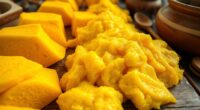
To guarantee tender beef in rendang, it’s vital to manage coconut fat partitioning during cooking. Start by pouring coconut milk into the pot and simmer gently, stirring often. As the dish cooks, the fat naturally rises or sinks, creating a rich, oily layer that coats the meat. Proper temperature control helps this fat emulsify, tenderizing the beef and thickening the gravy. Mastering this process enhances flavor and texture—keep going to learn even more techniques.
Key Takeaways
- Proper blending of spices creates a flavorful paste that integrates with coconut milk, essential for tender rendang.
- Gentle simmering of coconut milk allows fat to separate naturally, aiding in meat tenderization.
- Managing heat prevents fat from burning, ensuring proper fat partitioning and rich flavor development.
- Coconut fat coats the beef, locking in moisture and enhancing tenderness during slow cooking.
- Emulsification of fat with spices and meat produces a thick, aromatic gravy key to authentic rendang texture.

Rendang, a flavorful Indonesian dish, relies heavily on the way coconut fat partitions during cooking. Achieving that perfect balance of flavors and tender beef depends on understanding how the coconut milk’s fat separates and interacts with the spices you use. When preparing rendang, your approach to spice blending and cooking techniques plays a crucial role in how the dish develops its rich, complex taste. You start by carefully selecting a blend of spices—galangal, turmeric, lemongrass, and chilies—that are combined to form a vibrant paste. Proper spice blending ensures that the flavors are well-integrated, which is essential for the depth of flavor in rendang.
Mastering spice blending and cooking techniques is essential for rich, flavorful rendang.
As you begin cooking, the way you handle the coconut milk is key. Pour it into the pot and bring it to a gentle simmer, stirring regularly to promote even heat distribution. During this process, the coconut fat begins to separate from the water content, rising to the top or sinking to the bottom depending on the heat and duration. This partitioning is what creates the luscious, oily layer that helps tenderize the beef while infusing it with flavor. Your choice of cooking techniques—such as slow simmering and frequent stirring—encourages this natural separation, ensuring the fat isn’t just floating on top but actively melding with the spices and meat.
You’ll notice that as the cooking continues, the coconut fat coats the beef pieces, locking in moisture and flavor. This is where your skill in managing heat and timing becomes vital. Too high a temperature can cause the coconut fat to burn or separate unevenly, while too low might prevent proper fat partitioning. The goal is to sustain a gentle simmer, allowing the fat to emulsify with the spice mixture, creating a rich, fragrant sauce that clings to the beef. This process also helps break down the connective tissues in the meat, making it tender without falling apart. Temperature control is a critical factor in ensuring the ideal partitioning process occurs. Additionally, understanding the behavior of fats during cooking can help you optimize the dish’s texture and flavor profile.
Throughout cooking, your focus on technique influences how well the coconut fat partitions and integrates. Properly executed, it results in a dish with a thick, aromatic gravy and tender meat, characteristic of authentic rendang. The key is to master the balance: blending your spices thoroughly, controlling your heat, and giving enough time for the fat to naturally separate and meld. This deliberate process transforms simple ingredients into a complex, mouthwatering dish that embodies the essence of Indonesian culinary artistry. Additionally, understanding how coconut fat behaves during cooking is similar to how catering trends optimize flavor profiles and presentation by managing different components for maximum appeal.
Frequently Asked Questions
How Does Coconut Fat Affect Rendang’s Flavor Profile?
Coconut fat plays a key role in shaping rendang’s flavor profile. It releases a rich coconut aroma that permeates the dish, enhancing its depth. As the fat melts, it also helps carry and amplify spices, resulting in flavor enhancement. You’ll notice how the coconut fat‘s smooth, creamy texture adds tenderness to the beef, balancing the spice and making every bite more flavorful and aromatic.
Can Coconut Fat Partitioning Be Adjusted for Dietary Restrictions?
You can adjust coconut fat partitioning for dietary restrictions by exploring coconut fat alternatives like low-fat or plant-based options. Dietary modifications might include reducing the overall coconut fat content or substituting it with healthier fats such as avocado or olive oil. By tailoring the fat distribution, you guarantee the dish remains flavorful while meeting specific health needs. This approach helps you enjoy rendang without compromising your dietary goals.
What Are Common Variations in Rendang Recipes Across Indonesia?
You might think rendang’s just one recipe, but across Indonesia, it’s a culinary chameleon. Each region flaunts unique spice combinations and cooking techniques, from the fiery Minang style to the sweeter flavors in Java. Some add turmeric or lemongrass, others slow-cook for tenderness. These variations mirror local tastes, proving rendang’s versatility—and that no two rendangs are exactly alike, despite everyone’s love for tender, flavorful beef.
How Long Does the Coconut Fat Partitioning Process Typically Take?
When considering coconut fat timing, the partitioning duration can vary depending on your cooking method and heat level. Typically, this process takes about 30 to 45 minutes as the coconut milk reduces and the fat separates from the solids. During this time, you’ll notice the coconut fat gradually rises to the surface, making it easier to skim off and infuse your dish with rich flavor. Keep an eye on it to achieve the perfect tender beef texture.
Does the Quality of Coconut Influence the Tenderness of Beef?
You might wonder if coconut quality affects beef tenderness. Higher-quality coconuts usually have richer, purer coconut fat, which can enhance flavor and moisture retention during cooking. This improved fat quality helps keep beef tender by providing better fat partitioning, resulting in juicier and more tender meat. So, yes, choosing good-quality coconut makes a noticeable difference in achieving tender beef, especially in dishes like rendang.
Conclusion
You might think that the secret to tender rendang lies only in slow cooking, but recent studies suggest it’s actually how coconut fat partitions during the process. As the fat redistributes, it tenderizes the beef and enhances flavor, challenging the idea that heat alone is enough. So next time you make rendang, remember that mastering coconut fat movement could be your key to perfect, melt-in-your-mouth beef every time. It’s science and tradition blending for the best results.