To spice up your hot sauce game, experiment with different peppers, blending mild and fiery varieties for layered heat and flavor. Add ingredients like garlic, fruit, or spices such as cumin or smoked paprika to create unique profiles. Fermentation enhances richness and adds probiotics, making your sauce more complex. Adjust acidity with vinegar or citrus for bright notes. Keep exploring variations, and you’ll discover new favorites that turn simple hot sauces into culinary masterpieces.
Key Takeaways
- Experiment with blending different peppers, including mild and fiery varieties, for layered heat and complex flavors.
- Incorporate additional ingredients like garlic, fruits, or herbs to create unique flavor profiles.
- Use fermentation to develop tangy, rich, and probiotic-enhanced sauces with depth and character.
- Adjust acidity with vinegar or citrus to brighten flavors and balance spiciness.
- Customize spice levels and ingredients to craft a signature hot sauce tailored to personal tastes.
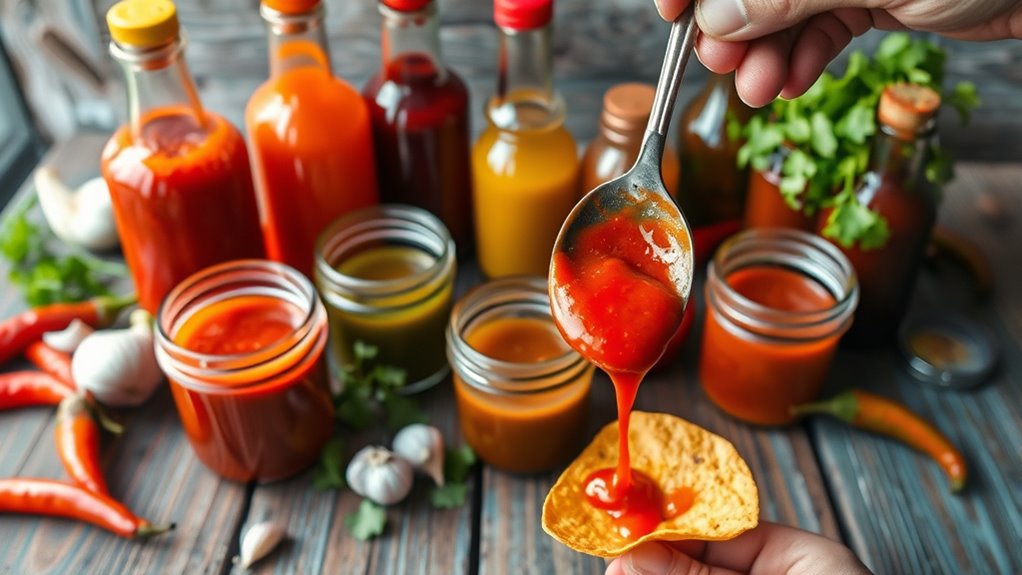
Making your own hot sauce opens up a world of flavor possibilities beyond the store-bought options. When you craft your own, you get to experiment with a variety of flavor combinations that suit your taste buds perfectly. Whether you prefer smoky, tangy, sweet, or fiery, customizing your hot sauce allows you to create something truly unique. One of the best ways to deepen flavors and add complexity is by exploring fermentation techniques. Fermentation not only preserves your hot peppers but also develops a rich, tangy profile that enhances the overall flavor. Plus, it introduces beneficial probiotics, making your hot sauce both delicious and good for your gut.
When you’re starting out, consider blending different peppers to achieve a balanced heat level and flavor profile. Combining milder peppers like poblanos with fiery varieties such as habaneros or Thai chilis can give your sauce depth and a layered spice that’s more interesting than just one type of pepper. Adding ingredients like garlic, onions, or fruit can further diversify your flavor combinations, creating a complex sauce that pairs well with everything from tacos to grilled meats. Don’t shy away from experimenting with herbs and spices—cumin, coriander, or smoked paprika can add smoky, earthy notes that elevate your hot sauce to the next level.
Fermentation techniques are surprisingly simple to incorporate. After blending your peppers with salt and water, you can store the mixture in a jar, covering it with a cloth to allow gases to escape. Over the course of several days to weeks, natural bacteria will ferment the mixture, developing a tangy depth that’s impossible to replicate with raw ingredients alone. During fermentation, you can taste-test periodically and decide when your hot sauce hits the perfect flavor note. This process not only intensifies the flavor but also adds complexity, making each batch a unique culinary experience. Understanding fermentation is key to mastering this technique, as it involves beneficial bacteria that transform your hot sauce into a richer, more nuanced condiment. Once fermentation is complete, blending the mixture again and adjusting with vinegar or citrus juice can brighten the flavor and add acidity.
Creating your own hot sauce isn’t just about heat; it’s about crafting a condiment that reflects your palate. By playing with flavor combinations and embracing fermentation techniques, you release endless possibilities for customization. You get to control the ingredients, spice level, and complexity, transforming simple peppers into a signature hot sauce that’s both fresh and deeply flavorful. With each batch, you learn what works best for your taste and how to balance heat with flavor, making every bottle a personal masterpiece.
Frequently Asked Questions
Can I Use Dried Peppers Instead of Fresh Ones?
Yes, you can use dried peppers instead of fresh ones. Dried peppers are a great option because they offer a concentrated flavor and heat, which can enhance your hot sauce’s overall flavor profile. Just rehydrate the dried peppers in warm water for about 15-20 minutes before blending. This step helps reveal their full potential, ensuring your homemade hot sauce gets the flavor enhancement you’re looking for.
How Long Does Homemade Hot Sauce Last?
Your homemade hot sauce typically lasts about 6 months when stored properly in the refrigerator. Keep an eye out for spoilage indicators like mold, off-odor, or changes in color or texture. To extend its shelf life, make certain you use clean utensils each time you scoop out some. Proper storage in a sealed container minimizes exposure to air, helping prevent spoilage and keeping your hot sauce fresh longer.
What Are Some Natural Thickening Agents?
Think of your hot sauce as a river that needs a gentle dam to control its flow. You can use plant-based thickeners like cornstarch, arrowroot, or xanthan gum for a natural boost, or opt for commercial thickening agents if you prefer consistency. These options help create the perfect texture, ensuring your hot sauce stays lively and inviting, just like a well-managed river flowing smoothly.
Can I Make Hot Sauce Without Vinegar?
Yes, you can make hot sauce without vinegar by using vinegar alternatives like citrus juice or fermented ingredients. Fermentation processes naturally develop acidity and flavor, so you can create a tangy hot sauce by fermenting chili peppers with salt and water. This method not only preserves your peppers but also adds complexity to your sauce, making it a delicious, vinegar-free option that’s healthy and full of flavor.
Is It Safe to Freeze Hot Sauce?
Freezing hot sauce is like giving it a superhero shield—it’s perfectly safe and keeps your flavor explosion intact! Just follow storage tips: use airtight containers, leave some space for expansion, and thaw slowly in the fridge. This way, you preserve the fiery flavor and vibrant color, so your hot sauce stays as bold and delicious as the day you made it. No worries, your fiery concoction is safe and ready whenever you are!
Conclusion
Now that you’ve explored these fiery homemade hot sauce variations, remember: your kitchen is your playground, and heat is your brush. Don’t be afraid to experiment and make each batch uniquely yours—after all, no two sauces should taste the same. With a little creativity, you hold the power to turn simple ingredients into a symphony of spice. So, go ahead—dare to spice things up and turn every meal into an unforgettable adventure!