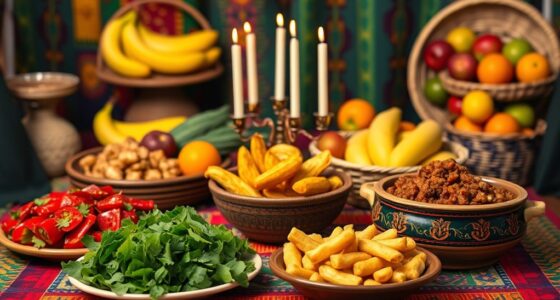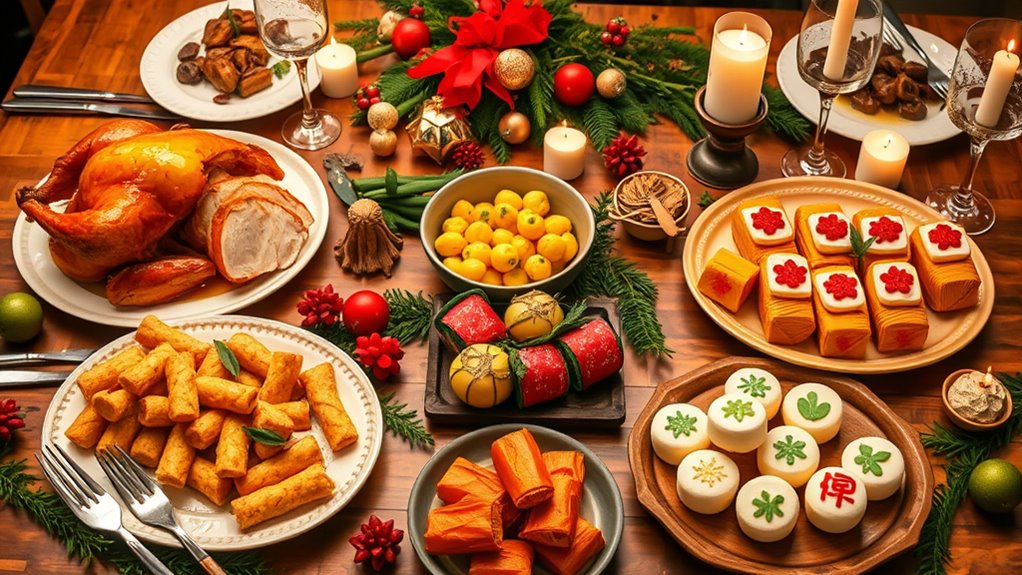

Across the globe, holiday recipes reflect rich cultural traditions, from Europe’s spicy mulled wines and Italy’s sweet panettone to Japan’s festive fried chicken. You’ll find vibrant decorations and foods that symbolize hospitality, joy, and community. Each country showcases unique ingredients and customs that deepen the celebration. By exploring these diverse culinary traditions, you can experience the full spirit of seasonal cheer—if you keep exploring, you’ll uncover even more festive delights.
Key Takeaways
- Explore diverse festive beverages like European mulled wine, North American eggnog, and Asian spiced teas to understand regional holiday traditions.
- Discover traditional holiday dishes such as Italian panettone, Japanese fried chicken, and Scandinavian cured meats, reflecting local cultural significance.
- Incorporate regional decorations and food pairings, like Mexican papel picado or Scandinavian pine branches, to enhance festive authenticity.
- Learn the history and symbolism behind holiday recipes to appreciate their cultural stories and ancestral roots.
- Prepare and share traditional recipes to foster cultural understanding and community spirit during seasonal celebrations.
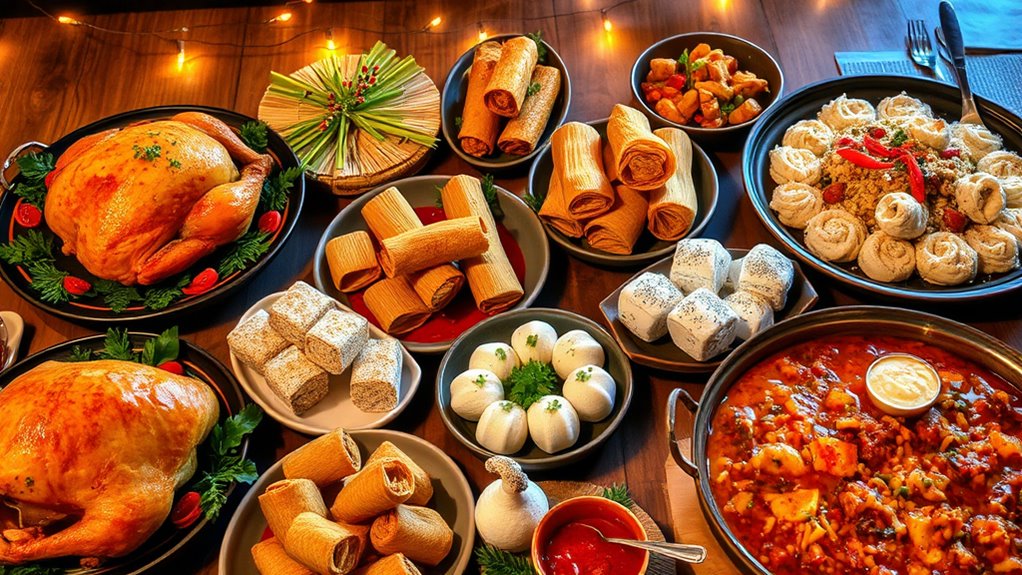
Have you ever wondered how different cultures celebrate the holiday season through food? It’s fascinating to see how each tradition incorporates unique flavors, dishes, and customs into their festivities. One of the most mesmerizing aspects is the way festive beverages play a central role in creating a warm, joyful atmosphere. From spicy mulled wines in Europe to sweet eggnog in North America, these drinks serve as much more than just refreshers—they symbolize hospitality, togetherness, and seasonal cheer. You might find yourself inspired to try your hand at making traditional recipes that have been passed down through generations, complete with their iconic ingredients and presentation styles.
In many cultures, traditional decorations are closely linked with the foods served during the holidays. For example, in Mexico, vibrant poinsettias and colorful papel picado adorn homes, often paired with tables laden with tamales and other regional specialties. These decorations aren’t just for visual appeal; they embody the spirit of celebration and cultural pride. Similarly, Scandinavian countries often feature natural elements like pine branches, berries, and candles, creating a cozy ambiance that complements their holiday fare. When you’re preparing these dishes, incorporating traditional decorations can deepen your connection to the culture, turning your meal into a multi-sensory experience.
Across the globe, holiday foods often reflect the history and environment of each region. In Italy, panettone is a must-have sweet bread brimming with candied fruits and raisins, evoking warmth and abundance. Meanwhile, in Japan, Christmas isn’t complete without a bucket of fried chicken—showing how adaptations of Western traditions blend with local customs. As you explore these recipes, you’ll notice how each dish is more than just sustenance; it’s a story, a symbol, and a celebration rolled into one. The same goes for the festive beverages that accompany these meals, often infused with spices, citrus, or even alcohol, designed to bring comfort and joy during the cold winter months. Additionally, understanding the regulatory requirements for certain ingredients or beverages can enhance your preparation and ensure authenticity.
Trying out these recipes from around the world offers a chance to connect with different cultures, understand their values, and bring a touch of their holiday spirit into your home. Whether you’re savoring a cup of mulled wine while decorating with traditional ornaments or sharing a meal that echoes generations of tradition, you’re participating in a global celebration of togetherness and joy. These culinary traditions remind us that despite our differences, the universal language of food and festivity unites us all during the holiday season.
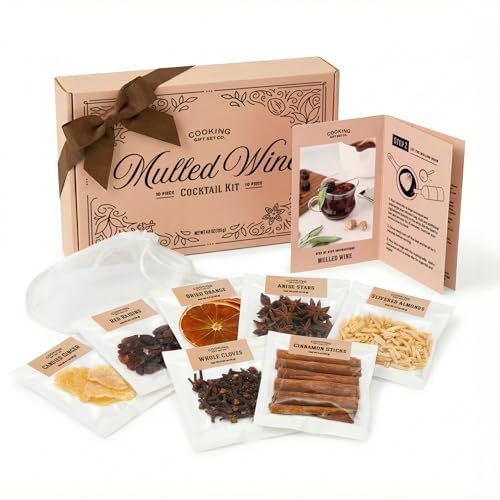
Mulled Wine Kit Mulling Spices for Apple Cider and Infused German Gluhwein Mix | Best Wine Lover Gift for Cozy Nights at Home for New Homeowners
Taste a Cozy European Tradition – An iconic winter cocktail, mulled wine is also known as gluhwein in…
As an affiliate, we earn on qualifying purchases.
As an affiliate, we earn on qualifying purchases.
Frequently Asked Questions
How Do Holiday Recipes Vary Across Different Cultures?
You’ll notice that holiday recipes vary across cultures due to cultural influences and regional variations. For example, some cultures favor sweet desserts, while others emphasize hearty, savory dishes. Ingredients often reflect local availability, like seafood in coastal regions or spices in warmer climates. These differences create unique flavors and traditions that make each holiday celebration special, allowing you to experience diverse culinary expressions around the world.
What Ingredients Are Essential for Authentic Global Holiday Dishes?
Remember, “the proof of the pudding is in the eating.” To make authentic global holiday dishes, you need essential ingredients like diverse spice blends, which bring genuine flavor. Use traditional cooking techniques, such as slow simmering or roasting, to enhance those flavors. Staples often include regional herbs, spices, grains, and proteins. Keep these ingredients in mind, and you’ll create dishes that truly capture the essence of holiday celebrations worldwide.
Are There Any Common Nutritional Considerations in International Holiday Recipes?
You should consider nutritional disparities and dietary modifications when exploring international holiday recipes. Many global dishes feature rich ingredients, which can be high in calories, fats, or sugars. To make them healthier, you might reduce salt or sugar, substitute ingredients for dietary needs, or add more vegetables. This way, you enjoy cultural traditions while respecting nutritional considerations, ensuring everyone can partake comfortably and healthily.
How Can I Adapt Holiday Recipes for Dietary Restrictions?
You can adapt holiday recipes for dietary restrictions by using gluten-free substitutions like almond flour or gluten-free oats. For vegan holiday options, swap eggs with flaxseed or applesauce and use plant-based milks. These changes help you enjoy traditional flavors while respecting dietary needs. Experiment with these ingredients to create inclusive dishes that everyone can savor and celebrate together.
What Are the Best Presentation Tips for International Festive Dishes?
You should focus on plate presentation by arranging your international festive dishes thoughtfully, balancing colors to make the dish visually appealing. Use contrasting colors to highlight different components, and garnish with fresh herbs or spices for added vibrancy. Keep the plate clean and uncluttered, ensuring each element stands out. Incorporate color coordination by selecting complementary hues that reflect the dish’s cultural background, creating an inviting and festive look.

Bauducco Classic Panettone, 24.0 oz (Pack of 1) – Soft and Moist Bread with Candied Fruit and Raisins – Traditional Italian Slow Rise Dough Recipe
MOIST, FRESH, READY TO EAT: Bauducco Classic Panettone is known for its moist, fresh, and aromatic qualities, making…
As an affiliate, we earn on qualifying purchases.
As an affiliate, we earn on qualifying purchases.
Conclusion
As you explore holiday recipes from around the world, you’ll discover unique flavors that bring people together. Did you know that over 70% of global holiday celebrations feature traditional dishes passed down through generations? Embracing these recipes not only enriches your festive table but also connects you to diverse cultures. So, try something new this season—your taste buds and loved ones will thank you for the delicious journey!

Ebi Chahun – Shrimp Flavored Japanese Stir Fried Rice Seasoning, for 3 Servning
1. Pour cooking oil into a hot pan and add beaten egg and stir rightly.
As an affiliate, we earn on qualifying purchases.
As an affiliate, we earn on qualifying purchases.

Bigelow Tea Seasonal Tea Collection, Caffeine Tea Variety Pack Gift Sampler, Holiday Tea Gift Set, 64 Count Box (Pack of 1), 64 Tea Bags Total
Seasonal Tea Collection: 64 Bigelow tea bags that include 8 caffeinated tea bags each of Pumpkin Spice, Salted…
As an affiliate, we earn on qualifying purchases.
As an affiliate, we earn on qualifying purchases.