To make tender Hanukkah brisket, choose a well-marbled cut, sear it on all sides to develop rich flavor, then build a braising base with onions, garlic, carrots, and seasonings like paprika and cumin. Use beef broth or wine for slow cooking at low heat, allowing the meat to absorb flavors and become melt-in-your-mouth tender. Rest and slice against the grain for the best results. Keep going to discover the full process of creating this festive classic.
Key Takeaways
- Choose a well-marbled brisket to ensure tenderness and rich flavor during slow braising.
- Sear the brisket thoroughly to develop caramelized flavors and lock in juices.
- Build a flavorful braising base with onions, garlic, carrots, potatoes, and seasonings like paprika and cumin.
- Cook slowly at low heat to break down connective tissues, resulting in tender, melt-in-your-mouth beef.
- Rest and slice against the grain before serving to maximize juiciness and tenderness, making it a memorable holiday centerpiece.
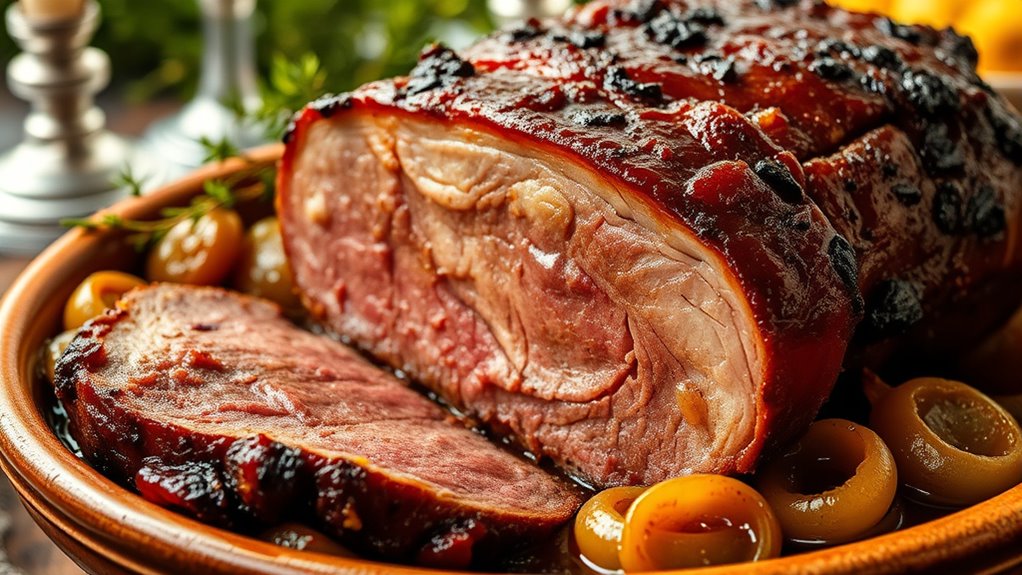
Hanukkah Brisket is a classic and hearty dish that adds warmth and tradition to your holiday celebrations. This time-honored recipe embodies the spirit of Hanukkah, bringing families together around the table to enjoy comforting flavors rooted in history and culture. When preparing this dish, you’ll find that understanding traditional holiday customs and mastering effective cooking techniques make all the difference in creating a memorable meal. The process allows you to connect with centuries-old culinary practices while customizing flavors to suit your taste.
To start, choosing the right cut of beef is essential for achieving tender, flavorful brisket. Look for a well-marbled piece with a good balance of fat and meat, as this helps keep the brisket moist during braising. The key to a successful Hanukkah brisket lies in your cooking techniques. Braising, a slow-cooking process involving simmering the meat in liquid, breaks down connective tissues and results in melt-in-your-mouth tenderness. Before you begin cooking, sear the brisket on all sides in a hot skillet to develop rich, caramelized flavors. This step is *vital* for locking in juices and adding depth to the dish.
Once seared, transfer the brisket to a heavy-duty pot or Dutch oven, and add a mixture of traditional ingredients like onions, garlic, carrots, and potatoes. To infuse the dish with classic flavors, include ingredients such as tomato paste, beef broth, and a touch of red wine or balsamic vinegar. Sprinkle in spices like paprika, black pepper, and a pinch of cumin for added warmth. Cover the meat and let it cook slowly at a low temperature—either in the oven or on the stovetop—allowing the flavors to meld and the meat to become tender. Incorporating proper heat control during braising is crucial for optimal results.
Throughout the cooking process, you’ll want to maintain patience, as braising takes time to develop the rich, layered flavors that define a perfect Hanukkah brisket. As the meat cooks, it absorbs the aromatic liquids, creating a savory sauce that elevates the dish. Once done, let the brisket rest briefly before slicing against the grain. This *guarantees* each bite stays juicy and tender, honoring the traditional holiday spirit of gathering and sharing.
Incorporating these cooking techniques and honoring holiday traditions will help you craft a Hanukkah Brisket that’s both delicious and meaningful. It’s a dish that celebrates resilience, family, and heritage—perfect for creating lasting memories during this special festival. With the right approach, your brisket will become a centerpiece that embodies the warmth and joy of Hanukkah for everyone at your table.
Frequently Asked Questions
Can I Prepare Hanukkah Brisket Ahead of Time?
Yes, you can make ahead preparation for your Hanukkah brisket. After cooking, let the brisket cool completely, then store it in an airtight container in the refrigerator for up to 3 days. For best results, reheat it gently on the stove or in the oven to preserve tenderness. Follow storage tips carefully to keep the meat flavorful and moist, making your celebration stress-free and delicious.
What Wine Pairs Best With Hanukkah Brisket?
Ever wonder what wine best complements your Hanukkah brisket? A rich, full-bodied red like Cabernet Sauvignon or Merlot works beautifully, enhancing the savory flavors and adding depth to your meal. These wines’ boldness balances the tenderness of the braised beef, creating a perfect flavor pairing. Do you want to elevate your celebration? Opt for these wines to boost flavor enhancement and make your feast even more memorable.
How Do I Make Vegetarian-Friendly Hanukkah Brisket?
To make vegetarian-friendly Hanukkah brisket, swap out meat for hearty vegetarian substitutes like seitan, mushrooms, or eggplant. Sear these until browned, then braise with flavorful ingredients like onions, garlic, carrots, and spices. To enhance flavor, add soy sauce, balsamic vinegar, or smoked paprika. These substitutions provide a rich, savory taste while keeping the dish festive and satisfying for vegetarians, ensuring everyone can enjoy the celebration.
What Are Common Side Dishes for Hanukkah Brisket?
You can pair your Hanukkah brisket with classic potato latkes, which add a crispy, savory touch to your meal. A dollop of sour cream dressing complements the latkes perfectly, balancing the richness of the beef. You might also consider serving roasted vegetables or a fresh green salad to add variety. These sides create a well-rounded, festive plate that celebrates tradition and flavor during the holiday.
Can I Freeze Leftover Hanukkah Brisket?
Yes, you can freeze leftover Hanukkah brisket. For proper brisket storage, let it cool completely before transferring it to an airtight container or heavy-duty freezer bag. Label it with the date and freeze it promptly. Freezing leftovers helps preserve the tender braised beef for future meals. When you’re ready to enjoy it again, thaw it in the refrigerator overnight and reheat gently for the best flavor and texture.
Conclusion
As you savor this tender Hanukkah brisket, remember that over 70% of Jewish households in the U.S. enjoy homemade traditional dishes during the festival. Making this brisket not only brings warmth and flavor to your celebration but also keeps a cherished tradition alive. So, gather your ingredients, get cooking, and create a memorable meal that honors history and brings loved ones together. Happy Hanukkah!