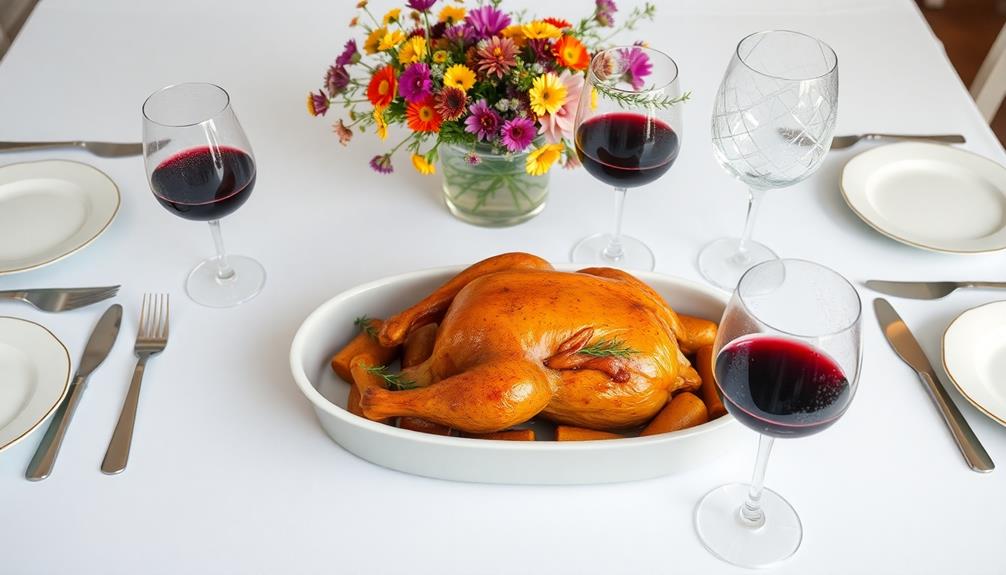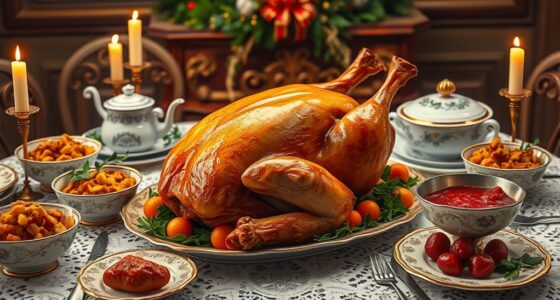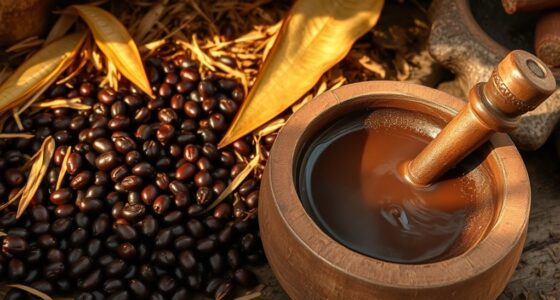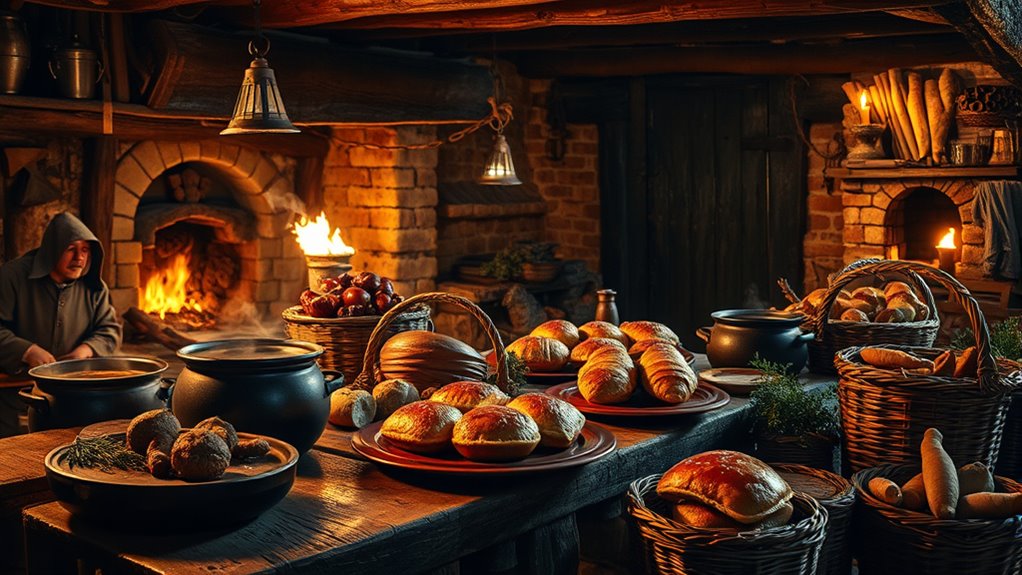

In medieval winter feasts, you find preserved foods like salted meats, dried vegetables, and pickled goods, which you cook with warming spices such as cinnamon, ginger, and pepper. Spices not only add flavor but also help prevent spoilage, making them essential in resourceful cooking. You’d often simmer stored ingredients with spices to create hearty, nourishing dishes. To discover more about these flavors and techniques, continue exploring the rich traditions of medieval winter cuisine.
Key Takeaways
- Medieval winter feasts relied heavily on preserved foods like salted meats, dried fish, and pickled vegetables to sustain households through scarce months.
- Spices such as cinnamon, ginger, and pepper were used to flavor hearty stews and dishes, adding warmth and variety during cold seasons.
- Preservation techniques like salting, drying, and smoking extended the shelf life of ingredients, ensuring year-round availability for winter recipes.
- Root vegetables and stored grains served as staples, often cooked with spices to enhance flavor and mask the taste of preserved ingredients.
- Winter feasts showcased resourcefulness, combining preservation methods and spice usage to create memorable, nourishing meals despite limited fresh supplies.
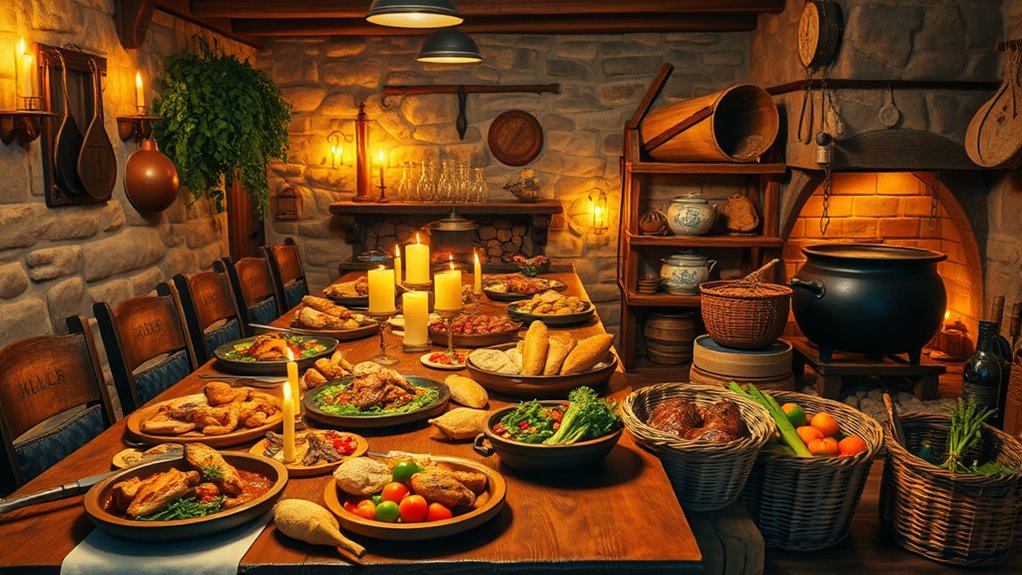
Have you ever wondered how people cooked centuries ago? Back then, kitchens were bustling centers of activity, where every ingredient and technique served a purpose beyond just flavor. When winter arrived, cooks had to get creative with preservation, ensuring food lasted through the cold months. They relied on winter preservation techniques like salting, drying, pickling, and smoking to keep their supplies intact. These methods prevented spoilage and made ingredients like meats, fish, and vegetables available long after harvest time. Because fresh produce was scarce in winter, cooks also turned to stored and preserved foods, often spicing them heavily to add variety and warmth to their meals.
Medieval spices played a vital role in this culinary landscape. Spices like cinnamon, ginger, cloves, and pepper were highly valued and traded across long distances, often making them costly and rare. When preparing winter dishes, cooks used these aromatic ingredients to enhance flavors and mask the taste of preserved or dried foods. For example, a hearty stew might include a pinch of cinnamon or ginger to add depth and warmth, transforming simple ingredients into something special. These spices also helped inhibit bacteria and spoilage, making them not just flavorful additions but practical ones as well. Their use was often reserved for special occasions or feasts, but they also found their way into everyday winter cooking to make meals more appealing.
Medieval spices like cinnamon and ginger added warmth, flavor, and preservation to winter dishes.
Imagine how resourceful medieval cooks had to be, balancing the limited availability of fresh ingredients with the desire to create nourishing, flavorful meals. They relied heavily on their knowledge of winter preservation techniques to stockpile supplies and keep their kitchens running smoothly. When fresh meat was scarce, they turned to salted or dried meats, which, when rehydrated or cooked with rich spices, still provided satisfying sustenance. Vegetables like cabbages, carrots, and onions were stored in root cellars or buried in cool, dark places. These stored foods were often simmered with fragrant spices to make them more palatable and comforting during the cold months.
In essence, medieval winter cooking was about ingenuity and adaptation. Spices weren’t just about flavor—they were essential tools in the preservation process, helping to extend the life of ingredients and make winter diets more diverse. By understanding these techniques and the importance of medieval spices, you can appreciate how ancient cooks turned simple ingredients into memorable, warming feasts even in the harshest months. Their methods laid the groundwork for many culinary traditions we still follow today, proving that a little spice and clever preservation can go a long way in creating hearty winter meals.

Medieval Monk's Blend from the Fanciful Collection by Merchant Spice Co.
Since we couldn’t travel back in time to the middle ages, we did a bit of research instead…
As an affiliate, we earn on qualifying purchases.
As an affiliate, we earn on qualifying purchases.
Frequently Asked Questions
What Ingredients Were Most Common in Medieval Winter Feasts?
You’ll find that common ingredients in medieval winter feasts include hearty winter vegetable varieties like cabbage, turnips, and leeks, which keep well during cold months. Medieval spice blends, such as cinnamon, cloves, and ginger, add warmth and flavor to stews and pies. These ingredients reflect the season’s availability and the desire to create nourishing, flavorful dishes that sustain you through the winter months.
How Did Medieval Cooks Preserve Food for Winter?
You preserved food in medieval times using various food preservation methods like salting, smoking, drying, and pickling. You likely used medieval kitchen tools such as knives, pots, and fermentation vessels to process and store foods. These techniques helped keep meats, fish, and vegetables edible through winter. By applying these methods, you guaranteed a steady food supply during the colder months, making your winter feasts hearty and sustainable.
Were There Regional Differences in Medieval Winter Recipes?
Yes, medieval winter recipes varied by region, influenced by local medieval regional spices and seasonal ingredient variations. You’ll find that northern recipes often used preserved meats and root vegetables, while southern dishes incorporated more fresh herbs and fruits. These regional differences shaped the flavors and ingredients, making each area’s winter cuisine unique. So, depending on where you were, your winter feast could be quite different, reflecting local tastes and available ingredients.
Did Medieval Feasts Include Sweets or Desserts?
Yes, medieval feasts included sweets and desserts. You’d find treats like sweetened pastries, often based on medieval pastry traditions, which used honey and fruit as common sweetening agents in medieval baking. These desserts showcased the era’s love for rich flavors and elaborate presentation. You might have enjoyed spiced tarts, fruit pies, or honey cakes, highlighting the importance of sweet flavors in medieval celebrations.
How Did Medieval Cooking Techniques Influence Modern Cuisine?
Medieval culinary innovations, like the use of spices, roasting techniques, and preserving methods, heavily influence modern cuisine. You can see the legacy of rustic cooking in today’s hearty, flavorful dishes that emphasize simple ingredients prepared with care. These techniques fostered a deeper understanding of flavor combinations and food preservation, shaping contemporary culinary practices. By exploring medieval methods, you gain insight into the roots of many cooking styles still celebrated today.
dried and preserved food storage containers
As an affiliate, we earn on qualifying purchases.
As an affiliate, we earn on qualifying purchases.
Conclusion
As you explore medieval winter feasts and recipes, you’ll find that food was more than sustenance—it was a celebration of community and tradition. Did you know that during these feasts, some households could serve over 100 different dishes? This highlights how medieval cooks prioritized variety and extravagance, even in the cold months. Now, with this glimpse into history, you can appreciate the rich culinary heritage that shaped modern festive traditions, inspiring your own seasonal cooking adventures.

IMUSA 16Qt Stainless Steel Stock Pot with Lid, Large Cooking Pot for Soups, Boiling Seafood, Pasta, Stews, and Family Meals
LARGE CAPACITY: The stock pot has a substantial 16-quart size, providing ample space for cooking large quantities of…
As an affiliate, we earn on qualifying purchases.
As an affiliate, we earn on qualifying purchases.

3 Layer 26" x 38" Thermal Insulated Window Cover,Oxford Windows Blanket Curtains Winterizing Kit Window Insulation for Winter Keeping Warm
Insulation & Energy-Saving: Designed for window insulation in winter, our thermal window cover can effectively block the hot…
As an affiliate, we earn on qualifying purchases.
As an affiliate, we earn on qualifying purchases.