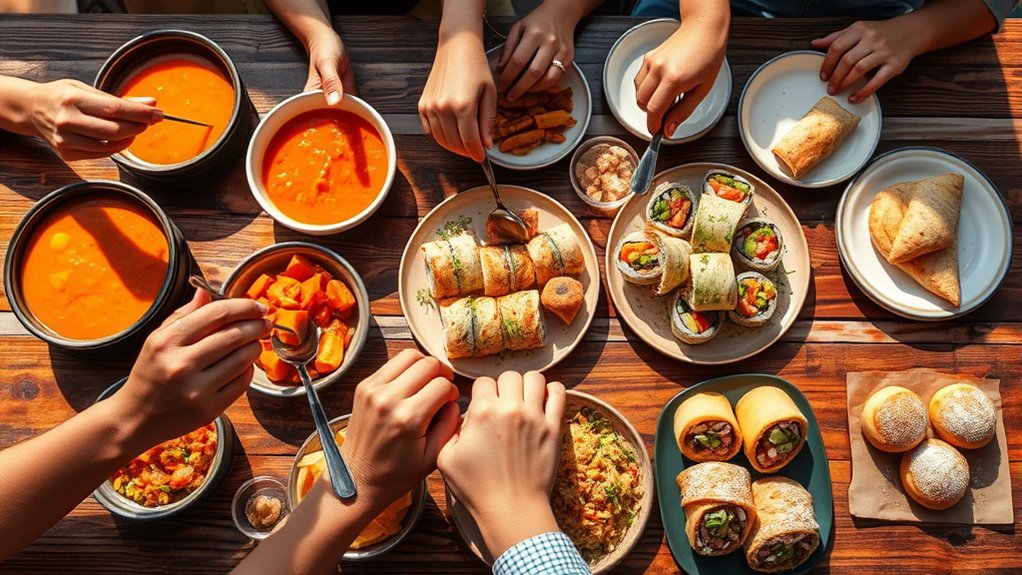

Across cultures, expressing gratitude for food involves rituals, prayers, and manners that honor the effort, resources, and tradition behind each meal. You might say a blessing, recite a prayer, or offer a toast to show appreciation. Good manners—like chewing quietly and sharing generously—also reflect respect. These practices turn eating into a meaningful act of thankfulness, helping you connect with tradition and community. Keep exploring to discover more about how different cultures honor their meals.
Key Takeaways
- Many cultures have traditional blessings or prayers before meals to express gratitude for the food and its sources.
- Rituals like offering a toast or reciting a blessing acknowledge the effort of those who prepared the meal.
- Some societies incorporate specific gestures, such as folding hands or bowing, to show appreciation during eating.
- Giving thanks through words or actions emphasizes humility and recognition of the food’s significance across cultures.
- Practices like sharing food generously or giving thanks after meals reflect cultural values of gratitude and community.

Food is more than just sustenance; it’s a way to cultivate gratitude for the nourishment, effort, and resources that bring meals to your table. When you gather around a table, the way you handle yourself—your table manners—can reflect appreciation for the food and the company. Simple acts like saying “please” and “thank you,” or waiting for everyone to be served before eating, show respect for the effort that went into preparing the meal. Many cultures have traditional blessings or prayers that are spoken before eating, serving as a way to acknowledge the food’s significance and express gratitude. These blessings often invoke divine favor or thank the earth for providing sustenance, reminding you to appreciate the origins of your meal. Following such customs helps you connect with a sense of humility and thankfulness, turning eating into a meaningful act rather than just a routine. Cultivating self-awareness during meals can deepen your appreciation and mindfulness of your eating habits.
Practicing gratitude at the table transforms eating into a meaningful, respectful act of appreciation for food and community.
In some traditions, saying a blessing is more than just words; it’s a ritual that sets the tone for gratitude. You might recite a prayer, offer a toast, or simply pause to reflect on the effort that brought the food to your plate. These gestures acknowledge not only the harvest and the cooks but also the community and circumstances that made the meal possible. When you observe these customs, you foster a deeper appreciation for your food and the people involved in its journey. It’s a reminder that food is a gift, not just a personal convenience.
Practicing good table manners during meals reinforces this sense of gratitude. Chewing quietly, avoiding waste, and sharing food generously are ways to honor what’s on your plate. When you’re mindful of your behavior, you recognize that dining isn’t just about satisfying hunger; it’s an act of respect and thankfulness. Many cultures emphasize these manners as a way to show appreciation for those who prepared the meal and for the nourishment itself. By doing so, you participate in a tradition that elevates eating from a mundane task to a meaningful ritual.
Ultimately, expressing gratitude through traditional blessings and proper table manners helps you stay grounded and mindful. It reminds you that every meal is a chance to reflect on the effort, resources, and community that make it possible. Cultivating this gratitude not only enhances your connection to food but also enriches your appreciation for life’s simple, essential gifts.

Stupell Industries Bless Us O Lord Before Meal Prayer Subtle Birch Typography Wall Plaque, 10 x 15, Design by Artist Lettered and Lined
Dimensions: 10 x 0.5 x 15 Inches
As an affiliate, we earn on qualifying purchases.
As an affiliate, we earn on qualifying purchases.
Frequently Asked Questions
How Do Gratitude Practices Vary in Indigenous Food Traditions Globally?
You’ll notice that indigenous food traditions often incorporate rituals rooted in cultural symbolism and indigenous rituals. You might see offerings, prayers, or ceremonies that honor nature or ancestors before eating. These practices vary widely, reflecting each community’s beliefs and history. By participating or observing, you’ll gain insight into how gratitude is expressed through food, emphasizing respect, sustainability, and a deep connection to cultural roots that shape their unique ways of saying thanks.
Are There Specific Foods Associated With Expressing Thanks Across Cultures?
Ever wondered if certain foods symbolize gratitude? You’ll find that festive dishes and ceremonial offerings often serve as expressions of thanks across cultures. For instance, turkey in the U.S. during Thanksgiving, rice offerings in Asian ceremonies, and bread in many European traditions. These foods, deeply rooted in cultural practices, act as tangible symbols of appreciation, allowing you to honor traditions and show respect through shared, meaningful meals.
How Has Globalization Influenced Traditional Gratitude Rituals in Cuisine?
Globalization has greatly influenced traditional gratitude rituals by blending culinary practices through fusion cuisine and culinary innovation. You might notice that traditional dishes are now combined with new ingredients or techniques, creating unique ways to say thanks. This cultural exchange encourages you to explore diverse expressions of gratitude, making rituals more dynamic and inclusive. As a result, your appreciation for food’s cultural significance deepens, reflecting a globalized world that celebrates shared culinary traditions.
What Role Does Gratitude Play in Modern Culinary Experiences?
Imagine a beautifully plated dish, each element carefully arranged—gratitude shapes your dining experience. In modern culinary settings, gratitude enhances food presentation and dining etiquette, making your meal more meaningful. You actively appreciate the chef’s effort, fostering a connection that elevates the entire experience. Gratitude isn’t just polite; it transforms ordinary dining into a memorable moment, deepening your appreciation for the artistry behind each dish.
Can Expressing Gratitude in Food Impact Nutritional Health?
Yes, expressing gratitude in food can positively impact your nutritional health. When you practice mindful eating and thankful thoughts, you enhance emotional well-being, which can lead to better digestion and nutrient absorption. Gratitude helps you savor each bite, reducing overeating and promoting healthier choices. This mindful approach creates a more meaningful connection with your food, supporting both physical health and emotional balance.

Enesco Our Name is Mud Friendship Friendsgiving Toast Thanksgiving Dinner Plate, 11 Inch, Multicolor
ENESCO DINNER PLATE: from the Our Name is Mud collection
As an affiliate, we earn on qualifying purchases.
As an affiliate, we earn on qualifying purchases.
Conclusion
So, next time you sit down to eat, remember the power of gratitude. Whether you bow, say a prayer, or simply smile, express your thanks. Recognize the tradition, honor the culture, and embrace the connection. Gratitude in food isn’t just about manners; it’s about respect, appreciation, and mindfulness. By sharing your thanks, you honor the meal, the moment, and the people behind it. Make gratitude a part of every bite, every day.

A Butler's Guide to Table Manners
Used Book in Good Condition
As an affiliate, we earn on qualifying purchases.
As an affiliate, we earn on qualifying purchases.

Mindful Eating for Kids Tool – Great for Picky Eaters, Sensory Food Aversion, and Healthy Eating. Created by Your Therapy Source
Engage your child with five interactive areas: Hunger Rating, Gratitude, Sensory Exploration, Eating Check-In, and Food Review—each designed…
As an affiliate, we earn on qualifying purchases.
As an affiliate, we earn on qualifying purchases.