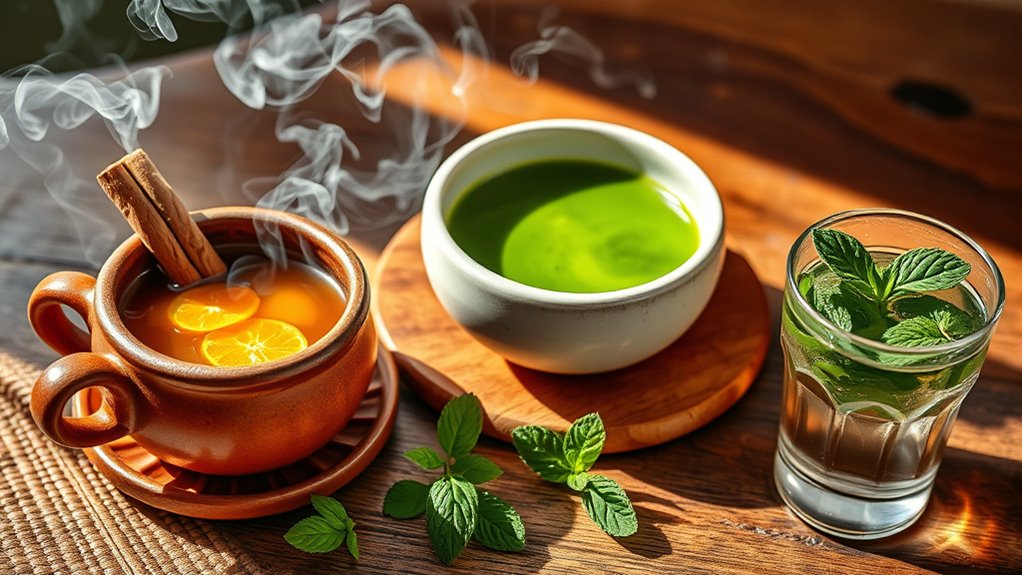

When cold weather hits, enjoy a warming cup of tea that connects you to global traditions. You can savor spicy chai with its aromatic spices, soothe yourself with invigorating mint tea, or enjoy the calming ritual of preparing matcha. Each offers unique flavors, brewing methods, and cultural stories. By exploring these teas, you’ll discover new comforting experiences and techniques that make your tea time special—all just a sip away if you keep exploring.
Key Takeaways
- Different global teas like chai, matcha, and mint offer unique flavors and warming qualities perfect for cold weather.
- Traditional brewing methods, such as simmering spices for chai or whisking matcha, enhance flavor and cultural authenticity.
- Chai provides a spicy, aromatic experience rooted in Indian culture, while matcha offers a calming, energizing green tea ritual.
- Mint tea is a refreshing, soothing option, often infused with honey or lemon for added comfort and digestive benefits.
- Respecting each culture’s tea preparation enhances the sensory experience and makes tea time more meaningful.
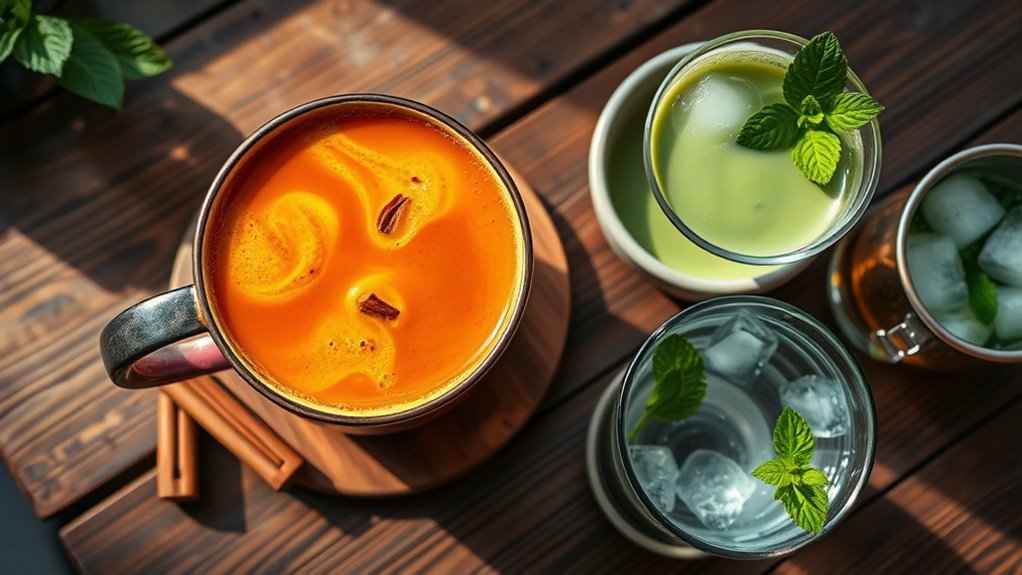
When the weather turns chilly, nothing beats a warm cup of tea to lift your spirits and keep you cozy. Tea isn’t just a beverage; it’s a ritual that connects you to centuries of tea culture across the globe. Each type of tea, from chai to matcha to mint, comes with its own traditions and brewing techniques, giving you a unique experience with every sip.
When chilly days arrive, a warm tea ritual connects you to centuries of global tradition and comforting flavors.
If you’re exploring chai, you’re diving into a rich tradition rooted in Indian tea culture. Chai isn’t just black tea with spices—it’s an aromatic blend that reflects centuries of craftsmanship. To get the best flavor, you want to master the brewing techniques. Start by simmering black tea leaves with milk, water, and a mix of spices like cardamom, cinnamon, ginger, and cloves. This slow simmering process allows the spices to infuse thoroughly, creating a warm, comforting brew. When brewing chai, don’t rush it; patience is key to *disentangling* its full flavor profile. You’ll find that the right balance of spices and milk results in a creamy, spicy drink that’s perfect for warming up on cold days. The tea culture surrounding chai emphasizes community and tradition, so feel free to experiment with different spice combinations to find your perfect blend. Additionally, choosing the right tea kettle material can help control the brewing process more precisely.
Moving to matcha, this vibrant green tea from Japan offers a different kind of warming experience. Matcha is unique because you consume the powdered tea leaves directly, making it more concentrated than typical brewed teas. Preparing matcha involves specific techniques—using a bamboo whisk (chasen) and a bowl (chawan) to create a frothy, smooth drink. First, sift the matcha powder to avoid clumps. Then, add hot water (not boiling) and whisk briskly in a zigzag motion until it’s frothy. This process not only releases the flavors but also creates a calming ritual that can warm you from the inside out. Drinking matcha provides a gentle caffeine boost and a rich umami flavor, making it a perfect choice when you need a cozy pick-me-up during chilly mornings or afternoons.
Mint tea brings a *invigorating* yet warming sensation, often associated with Mediterranean and Middle Eastern tea culture. To brew mint tea, you can use fresh mint leaves or dried, depending on what’s available. Simply steep the leaves in hot water—no complicated techniques needed—letting the mint release its invigorating aroma and flavor. For an extra comforting touch, add a bit of honey or lemon. Mint tea is known for its soothing qualities and ability to aid digestion, making it an ideal drink to warm you up after a hearty meal or on a cold day. Its simplicity and *revitalizing* taste make it a staple in many households, embodying the essence of relaxed, comforting tea culture.
No matter which tea you choose, understanding the brewing techniques and respecting the tea culture behind each variety enhances your experience. A perfect cup isn’t just about the ingredients; it’s about the process, the tradition, and the moment you take to enjoy it.
Frequently Asked Questions
How Do Different Cultures Customize Their Tea Brewing Methods?
You’ll find that different cultures customize their tea brewing techniques through unique tea ceremonies. In Japan, you gently whisk matcha in a bowl, emphasizing mindfulness. Chinese tea ceremonies involve precise steeping times and pouring techniques, highlighting respect for tradition. In Morocco, mint tea is brewed with sugar and poured from a height to aerate. These methods reflect cultural values and enhance the tea-drinking experience.
What Are the Health Benefits of Each Type of Tea?
Your tea can be a powerhouse of health benefits! Matcha teems with antioxidants that boost your energy and protect your cells, while chai offers anti-inflammatory herbs that support digestion. Mint tea cools inflammation and soothes your stomach, and herbal teas pack natural benefits for relaxation and immune health. Drinking a variety of teas helps you harness their unique herbal benefits and antioxidants, making each sip a step toward better well-being.
Which Teas Pair Best With Specific Foods or Desserts?
You’ll find that chai pairs wonderfully with spicy desserts like gingerbread or cinnamon rolls, enhancing their warmth. Matcha complements sweet treats such as mochi or green tea-flavored pastries, balancing their subtle flavors. Mint tea works best with light, savory snack complements like salads or cheese platters, offering a revitalizing contrast. For perfect tea and dessert pairing, match the tea’s flavor intensity with the richness of your dessert or snack for a delightful experience.
How Should I Store Loose Leaf Teas to Maintain Freshness?
You should store loose leaf teas in an airtight tea container to keep them fresh. Did you know that improper storage can reduce tea quality by up to 50% in just a few months? Use proper storage techniques by keeping your tea away from light, heat, and moisture. Store your tea in a cool, dark place, and avoid frequent opening to preserve its flavor and aroma.
Are There Traditional Rituals Associated With Tea Drinking Worldwide?
Yes, there are traditional rituals associated with tea drinking worldwide that hold deep cultural significance. You might participate in tea ceremonies like Japan’s precise matcha preparation, or enjoy the relaxed social ritual of British afternoon tea. These ceremonies emphasize mindfulness, respect, and tradition, transforming a simple beverage into an experience that reflects cultural values and history. By engaging in these rituals, you connect with centuries of cultural significance behind tea.
Conclusion
So, sip, savor, and stay snug with these sensational sips from around the world. Whether it’s the bold boost of chai, the calming calm of matcha, or the minty magic of mint tea, each offers a unique comfort. Embrace each warm, wonderful cup and let global goodness garnish your days. With a little taste adventure, you’ll turn every tea time into a treasured, tranquil treat—so go ahead, get brewing and bask in the bliss!