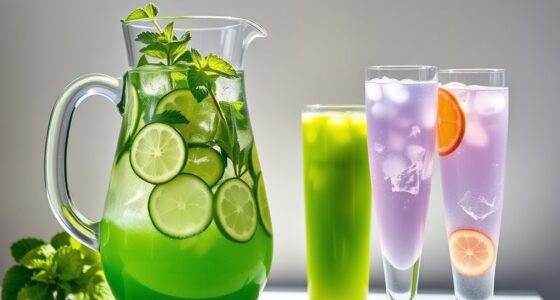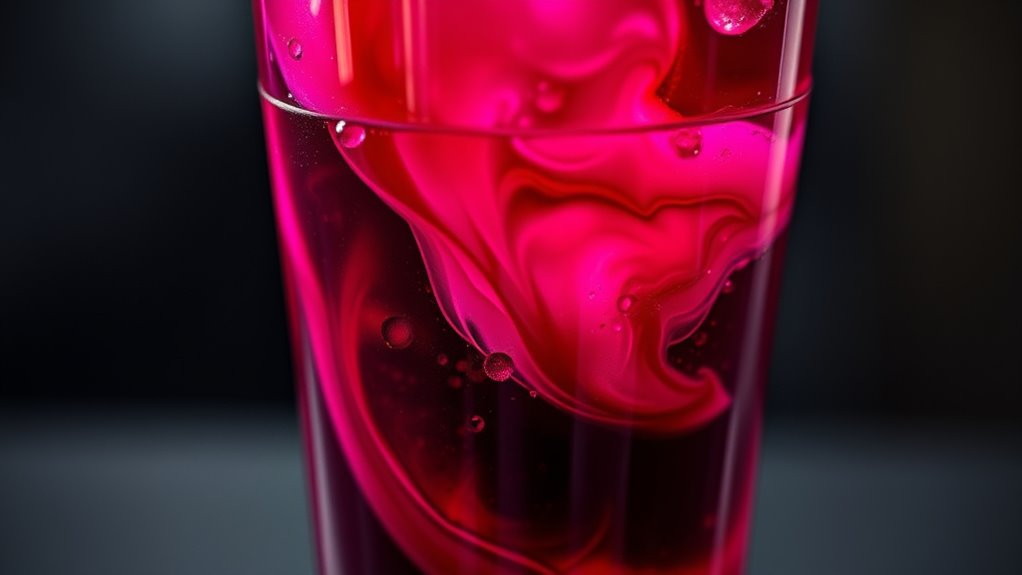

When you explore Senegalese Bissap, you’ll notice its brilliant red color comes from natural anthocyanins in hibiscus flowers. These pigments change hue based on pH levels—adding lemon or lime boosts the red, while baking soda can turn it blue or green. This color shift highlights how herbal infusions use natural chemistry, connecting tradition with science. If you keep exploring, you’ll discover even more fascinating ways these natural dyes influence flavor and culture.
Key Takeaways
- Bissap’s vibrant red color is due to anthocyanins, plant pigments sensitive to pH changes.
- Adding acidic ingredients like lemon enhances the red hue by lowering pH.
- Alkaline substances such as baking soda can turn Bissap’s color from red to blue or green.
- The pH-dependent color shift showcases anthocyanins’ role as natural pH indicators.
- These color changes reflect the chemistry of herbal infusions and their cultural significance.

Have you ever tasted the lively, tangy flavor of Senegalese Bissap drink? If not, you’re missing out on a beverage that’s not only invigorating but also steeped in cultural significance. Bissap is a traditional herbal infusion made from hibiscus flowers, and its bright red hue instantly catches your eye. This drink holds a special place in Senegalese culture, often served during celebrations, family gatherings, and everyday meals. It’s more than just an invigorating beverage; it’s a symbol of hospitality and community, connecting people through shared traditions. When you prepare Bissap, you’re participating in a centuries-old practice that highlights the importance of herbal infusions in West African life.
The striking color of Bissap comes from natural anthocyanins, pigments responsible for the deep reds and purples in many plants. These compounds are sensitive to pH changes, which means the drink’s color shifts depending on the acidity of other ingredients or additives you might include. For example, adding lemon juice or lime can turn the drink a brighter, more vivid red, thanks to the increased acidity. Conversely, if you add a pinch of baking soda, the pH rises, causing the beverage to turn a bluish or greenish shade. This natural color shift not only makes Bissap visually appealing but also demonstrates the fascinating chemistry behind herbal infusions. These anthocyanins aren’t just for show—they also possess antioxidant properties, contributing to the health benefits of the drink.
Understanding the pH-dependent color change is essential if you want to get creative with your Bissap. You can experiment with different acidic or alkaline ingredients to produce a spectrum of hues, making the beverage as visually engaging as it is flavorful. For example, pH sensitivity makes anthocyanins excellent natural pH indicators, which is a fascinating trait for both culinary and scientific applications. The pH sensitivity of anthocyanins also underscores their role as natural pH indicators, a feature that’s been harnessed in various culinary and scientific applications. As you make Bissap, you’re working with a natural dye that’s both safe and versatile, rooted in herbal infusions passed down through generations. This connection to tradition and science enhances your appreciation for the drink, turning a simple herbal infusion into a fascinating experience. Additionally, the use of natural dyes like anthocyanins in herbal infusions highlights the importance of plant-based colorants in food science. Exploring the chemistry behind these natural pigments can deepen your understanding of herbal infusions and their significance across cultures.
In the end, Bissap isn’t just a drink; it’s a lively expression of cultural heritage, crafted with herbs and natural pigments that tell a story of community, history, and chemistry. Every sip reminds you of the importance of herbal infusions in African culture and the beauty of natural color shifts driven by pH. So, next time you enjoy Bissap, remember you’re tasting more than flavor—you’re experiencing a rich tradition rooted in the natural world.
Frequently Asked Questions
How Does Bissap Consumption Affect Blood Sugar Levels?
When you consume bissap, it may influence your blood sugar regulation. The glycemic impact of bissap can vary, but some studies suggest that its anthocyanins might help stabilize blood sugar levels. However, it’s important to monitor how your body responds, especially if you have diabetes or blood sugar concerns. Drinking bissap in moderation could support overall blood sugar management, but always consult your healthcare provider for personalized advice.
What Are the Potential Health Benefits of Anthocyanins?
Imagine your body as a fortress, and anthocyanins are your vigilant guards. These powerful compounds, with their antioxidant properties, protect your cells from damage and support your cardiovascular health. By consuming foods rich in anthocyanins, like Bissap, you bolster your defenses against inflammation and oxidative stress. This helps you maintain a healthy heart and vibrant wellbeing, making anthocyanins your natural allies in health and energy.
Can Bissap Be Used as a Natural Food Coloring?
You can definitely use bissap as a natural dye and food additive because of its vibrant color. The anthocyanins in bissap change color based on pH, making it a versatile natural dye for various foods. It’s a healthy alternative to synthetic colorings, adding visual appeal while also providing potential health benefits. Incorporating bissap in your recipes can enhance both the appearance and nutritional value of your dishes.
Are There Variations of Bissap in Different West African Countries?
Imagine you’re on a quest through West Africa, discovering regional flavor profiles of bissap. Different countries, like Ghana, Mali, and Nigeria, showcase unique twists on traditional preparation methods, adding local herbs or adjusting sweetness levels. These variations reflect cultural tastes and available ingredients. So, yes, bissap isn’t just Senegal’s; it varies across West Africa, offering diverse flavors that make each version special and authentic to its region.
How Long Does Bissap’S Color Change Last During Storage?
You wonder how long bissap’s color change lasts during storage. The color stability depends on factors like exposure to light, temperature, and pH levels. Typically, with proper preservation techniques—such as storing in airtight, dark containers and keeping it refrigerated—you can maintain vibrant color for several days to a week. Proper storage helps slow down anthocyanin degradation, ensuring your bissap stays visually appealing and flavorful longer.
Conclusion
As you savor the vibrant hues of bissap, you gently embrace its subtle magic. The delicate dance of anthocyanins and pH shifts whispers secrets of nature’s artistry, inviting you to appreciate the beauty in every sip. With each taste, you’re gently reminded of how simple ingredients can hold enchanting stories, turning a humble drink into a delightful experience. So, let this radiant beverage inspire you to find wonder in life’s colorful moments.