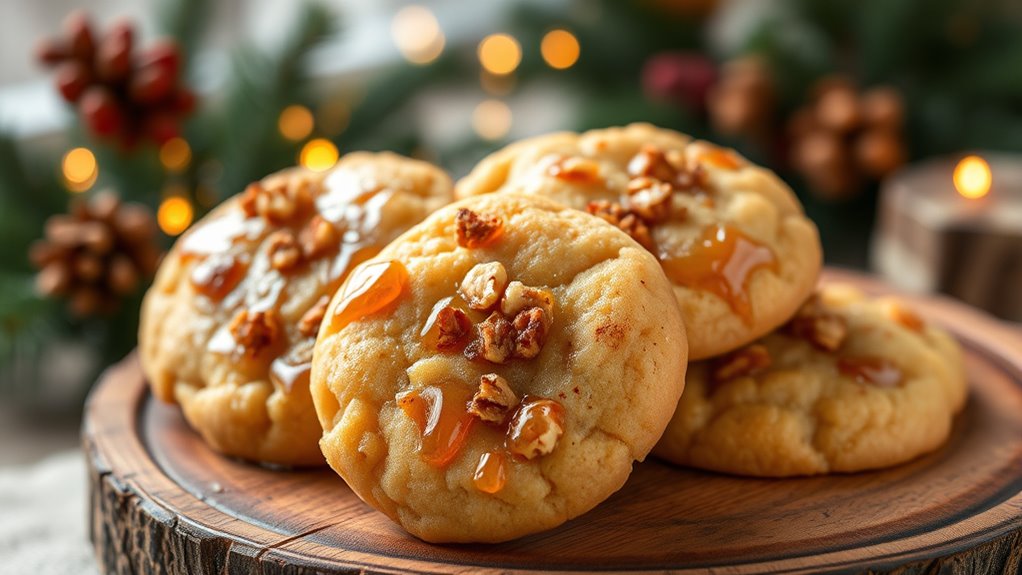

To celebrate Christmas with Greek honey cookies, or melomakarona, you’ll enjoy a fragrant treat that symbolizes festive traditions. Made from simple ingredients like flour, honey, and spices, these cookies are shaped and baked to perfection, then soaked in honey syrup and topped with walnuts. The aroma of cinnamon, cloves, and honey fills your home, creating a warm holiday atmosphere. Keep exploring to discover more about their rich cultural significance and how to make them yourself.
Key Takeaways
- Melomakarona are traditional Greek honey cookies served during Christmas, symbolizing festive joy and aromatic holiday customs.
- Made from simple ingredients like flour, honey, olive oil, and spices, then soaked in honey syrup and topped with walnuts.
- Baking releases fragrant aromas of honey, cinnamon, and cloves, creating an inviting holiday atmosphere at home.
- Involving family in shaping and decorating the cookies strengthens Greek holiday traditions and festive bonds.
- These cookies are a staple on Greek Christmas tables, celebrating culinary heritage and seasonal warmth.
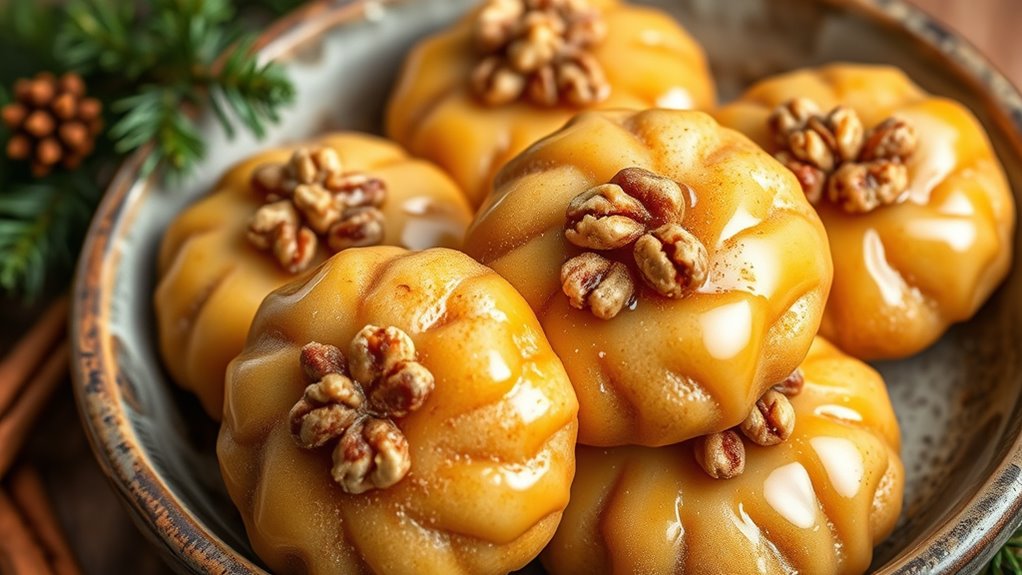
As the holiday season approaches, nothing captures the warmth and tradition of Greek Christmas quite like honey cookies. These sweet treats, known as melomakarona, are more than just a dessert—they’re a symbol of festive aromas filling the air and a cherished part of holiday traditions. When you bake these cookies, you’ll notice how the fragrant smell of honey, cinnamon, and cloves instantly evokes feelings of comfort and joy, transporting you to a time-honored celebration. The aroma wafts through your home, creating an inviting atmosphere that signals the start of festivities.
Making honey cookies is a delightful way to connect with Greek holiday customs. The process begins with mixing simple ingredients—flour, olive oil, honey, and spices—that come together to form a rich, fragrant dough. As you roll and shape the cookies into oval or elongated forms, you’re engaging in a tradition passed down through generations. The act of baking these cookies isn’t just about creating a tasty treat; it’s about participating in a cultural ritual that brings family and friends together. Once baked, the melomakarona are soaked in a honey syrup, infusing each piece with sweetness and moisture, adding to their irresistible appeal.
Creating honey cookies connects you to Greek traditions and brings family together through baking and shared joy.
Throughout the holiday season, these cookies hold a special place at Christmas tables across Greece. They are often served alongside other traditional sweets, but their distinctive aroma and flavor make them stand out. As you enjoy your homemade melomakarona, you’ll notice how the festive aromas linger long after baking, filling your home with the essence of Greek Christmas. This scent not only enhances your holiday decor but also strengthens the sense of tradition, reminding you of past celebrations and the importance of sharing these moments with loved ones.
Involving family members in baking honey cookies can become a cherished holiday tradition. Kids love shaping the dough, and everyone enjoys the sense of accomplishment when they see the golden-brown cookies emerge from the oven. The act of dipping them into honey syrup and sprinkling them with crushed walnuts further deepens the festive experience. These cookies symbolize generosity and the warmth of the season, making them more than just a sweet treat—they’re a heartfelt gift from your kitchen to your loved ones. Additionally, using traditional ingredients like honey and olive oil reflects the authentic Greek culinary heritage that enhances the overall experience.
In the end, honey cookies are a delicious way to celebrate Greek Christmas traditions. They bring together the pleasures of baking, the magic of festive aromas, and the joy of shared customs. As you indulge in these delightful treats, you create new memories while honoring an enduring holiday tradition that’s been cherished for generations.
Frequently Asked Questions
Can Melomakarona Be Made Vegan?
Yes, you can make melomakarona vegan by using vegan substitutions and ingredient alternatives. Swap out honey for maple syrup or agave nectar, and replace butter with coconut oil or vegan margarine. Use plant-based milk like almond or soy milk instead of dairy milk. These ingredient alternatives help you create delicious vegan melomakarona that taste just as good, allowing everyone to enjoy this sweet treat without animal products.
How Long Do Greek Honey Cookies Stay Fresh?
You can expect Greek honey cookies to stay fresh for about one to two weeks when stored properly. To preserve their freshness, keep them in an airtight container at room temperature or in the refrigerator. Avoid exposure to humidity or direct sunlight, as these can cause them to become stale or sticky. For longer storage, consider freezing them, which can extend their shelf life up to a month while maintaining quality.
What Variations Exist for Melomakarona Recipes?
Think of melomakarona as a canvas, ready for your creative touch. You can sprinkle in alternative flavor infusions like orange zest, cinnamon, or clove, transforming the classic into a personalized masterpiece. Regional recipe differences also add variety—some favor walnuts, others use almonds or even pistachios. These variations let you craft a unique cookie experience, blending tradition with your own flavor adventures.
Are There Gluten-Free Options for These Cookies?
Yes, you can make gluten-free melomakarona using gluten-free ingredients and alternative flours. Try substituting all-purpose flour with almond, rice, or oat flour to create a delicious gluten-free version. Be sure to adjust the liquid ingredients slightly, as some flours absorb more moisture. With these tweaks, you’ll enjoy flavorful, traditional-style honey cookies that suit your gluten-free diet.
What Is the Traditional Origin of Melomakarona?
You’ll find that melomakarona originate from ancient Greek traditions, blending local customs with Ottoman influences over centuries. These honey cookies symbolize festive celebration and hospitality, reflecting Greece’s rich history. The recipe has evolved, but the core connection to ancient rituals and Ottoman culinary elements remains. So, when you enjoy these cookies, you’re experiencing a delicious link to Greece’s historical cultural tapestry, passed down through generations.
Conclusion
So, there you have it—your foolproof recipe to impress friends and family with Greek honey cookies. Because nothing says “holiday cheer” like soaking sweet treats in honey and drenching them in syrup, right? Just remember, if you end up covered in sticky glaze, it’s all part of the charm. After all, who needs a spotless kitchen when you can have a plate of delicious melomakarona and a good story to tell?