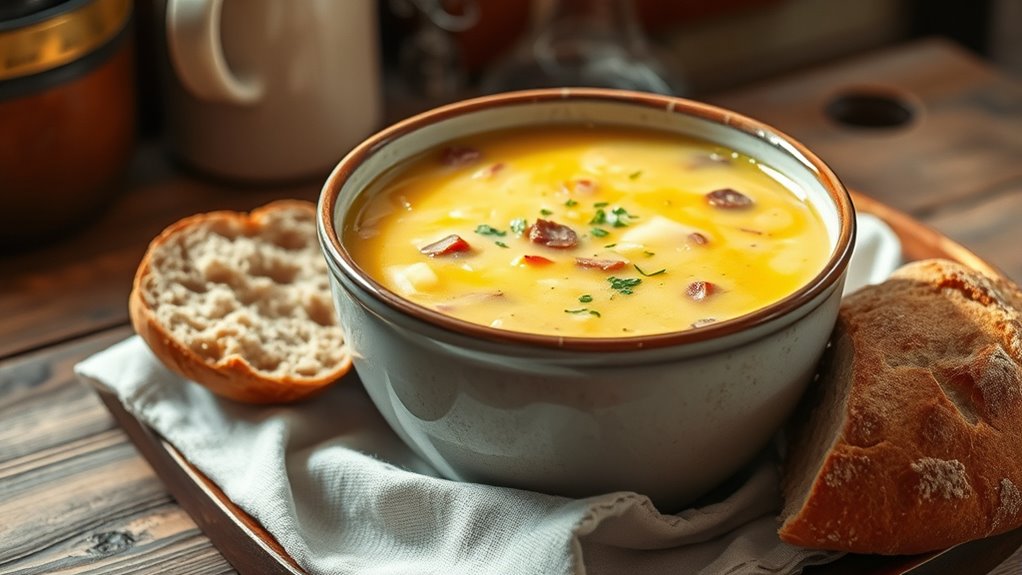

Polish żurek is a flavorful sour rye soup that showcases Poland’s rich culinary heritage and centuries-old fermentation techniques. Made from fermented rye flour called zakwas, it develops a unique tangy taste through natural fermentation. Regional variations add ingredients like garlic, sausage, or herbs, reflecting local flavors and traditions. This dish not only preserves Polish history but also highlights community and craftsmanship. Keep exploring to discover more about this fascinating and delicious traditional soup.
Key Takeaways
- Żurek is a traditional Polish sour rye soup symbolizing cultural heritage and centuries-old fermentation techniques.
- It is made from zakwas, a fermented rye flour base that imparts a distinctive sour flavor.
- Regional variations include differences in ingredients like garlic, sausage, herbs, and vegetables.
- Fermentation preserves ingredients naturally, creating complex flavors rooted in Polish culinary history.
- Each local version reflects Poland’s diverse landscape, climate, and culinary traditions.
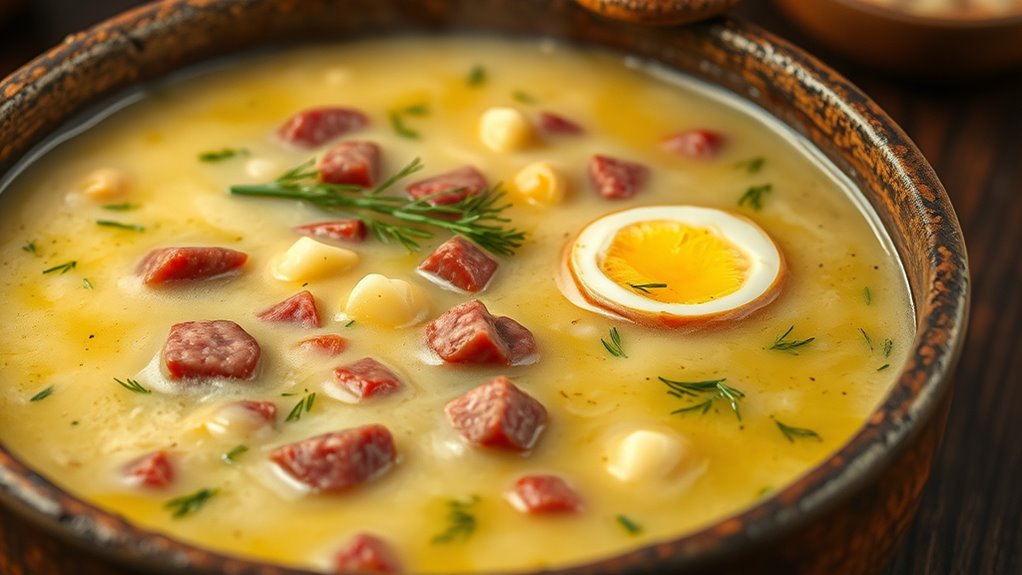
Have you ever wondered how a simple bowl of soup can tell a story about a culture? Polish Żurek is a perfect example. This sour rye soup isn’t just comforting food; it’s a reflection of Poland’s history, ingredients, and regional flavor variations. At its core, Żurek relies heavily on fermentation techniques, which transform basic ingredients into something uniquely flavorful. You start with a base made from fermented rye flour, known as zakwas, which gives the soup its distinctive sour taste. Creating this fermentation involves allowing the rye flour and water to sit at room temperature, developing natural lactic acid bacteria that give Żurek its tang. This method not only preserves the soup but also adds depth and complexity to its flavor profile. The fermentation process varies slightly from region to region, affecting the final taste. In some areas, people add more garlic or seasoned sausage, while others incorporate additional herbs or vegetables. These regional flavor variations showcase how local ingredients and preferences influence the traditional recipe, making each bowl a unique experience.
Additionally, the fermentation techniques used in Żurek are rooted in centuries of culinary tradition, emphasizing the importance of preserving food through natural processes. As you prepare Żurek, you’ll notice how fermentation techniques serve as a bridge between tradition and flavor. The sourness, which might seem unusual at first, becomes a signature trait that distinguishes Polish cuisine. It’s a testament to how fermentation has been historically used for preservation, but over time, it’s evolved into a culinary art form. The regional differences in Żurek highlight the diverse palate across Poland. For instance, in southeastern regions, you might find a version enriched with smoked sausage and a hint of marjoram, while in the north, the soup might be lighter, with more emphasis on fresh herbs and vegetables. These variations aren’t just about taste; they’re a reflection of local resources and cultural influences. The fermentation techniques used in each region adapt to available ingredients, climate, and culinary traditions, creating a soup that’s both rooted in history and tailored to local tastes.
When you take a spoonful of Żurek, you’re tasting centuries of tradition. The fermentation techniques give it a tang that’s unlike any other soup, and the regional flavor variations reveal Poland’s rich culinary diversity. It’s more than just a dish; it’s a living story of how communities preserve their heritage through food. Each variation, each added ingredient, speaks to the local landscape and history. So next time you enjoy Żurek, remember that you’re experiencing a culinary craft that has been passed down, perfected, and adapted over generations — all through the simple, yet profound, art of fermentation.

KNEADACE Pro Sourdough Starter Kit – 34oz Large Capacity Glass Fermentation Jar with Lid & Tracker, Sourdough Starter Fermenter for Homemade Sourdough, Bread Dough Prep & Culinary Fermentation, 2 Pack
Discover the Joy of Artisan Sourdough Bread – Exclusive design, molded for optimal sourdough starter maintenance. With its…
As an affiliate, we earn on qualifying purchases.
As an affiliate, we earn on qualifying purchases.
Frequently Asked Questions
What Are Traditional Toppings for ŻUrek?
You should add traditional garnishes like a hard-boiled egg, slices of kielbasa, and fresh parsley to enhance żurek’s flavor. These serving suggestions bring authenticity and richness to the dish. You might also consider a dollop of sour cream or a sprinkle of black pepper for extra depth. These toppings not only complement the sour rye broth but also make your presentation more appealing and traditional.
Can ŻUrek Be Made Vegetarian or Vegan?
Imagine a vibrant garden where flavors bloom—yes, żurek can be vegan or vegetarian. You just need to swap traditional ingredients with plant-based alternatives, like mushroom broth instead of meat stock, and tofu or seitan for sausage. These flavor substitutions preserve the soup’s tangy, hearty essence while making it suitable for plant-based diets. With a little creativity, you can enjoy a delicious, cruelty-free version of this classic Polish dish.
How Long Does ŻUrek Typically Last in the Refrigerator?
You should enjoy żurek within 3 to 4 days of storage in the refrigerator. Keep an eye out for spoilage indicators like sour smell, slimy texture, or discoloration, which signal it’s time to discard. Proper storage in an airtight container helps maintain freshness. If you want to extend its shelf life, consider reheating thoroughly or freezing portions, but always check for signs of spoilage before consuming.
Are There Regional Variations of ŻUrek Within Poland?
You’ll find fantastic flavor facets in Żurek across Poland, with regional variations adding unique twists. In the south, locals love hearty, smoky flavors, while in the east, sour and spicy profiles shine. These local ingredient variations and regional flavor profiles give Żurek a distinctive character from place to place. So, whether you’re savoring a tangy, traditional bowl or a spicy, modern version, each region offers its own delicious delight.
What Are Common Side Dishes Served With ŻUrek?
You usually serve żurek with bread dumplings, which soak up the flavorful broth perfectly. Pickled vegetables, like cucumbers or cabbage, are also common side dishes that add a tangy crunch and balance the soup’s sourness. Sometimes, people enjoy it with crusty rye bread or boiled potatoes. These sides complement the hearty, savory flavors of żurek and make your meal more satisfying and traditional.

Adamba Polish Style White Borscht Zurek Soup Mix 1.5oz Bag (3-Pack)
As an affiliate, we earn on qualifying purchases.
As an affiliate, we earn on qualifying purchases.
Conclusion
As you savor the tangy notes of żurek, imagine yourself steering a ship through uncharted culinary waters, each spoonful a new horizon. This sour rye soup isn’t just a dish; it’s a voyage that connects you to Poland’s rich traditions. Embrace the journey, knowing that with every taste, you’re manning a world of flavors—an allegory of discovery that invites you to explore beyond borders and into the heart of cultural storytelling.

Freshly Fermented – Certifed Organic Sourdough Starter – Rye
ORGANIC CERTIFIED & UKAS LAB TESTED – Our Gloucestershire Rye Sourdough starter culture is certified by the Organic…
As an affiliate, we earn on qualifying purchases.
As an affiliate, we earn on qualifying purchases.

Winiary Zurek Polish Instant Sour Rye Soup 132g (Pack of 2)
Preparation Instructions: To prepare, approximately 2-3 flat teaspoons (11g) of the mix are combined with 200 ml of…
As an affiliate, we earn on qualifying purchases.
As an affiliate, we earn on qualifying purchases.