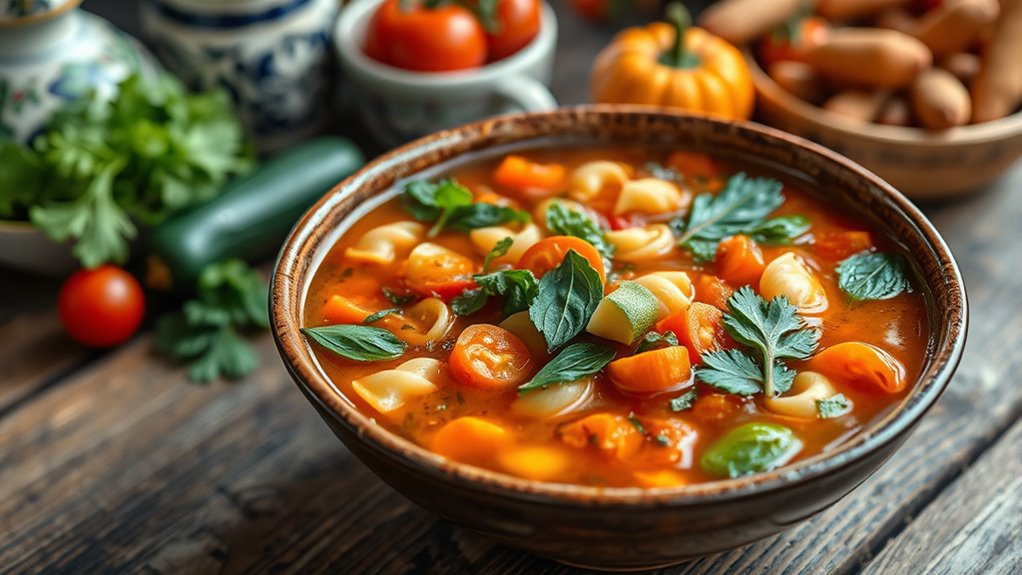

On your global soup tour, Italian minestrone highlights how simple, seasonal vegetables simmer in a flavorful broth to create a hearty, comforting dish. Using ingredients like zucchini, carrots, celery, and tomatoes, you’ll capture Italy’s culinary spirit of freshness and patience. Focus on quality broth and balance among vegetables, then finish with herbs or cheese for added depth. Keep exploring to discover how traditional techniques turn everyday ingredients into a timeless Italian classic.
Key Takeaways
- Italian minestrone is a hearty vegetable soup emphasizing seasonal produce, fresh ingredients, and rich flavors rooted in Italy’s culinary tradition.
- Its foundation is a flavorful vegetable broth infused with herbs like basil, thyme, and bay leaves, enhancing natural vegetable tastes.
- Key vegetables include zucchini, carrots, celery, green beans, and tomatoes, chopped into bite-sized pieces for even cooking and texture.
- The cooking process involves slow simmering vegetables in broth to develop deep, balanced flavors, often with added pasta or rice for heartiness.
- Finishing touches like fresh herbs, olive oil, or Parmesan cheese reflect Italy’s culinary heritage and personal adaptation, creating a comforting dish.
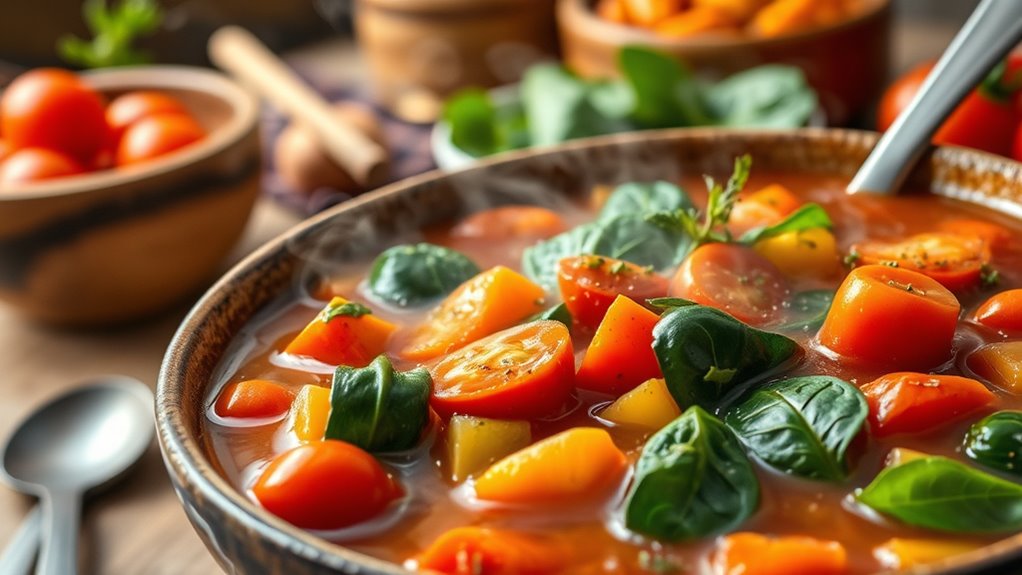
Begin a flavorful journey with Italian minestrone, a hearty vegetable soup that captures the essence of Italy’s culinary tradition. This iconic dish isn’t just about nourishment; it’s a celebration of fresh, seasonal produce simmered in a rich vegetable broth that embodies centuries of culinary expertise. When you prepare minestrone, you’re tapping into a tradition that emphasizes simple ingredients transformed through time-honored techniques, resulting in a soup that’s both comforting and vibrant.
Embark on a culinary journey with hearty, seasonal minestrone, a timeless Italian vegetable soup celebrating simplicity and rich flavors.
The foundation of a great minestrone lies in the vegetable broth, which serves as the soul of the dish. You’ll want to start with a homemade or high-quality store-bought broth, infused with herbs like basil, thyme, and bay leaves. The broth’s depth and clarity elevate the entire soup, bringing out the natural flavors of the seasonal vegetables you add. As you select your vegetables—think zucchini, carrots, celery, green beans, and tomatoes—you’re engaging with the culinary traditions that emphasize local, fresh ingredients. These seasonal veggies not only provide a spectrum of flavors and textures but also reflect Italy’s regional diversity and farming cycles.
When cooking, you chop your vegetables into bite-sized pieces, ensuring they cook evenly and retain their distinct textures. You add them to the simmering broth, allowing the flavors to meld and intensify. This process is essential, as it captures the essence of Italian cooking: simplicity and balance. You might include pasta or rice for added heartiness, but the core remains the vegetables and broth, which showcase the season’s best offerings. Additionally, incorporating seasonal vegetables ensures your minestrone remains fresh and flavorful, aligning with traditional Italian culinary principles.
Throughout the process, you’re embracing a culinary tradition that values patience and respect for ingredients. The slow simmer helps develop layers of flavor, making each spoonful a satisfying experience. As you finish, you can garnish your minestrone with fresh herbs, a drizzle of olive oil, or a sprinkle of Parmesan cheese, adding personal touches that honor Italy’s culinary heritage.
Ultimately, making minestrone isn’t just about creating a nourishing meal; it’s about connecting with a timeless culinary tradition rooted in simplicity, seasonal ingredients, and soulful cooking. By focusing on a flavorful vegetable broth and the seasonal bounty, you’re recreating a classic dish that’s both a comforting staple and a celebration of Italy’s rich gastronomic history. This soup invites you to savor the flavors of the season while honoring centuries of culinary artistry, making every bowl a delightful journey through Italy’s culinary landscape.
Top picks for "global soup tour"
Open Amazon search results for this keyword.
As an affiliate, we earn on qualifying purchases.
Frequently Asked Questions
What Are the Origins of Minestrone Soup?
You’ll find that minestrone soup originates from traditional Italian cuisine, rooted in Mediterranean culinary traditions. It has a long history within Italy, evolving as a staple of historical Italian cuisine. This hearty, vegetable-based soup reflects Italy’s rustic cooking style, using seasonal ingredients. Over time, it’s become a beloved dish across regions, showcasing Italy’s rich culinary heritage and emphasis on fresh, local produce in every bowl.
Can Minestrone Be Made Vegan or Gluten-Free?
Did you know that over 10% of Americans follow a vegan diet? You can easily make minestrone vegan by using plant-based substitutions like vegetable broth, beans, and tofu. For gluten-free options, swap traditional pasta with gluten-free grains such as rice or quinoa. These simple substitutions guarantee your minestrone remains hearty, delicious, and suitable for both vegan and gluten-free diets, allowing everyone to enjoy this classic soup.
How Long Does Homemade Minestrone Last in the Fridge?
You can store homemade minestrone in the fridge for up to 3 to 4 days, making sure it’s cooled and stored in an airtight container. Its shelf life depends on how fresh the ingredients are when you make it. To enjoy the best flavor and safety, reheat thoroughly and consume within this timeframe. If you notice any sour smell or mold, discard it immediately.
What Are Traditional Italian Herbs Used in Minestrone?
You’ll find that traditional Italian herbs like basil, oregano, thyme, and bay leaves work wonders as herb combinations for minestrone. These herbs serve as flavor enhancements, adding warmth and depth to your soup. Basil brings a fresh aroma, oregano offers a savory touch, thyme adds earthiness, and bay leaves lend a subtle complexity. Together, they create an inviting, authentic taste that transforms your hearty bowl into a true Italian delight.
Are There Regional Variations of Minestrone Across Italy?
Yes, you’ll find regional ingredient differences and historical culinary influences shape minestrone across Italy. Northern versions often include beans, potatoes, and cabbage, reflecting local agriculture, while southern recipes favor tomatoes, zucchini, and eggplant, influenced by Mediterranean flavors. These variations showcase Italy’s diverse culinary history, blending local produce and traditions. So, no matter where you try it, each region offers a unique take on this hearty, vegetable-rich soup.
Conclusion
As you ladle the steaming minestrone into your bowl, imagine the vibrant colors of fresh vegetables dancing alongside the steamy warmth. Just like life’s contrasts—bright carrots against earthy beans, tender greens against hearty broth—this soup embodies comfort and freshness. With each spoonful, you’re transported from busy kitchens to sunlit Italian gardens. Savor the harmony of seasonal flavors, knowing that every bite’s a reminder: even simple ingredients can create a symphony of warmth and importance.