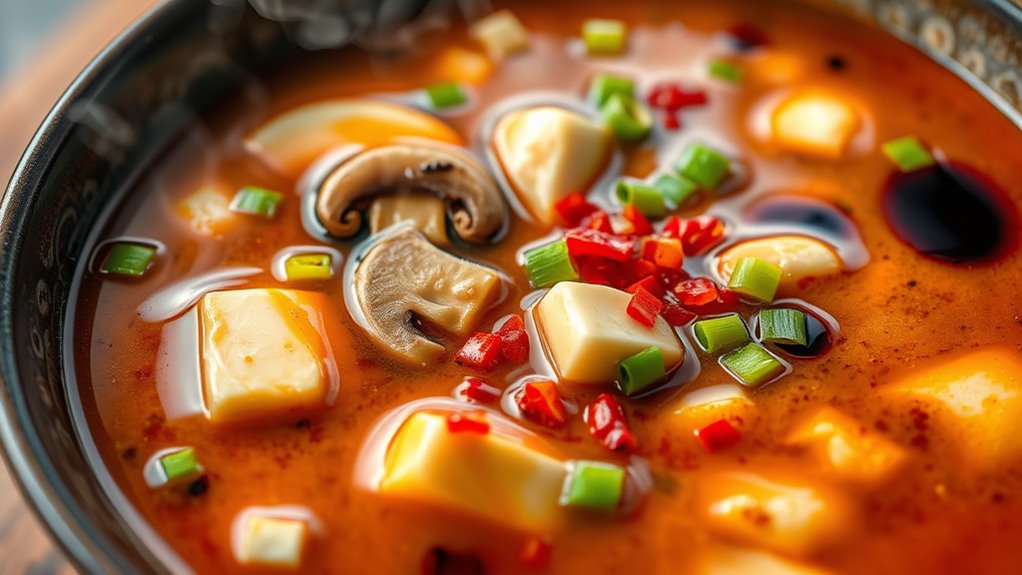

Chinese hot and sour soup is a perfect spicy winter warmer that energizes and comforts you. Its rich, tangy flavor is balanced with heat from ingredients like Sichuan peppercorns, vinegar, and ginger, making it a restorative classic. Variations include ingredients like tofu, bamboo shoots, and mushrooms, reflecting regional tastes. Understanding its history and diverse flavors can deepen your appreciation. If you keep exploring, you’ll uncover even more about this beloved dish’s rich cultural background and unique adaptations.
Key Takeaways
- Chinese hot and sour soup is a traditional winter dish valued for its warming, spicy, and sour flavors.
- It features ingredients like vinegar, ginger, garlic, and chili for a comforting, spicy profile.
- Regional variations include Sichuan’s spicy version with Sichuan peppercorns and milder Jiangsu styles.
- The soup’s ingredients balance heat, sourness, umami, and optional thickness with egg ribbons or cornstarch.
- Its cultural significance lies in its medicinal roots and status as a warming, restorative dish during cold months.
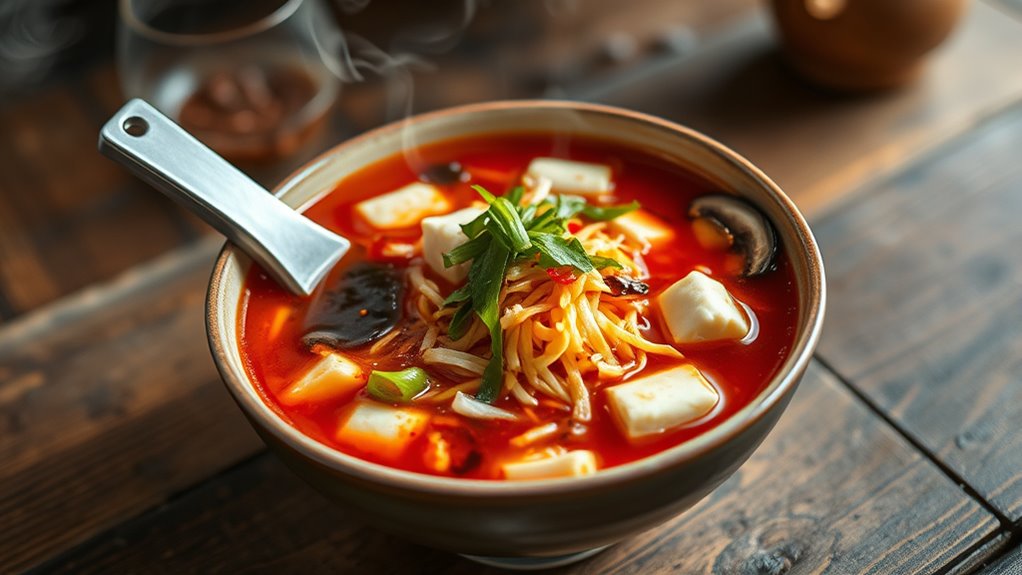
Chinese Hot and Sour Soup is a flavorful, comforting dish that perfectly balances spicy heat with tangy acidity. As you enjoy each spoonful, you’re tasting a dish with deep historical roots and a variety of regional twists. Its origins trace back centuries, rooted in the culinary traditions of northern China, where hearty, warming soups were essential for surviving cold winters. Over time, the recipe evolved as it spread across different regions, each adding their unique touch. In Sichuan, for example, you’ll find a version that’s particularly spicier, infused with Sichuan peppercorns that create a numbing heat, while in Jiangsu or Shanghai, the soup tends to be milder, emphasizing a balance of flavors. These regional variations reflect local ingredients and preferences, making Hot and Sour Soup a versatile dish that adapts to the palate of each area.
Historically, the soup’s origins are linked to ancient Chinese medicine, which valued the therapeutic properties of ingredients like vinegar, ginger, and garlic, believed to boost immunity and aid digestion. It was traditionally served in homes and small eateries, often as a restorative dish during harsh winters. As Chinese cuisine became more widespread, the soup’s popularity surged, leading to countless regional adaptations. For instance, some versions incorporate tofu, bamboo shoots, or wood ear mushrooms, depending on what’s locally available or culturally favored. The use of vinegar and white pepper is also variable, with some recipes emphasizing a more pronounced sourness, while others lean into the spiciness, creating a harmonious flavor profile that can be tailored to personal taste.
You’ll notice that regional variations also impact the soup’s consistency—some are broth-heavy and clear, highlighting the sharp, tangy flavors, while others are thicker, with cornstarch or egg ribbons adding body. Despite these differences, the core elements remain consistent: a balance of heat and sourness, combined with umami-rich ingredients like soy sauce or sesame oil. This flexibility allows you to experiment and create your ideal version. Whether you prefer it fiery and robust or milder and more subdued, understanding its historical background and regional influences enhances your appreciation for this comforting dish. So next time you make or order Hot and Sour Soup, remember it’s more than just a winter warmer; it’s a culinary story that spans centuries and regions, inviting you to enjoy a piece of Chinese culinary heritage.

Sunbird Hot & Sour Soup Mix Packets – Asian Soup Recipe – 1.34 Ounce Each Packet (Pack of 4)
Hot and Sour Asian Soup Recipe Seasoning Mix Packet – 1.34 Ounces Each (Pack of 4)
As an affiliate, we earn on qualifying purchases.
As an affiliate, we earn on qualifying purchases.
Frequently Asked Questions
Can I Make Chinese Hot and Sour Soup Vegan?
Yes, you can make Chinese hot and sour soup vegan. Use vegan substitutions like tofu instead of meat and plant-based broth instead of chicken or pork broth. Replace eggs with silken tofu blended in or omit them altogether. You can also add vegetables like mushrooms and bamboo shoots for extra flavor. With these tweaks, you’ll enjoy a flavorful, spicy, vegan hot and sour soup that’s just as comforting.
How Long Does Chinese Hot and Sour Soup Last in the Fridge?
Chinese hot and sour soup typically lasts 3 to 4 days in the fridge if stored properly. To maximize freshness, use airtight containers and refrigerate promptly after serving. Remember to check for signs of spoilage before eating leftovers. Proper refrigeration tips include keeping the soup at a consistent temperature below 40°F (4°C) and reheating thoroughly to enjoy safe, delicious leftovers.
What Are Authentic Ingredients for Traditional Hot and Sour Soup?
Think of authentic ingredients as the key to revealing traditional flavors in hot and sour soup. You’ll want to include shiitake mushrooms, bamboo shoots, tofu, and pork or chicken for the protein. Add vinegar for tanginess, soy sauce for depth, and white pepper for heat. Use eggs to create that silky texture, and thicken it with cornstarch. These ingredients bring the true essence of classic hot and sour soup to life.
How Spicy Should Chinese Hot and Sour Soup Be?
You should aim for a moderate spice level in Chinese hot and sour soup, enough to add warmth without overpowering the flavor balance. Adjust the heat by adding chili paste or pepper gradually, tasting as you go. Your goal is a harmonious blend of spicy, sour, and savory notes, so don’t let the spice dominate—keep it lively but well-balanced for an authentic experience.
Is Chinese Hot and Sour Soup Suitable for Gluten-Free Diets?
Yes, Chinese hot and sour soup can be suitable for gluten-free diets if you choose gluten-free options. You should look for ingredient substitutions like gluten-free soy sauce or tamari, and make certain that the broth and other ingredients don’t contain gluten. Always check labels and ask about preparation methods to avoid cross-contamination, so you can enjoy this spicy winter warmer safely and deliciously.

Soeos Sichuan Peppercorns, 4 Ounce(113g), Authentic Szechuan Red Peppercorn, Numbing and Tingle Effect, Less Seeds, Strong Flavor, Essential for Mapo Tofu, Kung Pao Chicken and Asine Cusine
NUMBING SENSATION: Sichuan peppercorns' unique aroma is not hot or pungent like black, white, or chili peppers; Instead,…
As an affiliate, we earn on qualifying purchases.
As an affiliate, we earn on qualifying purchases.
Conclusion
As you savor each spoonful, let the tangy warmth of hot and sour soup symbolize resilience, warming your spirit amidst winter’s chill. The bold flavors and comforting heat mirror life’s challenges, reminding you that even in the coldest times, a little spice can ignite hope. With every sip, embrace the symbolism of warmth and strength, knowing that like this soup, you can find comfort and courage to face whatever lies ahead.

Instant Hot and Sour Soup – 5 Packs | Ready-to-Eat Chinese Soup with Tofu and Vegetables | Savory Flavor, No Cooking Needed 海福盛酸辣汤Shipping from California, U.S.
Authentic Hot and Sour Flavor: Bold and tangy Chinese-style soup made with tofu, wood ear mushrooms, carrots, and…
As an affiliate, we earn on qualifying purchases.
As an affiliate, we earn on qualifying purchases.

Lyellfe Set of 10 Miso Soup Bowl with Spoon, Restaurant Quality Melamine Cereal Rice Bowl, 16 Oz Unbreakable Japanese Dinnerware for Ramen, Udon Noodle, Dishwasher Safe
Value Package: You will receive 10 pack miso soup bowls with matched spoons, complete tableware set to serve…
As an affiliate, we earn on qualifying purchases.
As an affiliate, we earn on qualifying purchases.