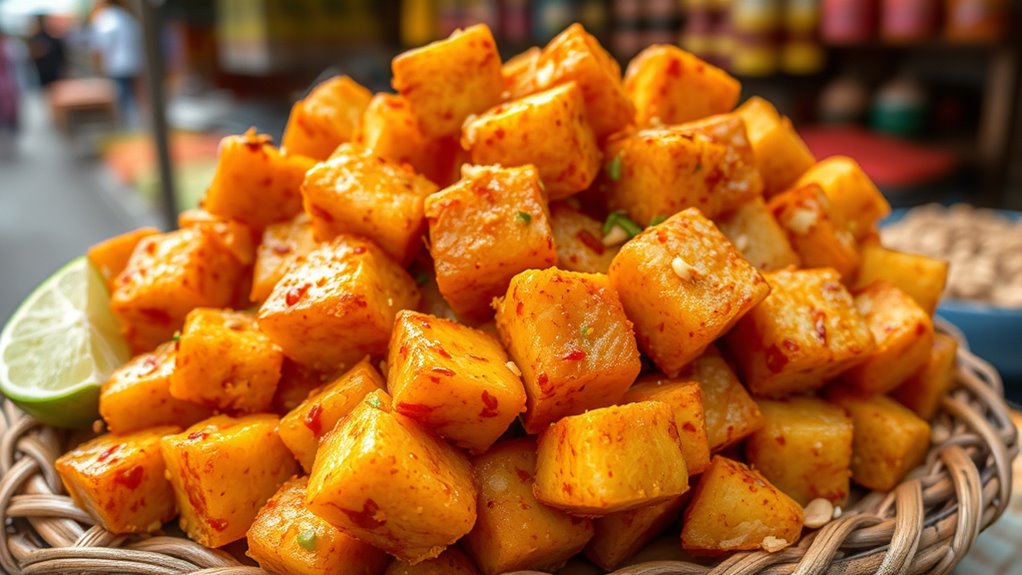

Ghanaian kelewele is a spicy, flavorful snack made from ripe plantains seasoned with ginger, cayenne, garlic, and salt, then fried to perfection. It’s a beloved part of Ghana’s street food culture and symbolizes community and tradition. Vendors serve kelewele at social gatherings, festivals, and late-night stalls, creating lively and aromatic experiences. This traditional treat offers a taste of Ghana’s vibrant culinary spirit—keep exploring to discover more about its cultural significance and preparation.
Key Takeaways
- Kelewele is a traditional Ghanaian street food made from ripe plantains seasoned with ginger, cayenne pepper, garlic, and salt.
- It symbolizes Ghana’s vibrant culinary culture, often enjoyed at social gatherings and festivals.
- The preparation involves blending spices into sliced plantains and frying until crispy and flavorful.
- Kelewele fosters community bonding, shared among friends and during celebrations across Ghana.
- It reflects the warmth, creativity, and rich traditions of Ghana’s street food scene.
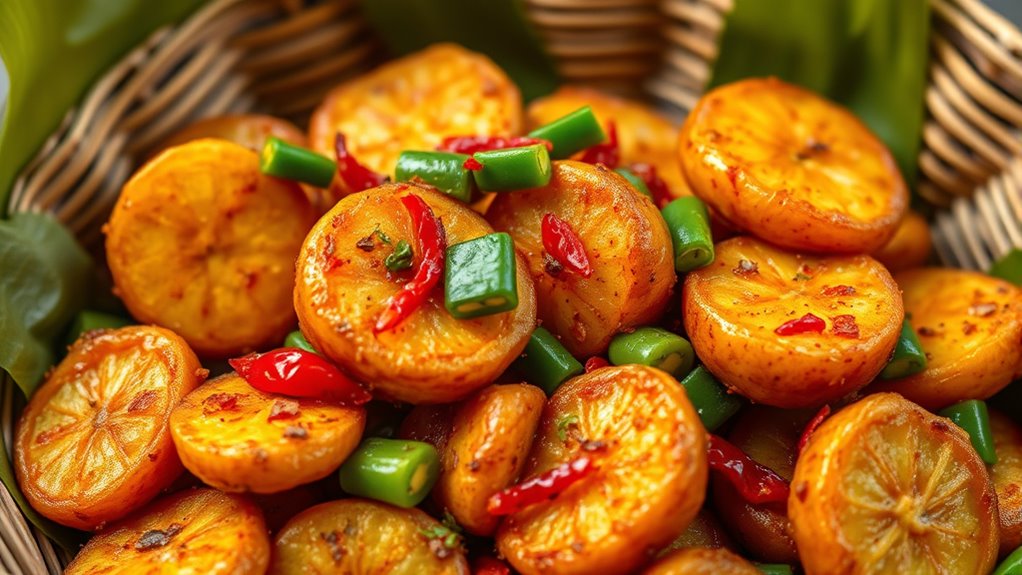
Ghanaian Kelewele is a spicy, flavorful street food that you’ll love to snack on. It’s a vibrant dish that captures the essence of Ghana’s rich culinary traditions and bustling street food culture. When you bite into kelewele, you’re not just tasting fried plantains; you’re experiencing a piece of Ghana’s history and social fabric. This dish holds a special place in Ghanaian communities, often served at social gatherings, festivals, and even late-night street stalls. Its popularity reflects the cultural significance of street food in Ghana, where food isn’t just about nourishment but about community, identity, and shared experiences.
Ghanaian kelewele is a spicy street food that celebrates community, tradition, and vibrant flavors.
In Ghana, street food culture is deeply rooted in everyday life. Vendors line the streets, offering kelewele alongside other local favorites, creating a lively, sensory-rich environment. When you walk through these streets, you’ll notice the aroma of spiced plantains wafting through the air, drawing locals and visitors alike. The preparation of kelewele is an art, blending ingredients like ginger, cayenne pepper, garlic, and salt into ripe plantains. This combination creates a perfect balance of heat and sweetness, making it an addictive snack that’s easy to eat on the go. As you enjoy kelewele, you become part of a tradition that’s been passed down through generations, a tribute to Ghana’s vibrant street food scene.
Kelewele is more than just food; it’s a social experience. You might see groups of friends sharing plates of kelewele, chatting animatedly as they enjoy the spicy bites. During festivals or celebrations, vendors set up stalls where people gather to indulge in this beloved snack. The dish’s cultural significance is evident in how it brings people together, fostering a sense of community and pride. Its presence on the streets symbolizes Ghana’s lively, welcoming spirit and its love for flavorful, accessible cuisine. When you partake in eating kelewele, you’re not only savoring a delicious treat but also immersing yourself in a cultural practice that unites people across ages and backgrounds.
In essence, Ghanaian kelewele embodies the heart of Ghana’s street food culture. It’s a reflection of the country’s warmth, creativity, and deep-rooted traditions. Whether you’re a tourist discovering it for the first time or a local enjoying it daily, kelewele offers a taste of Ghana’s soul—spicy, sweet, and unforgettable. It’s a snack that invites you to connect with the community, appreciate local flavors, and celebrate the vibrant culture that makes Ghana unique.
Frequently Asked Questions
What Are the Main Ingredients in Kelewele?
You’ll need ripe plantains, ginger flavor, and a blend of spices like cayenne or chili peppers for kelewele. The main ingredients also include salt and sometimes garlic or onion powder. You prepare it by slicing the plantains and frying them with the spices using frying techniques that guarantee a crispy exterior and tender interior. The ginger flavor adds a spicy kick, making each bite flavorful and irresistible.
How Is Kelewele Traditionally Served?
You’ll find that kelewele is traditionally served hot and street-style, often as a snack or appetizer. It’s usually accompanied by a sprinkle of additional spices or served with chilled drinks, balancing the spice level perfectly. For serving suggestions, enjoy it with roasted peanuts or alongside grilled meats. When you serve kelewele, remember, it’s all about sharing and savoring the bold flavors, making every bite a delightful experience.
Can Kelewele Be Made Vegan or Vegetarian?
Yes, you can easily make kelewele vegan or vegetarian. To do so, use vegan alternatives for any non-plant ingredients, like replacing honey with agave syrup or maple syrup. Stick to vegetarian options by avoiding animal-based additives. You simply season the fried plantains with spicy, flavorful ingredients like ginger, chili, and garlic, ensuring they stay delicious and suitable for a vegan or vegetarian diet.
What Is the Origin of Kelewele in Ghanaian Culture?
You’ll find that kelewele holds deep cultural significance in Ghana, dating back to the Ashanti Empire over 300 years ago. It’s more than just a snack; it’s a symbol of community and celebration. Its historical roots reflect Ghanaian zest for life, often enjoyed during festivals, ceremonies, and social gatherings. Knowing this, you’ll appreciate kelewele as a delicious tradition that embodies the vibrant spirit of Ghanaian culture.
Are There Regional Variations of Kelewele Across Ghana?
Yes, there are regional variations of kelewele across Ghana. You’ll notice different flavor profiles depending on the area, with some places emphasizing spicier or sweeter versions. Local spice blends often include ingredients like ginger, cloves, or ginger, which give each region’s kelewele a unique taste. These regional flavor profiles reflect local preferences and traditions, making each kelewele experience distinct and exciting for your taste buds.
Conclusion
Next time you try Kelewele, remember it’s more than just a tasty snack—it’s a Ghanaian tradition cherished nationwide. Did you know that Ghana consumes over 10,000 tons of plantains annually, with Kelewele being a popular street food favorite? So, when you enjoy this spicy fried delight, you’re partaking in a vibrant cultural experience. Embrace the bold flavors and rich history behind each bite, and let Kelewele bring a little Ghanaian warmth to your day.