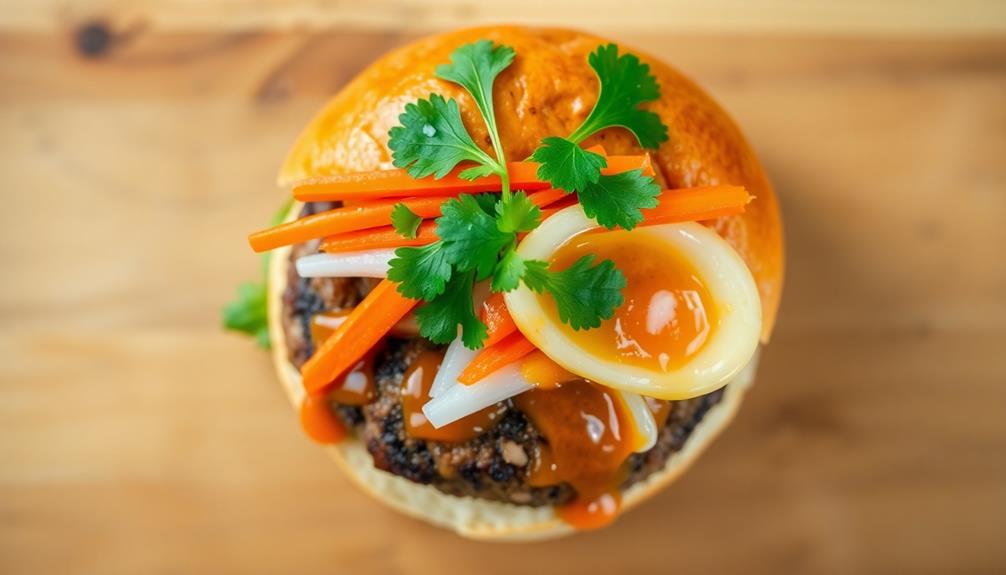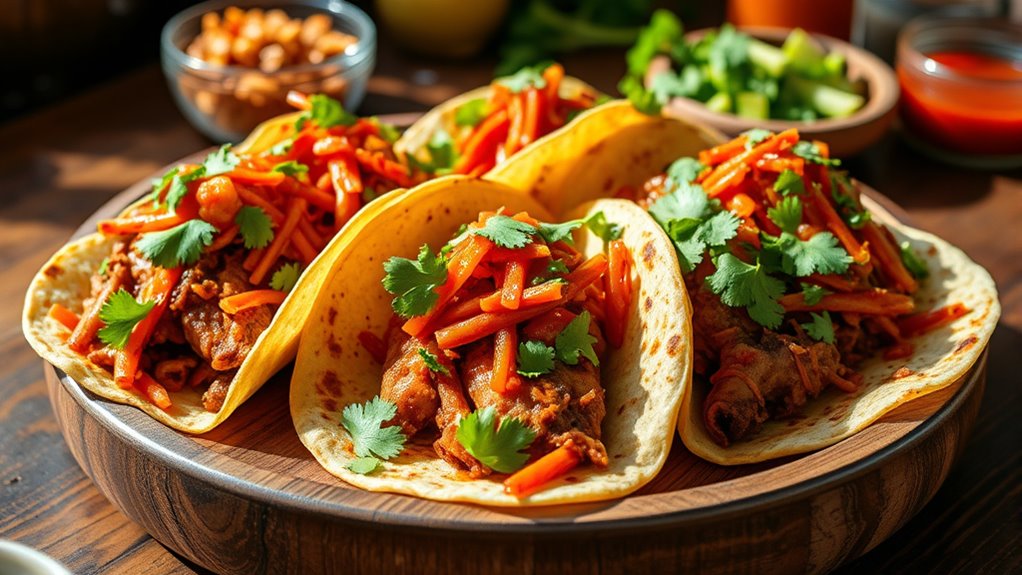

Fusion feast recipes like tacos with kimchi combine bold Latin flavors with delicate Asian ingredients to excite your palate. You’ll experiment with ingredients such as spicy salsas featuring mangoes and cilantro paired with Asian spices like five-spice powder or ginger. Balancing these contrasting flavors creates vibrant, multi-layered dishes that challenge traditional boundaries. If you’re enthusiastic to learn how to craft these innovative bites, exploring further will reveal how to perfect the harmony of Latin and Asian cuisines.
Key Takeaways
- Incorporate Asian spices like ginger and five-spice into Latin-inspired salsas for vibrant flavor layers.
- Use kimchi as a tangy, spicy topping to add contrast to Latin-style tacos.
- Balance acidity from rice vinegar and sweetness from tropical fruits to harmonize diverse ingredients.
- Experiment with fusion sauces combining soy, garlic, and chili to enhance taco fillings or serve as dips.
- Embrace bold flavor pairings and tasting adjustments for a dynamic, harmonious Latin-Asian fusion feast.
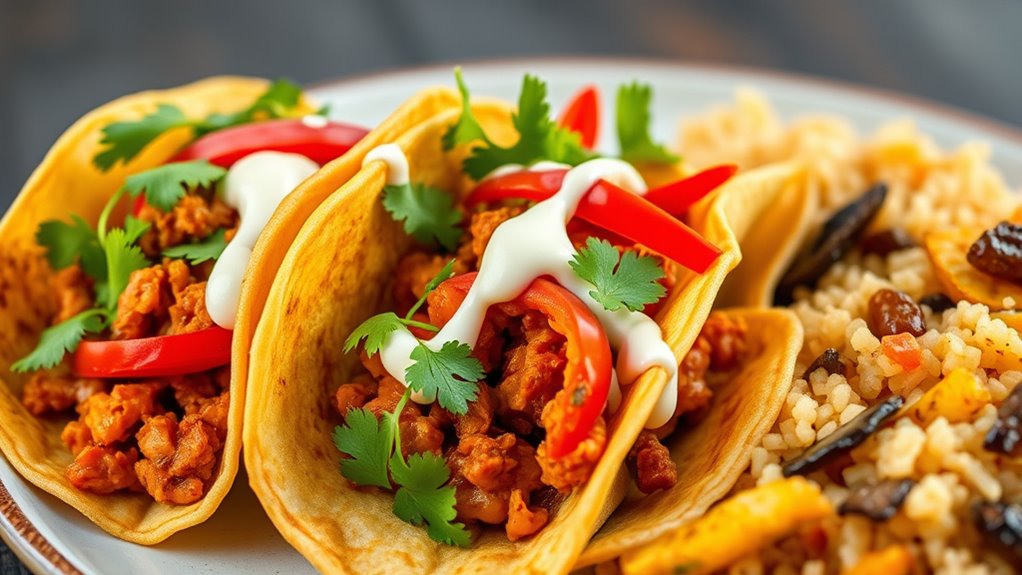
When you experience Latin-Asian fusion cuisine, you’re invited to explore bold flavors that blend the vibrant spices of Latin America with the delicate nuances of Asian cooking. This culinary mashup pushes boundaries, encouraging you to experiment with ingredients and techniques that create exciting, unexpected dishes. One of the key elements in mastering this fusion is understanding salsa techniques. Unlike traditional salsas, which often rely on tomatoes, Latin-Asian salsas incorporate ingredients like soy sauce, sesame oil, and rice vinegar to add depth and complexity. You might find yourself blending chopped mangoes or pineapples with finely diced onions, jalapeños, and cilantro, then tossing everything in a dressing that balances acidity with sweetness. The goal is to achieve a harmonious blend of textures and flavors that complement the dish without overpowering it. When working with Asian spices, you need to pay attention to their subtlety and how they interact with Latin ingredients. For example, adding a dash of five-spice powder to a salsa or marinade can introduce a warm, aromatic note that elevates the dish. You might also experiment with spices like turmeric, ginger, or lemongrass to bring out the delicate nuances of Asian cuisine while maintaining the zest of Latin flavors. Incorporating these spices into your salsa or marinade can transform a simple taco into a vibrant, multi-layered experience. The art lies in balancing these elements—too much Asian spice can overshadow Latin ingredients, while too little might not make an impact. You’ll want to taste as you go, adjusting the quantities until you find that perfect harmony. As you develop your skills, you’ll discover that the magic of Latin-Asian fusion is in the contrast and complement of flavors. For instance, pairing kimchi with grilled fish in a taco offers a tangy, spicy kick that pairs beautifully with a squeeze of lime and fresh cilantro. Using salsa techniques, you can also craft dipping sauces that marry soy sauce, garlic, and chili for a versatile condiment. These sauces can be drizzled over grilled meats, used as a dipping sauce, or even incorporated into rice bowls, adding layers of flavor that highlight the fusion concept. Ultimately, embracing both salsa techniques and Asian spices allows you to create dishes that are vibrant, complex, and perfectly balanced—transforming simple ingredients into a memorable culinary experience. Additionally, understanding the importance of personality traits such as open-mindedness and adaptability can help in experimenting successfully with fusion cuisines.
Top picks for "fusion feast latin"
Open Amazon search results for this keyword.
As an affiliate, we earn on qualifying purchases.
Frequently Asked Questions
How Do Latin and Asian Flavors Complement Each Other?
Latin and Asian flavors complement each other through creative ingredient pairing and cultural blending. You’ll notice how spicy, tangy, and savory elements from both cuisines balance perfectly, enhancing each dish’s complexity. The vibrant herbs, bold sauces, and unique textures work together to create exciting fusion dishes. By combining these flavors, you embrace a culinary adventure that highlights the best of both cultures, making every bite flavorful and memorable.
What Are the Most Popular Fusion Taco Varieties?
You’ll love popular fusion taco varieties like Korean BBQ with spicy gochujang sauce pairing and Mexican-inspired tacos topped with kimchi. Presentation styles often feature vibrant garnishes and colorful sauces, making each taco visually appealing. You can experiment with fillings like teriyaki chicken or tempura shrimp, blending flavors seamlessly. These tacos stand out because of their bold taste and creative presentation, offering a unique dining experience that highlights the exciting mix of Latin and Asian cuisines.
Can Fusion Dishes Cater to Specific Dietary Restrictions?
Fusion dishes are like a versatile puzzle, easily fitting your dietary needs. You can find gluten-free options or vegetarian adaptations that cater to specific restrictions. Chefs often customize recipes, swapping ingredients or altering cooking methods, so you don’t have to compromise your health or values. Whether you need a plant-based, dairy-free, or low-carb meal, fusion cuisine can be tailored to suit your dietary restrictions without losing flavor or excitement.
How Are Authenticity and Innovation Balanced in Fusion Cuisine?
You balance authenticity and innovation by respecting cultural preservation while embracing culinary experimentation. Stay true to traditional flavors and techniques that honor the origins of each cuisine, ensuring authenticity. Then, add creative twists to introduce new textures and combinations, making the dishes exciting. This approach allows you to honor cultural roots while pushing boundaries, resulting in fusion dishes that celebrate heritage and showcase your culinary creativity.
What Are Some Underrated Latin-Asian Fusion Dishes to Try?
Think of underrated Latin-Asian fusion dishes as hidden gems waiting to be uncovered. You should definitely try Korean-inspired ceviche, blending tangy citrus with spicy kimchi, or Latin bao buns filled with chorizo and kimchi. By focusing on ingredient sourcing and spice level customization, you can elevate these dishes to new heights. These lesser-known creations offer a delightful twist, inviting you to explore a world of bold flavors and culinary innovation.
Conclusion
As you savor these Latin-Asian fusions, remember they’re more than just flavors—they’re bridges connecting worlds. Each bite symbolizes unity in diversity, a dance of cultures blending seamlessly. Just like the vibrant ingredients coming together on your plate, your open mind can create a richer, more colorful life. Embrace the fusion, and let it remind you that harmony often begins with a simple, bold act—like trying something new. Your palate, and your world, will never be the same.