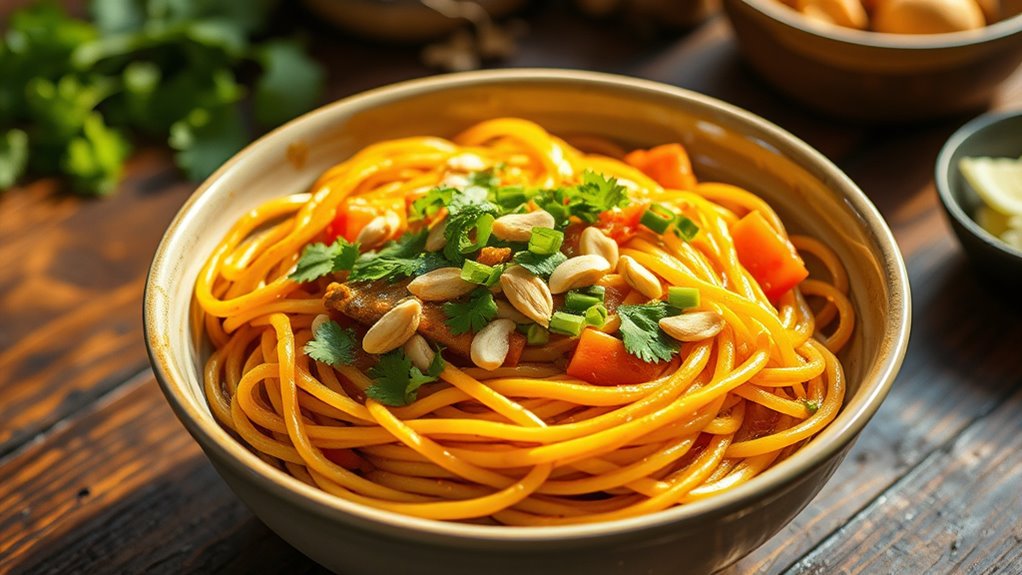
To explore Indian-Chinese “Hakka” noodles at home, start with high-heat stir-frying to achieve authentic smoky flavor and ideal texture. Incorporate Chinese ingredients like soy sauce and vinegar with Indian spices such as garam masala and chili powder for a rich, flavorful fusion. Customize the dish with your favorite proteins and vegetables to suit your taste. Continuing will reveal tips for perfecting the balance of flavors and mastering traditional techniques.
Key Takeaways
- Understand the history and cultural significance of Indian-Chinese fusion, especially Hakka noodles, to appreciate its culinary roots.
- Master high-heat stir-frying techniques to achieve authentic texture and smoky flavor in homemade Hakka noodles.
- Balance Chinese ingredients like soy sauce and vinegar with Indian spices such as garam masala and turmeric for a flavorful fusion.
- Customize the dish by adjusting spice levels, adding proteins, and vegetables to suit personal taste preferences.
- Experiment with different spice blends and ingredients to create unique, personalized versions of Indian-Chinese Hakka noodles at home.
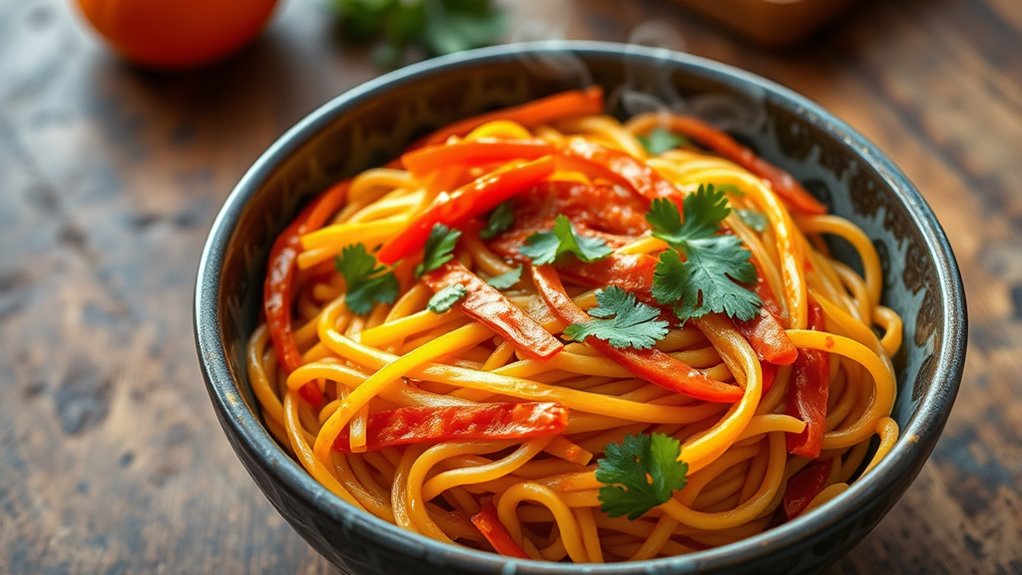
If you’re craving a flavorful fusion dish that combines the bold spices of India with the savory taste of Chinese cuisine, making Hakka noodles at home is a perfect choice. This dish exemplifies how cultural influences shape culinary traditions, blending ingredients and techniques from different regions to create something unique and delicious. The Indian-Chinese style, especially Hakka noodles, reflects a history of cultural exchange, where Chinese immigrants in India adapted their cooking to local tastes and ingredients. As a result, the dish carries a rich tapestry of flavors, spices, and techniques that have evolved over generations.
When preparing Hakka noodles, you’ll notice the importance of culinary techniques that define its character. High-heat stir-frying is essential; it ensures the noodles are cooked quickly at a roaring temperature, giving them a slightly smoky flavor and perfect texture. This method, common in Chinese cooking, is adapted here with an Indian twist—adding spices like garam masala, chili powder, or turmeric to the stir-fried vegetables and sauces. These techniques require you to work swiftly, combining ingredients in stages to preserve freshness and maximize flavor. The art lies in balancing the seasoning and ensuring the noodles absorb just enough spice without becoming overpowering.
Incorporating cultural influences into your cooking involves more than just adding spices. It’s about understanding the origins of the ingredients and techniques. For example, using soy sauce and vinegar echoes Chinese culinary roots, while adding Indian spices and herbs like coriander or green chilies infuses the dish with local flavor profiles. These influences influence not only the ingredients but also the way you approach cooking. You’ll need to master quick stir-frying methods, learn to balance savory, spicy, and tangy elements, and experiment with spice levels to suit your taste.
Making Hakka noodles at home gives you the opportunity to explore these cultural and technical aspects firsthand. You can experiment with different spice blends, adjust the heat, or add protein and vegetables to customize it to your liking. The key is respecting both culinary traditions—using the technique of high-temperature stir-frying—and cultural influences—melding spices and flavors from India and China. By doing so, you’ll craft a dish that’s authentic yet personalized, showcasing how diverse culinary techniques and cultural influences come together to create a truly flavorful fusion experience.
Frequently Asked Questions
What Are the Origins of Hakka Noodles in Indian Cuisine?
You’re curious about the origins of Hakka noodles in Indian cuisine. They stem from a history blending Chinese culinary traditions with Indian flavors, creating a unique cultural fusion. Hakka noodles were introduced to India by Chinese immigrants, especially those from the Hakka community, who adapted their recipes to local tastes. Over time, these noodles became a beloved street food, symbolizing the beautiful blending of two rich culinary heritages.
Can Hakka Noodles Be Made Gluten-Free at Home?
Yes, you can make gluten-free hakka noodles at home. Use gluten alternatives like rice flour, cornstarch, or gluten-free wheat substitutes to craft your noodles. Be mindful of cross-contamination concerns by thoroughly cleaning your utensils and workspace, especially if you’re using different ingredients. Follow a simple recipe, and you’ll have delicious, safe gluten-free hakka noodles that suit your dietary needs while still tasting authentic.
What Are Authentic Indian Spices Used in Hakka Noodle Recipes?
Imagine a vibrant marketplace, where regional spice blends awaken your senses. You’ll want to include cumin for earthy warmth, turmeric for a golden hue, coriander for subtle citrus notes, and garam masala for depth. These authentic Indian spices enhance flavor, creating a harmonious fusion in your Hakka noodles. Their aroma and taste bring a unique Indian-Chinese flair, elevating your dish with rich, layered complexity that’s both familiar and exciting.
How Can I Make Vegan Hakka Noodles Without Soy Sauce?
To make vegan Hakka noodles without soy sauce, swap it with vegan substitutes like coconut aminos or tamari, which add umami flavor. You can also boost flavor with ingredients like mushroom broth, miso paste, or nutritional yeast for depth. Stir-fry your vegetables with garlic and ginger, then toss everything together, ensuring each bite is flavorful and satisfying even without soy sauce.
What Are Common Side Dishes to Serve With Hakka Noodles?
Imagine crunchy spring rolls or colorful stir-fried vegetables alongside your hakka noodles, creating a vibrant, satisfying meal. These side dishes complement the savory, slightly chewy noodles with their crisp textures and fresh flavors. Spring rolls add a delightful crunch, while stir-fried vegetables bring a medley of colors and nutrients. Together, they balance your meal, making it hearty and inviting, perfect for a flavorful Indian-Chinese fusion dinner at home.
Conclusion
As you savor your homemade Hakka noodles, you subtly embrace a delightful harmony of flavors that gently bridge cultures. This culinary journey invites you to appreciate the nuanced blend of ingredients and techniques, creating a dish that quietly celebrates unity in diversity. With each bite, you experience a refined dance of tradition and innovation, reminding you that the most memorable flavors often arise from the soft intersection of different worlds, inviting continuous exploration and shared moments.