
To embrace zero-waste cooking, collect vegetable scraps like onion skins, carrot ends, or celery leaves in a designated container. When making stock, boil these scraps in water to extract flavor, then strain for a rich broth while reducing waste. Keep your scraps organized and accessible to streamline the process. If you want to discover tips on optimizing your kitchen for sustainability and flavor, you’ll find plenty of helpful ideas ahead.
Key Takeaways
- Collect vegetable scraps like onion skins, carrot ends, and celery leaves in a designated container for easy access.
- Boil scraps in water to extract flavor, then strain to create homemade vegetable stock.
- Label and organize scraps by type to streamline stock preparation and prevent spoilage.
- Use scraps promptly before they spoil to maximize flavor extraction and reduce waste.
- Incorporate composting for scraps not used in stock to further minimize kitchen waste and enrich soil.
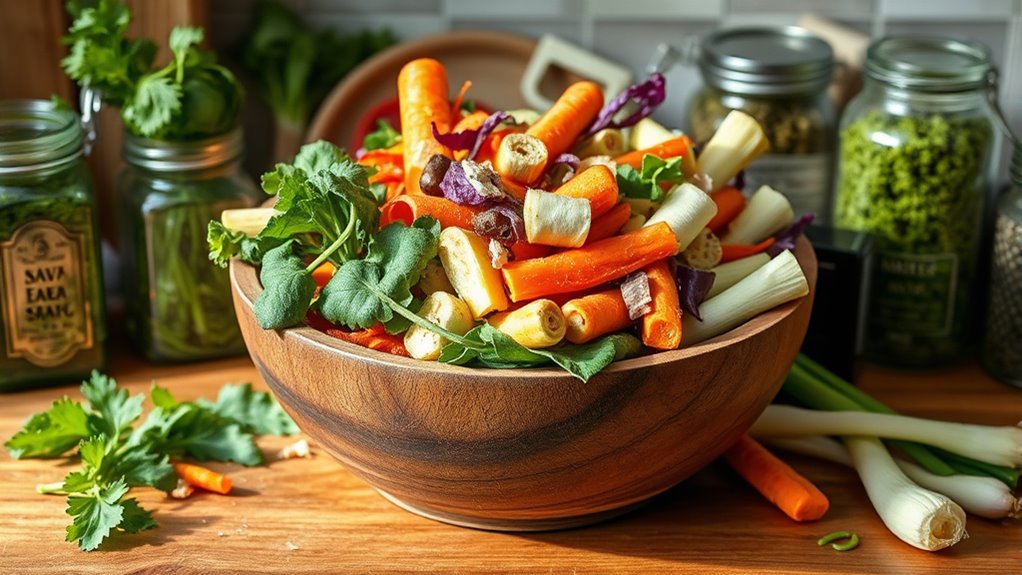
In today’s world, reducing food waste is more important than ever, and zero-waste cooking offers a practical way to do just that. One of the most effective strategies is using vegetable scraps to make flavorful stock, which not only minimizes waste but also enhances your cooking. To start, you need to master composting techniques and improve your kitchen organization. Keeping vegetable scraps in a designated container makes it easier to collect and use them efficiently, guaranteeing you won’t discard useful parts like onion skins, carrot ends, celery leaves, or mushroom stems. Labeling your scraps or designating a specific bin helps keep your kitchen tidy and encourages regular use.
Once you have your scraps collected, it’s vital to understand how composting techniques tie into your zero-waste approach. Composting transforms scraps into nutrient-rich soil, but in the context of stock-making, you’ll primarily focus on extracting flavor. When making vegetable stock, you can simply boil the scraps in water, then strain out the solids, leaving behind a rich, aromatic liquid. This method reduces waste and provides a homemade alternative to store-bought broth. To streamline this process, keep your scraps organized by type or use, so you can quickly gather what’s needed for each batch. Keeping your kitchen organized means you’re less likely to forget about scraps or let them spoil, which helps prevent unnecessary waste. Proper storage techniques can further prolong the freshness of your scraps and maximize their usability.
Efficient kitchen organization plays a vital role here. Designate specific containers or sections in your fridge or pantry for vegetable scraps, making it easy to access when you’re ready to make stock. Label these containers clearly to avoid confusion and to guarantee you use scraps while they’re fresh. Also, consider creating a dedicated space near your stove or sink for storing scraps temporarily, so they’re within arm’s reach during your cooking process. This setup encourages consistency and helps you integrate zero-waste practices seamlessly into your routine. Making stock from scraps becomes second nature when your kitchen is well-organized, and waste is minimized.
Frequently Asked Questions
How Long Can Vegetable Scraps Be Stored Before Making Stock?
You can store vegetable scraps for up to 1-2 weeks before making stock, but it’s best to use them sooner to prevent spoilage. Keep scraps in an airtight container or freezer bag, and store them in the freezer to extend their freshness. Proper storage duration helps prevent spoilage and preserves flavor, ensuring your stock turns out rich and tasty. When you’re ready, just simmer the scraps to create a flavorful, zero-waste broth.
Are There Vegetables Whose Scraps Shouldn’T Be Used in Stock?
Sure, you wouldn’t want to turn your stock into a toxic vegetable stew, right? Some scraps, like those from toxic vegetables or ones that trigger allergic reactions, should be avoided. Think of bitter gourd or eggplants with mold—they can introduce harmful compounds. Using these might give you more than just a bad flavor; it could cause health issues. Always know your vegetables before tossing scraps into your stock pot!
Can Fruit Scraps Be Used in Vegetable Stock?
Yes, you can use fruit scraps in vegetable stock to add a touch of sweetness and depth. Fruit scraps like apple or pear peels, citrus rinds, or berry stems can enhance the flavor without overpowering the vegetable base. Just be mindful to balance the sweetness and acidity, so your stock remains vegetable-flavored and versatile for soups or sauces. Always rinse scraps thoroughly before adding to your stock.
How Do I Prevent Stock From Becoming Cloudy?
To keep your stock clear, use clarity enhancement techniques like skimming the surface regularly to remove foam and impurities. Maintain a gentle simmer instead of a vigorous boil, which helps prevent cloudiness caused by agitation. Strain the stock through a fine-mesh sieve, and avoid stirring during cooking. These simmering techniques ensure your stock stays beautifully clear, preserving its flavor and presentation.
What Are Some Creative Ways to Use Leftover Vegetable Scraps Besides Stock?
You can turn leftover vegetable scraps into incredible flavor bombs! Toss leafy greens into smoothies for a nutritional boost, or sauté root vegetable peels with garlic and herbs for a crispy snack. Use peels to make infused oils or add them to compost for rich soil. These creative uses make every scrap count, transforming what seems useless into delicious, eco-friendly treasures that elevate your cooking and reduce waste.
Conclusion
By embracing zero-waste cooking and using vegetable scraps for stock, you’re not just saving scraps—you’re saving the planet one simmer at a time! Imagine turning tiny leftover bits into a liquid gold so powerful, it could make your dishes taste like they were crafted by culinary wizards. So go ahead, chop those ends, save those peels, and become a kitchen hero—your wallet, the planet, and your taste buds will thank you for it!