To store and freeze leftovers effectively, divide large portions into shallow containers for quick cooling and refrigerate within two hours, or one hour if it’s hot outside. Label your storage with dates and use airtight containers or freezer bags to prevent freezer burn. Freeze in small portions and thaw safely in the fridge or microwave. Reheat thoroughly to ensure safety. Keep your leftovers fresh, safe, and flavorful—continue to explore more tips for smooth leftover management.
Key Takeaways
- Cool leftovers promptly in shallow containers and refrigerate within 1-2 hours to prevent bacteria growth.
- Label containers with dates and store in the refrigerator for no more than 3-4 days.
- Use airtight containers or freezer bags, removing excess air to prevent freezer burn during freezing.
- Freeze leftovers in small portions and store in the coldest part of the freezer for 3-6 months.
- Thaw safely in the fridge or microwave, then reheat to an internal temperature of 165°F before consuming.
Ever wondered what happens to surplus food and materials after a major event or meal? If you’re like most people, leftovers can pile up quickly, and knowing how to store and freeze them properly is key to reducing waste and maintaining food safety. When it comes to leftovers, proper handling starts right after the meal prep. You want to clear and cool food promptly to prevent bacteria growth. The first step is to divide large portions into smaller, shallow containers. This speeds up cooling and ensures the food reaches a safe temperature faster. Always refrigerate leftovers within two hours of serving; if the room temperature is above 90°F, do it within an hour. This quick action helps keep leftovers safe to eat later.
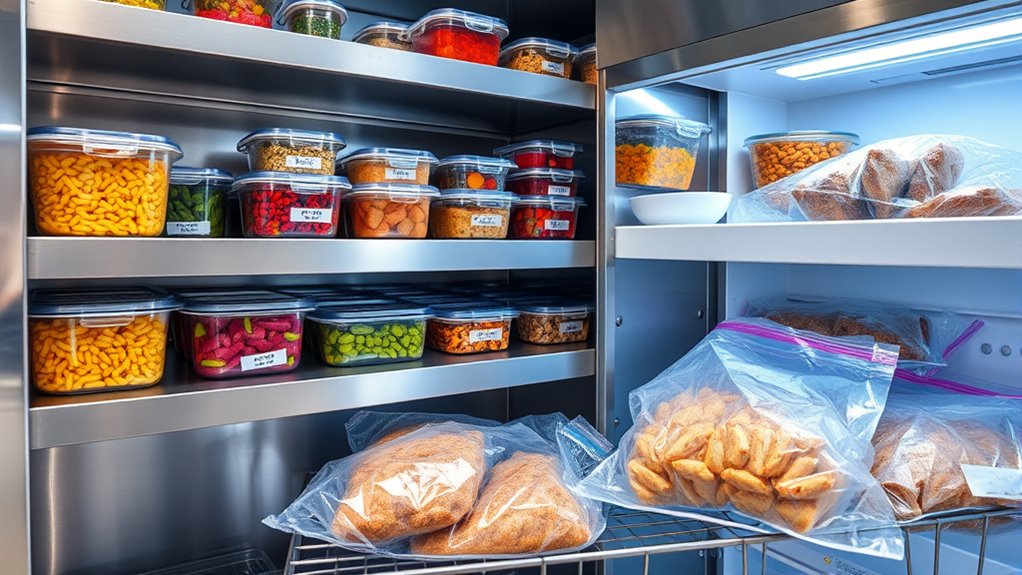
Food safety is essential when storing leftovers, and it’s important to be mindful of how long food stays in the danger zone—between 40°F and 140°F. Bacteria thrive in this range, so don’t keep leftovers for more than three to four days in the fridge. Label containers with dates, so you know exactly when the food was stored. When you’re planning to freeze leftovers, use airtight containers or freezer bags designed for long-term storage. Removing excess air from bags helps prevent freezer burn, which affects texture and flavor. For best results, freeze leftovers in small portions—this makes it easier to defrost only what you need later. Remember to leave some space at the top of containers or bags, as liquids expand when frozen.
Label leftovers with dates and store in airtight containers to prevent freezer burn and maintain quality.
Freezing is a great way to extend the life of leftovers, but it’s important to follow proper techniques to preserve food quality. Use the coldest part of your freezer, and try to consume frozen leftovers within three to six months for maximum taste and safety. When you’re ready to eat, thaw leftovers safely by transferring them to the fridge overnight or using the microwave. Avoid thawing at room temperature, as this can allow bacteria to multiply. Once thawed, reheat leftovers thoroughly to an internal temperature of 165°F, ensuring they’re hot all the way through. This step is essential in maintaining food safety, especially if you’ve stored cooked meats or seafood. Incorporating proper storage media such as vacuum-sealed bags can further extend freezer life and preserve flavor.
Managing leftover logistics isn’t just about saving food—it’s about doing it safely and efficiently. Proper meal prep, storage, and freezing techniques help you reduce waste, save money, and enjoy leftovers without worry. By paying attention to food safety guidelines and handling leftovers promptly, you keep your meals fresh and your family protected from foodborne illnesses. The next time you’re faced with surplus food, remember that thoughtful storage and freezing practices can turn potential waste into a safe, delicious meal later on.
Frequently Asked Questions
How Long Can I Store Cooked Leftovers Safely?
You can store cooked leftovers safely for 3 to 4 days in the fridge. Follow food safety tips by using airtight storage container options like plastic or glass to keep food fresh and prevent contamination. Make sure to cool leftovers quickly before refrigerating, and label containers with dates. If you want to keep leftovers longer, freeze them, where they can last 2 to 6 months, depending on the food.
What’s the Best Way to Thaw Frozen Leftovers?
Did you know 90% of food safety experts recommend thawing leftovers in the refrigerator? To do this securely, plan ahead and allow several hours or overnight for slow thawing. Use thawing methods like refrigeration, cold water, or the microwave, but always follow safety tips: keep food at safe temperatures, avoid leaving leftovers out, and cook promptly after thawing. This ensures your leftovers stay safe and delicious.
Can I Refreeze Leftovers After Thawing?
You can refreeze leftovers after thawing, but only if they’ve been kept at safe temperatures. For example, refreezing cooked meats and seafood is okay if they were thawed in the fridge and haven’t sat out too long. Avoid refreezing leftovers that have been left at room temperature for more than two hours, as bacteria can grow. Always reheat thoroughly before eating to guarantee safety.
How Do I Prevent Freezer Burn on Stored Food?
Freezer burn is a sneaky enemy that can ruin your food’s quality. To prevent it, always use airtight containers to keep moisture in check and avoid air exposure. Wrap foods tightly with plastic wrap or aluminum foil before sealing them in containers. Maintaining consistent freezer temperatures also helps. These simple steps act like a shield, preserving your leftovers in pristine condition, so they taste just as fresh as when you first stored them.
Which Leftovers Are Unsafe to Freeze?
You should avoid freezing leftovers like cooked eggs, soft cheeses, and creamy sauces, as they can change texture and compromise food safety. Fruits and vegetables with high water content may become mushy once frozen. Follow proper storage guidelines to prevent bacterial growth and spoilage. If you’re unsure about safety, it’s best to consume leftovers promptly or use different preservation methods to ensure your food remains safe and tasty.
Conclusion
So next time you find yourself with leftovers, remember how simple storage and freezing can save your meal—and maybe even a dinner date. It’s funny how a little planning can turn forgotten food into a delicious surprise later. You might just stumble upon that forgotten container months from now, still perfectly good. Leftover logistics isn’t just about saving food; it’s about discovering unexpected moments of convenience—and maybe a little bit of luck tucked inside your freezer.