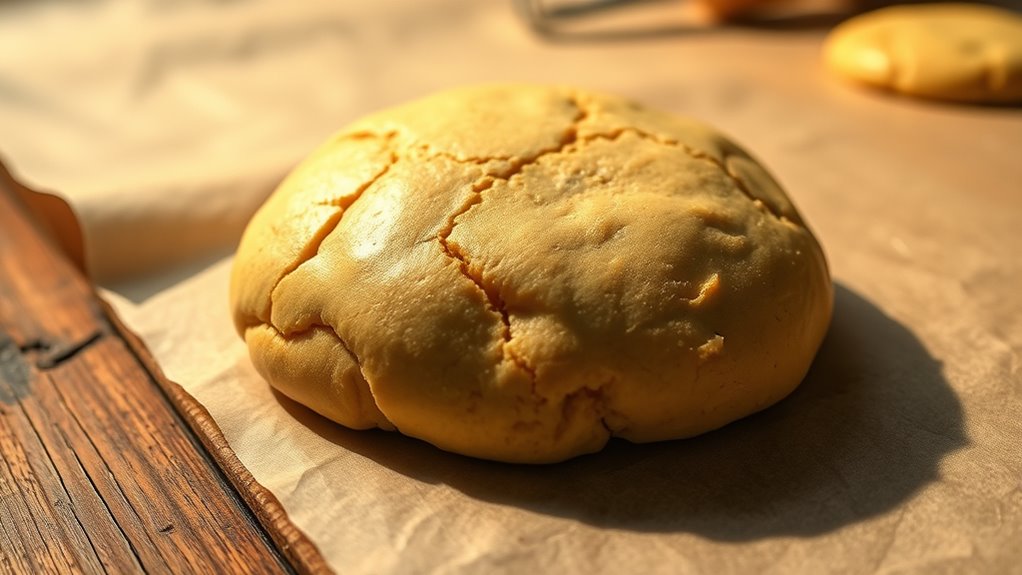

Resting dough is essential because it allows gluten to relax, making it easier for you to shape, and lets fermentation develop flavors and create a light, airy texture. During this time, enzymes work on starches and proteins, improving the dough’s overall quality. Proper resting prevents cracks and shrinkage, ensuring a better final product. Understanding how resting transforms your dough can help you achieve bakery-quality results—explore further to reveal its full potential.
Key Takeaways
- Resting relaxes gluten strands, making dough easier to shape and preventing shrinkage during baking.
- It allows fermentation to develop flavors and produce carbon dioxide for better dough rising.
- Resting enables enzymatic activity that improves dough texture and enhances taste.
- Covering dough prevents drying out, ensuring moisture retention for a smoother, more manageable dough.
- Proper resting results in more consistent, tender, and flavorful baked goods.
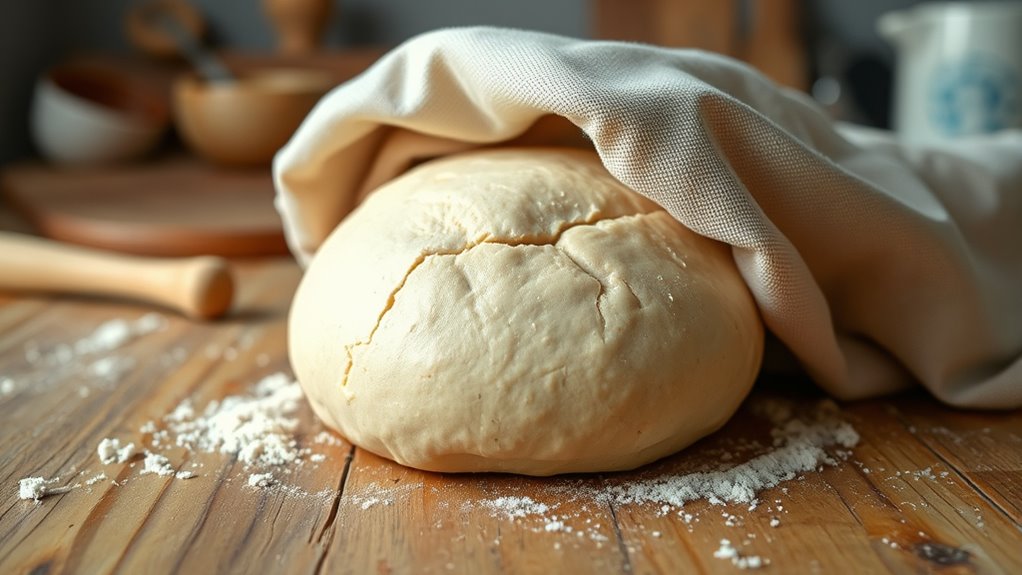
Resting dough is an essential step in many baking processes because it allows gluten strands to relax, resulting in a more manageable and tender final product. When you let your dough rest, you give the dough time to undergo important chemical and physical changes that improve its texture and flavor. One key aspect of this process is the fermentation process, especially when working with yeast or sourdough. During fermentation, yeast consumes sugars in the dough, producing carbon dioxide and alcohol. This not only causes the dough to rise but also contributes to developing complex flavors. Resting allows fermentation to continue gradually, ensuring that these flavors mature and the dough becomes more cohesive.
Another indispensable reason for resting your dough is to facilitate gluten development. Gluten is a protein network that forms when water interacts with the proteins in flour. As you knead or mix your dough, gluten strands begin to develop, giving the dough elasticity and strength. However, overworking the dough can make it tough and difficult to shape. Resting gives these gluten strands time to relax and realign, making the dough easier to handle. It also prevents it from shrinking back when you’re trying to roll or shape it, which is especially important for delicate pastries or bread.
The duration of resting depends on the type of dough you’re working with. For bread, longer resting periods—sometimes several hours or even overnight—allow for better gluten development and fermentation, resulting in a lighter, airier crumb. For cookies or pastry dough, shorter rests—often just 30 minutes to an hour—help relax the gluten enough to make rolling easier and improve texture. During resting, enzymes in the flour continue to act on starches and proteins, further enhancing the dough’s qualities. This process also allows moisture to distribute evenly throughout, reducing cracks and uneven surfaces when baked. Additionally, incorporating resting time into your baking routine can enhance flavor complexity by allowing more time for fermentation and enzymatic activity.
To maximize the benefits of resting, you should cover your dough with plastic wrap or a damp cloth to prevent it from drying out. Resting in a cool environment slows down fermentation, preventing over-proofing, which can lead to a sour taste or overly soft texture. Ultimately, taking the time to rest your dough leads to a more predictable, consistent bake and better overall flavor and texture. Whether you’re making bread, cookies, or pastries, understanding and respecting the resting process elevates your baking from good to great.
Frequently Asked Questions
How Does Resting Dough Affect Gluten Development?
Resting dough allows the gluten network to develop properly, giving it strength and elasticity. During this time, dough relaxation occurs, which reduces toughness and makes it easier to work with. As the gluten strands relax, the dough becomes more supple, leading to better texture in your cookies or bread. By giving your dough time to rest, you guarantee a more consistent, well-structured final product with improved flavor and appearance.
Can Resting Dough Improve Flavor Complexity?
Resting dough can definitely improve flavor complexity through fermentation benefits. As you let the dough rest, natural enzymes break down starches and proteins, releasing sugars and amino acids that enhance taste. This fermentation process develops deeper, richer flavors, making your baked goods more satisfying. So, by giving your dough time to rest, you allow these flavor-enhancing reactions to occur, resulting in a more nuanced and delicious final product.
What Are the Best Storage Conditions for Resting Dough?
You should store resting dough in a cool, airtight container to maintain ideal temperature control and humidity levels. Keep it in the refrigerator at around 37-40°F (3-4°C) to slow fermentation without drying out. Cover the dough tightly to prevent moisture loss and unwanted odors. Avoid temperature fluctuations, which can affect texture and flavor. Proper storage ensures your dough stays fresh, easy to work with, and develops the best flavor.
How Does Resting Influence Dough Elasticity?
It’s interesting how resting dough promotes relaxation, which directly enhances its elasticity. As you let it sit, the gluten strands unwind, allowing the dough to become more pliable and easier to shape. This process, known as dough relaxation, results in improved elasticity, making your baked goods lighter and more tender. Resting isn’t just about waiting; it’s about actively improving the dough’s structure, ensuring your final product has the perfect texture and stretch.
Is There a Difference in Resting Times Between Cookies and Bread?
Yes, there’s a difference in resting times between cookies and bread. For bread, resting allows dough fermentation and ingredient diffusion, which develop gluten and flavor, often lasting from 1 to 2 hours or longer. Cookies typically rest for 30 minutes to enhance ingredient diffusion and improve texture, but don’t require extensive fermentation. Adjust resting times based on recipe goals to optimize dough elasticity and final product quality.
Conclusion
So, remember, giving your dough some rest isn’t just a simple step—it’s a gentle pause that lets flavors deepen and textures settle. When you allow your dough this quiet moment, you’re subtly inviting better results without rushing the process. Embrace the patience; it’s a quiet act of care that pays off in every bite. Sometimes, the smallest pauses create the most memorable moments in your baking journey.