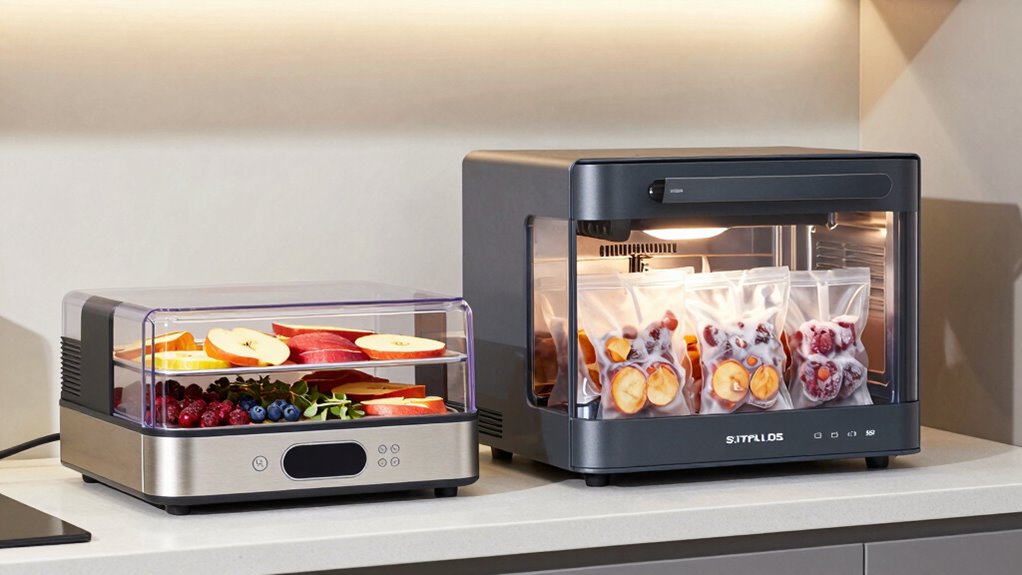

Choosing between a dehydrator and a freeze dryer depends on your kitchen goals. If you want an affordable, compact option for quick snacks, herbs, or short-term storage, a dehydrator is ideal. For long-term preservation of delicate foods, nutrients, and complex flavors, a freeze dryer is a better investment, though it takes up more space and costs more upfront. To make the best decision for your needs, explore the details below to learn more.

Get kitchen staples and gadgets delivered free with Prime
- Fast, free delivery on millions of items
- Prime Video, Amazon Music and more included
- Member-only deals all year
Key Takeaways
- Choose a dehydrator for quick, cost-effective preservation of fruits, herbs, and snacks with simpler operation and space efficiency.
- Opt for a freeze dryer to preserve delicate foods and nutrients for long-term storage, especially if you prioritize flavor and texture retention.
- Consider your budget: dehydrators are affordable and energy-efficient; freeze dryers require a higher initial investment but offer extended shelf life.
- Assess available space: dehydrators are compact, suitable for small kitchens; freeze dryers are larger and need dedicated, well-ventilated areas.
- Match your preservation goals: dehydrators suit short-term needs and flavor enhancement; freeze dryers excel for long-term, high-quality food storage.
home dehydrator for fruits and herbs
As an affiliate, we earn on qualifying purchases.
As an affiliate, we earn on qualifying purchases.
What Are Dehydrators and Freeze Dryers, and How Do They Work?
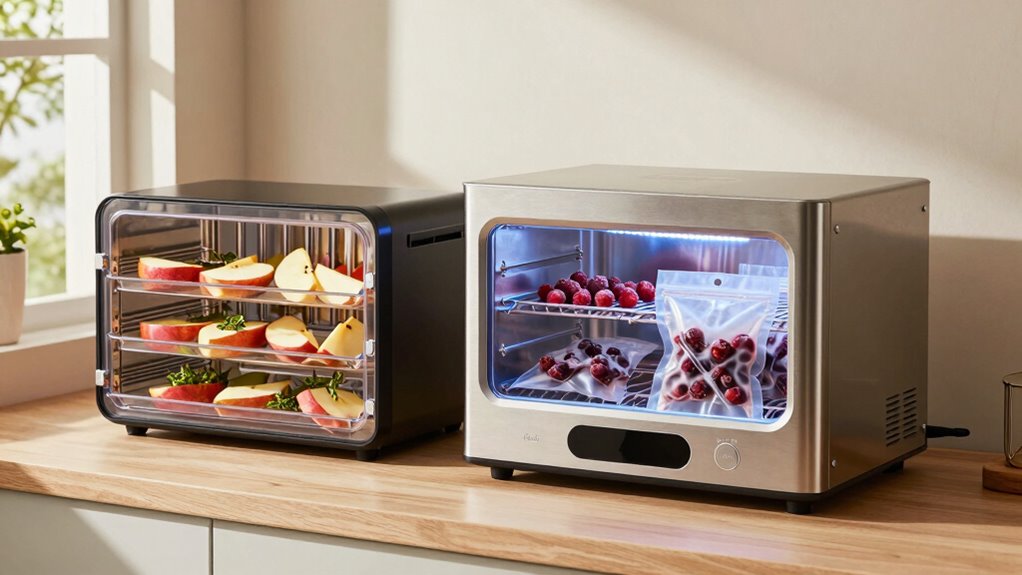
Dehydrators and freeze dryers are appliances designed to remove moisture from food, but they do so through different processes. Dehydrators use low heat and airflow to slowly evaporate water, which helps preserve flavor and texture better than other methods. They maintain the food’s original structure, keeping it chewy or crunchy as intended. Freeze dryers, on the other hand, freeze the food first and then remove moisture via sublimation, turning ice directly into vapor. This process preserves more of the food’s nutrients, flavor, and original texture. Freeze drying results in lightweight, crisp products that retain their shape and flavor better over time. Both appliances aim to extend shelf life, but their methods impact flavor retention and texture preservation differently. Understanding the underlying comparative advantage of each method can help you choose the best option for your kitchen goals.
Cost and Space Differences Between Dehydrators and Freeze Dryers
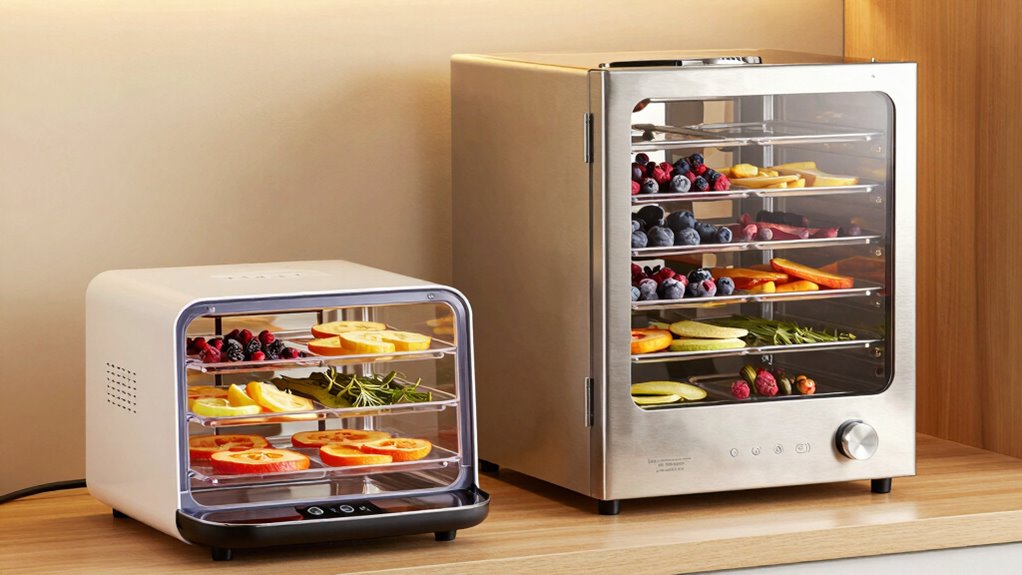
When comparing dehydrators and freeze dryers, you’ll notice a big difference in initial costs, with freeze dryers typically requiring a much larger investment. Storage space is also a factor, as freeze dryers are bulkier and take up more room than dehydrators. Additionally, operating costs vary, with freeze dryers generally consuming more energy over time. For those interested in sustainable practices, natural options like eco-friendly pools can complement a mindful approach to backyard projects. Moreover, the energy efficiency of dehydrators often makes them a more economical choice for regular use. Understanding the scientific principles behind each method can help you choose the best appliance for your specific needs.
Initial Investment Variations
While both dehydrators and freeze dryers require upfront investments, the costs and space needs can vary considerably. The initial investment for a dehydrator is generally lower, making it more accessible for most home cooks. Freeze dryers, however, tend to have a higher cost comparison due to their advanced technology and larger size. Here are some key points to think about:
- Dehydrators typically cost between $50 and $500, depending on size and features.
- Freeze dryers can range from $2,000 to over $10,000, reflecting their complexity.
- Space for dehydrators is usually compact, fitting easily on countertops or shelves. Proper ventilation is important for freeze dryers due to their size and operational requirements.
- Freeze dryers require a dedicated, larger area due to their size and ventilation needs. Additionally, their energy consumption can be significantly higher, impacting ongoing costs. Considering the initial investment can help determine the most suitable option for your long-term preservation goals.
- It’s also important to consider the cost-effective outreach of these appliances, especially if you plan to preserve large quantities of food regularly.
Your choice depends on your budget and available kitchen space.
Storage Space Requirements
Considering the space you have available, dehydration and freeze drying equipment differ considerably in both size and cost. Dehydrators are compact, often fitting easily on countertops or shelves, while freeze dryers are notably larger, requiring dedicated space. Freeze dryers also demand more storage for packaging methods, as their vacuum-sealed packages can be bulkier. Climate impact plays a role too; freeze drying is more sensitive to humidity, influencing storage needs to prevent moisture absorption. Dehydrated foods, being lightweight and dry, require minimal packaging space. In contrast, freeze-dried foods, while light, need robust packaging to maintain quality. Your available storage and climate conditions will help determine which appliance best fits your kitchen setup and long-term storage plans. Additionally, understanding building and legal considerations can be important if you plan to customize or set up dedicated storage or drying areas in your home.
Operating Cost Differences
Dehydrators generally have lower upfront costs and operate more economically over time compared to freeze dryers. Their energy consumption is minimal, making them cheaper to run day-to-day. Maintenance costs are also lower, as dehydrators have fewer complex parts and less frequent servicing. Freeze dryers, on the other hand, require more power due to their refrigeration and vacuum systems, increasing energy bills. Additionally, they tend to have higher maintenance costs because of their intricate components. Here are key differences: 1. Dehydrators use less energy overall. 2. Freeze dryers consume markedly more power. 3. Maintenance costs are lower for dehydrators. 4. Freeze dryers require more frequent repairs and servicing. When considering long-term operating costs, it’s important to evaluate both initial investment and ongoing expenses. The space requirements for freeze dryers are also typically larger, which can influence your kitchen setup and storage options. Choosing one depends on your budget for ongoing expenses and energy efficiency.
How Do Food Quality and Nutritional Value Vary With Drying and Freeze Drying?
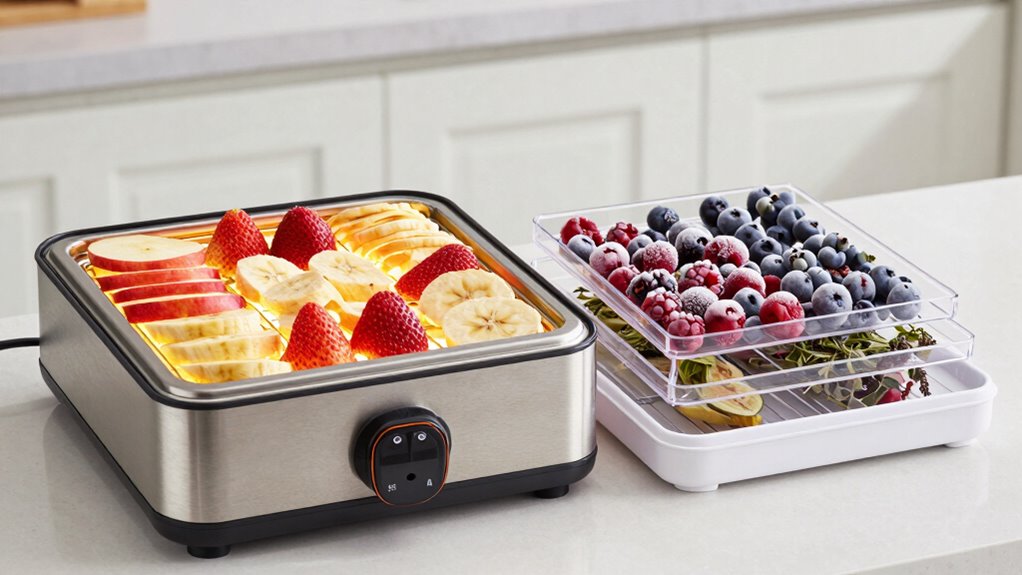
Drying and freeze drying considerably impact the food’s quality and nutritional content, but in different ways. Drying can cause nutrient loss and alter flavor, but it often retains moisture and texture better than freeze drying. Freeze drying preserves more nutrients and flavor due to minimal heat exposure, maintaining better overall quality. Additionally, understanding chemical stability during these processes can help optimize food preservation techniques.
Which Preservation Method Is Best for Fruits, Vegetables, and Herbs?
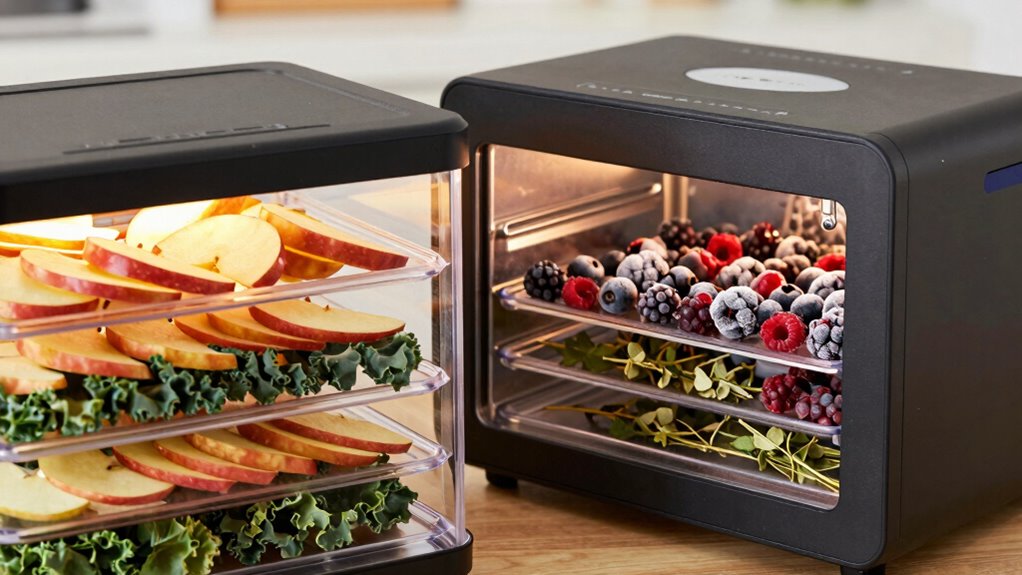
When choosing the best preservation method for fruits, vegetables, and herbs, it’s important to weigh factors like flavor, nutrients, ease of use, and storage needs. Freeze drying generally offers superior flavor retention and minimal texture modification, keeping produce closer to its fresh state. Dehydrators, on the other hand, may cause more texture changes but are often simpler and quicker to operate. Consider these options:
Freeze drying preserves flavor and nutrients best, keeping produce closest to fresh.
- Freeze drying preserves flavor and nutrients best, ideal for long-term storage.
- Dehydrators are more affordable and easier to use but may affect texture.
- Fruits benefit most from freeze drying for taste, though dehydrated options are convenient.
- Herbs retain aroma and flavor better through freeze drying, while dehydration might dull their potency.
- Additionally, modern composting toilets can enhance bathroom sustainability, aligning with eco-friendly kitchen practices. Understanding the differences in food preservation methods can help you make informed decisions based on your specific needs and priorities.
Choose based on your priorities—flavor, texture, or ease of use.
Is It Easy to Use and Maintain Dehydrators and Freeze Dryers?
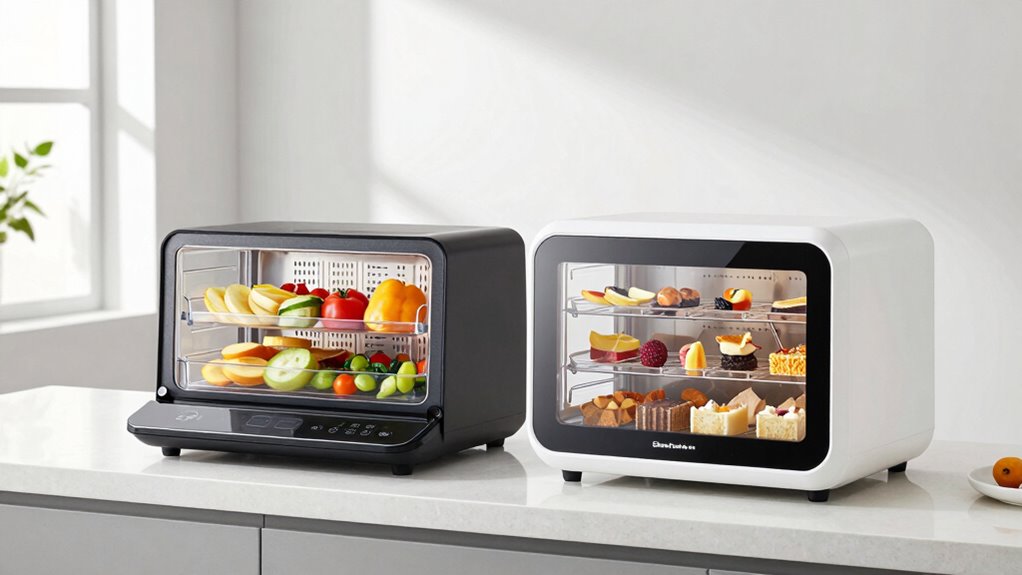
While both dehydrators and freeze dryers require some initial setup, most users find them straightforward to operate with minimal training. User friendliness is a key advantage, as the controls are simple and intuitive. Dehydrators typically have adjustable temperature settings and timers, making operation easy even for beginners. Freeze dryers often come with user-friendly interfaces and clear instructions, but they may require more attention during the initial setup. Maintenance ease is generally good for both appliances; dehydrators need regular cleaning of trays and vents, while freeze dryers might need occasional maintenance of filters and seals. Additionally, understanding the different preservation processes can help users optimize their use of each device. For example, knowing the technological differences between dehydration and freeze drying can improve results and efficiency. Proper knowledge of these processes can also help prevent mistakes and prolong the appliance lifespan. Understanding the energy consumption of each device can also assist in making more cost-effective choices. Overall, both devices are designed for ease of use and simple upkeep, ensuring you can preserve food efficiently without hassle. Moreover, familiarizing yourself with the maintenance requirements can extend the lifespan of these appliances and ensure consistent performance.
How Versatile Are Dehydrators and Freeze Dryers for Different Food Types?
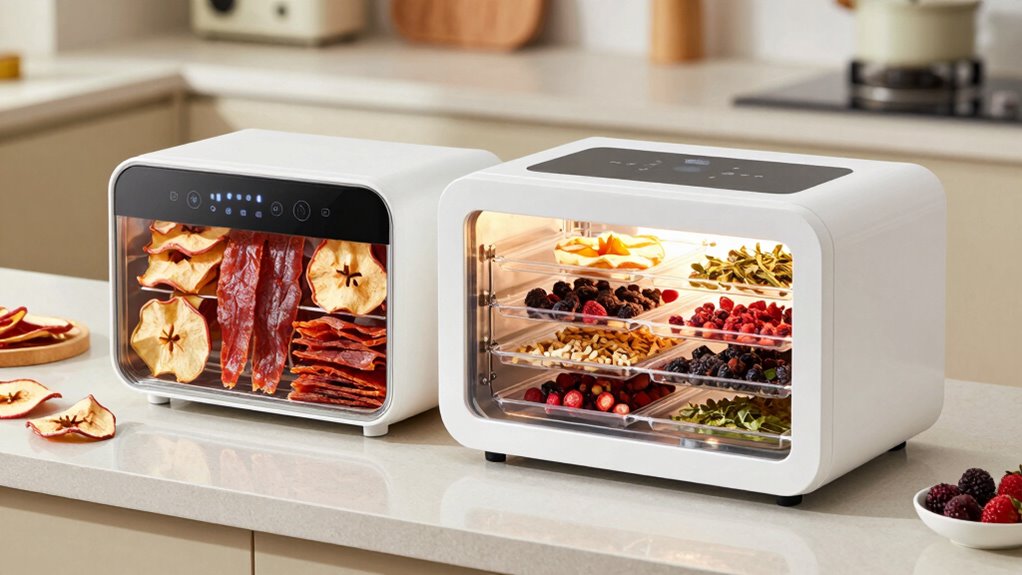
Both dehydrators and freeze dryers excel at preserving a wide variety of foods, but they do so in different ways that affect their versatility. Dehydrators are great for fruits, herbs, and jerky, offering good flavor retention and maintaining a chewy or crispy texture. Freeze dryers, on the other hand, excel at preserving delicate foods like berries, coffee, and full meals, with superior flavor retention and minimal texture loss.
Additionally, freeze dryers are increasingly popular in food preservation trends, making them a versatile choice for diverse kitchen goals. Their ability to maintain delicate textures makes them especially valuable for a variety of food preservation needs. Moreover, freeze drying is often more energy-efficient for long-term storage of large quantities of food. This method also allows for easy rehydration, which is important for certain recipes and meal preparations. Furthermore, freeze drying can extend shelf life significantly, making it ideal for seasonal harvests or bulk food storage.
- Dried fruits and vegetables retain nutrients and flavor well in dehydrators.
- Freeze dryers excel at preserving complex textures and flavors of soups or full meals.
- Herbs and spices stay flavorful longer with dehydration.
- Freeze drying preserves fragile items like berries with minimal texture change.
Should You Choose Short-Term or Long-Term Food Storage?
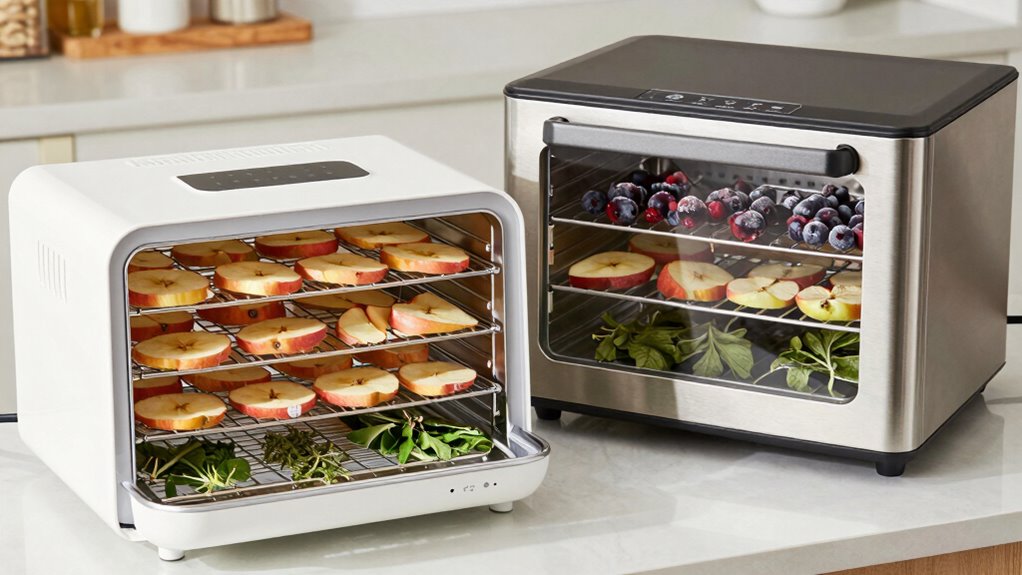
Deciding between short-term and long-term food storage depends on how long you want your food to last and your preservation goals. Short-term storage works well for everyday needs, while long-term plans require more durable methods. Consider your storage duration and what you aim to achieve with your preserved foods to make the right choice. Incorporating preservation equipment like dehydrators or freeze dryers can significantly impact your storage success.
Storage Duration Considerations
Choosing between short-term and long-term food storage depends on how quickly you want access to your preserved foods and how long you need them to last. For longer shelf life, proper packaging materials are essential, preventing moisture and light exposure that can degrade food quality. Dehydrators are ideal for short-term storage, as dried foods typically last a few months to a year with simple packaging. Freeze dryers extend shelf life greatly, often beyond five years, if stored correctly. Consider these factors:
- Use vacuum-sealed bags or Mylar pouches for maximum shelf life.
- Store in a cool, dark, and dry place to prolong freshness.
- Label all packages with date and contents for easy tracking.
- Guarantee airtight sealing to prevent spoilage and preserve nutritional value.
These steps help you maximize storage duration based on your needs.
Food Preservation Goals
Your food preservation goals will determine whether short-term or long-term storage methods suit your needs best. If you want quick flavor enhancement and easy access, a dehydrator is ideal, offering preserved foods that retain good texture for weeks or months. It’s perfect for snacks, herbs, and quick meals. However, if your goal is long-term storage with minimal quality loss, a freeze dryer is the better choice. Freeze drying preserves the original flavor and texture over years, making it suitable for emergency supplies or bulk stocking. Consider how long you want to store foods, how much effort you’re willing to invest, and whether maintaining natural flavors and textures is a priority. Your decision hinges on balancing immediate convenience versus lasting preservation.
Which Food Preservation Device Fits Your Budget and Lifestyle?

Are you trying to figure out which food preservation device best fits your budget and lifestyle? Consider your priorities to make the right choice.
Choosing the right food preservation device depends on your budget, needs, and lifestyle priorities.
- If you want a budget-friendly option with simple operation, a dehydrator is ideal, offering flavor enhancement and decent shelf stability for dried fruits and herbs.
- For long-term storage and maximum flavor retention, a freeze dryer might be worth the investment, though it costs more upfront.
- If you prefer quick results and minimal energy use, a dehydrator is convenient.
- If you’re into preserving large quantities of food for extended periods, a freeze dryer provides superior shelf stability and quality.
Matching your needs with your budget ensures you pick the device that enhances your kitchen experience without stress.
Frequently Asked Questions
Can Dehydrators or Freeze Dryers Handle Large Quantities of Food at Once?
Dehydrators can handle large quantities of food at once, but their capacity depends on the size of the trays, and you might need to rotate items for even drying. Freeze dryers usually process smaller batches but produce better food texture and preserve nutrients more effectively. Both require regular equipment maintenance to guarantee longevity and peak performance, especially when dealing with large quantities. Choose based on your batch size needs and maintenance willingness.
How Long Does the Dehydration and Freeze-Drying Process Typically Take?
Dehydration usually takes between 6 to 12 hours, depending on food thickness and moisture content, resulting in a crunchy texture that preserves flavor. Freeze-drying, however, can take 24 to 48 hours, but it creates a lightweight, crispy, and more shelf-stable snack with superior preservation quality. Visualize your food perfectly preserved, maintaining its original texture and nutrients, whether you want quick snacks or long-term storage.
Are There Specific Foods That Should Not Be Dehydrated or Freeze-Dried?
Certain foods, like leafy greens or foods with high water content, shouldn’t be dehydrated or freeze-dried because they can develop undesirable food texture or lose too much nutritional impact. Avoid dehydrating or freeze-drying fatty meats or dairy, as they can spoil or become unsafe. Stick to fruits, vegetables, herbs, and some meats, ensuring you preserve the food’s texture and nutritional value for safe, tasty storage.
What Safety Precautions Should I Follow When Using These Appliances?
Using these appliances is like walking a tightrope—you need balance and caution. Always follow food safety guidelines to prevent contamination, and clean appliances thoroughly after each use. Avoid overloading trays, and check for damaged parts regularly to guarantee appliance maintenance. Keep electrical cords away from water, and operate on a stable surface. These precautions help keep you safe and your dried or freeze-dried foods delicious and healthy.
Can Dehydrators or Freeze Dryers Extend the Shelf Life of Preserved Foods?
Yes, both dehydrators and freeze dryers can extend the shelf life of preserved foods. Dehydrators remove moisture, which helps prevent microbial growth, maintaining flavor preservation and nutrient retention over time. Freeze dryers, on the other hand, remove water through sublimation, better preserving the original flavor and nutrients. This makes freeze-dried foods ideal for long-term storage, ensuring your preserved items stay fresh, flavorful, and nutrient-rich for months or even years.
Conclusion
Choosing between a dehydrator and a freeze dryer depends on your kitchen goals and lifestyle. Whether you’re aiming for quick snacks or long-term food storage, each device offers unique benefits. Think of it as selecting your culinary superhero—each with its own superpower. Whichever you pick, you’ll discover the magic of preserving your favorite foods with ease. Get ready to transform your kitchen into a food preservation powerhouse—your taste buds and future self will thank you!
Evergreen bestsellers Picks
bestsellers
As an affiliate, we earn on qualifying purchases.