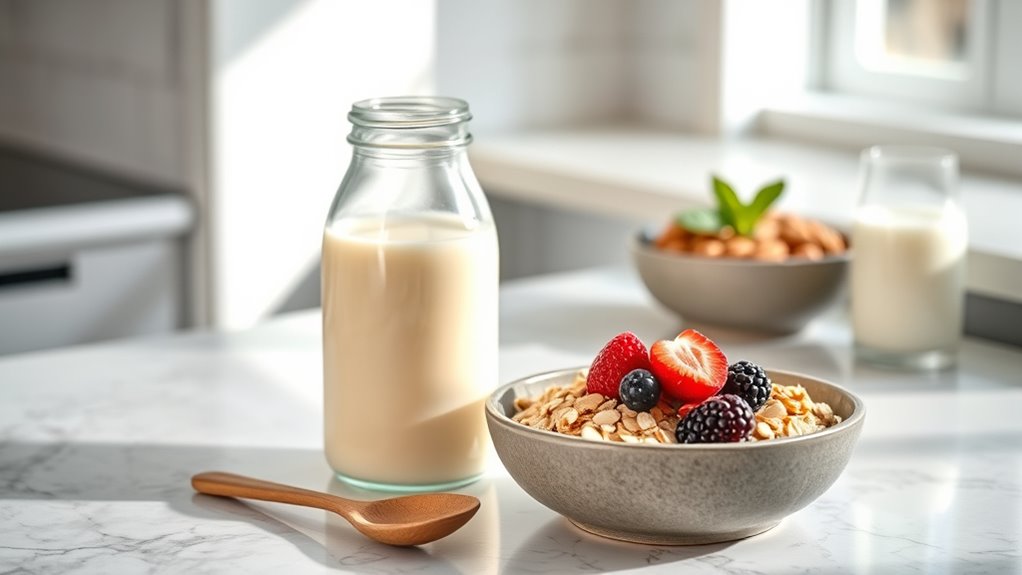

Oat milk and other non-dairy milks are revolutionizing cooking, offering creamy, versatile options that replace traditional dairy seamlessly. You can use them in baking, sauces, soups, and smoothies, thanks to their neutral flavor and rich texture. These plant-based alternatives support healthier choices and cater to allergies or lactose intolerance. Their popularity is growing fast, transforming how you approach dairy-free dishes. Keep exploring, and you’ll discover even more innovative ways to incorporate these ingredients into your favorites.
Key Takeaways
- Oat milk’s creamy texture and subtle flavor make it a versatile dairy alternative in both savory and sweet dishes.
- Growing consumer demand for plant-based options drives oat milk’s popularity in baking, smoothies, and sauces.
- Its natural sweetness and neutral taste enhance recipes without overpowering other ingredients.
- Oat milk supports allergen-friendly and vegan cooking, reducing reliance on traditional dairy.
- Nutritional benefits like high fiber and heart health support its trend as a healthy, everyday dairy substitute.

Non-dairy milks, especially oat milk, have become popular ingredients in cooking because they offer a creamy texture and subtle flavor that enhance a variety of dishes. As you explore plant-based alternatives, you’ll find oat milk particularly versatile, making it a favorite for both savory and sweet recipes. Its smooth consistency and naturally sweet undertone make it an excellent substitute for dairy in many culinary applications, especially in dairy free baking. Whether you’re crafting muffins, pancakes, or creamy sauces, oat milk provides a rich, dairy-like mouthfeel without the dairy itself.
When you incorporate plant-based alternatives like oat milk into your kitchen, you open up new possibilities for creating allergen-friendly and healthier dishes. Dairy free baking benefits greatly from oat milk because it mimics the properties of dairy milk, adding moisture and tenderness to baked goods. You can replace cow’s milk with oat milk in nearly any recipe, often without adjusting other ingredients. This ease of substitution makes it a go-to choice for those reducing or eliminating dairy from their diet, whether due to lactose intolerance, allergies, or ethical reasons.
Using oat milk in your cooking can also help you achieve a creaminess that’s hard to match with other plant-based options. For example, in creamy soups, smoothies, or sauces, oat milk adds a luxurious texture that elevates the dish. Its neutral flavor ensures that the overall taste remains balanced, allowing other ingredients to shine through. Plus, since oat milk is naturally sweet, it pairs well with both sweet and savory dishes, giving you flexibility in your culinary experiments.
In dairy free baking, oat milk shines as a dairy substitute because it interacts well with leavening agents like baking soda or powder, helping baked goods rise properly. It also blends seamlessly into batters, providing a consistent texture and flavor. You’ll notice that baked items made with oat milk tend to be tender, moist, and flavorful, often indistinguishable from their dairy-containing counterparts. This makes it especially appealing for vegan baking or for anyone looking to cut back on animal products without sacrificing taste or texture.
Additionally, the health benefits of oat milk include its high fiber content and potential to support heart health, making it a nutritious choice for daily consumption.

Oatly Original Oat Milk, 64 oz
Use it just like cow's milk.
As an affiliate, we earn on qualifying purchases.
As an affiliate, we earn on qualifying purchases.
Frequently Asked Questions
Can Oat Milk Be Used in Baking Recipes?
Yes, you can definitely use oat milk in baking recipes. As a plant-based alternative, oat milk works well as a baking substitution for dairy milk, adding moisture and a subtle sweetness. It’s versatile and can be used in cakes, muffins, and pancakes. Just keep in mind that oat milk may slightly alter the texture or flavor, but overall, it’s a great, dairy-free choice for your baking needs.
How Does Oat Milk Affect the Flavor of Dishes?
Oat milk acts like a gentle whisper in your dish, subtly enhancing flavors without overpowering them. It brings a creamy texture that smooths out the taste while adding a mild sweetness, making your recipes feel richer and more inviting. Expect a delicate flavor enhancement that complements ingredients beautifully, creating a harmonious balance. Its neutral, subtly sweet profile means it seamlessly integrates, elevating your culinary creations with a soft, comforting touch.
Is Oat Milk Suitable for Making Dairy-Free Cheese?
Yes, oat milk is suitable for making dairy-free cheese. Its creamy texture and mild flavor make it an excellent base for plant-based alternatives. You can incorporate oat milk into cheese making techniques like fermentation or thickening with agar or nuts. Just make certain you adjust recipes to balance consistency and flavor, and experiment to find the perfect method for your homemade dairy-free cheese.
What Are the Environmental Benefits of Oat Milk?
Think of oat milk as a gust of fresh air for the planet. Its environmental impact is minimal compared to other dairy alternatives, requiring less water and land. You’ll find it offers significant sustainability advantages, helping reduce greenhouse gas emissions and conserve resources. By choosing oat milk, you support eco-friendly practices and contribute to a healthier planet. It’s a simple switch that makes a big difference for our environment.
How Does Oat Milk Compare Nutritionally to Dairy Milk?
You’ll find that oat milk offers a decent nutritional comparison to dairy milk, though it usually has less protein. Its calcium content is often fortified, making it similar to dairy in supporting bone health. While it may lack some nutrients naturally found in dairy, oat milk provides fiber and is lower in saturated fat. Overall, it’s a good alternative, especially if you’re looking for plant-based options with comparable calcium levels.
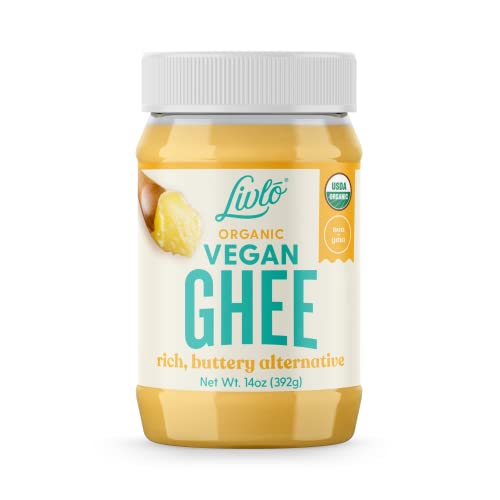
Livlo Organic Vegan Ghee – Plant Based Butter – No Refrigeration Necessary – Dairy, Soy Free, and Gluten Free Substitute to Ghee and Butter – 14 oz.
MAKE ME MELT – Organic, Shelf Stable, 100% Dairy Free, Oh-So-Delicious, and suited for your healthy lifestyle. Made…
As an affiliate, we earn on qualifying purchases.
As an affiliate, we earn on qualifying purchases.
Conclusion
As you explore cooking with oat and non-dairy milks, you’ll find new flavors and healthier options. Did you know that non-dairy milk sales have skyrocketed by over 20% in just the past year? This shows how much more people are embracing plant-based alternatives. So, next time you’re in the kitchen, consider experimenting with these milks—you might just discover your new favorite ingredient and make a positive impact on your health and the planet.

Pretty Thai Peanut Sauce, Gluten Free Certified Non-GMO Vegan Authentic Stir Fry, Dressing, Rice Seasoning, Condiment & Dipping Sauce, 100% Natural
Add Adventure to Your Cooking – Bring the tastes of Thailand to your table with our bold Thai…
As an affiliate, we earn on qualifying purchases.
As an affiliate, we earn on qualifying purchases.

Miss Jones Baking Monster Cookie Mix – Certified Gluten Free & Made with 100% Oats, Easy To Bake Desserts & Treats, Artificial Colors, (Pack of 1)
25% MORE CHOCOLATE – Miss Jones Baking Co.'s Everyday Delicious Monster Cookie Mix has 25% more chocolate chips…
As an affiliate, we earn on qualifying purchases.
As an affiliate, we earn on qualifying purchases.