To build a stunning cheese and charcuterie board, start by choosing a variety of cheeses with different textures and flavors, along with assortments of meats like salami and prosciutto. Add colorful fruits, nuts, and spreads in small bowls, and arrange everything on a large platter or wooden board, mixing shapes and heights for visual interest. Incorporate contrasting colors and textures, and pair with suitable wines to enhance flavors. Keep in mind these tips, and soon you’ll discover how to create a truly impressive spread.
Key Takeaways
- Select a variety of cheeses, meats, and accompaniments, balancing textures and flavors for visual appeal and taste.
- Arrange ingredients in varying shapes and sizes on a large platter, filling gaps with fruits for color and contrast.
- Incorporate nuts, dried fruits, spreads, and olives in small bowls to organize and add diverse textures.
- Pair cheeses with complementary wines to enhance flavors and encourage guest exploration.
- Use natural, slightly asymmetrical layouts with crackers and breadsticks around the edges for an inviting, balanced presentation.
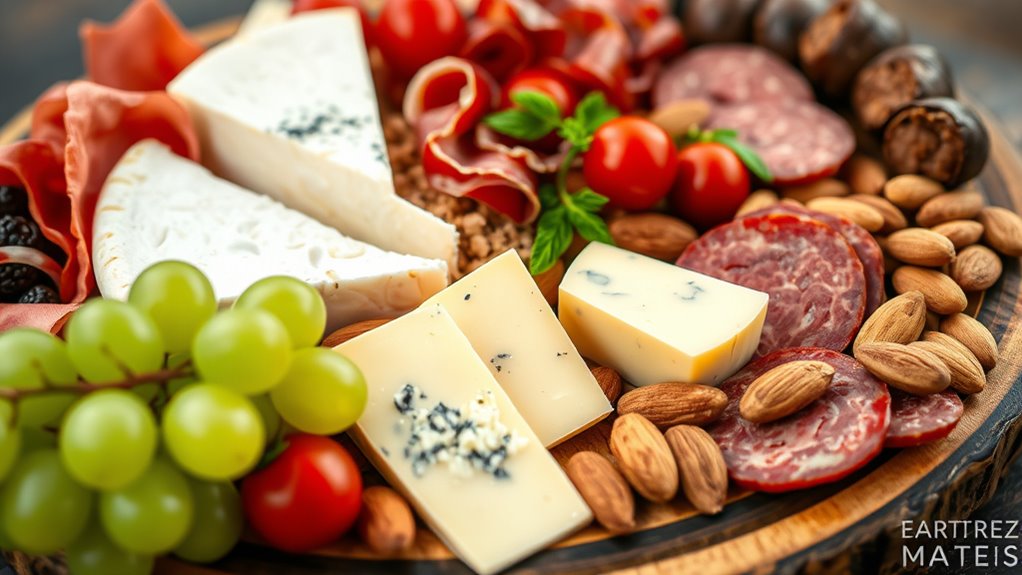
Creating a stunning cheese and charcuterie board is easier than you might think, and with a few simple guidelines, you can impress your guests effortlessly. The key lies in selecting a variety of cheeses, meats, accompaniments, and presenting them thoughtfully. When it comes to pairing wine, choose options that complement the flavors on your board. For example, creamy cheeses like Brie or Camembert go well with a crisp Chardonnay or a light Sauvignon Blanc. Hard cheeses such as aged cheddar or Gouda pair nicely with bolder reds like Cabernet Sauvignon or Merlot. Offering a range of wine choices enhances the tasting experience and encourages your guests to explore different flavor combinations.
Pair cheeses and meats with wines to elevate your cheese and charcuterie board effortlessly.
Presentation tips are *vital* to making your cheese and charcuterie board visually appealing. Start by choosing a large, flat platter or wooden board that provides enough space for all the items. Arrange cheeses in varying shapes and sizes—sliced, cubed, or whole blocks—to add visual interest. Place meats like salami, prosciutto, or chorizo in loose folds or rolled slices to create texture and dimension. Use small bowls or ramekins for spreads, olives, nuts, and dried fruits, which also helps keep the board organized. Fill in gaps with fresh fruit, such as grapes, figs, or apple slices, which add color and freshness.
Color contrast is *essential* for an inviting presentation. Mix vibrant fruits with the neutral tones of cheese and the deep hues of cured meats. Incorporate different textures—creamy cheeses, crunchy nuts, chewy dried fruits, and tender meats—to create a balanced sensory experience. Don’t forget to include an assortment of crackers, baguette slices, or breadsticks along the edges of your board for easy nibbling. When arranging, aim for a natural, slightly asymmetrical layout rather than perfect symmetry, as it feels more inviting and approachable.
As you assemble your board, keep in mind that variety and balance are your best friends. Think about the flavor profiles and textures, ensuring there’s something for everyone. Remember, the presentation is just as important as the ingredients, so take your time to arrange everything thoughtfully. Pairing wine with your selection and paying attention to presentation tips will elevate your cheese and charcuterie board from simple to spectacular, making it a centerpiece of your gathering that’s as beautiful as it is delicious.
Frequently Asked Questions
How Do I Choose the Right Wine Pairings for My Board?
You should choose wine flavors that complement your cheese and charcuterie selections, following basic pairing principles. For example, pair bold red wines with aged cheeses, while light whites work well with softer cheeses and delicate meats. Consider the acidity, tannins, and sweetness of the wine to enhance flavors. Trust your palate, and don’t be afraid to experiment to find the perfect matches that make your board truly shine.
What Are Some Budget-Friendly Cheese and Meat Options?
Like the little engine that could, you can create an impressive board with budget-friendly cheese and affordable charcuterie options. Look for shop brands, store specials, or block cheeses like cheddar and mozzarella that are versatile and affordable. Deli meats such as turkey, ham, or salami often cost less when bought in larger packs. These options help you craft a delicious, visually appealing spread without breaking the bank.
How Can I Customize a Cheese Board for Dietary Restrictions?
You can customize your cheese board for dietary restrictions by including gluten-free options like rice crackers, fresh fruits, and nuts. For vegan substitutions, add plant-based cheeses, marinated vegetables, and spreads like hummus or tapenade. Be sure to label each item clearly so guests know what’s suitable for their diet. This way, everyone can enjoy your thoughtfully curated board without worry.
What Are the Best Tools for Slicing and Serving?
You should use specialized cheese knives like a soft cheese knife, a hard cheese knife, and a cheese cleaver for slicing different textures. For serving, opt for elegant serving platters that can hold various cheeses, meats, and accompaniments. These tools make slicing easy and neat, ensuring your cheese board looks appealing and stays organized. Invest in a good set of cheese knives and a sturdy platter to elevate your presentation.
How Far in Advance Can I Prepare My Cheese and Charcuterie Board?
You can prepare your cheese and charcuterie board up to 24 hours in advance without compromising freshness. For storage tips, tightly cover it with plastic wrap and keep it in the fridge to prevent drying out or flavor loss. To impress, consider presentation ideas like adding fresh herbs or edible flowers just before serving. This ensures your board looks stunning and stays delicious, making your hosting game unbeatable!
Conclusion
Now that you know the basics of building a cheese and charcuterie board, you’re ready to get creative and impress your guests. Remember, the key is to balance flavors, textures, and colors for a stunning presentation. So, why settle for a boring platter when you can craft something memorable? Just trust your instincts, have fun, and enjoy the delicious results. After all, isn’t good food meant to bring people together?