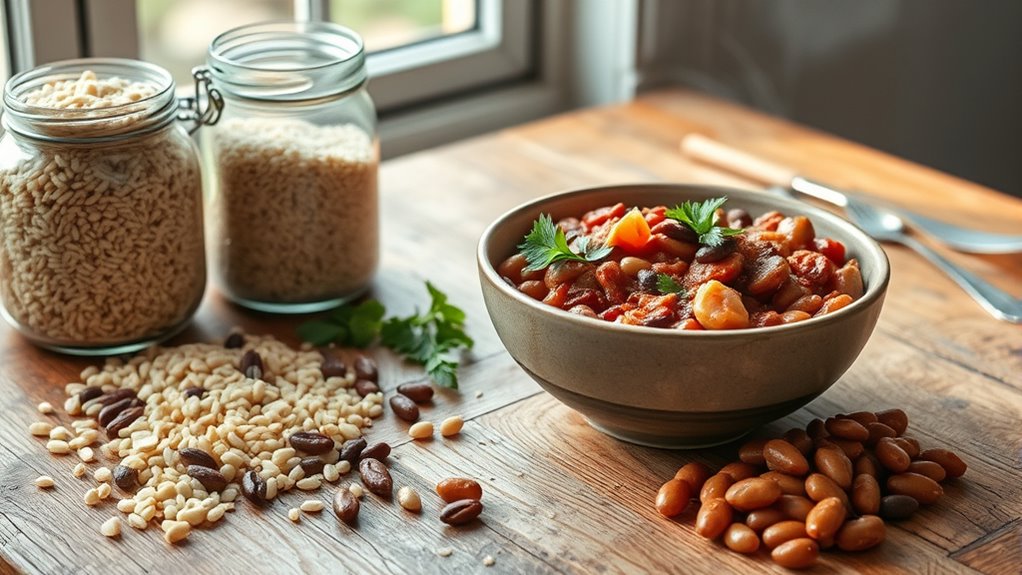

To stretch your meals on a budget, incorporate affordable beans and grains into your dishes. Buy dried beans and grains in bulk to save money, and cook larger portions for leftovers. Swap ingredients like rice, quinoa, or lentils to add variety without extra cost. Use seasonings and creative combinations to keep flavors interesting. Planning ahead with meal prep makes healthy, filling meals more accessible. Keep exploring to discover more tips for making budget-friendly, nutritious meals that satisfy.
Key Takeaways
- Purchase beans and grains in bulk, dried, or on sale to maximize savings and reduce costs.
- Prepare large batches of meals like stews and salads to stretch ingredients across multiple servings.
- Use versatile ingredients to create a variety of dishes, swapping grains or beans to prevent menu fatigue.
- Incorporate flavorful seasonings and herbs to enhance taste without extra expense, making budget meals satisfying.
- Incorporate beans and grains into meal prep routines, storing portions for quick, affordable, and healthy options throughout the week.
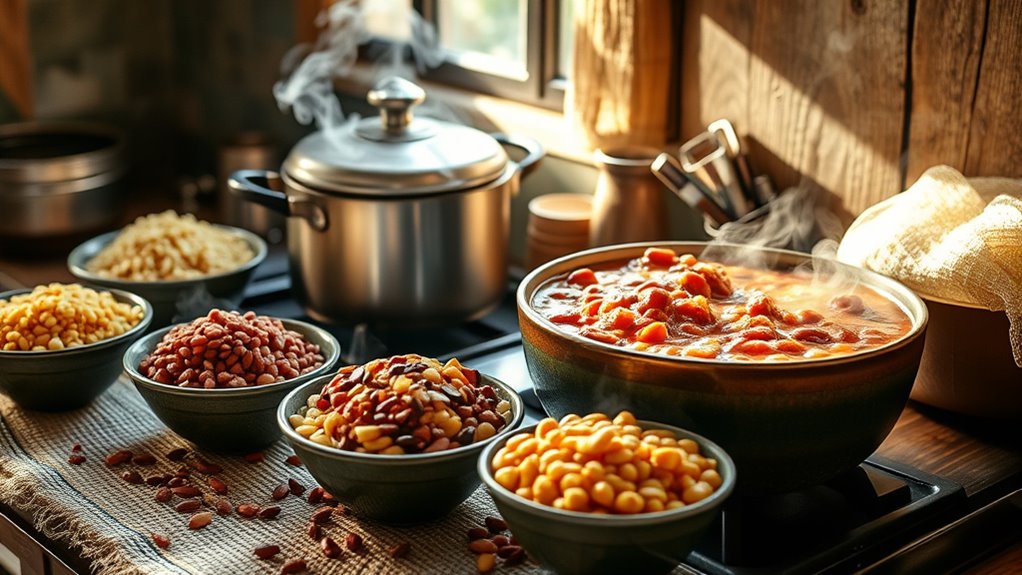
Are you looking for ways to enjoy delicious meals without breaking the bank? If so, focusing on budget-friendly ingredients like beans and grains can make a big difference. These staples are affordable, nutritious, and versatile, helping you stretch your dollar further while still satisfying your taste buds. To make the most of these ingredients, it’s smart to incorporate meal prep into your routine. Preparing meals ahead of time not only saves money but also reduces food waste and ensures you always have a healthy option on hand. When you meal prep with beans and grains, you can cook large batches and store portions for later, which cuts down on impulse buys or ordering takeout. Plus, meal prepping allows you to experiment with ingredient swaps, giving you the chance to diversify your diet without extra cost. For example, swapping out different grains like brown rice, quinoa, or bulgur can keep your meals interesting and nutritious. Similarly, replacing a meat component with beans can add protein and fiber while saving money. Think about preparing a big pot of lentil stew or a chickpea salad that can be repurposed into wraps, bowls, or side dishes throughout the week. Not only does this make your grocery list more efficient, but it also helps you avoid expensive, last-minute food purchases. When choosing beans and grains, buy in bulk whenever possible—this is often cheaper and ensures you always have essentials at hand. Dried beans are typically more affordable than canned, and soaking them at home saves even more money. For grains, look for store brands or sales, and consider cooking larger quantities to portion out for future meals. Ingredient swaps can also extend your budget by allowing you to use what you already have. For instance, if a recipe calls for a specific grain, feel free to substitute with whatever is available in your pantry. If you’re out of a particular bean, swap in another variety or even lentils for a similar texture and nutrient profile. These small adjustments keep costs down and prevent waste. Incorporating beans and grains into your meals doesn’t mean sacrificing flavor; with the right seasoning and combinations, your dishes will remain tasty and satisfying. By planning ahead, doing meal prep, and making strategic ingredient swaps, you can enjoy hearty, wholesome meals that are easy on your wallet. This approach not only helps you save money but also encourages healthier eating habits and creative cooking. Additionally, understanding the Mazda Tuning concepts like performance and handling can inspire you to approach your cooking with a bit of ingenuity and customization. With a little effort, you’ll find that stretching your meals with beans and grains becomes second nature, making budget cooking both practical and enjoyable.
Top picks for "budget cook stretch"
Open Amazon search results for this keyword.
As an affiliate, we earn on qualifying purchases.
Frequently Asked Questions
How Do I Store Dried Beans and Grains to Maximize Shelf Life?
To maximize shelf life, store dried beans and grains in airtight containers to prevent moisture and pests. Keep them in a cool, dark storage area, away from sunlight and heat sources. Make sure containers are sealed tightly after each use. Regularly check for signs of spoilage or pests, and consider adding a desiccant packet for extra protection. Proper storage keeps your beans and grains fresh and ready for budget-friendly meals.
Are Canned Beans and Grains as Nutritious as Dried Ones?
Canned beans and grains aren’t quite as nutritious as dried ones due to processing methods that can reduce vitamin content. While both offer valuable nutrients, dried options usually retain more vitamins and minerals. However, canned varieties offer convenience and longer shelf life, making them great for quick meals. You get similar protein and fiber, but if you want maximum nutrition, choose dried and cook them yourself.
What Are Quick Recipes Using Beans and Grains for Busy Weeknights?
For quick weeknight meals, toss canned beans and grains into salads or stir-fries, saving time and energy. Use meal prep tips like batch-cooking grains and storing them for later, and ingredient substitutions such as swapping quinoa for rice or black beans for chickpeas to vary flavors. You can also make simple bowls by combining these ingredients with veggies and sauces, ensuring a nutritious, satisfying meal in minutes.
How Can I Enhance the Flavor of Simple Bean and Grain Dishes?
To enhance the flavor of simple bean and grain dishes, try spice blending and herb infusions. Mix in a pinch of cumin, paprika, or chili powder to add warmth and depth. Fresh herbs like cilantro, parsley, or basil brighten the dish, while infusing oils with garlic or lemon can elevate the taste. Experimenting with these techniques makes your meals more vibrant without extra effort or cost.
What Are Some Common Mistakes to Avoid When Cooking With Beans and Grains?
When cooking with beans and grains, avoid overcooking them, which can make textures mushy and ruin the dish. Also, focus on flavor balancing by seasoning carefully and adding herbs or spices at the right time. Don’t forget to rinse beans thoroughly to remove excess starch and reduce gas. By paying attention to these details, you’ll guarantee your dishes turn out flavorful and perfectly textured every time.
Conclusion
By incorporating beans and grains into your meals, you can save money while eating healthily. These affordable staples not only stretch your budget but also provide essential nutrients. Did you know that beans are one of the most economical protein sources, costing as little as $0.50 per serving? Embracing budget-friendly ingredients like these means you can enjoy delicious, nutritious meals without breaking the bank—making every dollar work harder for you.