Choosing a rice cooker specifically for brown rice involves balancing features like cooking versatility, texture control, and ease of use. The COMFEE’ 4-Cup Uncooked Rice Cooker stands out as the best overall, offering reliable performance and multiple functions suited for brown rice. The AROMA CoreCoat Digital Rice Cooker provides excellent value with its larger capacity and smart features, making it ideal for larger households. Meanwhile, the Zojirushi Micom 3-Cup Compact Rice Cooker excels in precision and compact design, perfect for small kitchens. The main tradeoffs in this category include balancing price against advanced features and understanding which models genuinely improve brown rice texture. Continue reading for a detailed breakdown of these options and more, to help you find the best fit for your needs.

Get kitchen staples and gadgets delivered free with Prime
- Fast, free delivery on millions of items
- Prime Video, Amazon Music and more included
- Member-only deals all year
Key Takeaways
- Top-performing models combine fuzzy logic technology with precise temperature control for better brown rice results.
- Larger capacities tend to be more versatile but often come with a higher price tag and bulkier footprint.
- Multi-function cookers offer convenience but may add complexity—choose a simple model if you prefer straightforward use.
- Build quality and ease of cleaning are often overlooked but crucial for long-term satisfaction with brown rice cooking.
- Price correlates with features; budget options can still produce good brown rice but may lack advanced presets.
| COMFEE’ 4-Cup Uncooked Rice Cooker with 6 Functions | 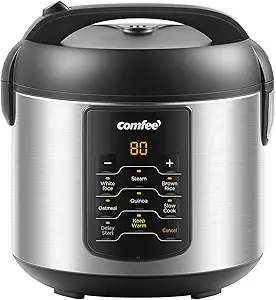 | Best Compact Multi-Function for Small Households | Capacity: 4 cups uncooked (2 Qt) | Functions: White rice, brown rice, steam, slow cook, quinoa, oatmeal | Material: BPA-Free Food Grade, stainless steel | VIEW ON AMAZON | See Our Full Breakdown |
| AROMA CoreCoat Digital Rice Cooker & Steamer for Brown Rice, 8 Cups |  | Best Versatile and Easy-to-Clean for Larger Batches | Capacity: 8 cups cooked (4 cups uncooked) | Material: Ceramic nonstick coating | Features: Digital timer, Sensor Logic, Steamer basket, Removable lid | VIEW ON AMAZON | See Our Full Breakdown |
| Cook With Color Glass Mini Low Carb Rice Cooker |  | Best for Healthy Low-Carb Rice Preparation in Small Batches | Capacity: 2 cups raw / 6 cups cooked | Power: 100W–700W adjustable | Material: Borosilicate glass, 304 stainless steel, heat-resistant PP | VIEW ON AMAZON | See Our Full Breakdown |
| Zojirushi Micom 3-Cup Compact Rice Cooker and Warmer | 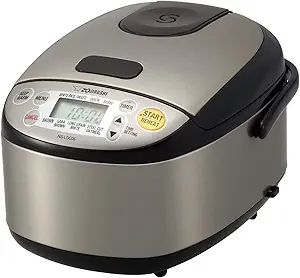 | Best for Small, Versatile Daily Use | Capacity: 3 cups | Material: Stainless Steel | Features: Multiple menu settings, brown rice activation, fold-down handle | VIEW ON AMAZON | See Our Full Breakdown |
| Aroma Digital Rice Cooker, 4-Cup (Uncooked) / 8-Cup (Cooked), Steamer, Grain Cooker, Multicooker, 2 Qt, Stainless Steel Exterior |  | Best for Versatile Small to Medium Meals | Capacity: 2 to 8 cups cooked rice | Cooked Rice Capacity: 8 cups | Uncooked Rice Capacity: 4 cups | VIEW ON AMAZON | See Our Full Breakdown |
| AROMA Professional Digital Rice Cooker, 4-Cup Uncooked / 8-Cup Cooked, Multicooker, Steamer, Slow Cooker, 2 Qt, Stainless Steel |  | Best Overall for Versatility and Compactness | Capacity: 8 cups cooked / 4 cups uncooked | Size: 2 Qt | Material: Stainless Steel | VIEW ON AMAZON | See Our Full Breakdown |
| COMFEE’ Mini Rice Cooker with 6 Functions, 2-Cups Uncooked Capacity | 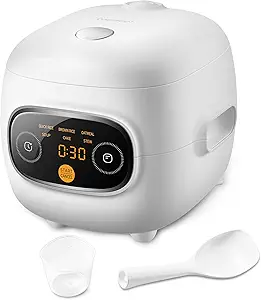 | Best for Singles and Small Spaces | Capacity: 2 cups uncooked (4 cups cooked) | Functions: 6 digital programs | Control Panel: LCD Touch | VIEW ON AMAZON | See Our Full Breakdown |
| GreenPan Advanced Rice Cooker, 4-Cups Uncooked/8-Cups Cooked, Graphite |  | Best for Quick, Healthy Cooking with Nonstick Ease | Capacity: 4 cups uncooked / 8 cups cooked | Presets: 6 including white rice, brown rice, quick cook | Material: PFAS-free ceramic nonstick | VIEW ON AMAZON | See Our Full Breakdown |
| COMFEE’ Japanese Style Rice Cooker with Fuzzy Logic, 10-Cups Uncooked Rice |  | Best for Large Families and Gourmet Cooking | Capacity: 10 cups uncooked (5.2 Qt) | Power: 890W | Control: Fuzzy Logic with 11 programs | VIEW ON AMAZON | See Our Full Breakdown |
| Cosori 10-Cup Fuzzy Logic Rice Cooker with Ceramic Coating Inner Pot, 18-in-1 |  | Best for Multi-Function Cooking and Precision Results | Capacity: 10 cups | Power: 1000W | Functions: 18 including rice, oats, steaming, sauté | VIEW ON AMAZON | See Our Full Breakdown |
| rice cooker for brown rice | Capacity | Material |
|---|---|---|
| COMFEE’ 4-Cup Uncooked Rice Co | 4 cups uncooked (2 Qt) | BPA-Free Food Grade, stainless steel |
| AROMA CoreCoat Digital Rice Co | 8 cups cooked (4 cups uncooked) | Ceramic nonstick coating |
| Cook With Color Glass Mini Low | 2 cups raw / 6 cups cooked | Borosilicate glass, 304 stainless steel, heat-resistant PP |
| Zojirushi Micom 3-Cup Compact | 3 cups | Stainless Steel |
| Aroma Digital Rice Cooker | 2 to 8 cups cooked rice | Stainless Steel exterior |
| AROMA Professional Digital Ric | 8 cups cooked / 4 cups uncooked | Stainless Steel |
| COMFEE’ Mini Rice Cooker with | 2 cups uncooked (4 cups cooked) | — |
| GreenPan Advanced Rice Cooker | 4 cups uncooked / 8 cups cooked | PFAS-free ceramic nonstick |
| COMFEE’ Japanese Style Rice Co | 10 cups uncooked (5.2 Qt) | — |
| Cosori 10-Cup Fuzzy Logic Rice | 10 cups | Ceramic coating |
More Details on Our Top Picks
COMFEE’ 4-Cup Uncooked Rice Cooker with 6 Functions
This compact rice cooker stands out for its versatility with six digital cooking programs, including brown rice, which makes it ideal for small households or those who want more than just basic rice. Unlike the Zojirushi Micom, which has a higher price point and a more limited 3-cup capacity, this model offers multiple functions in a smaller footprint, though it lacks advanced presets or a digital display for precision. Its easy-to-clean stainless steel exterior and dishwasher-safe parts make cleanup straightforward. However, its limited capacity means it isn’t suitable for families with larger appetites or for batch cooking. The absence of programmable delay timers or sophisticated cooking modes means it’s best for simple, everyday use.
Pros:- Multiple cooking functions including brown rice, steaming, and slow cook
- Compact size ideal for small kitchens or countertop use
- User-friendly digital controls with LED display
- Dishwasher-safe inner pot and accessories
Cons:- Limited capacity for larger families or meal prep
- No advanced preset options or smart features
- Requires electricity and counter space
Best for: Small households or singles seeking a versatile, space-saving cooker for brown rice and side dishes
Not ideal for: Larger families or those wanting advanced cooking presets and larger capacity
- Capacity:4 cups uncooked (2 Qt)
- Functions:White rice, brown rice, steam, slow cook, quinoa, oatmeal
- Material:BPA-Free Food Grade, stainless steel
- Safety Features:Overheating Protection, Cool touch handle
- Certifications:UL
Our verdict“This model is perfect for small households seeking an affordable, multifunctional rice cooker for brown rice and light meal prep.”
AROMA CoreCoat Digital Rice Cooker & Steamer for Brown Rice, 8 Cups
The AROMA CoreCoat offers a great balance of capacity and versatility, with an 8-cup cooked rice capacity that suits medium-sized families. Its nonstick ceramic coating makes cleaning effortless and healthier, especially compared to the plastic inner pots of some competitors like the COMFEE’. Unlike the Zojirushi, which lacks advanced digital controls, this model provides programmable delay timers and a user-friendly interface, making it easier for beginners yet still versatile for more experienced cooks. The absence of detailed power specs and limited size info are minor drawbacks, but the real strength lies in its combination of capacity and easy maintenance. The digital controls and steaming features make it a flexible choice for everyday meal prep.
Pros:- Large 8-cup cooked rice capacity for family meals
- Ceramic nonstick coating for easy cleaning and health safety
- Programmable delay timer for scheduling meals
- Includes steaming basket for healthy steaming
Cons:- Lack of detailed wattage or size info
- Some users may find digital controls slightly complex
- No advanced cooking presets beyond basic functions
Best for: Families who want a larger-capacity cooker with easy cleaning and versatile functions
Not ideal for: Single users or those with very limited kitchen space needing a smaller model
- Capacity:8 cups cooked (4 cups uncooked)
- Material:Ceramic nonstick coating
- Features:Digital timer, Sensor Logic, Steamer basket, Removable lid
- Power:Not specified
Our verdict“This cooker is well-suited for medium-sized families needing reliable, easy-to-clean rice and grain cooking with flexible timing options.”
Cook With Color Glass Mini Low Carb Rice Cooker
This small, specialized cooker makes low-carb rice by removing excess starch, a feature that sets it apart from general-purpose rice cookers like the Aroma or Zojirushi. Its auto-lifting stainless steel basket facilitates draining, making it ideal for health-conscious cooks. The transparent borosilicate glass bowl allows monitoring of cooking progress, which is a nice touch, but its limited capacity (2 cups raw rice) restricts its usefulness for larger families or batch cooking. The complex process may not appeal to everyone, especially since the rating suggests mixed reviews. Still, for those focused on precise, low-carb rice in small portions, this model provides a unique solution.
Pros:- Healthy low-carb rice with starch removal process
- Auto-lifting basket for easy draining and cleaner cooking
- Multi-functionality as hotpot, steamer, and stew maker
- Transparent glass bowl for easy monitoring
Cons:- Limited capacity of 2 cups raw rice
- Mixed user ratings indicate inconsistent performance
- Complex process may require learning curve
Best for: Health-conscious individuals preparing small portions of low-carb rice
Not ideal for: Large families or users seeking a simple, all-in-one rice cooker
- Capacity:2 cups raw / 6 cups cooked
- Power:100W–700W adjustable
- Material:Borosilicate glass, 304 stainless steel, heat-resistant PP
- Includes:Measuring cup, spatula
Our verdict“Ideal for small-scale, health-focused low-carb rice preparation but less suited for larger quantities or straightforward use.”
Zojirushi Micom 3-Cup Compact Rice Cooker and Warmer
The Zojirushi Micom offers a compact solution perfect for couples or small households, with a 3-cup capacity that can handle small portions like brown rice or oats. Its multiple menu settings allow for tailored cooking of different rice types, though the absence of a digital display and advanced presets makes precise control less straightforward than models like the Aroma. The fold-down handle and retractable cord add portability, but the limited capacity means it’s not suitable for larger families or batch cooking. Its activation of brown rice to boost GABA content is a health bonus, but the simpler interface might be less appealing to tech-savvy users.
Pros:- Compact size ideal for small spaces
- Multiple menu options including brown rice and oats
- Portable with fold-down handle and retractable cord
- Activates brown rice to increase GABA content
Cons:- Limited capacity for larger meals
- No digital display or smart features
- Multiple menu options may be confusing for some users
Best for: Small households or individuals seeking a compact, multi-mode rice cooker for daily brown rice and oats
Not ideal for: Families or cooks needing large capacity or advanced digital controls
- Capacity:3 cups
- Material:Stainless Steel
- Features:Multiple menu settings, brown rice activation, fold-down handle
- Model Number:NS-LGC05XB
Our verdict“This Zojirushi model suits those with limited space who want a simple, versatile cooker for small portions of brown rice and oats.”
Aroma Digital Rice Cooker, 4-Cup (Uncooked) / 8-Cup (Cooked), Steamer, Grain Cooker, Multicooker, 2 Qt, Stainless Steel Exterior
The Aroma Digital Rice Cooker offers a flexible, user-friendly option for small to medium households with its 8-cup cooked capacity and multiple preset functions, including brown rice. Its programmable controls and delay timer provide convenience, and the included steam tray enables healthy steaming of vegetables and meats simultaneously. Compared to the COMFEE’ 4-cup model, the Aroma provides more capacity and versatility, making it suitable for varied meal prep. Its size and requirement for the included measuring cup keep it manageable, but for larger gatherings or high-volume cooking, this model may fall short. The simple interface and automatic keep-warm function add to its appeal for everyday use.
Pros:- Multiple preset functions for rice and grains
- Includes steaming tray for healthy, simultaneous steaming
- Programmable delay timer for meal scheduling
- Compact and easy to operate
Cons:- Limited to 8 cups cooked rice capacity
- Requires the provided measuring cup for accurate results
- May be too small for very large families or frequent gatherings
Best for: Small to medium families needing an easy, multi-purpose rice cooker with steaming capabilities
Not ideal for: Large gatherings or those needing very high capacity cooking in a compact space
- Capacity:2 to 8 cups cooked rice
- Cooked Rice Capacity:8 cups
- Uncooked Rice Capacity:4 cups
- Material:Stainless Steel exterior
- Functions:White Rice, Brown Rice, Steam, Flash Rice, Keep Warm, Delay Timer
- Includes:Steam tray, rice measuring cup, serving spatula
Our verdict“This Aroma model offers a versatile, easy-to-use solution for small to medium households seeking brown rice and grain versatility.”
AROMA Professional Digital Rice Cooker, 4-Cup Uncooked / 8-Cup Cooked, Multicooker, Steamer, Slow Cooker, 2 Qt, Stainless Steel
This model stands out for combining multiple cooking functions—rice, slow cook, and steaming—in a compact 2-quart size that fits well in small kitchens or for singles. Unlike the GreenPan, which emphasizes quick, simple rice cooking with preset options, the Aroma offers a broader range of modes, but it requires some learning to navigate the menu and optimize usage. The sensor logic technology helps with consistent results, yet its limited capacity makes it less suitable for larger families. The delay timer and keep warm features enhance convenience, but the smaller capacity could be a drawback for those needing larger batches or frequent entertaining.
Pros:- Multiple cooking modes including rice, slow cook, and steam
- Compact size ideal for small kitchens
- Features like delay timer and keep warm for added convenience
- Sensor Logic Technology for consistent results
Cons:- Limited capacity for larger families
- Requires some familiarity to use all functions effectively
Best for: Small households or individuals seeking a versatile, space-efficient cooker with multiple functions.
Not ideal for: Families who regularly cook large quantities of rice or need extensive capacity; it may feel restrictive for bigger meal prep needs.
- Capacity:8 cups cooked / 4 cups uncooked
- Size:2 Qt
- Material:Stainless Steel
- Modes:6 including rice, slow cook, steam
- Features:Sensor Logic Technology, delay timer, keep warm
Our verdict“This cooker is perfect for small households wanting a multi-function appliance with a compact footprint.”
COMFEE’ Mini Rice Cooker with 6 Functions, 2-Cups Uncooked Capacity
This compact option shines for its small 2-cup capacity, making it an excellent choice for singles, couples, or for use during travel or camping. Compared to the GreenPan, which emphasizes quick cooking, the COMFEE’ offers a variety of digital programs, including oatmeal and stew, with automatic adjustments thanks to Fuzzy Logic technology. Its LCD touch controls make operation straightforward, but the small capacity limits its usefulness for larger households or batch cooking. The 30-minute cooking cycle might not suit all recipes, and the array of features could overwhelm first-time users.
Pros:- Small and portable for small kitchens or travel
- Six digital programs for diverse cooking needs
- Automatic Fuzzy Logic for perfect results
- Easy-to-clean with removable parts
Cons:- Limited capacity unsuitable for larger families
- Cooking time may be too short for some recipes
- Features might be complex for beginners
Best for: Singles or couples seeking a versatile, easy-to-use cooker for small portions and diverse recipes.
Not ideal for: Families or those cooking in large quantities, as the 2-cup uncooked capacity is restrictive and may require multiple batches.
- Capacity:2 cups uncooked (4 cups cooked)
- Functions:6 digital programs
- Control Panel:LCD Touch
- Keep Warm Duration:24 hours
- Delay Timer:24 hours
- Cooking Time:30 minutes
Our verdict“Ideal for individuals needing a compact, multifunctional cooker for small portions and varied meals.”
GreenPan Advanced Rice Cooker, 4-Cups Uncooked/8-Cups Cooked, Graphite
This model emphasizes healthy, quick rice cooking with its PFAS-free ceramic nonstick coating and preset functions, including brown rice and quick cook modes. Compared with the Aroma, which offers more cooking modes, GreenPan focuses on simplicity and speed—preparing rice in as little as 25 minutes. However, its limited to rice cooking alone, lacking the multi-purpose flexibility of the Aroma or COMFEE’. The hand wash recommendation for nonstick parts could add to maintenance effort, and its capacity isn’t ideal for large families. Still, its focus on healthy materials and fast results make it a solid pick for health-conscious users.
Pros:- PFAS-free ceramic nonstick coating for durability and health
- Fast cooking times, as quick as 25 minutes
- Multiple preset functions including brown rice and quick cook
- Dishwasher-safe parts for easy cleanup
Cons:- Limited to rice and simple grains
- Hand washing required for nonstick surfaces
- Capacity may not suit larger families
Best for: Health-conscious individuals who prioritize quick, simple rice cooking without sacrificing quality.
Not ideal for: Users seeking a multi-purpose cooker or larger capacity for family-sized meals; it’s primarily a rice-focused device.
- Capacity:4 cups uncooked / 8 cups cooked
- Presets:6 including white rice, brown rice, quick cook
- Material:PFAS-free ceramic nonstick
- Includes:Spatula, measuring cup
- Dishwasher Safe Parts:Yes
Our verdict“This cooker suits those wanting quick, healthy rice with minimal fuss and a focus on non-toxic materials.”
COMFEE’ Japanese Style Rice Cooker with Fuzzy Logic, 10-Cups Uncooked Rice
This large-capacity rice cooker excels for families or gatherings, with 10 cups of uncooked rice and 11 cooking programs, including options tailored for brown rice and sushi. Its fuzzy logic technology adjusts cooking parameters automatically, delivering reliably good results. Compared to the 8-cup Aroma, the COMFEE’ offers more control and variety but takes up more space, which can be a challenge in small kitchens. The complexity of features may require some learning curve, and its size makes it less suited for compact spaces. For those needing a versatile, family-sized cooker, this model strikes a compelling balance between capacity and smart features.
Pros:- Large 10-cup capacity ideal for families
- Multiple cooking programs including brown rice and sushi
- Auto keep-warm for up to 12 hours
- Easy-to-clean with non-stick inner pot and removable components
Cons:- Size may be too bulky for small kitchens
- Features may require some familiarity to operate effectively
- No specific price info available
Best for: Families or hosts who regularly prepare large quantities of rice and want versatile cooking options.
Not ideal for: Small households or kitchens with limited space, as its larger footprint can be cumbersome.
- Capacity:10 cups uncooked (5.2 Qt)
- Power:890W
- Control:Fuzzy Logic with 11 programs
- Size:10.8″D x 13.9″W x 10.5″H
- Removable Bowl:Yes
Our verdict“This cooker is suited for families needing large capacity and multiple cooking options, despite its size and learning curve.”
Cosori 10-Cup Fuzzy Logic Rice Cooker with Ceramic Coating Inner Pot, 18-in-1
This model offers an impressive 18 functions, including brown rice, oats, steaming, and sautéing, making it ideal for users who want to replace multiple appliances. Its fuzzy logic system ensures precise, consistent results, similar to the COMFEE’ but with even more versatility. The ceramic-coated inner pot simplifies cleaning, and the dishwasher-safe accessories add to user convenience. Compared to the simpler GreenPan, which is focused on quick rice, this cooker provides extensive options but at the expense of size and complexity. It’s best suited for those who want an all-in-one device and are comfortable with a larger footprint and a steeper learning curve.
Pros:- Multiple cooking functions including grains, steaming, and sautéing
- Fuzzy logic technology for consistent results
- Ceramic-coated inner pot for durability and easy cleaning
- Dishwasher-safe accessories
Cons:- Large size may not fit in small kitchens
- Complex functions could be overwhelming for beginners
- Power cord length not specified
Best for: Home chefs seeking a highly versatile appliance capable of handling a wide range of grains and cooking styles.
Not ideal for: Small kitchens or users who primarily cook rice and prefer straightforward operation; it can feel overwhelming and bulky.
- Capacity:10 cups
- Power:1000W
- Functions:18 including rice, oats, steaming, sauté
- Material:Ceramic coating
- Includes:Steamer basket
Our verdict“Best suited for those wanting a multi-purpose, high-tech cooker capable of handling diverse cooking tasks with precision.”

How We Picked
These rice cookers were evaluated based on their ability to cook brown rice well, focusing on texture, consistency, and ease of use. We considered build quality, capacity, programmability, and special features like fuzzy logic or steaming functions. Price was also a factor, ensuring options cater to different budgets while maintaining performance standards. Our ranking reflects a balance between value and advanced capabilities, prioritizing models that deliver reliable brown rice results without unnecessary complexity or cost.Factors to Consider When Choosing Rice Cooker For Brown Rice
When selecting a rice cooker for brown rice, it’s important to focus on features that influence texture, cooking time, and ease of use. Brown rice requires longer cooking and more precise temperature control, so not all cookers handle it equally well. Beyond basic capacity, consider how a model’s functions align with your cooking habits and whether extra features like steaming or programmable settings are worth the investment. Understanding these factors helps avoid common pitfalls like undercooking or mushy rice, ensuring you get consistently good results.Capacity and Size
Deciding on capacity depends on your household size and storage space. Smaller models (2-4 cups uncooked) are perfect for singles or couples, while larger ones (6-10 cups) suit bigger families. Keep in mind that larger cookers are often bulkier and may come with higher price tags. If space is limited, a compact model can be sufficient, but be sure it can handle the quantity of brown rice you typically cook. Bigger isn’t always better if you rarely cook large batches, as it can become unwieldy.
Cooking Technology and Settings
Look for models with fuzzy logic or micro-computerized controls, as these adjust cooking times and temperatures for better brown rice texture. Basic models may cook brown rice, but often with inconsistent results—mushy or undercooked rice are common issues. Programmable presets tailored to brown rice can simplify the process, especially if you prefer set-it-and-forget-it cooking. Evaluate whether extra features like steaming or a slow cooker are necessary, or if they add unnecessary complexity.
Ease of Use and Cleaning
Features like clear digital displays, one-touch operation, and non-stick or ceramic inner pots can make cooking and cleaning easier. Brown rice can leave stubborn residues, so a durable, easy-to-clean inner pot is worth the extra investment. Consider models with dishwasher-safe parts if you prioritize convenience. Simple controls are preferable if you want to avoid confusion or accidental settings changes during busy mornings.
Build Quality and Durability
Since brown rice requires longer cooking and frequent use, choosing a well-built model can extend its lifespan. Metal exteriors and sturdy inner pots typically last longer and resist wear and tear better than cheaper plastic options. A good seal and reliable heating element ensure consistent results over time. Skimping on build quality might save money upfront but can lead to frustrations and replacements sooner than expected.
Price and Value
While basic models are often affordable, investing a bit more in advanced features like fuzzy logic, larger capacity, or multi-functionality can improve your cooking experience. Budget options may suffice for occasional brown rice cooking but often lack consistency and versatility. Conversely, premium models tend to offer better control and durability, making them worthwhile if you cook brown rice regularly. Balance your budget with the features that matter most to your cooking style.
Frequently Asked Questions
Can a regular rice cooker cook brown rice well?
Many basic rice cookers can cook brown rice, but results vary widely. Brown rice needs a longer cooking time and more precise temperature control, which basic models may not provide. As a result, you might end up with undercooked or mushy rice. Investing in a model with fuzzy logic or specific brown rice settings typically produces much better texture and consistency.
Is it worth paying extra for a smart or fuzzy logic rice cooker?
Fuzzy logic cookers adjust cooking parameters dynamically, leading to more consistent and better-textured brown rice. If you cook brown rice frequently, the extra cost can be justified by improved results and convenience. However, for occasional use, a simpler model might suffice. Consider how much you value perfect brown rice versus saving money on a basic device.
Do I need a large capacity rice cooker for brown rice?
Not necessarily. Smaller models (2-4 cups uncooked) are sufficient for individuals or couples and are easier to store. Larger capacities are better for families or if you meal prep in bulk but can be more expensive and take up more space. Remember, larger models often come with more features, which might be unnecessary if you only cook small portions.
What features should I prioritize for brown rice cooking?
Look for models with fuzzy logic or adjustable cooking modes specifically for brown rice. An easy-to-clean inner pot and clear digital controls also make the process smoother. Additional features like steaming or multi-cooking functions are optional but can add versatility. Prioritize what fits your cooking habits and budget, rather than getting overwhelmed by too many extras.
How important is the material of the inner pot?
The inner pot’s material greatly influences cleaning, durability, and heat distribution. Ceramic or non-stick coatings prevent rice from sticking and make cleaning easier. Metal or stainless steel pots tend to last longer but may require more careful handling to avoid scratches. For brown rice, which tends to stick more, a high-quality, non-stick or ceramic inner pot is often more convenient and longer-lasting.
Conclusion
For general users seeking reliable results, the COMFEE’ 4-Cup Uncooked Rice Cooker offers excellent value with consistent performance and user-friendly features. Those who cook brown rice regularly and want precise control should consider the Zojirushi Micom 3-Cup for its advanced technology. Budget-conscious buyers can opt for simpler models like the AROMA Digital Rice Cooker, which still delivers decent results. If space and ease of use are priorities, a compact, straightforward model suits beginners best. For large families or meal prep enthusiasts, larger capacity and multi-function cookers like the Cosori 10-Cup Fuzzy Logic Rice Cooker stand out. Your choice should align with your cooking frequency, space, and desired control level, ensuring you get the best brown rice results in 2026.
Halloween Picks
halloween
As an affiliate, we earn on qualifying purchases.