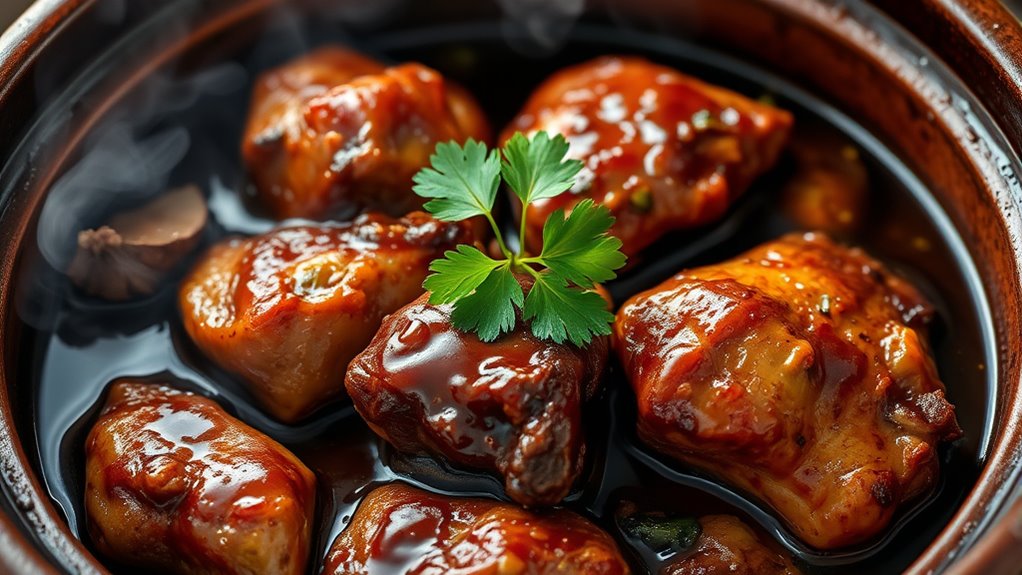

Filipino chicken adobo is a beloved one-pot dish that delivers a perfect balance of tangy and savory flavors, reflecting the country’s rich culinary heritage. Made with ingredients like vinegar, soy sauce, garlic, and bay leaves, it’s highly versatile and can be customized with regional twists or personal preferences. Whether you prefer it sour, sweet, or spicy, adobo’s comforting nature makes it a staple. Keep exploring to discover the diverse variations and cultural significance behind this classic dish.
Key Takeaways
- Filipino chicken adobo is a beloved one-pot dish known for its tangy, savory flavors.
- It features a marinade of vinegar, soy sauce, garlic, bay leaves, and peppercorns, customizable for taste.
- Regional variations include coconut milk, potatoes, or seafood, reflecting local ingredients and traditions.
- The dish’s flavor deepens with overnight marination and personal spice adjustments.
- It embodies Filipino cultural heritage, showcasing adaptability and regional culinary expressions.
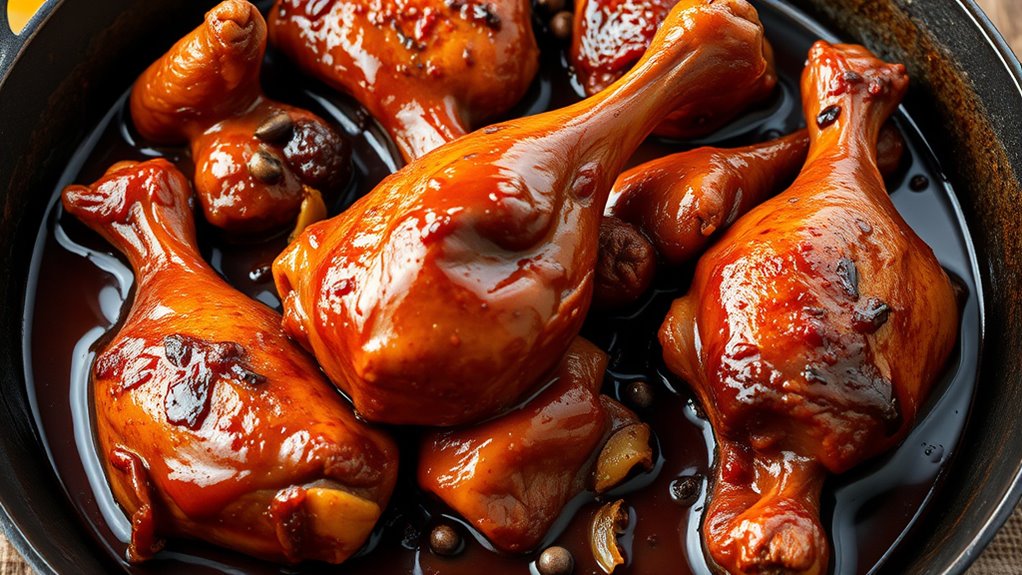
Have you ever wondered what makes Filipino Chicken Adobo a beloved national dish? It’s the perfect blend of tangy, savory flavors simmered together in a one-pot meal that’s both comforting and versatile. One reason for its popularity is the wide range of marinade variations and regional adaptations that give each version its unique character. You can customize the dish to suit your taste, whether you prefer a more sour profile, a hint of sweetness, or spicy kick. Traditional adobo typically uses vinegar, soy sauce, garlic, bay leaves, and peppercorns, but the beauty lies in how you can tweak these ingredients. For example, some regions favor coconut milk or add sugar for a touch of sweetness, while others incorporate citrus juices like calamansi or lemon to brighten the flavor. These regional adaptations reflect local ingredients and culinary traditions, making each version its unique character. Incorporating emotional intelligence can help you better understand regional preferences and adapt the dish accordingly. Your approach to marinades can be as simple or as inventive as you like. Classic versions call for a straightforward mix of soy sauce and vinegar, but you might experiment with different vinegars—such as palm vinegar or apple cider vinegar—to achieve various levels of acidity and depth. Some cooks prefer to marinate the chicken overnight, allowing the flavors to penetrate deeply, while others opt for a quicker marinade if they’re short on time. You can also add spices like star anise or ginger to bring out more complexity. The marinade variations don’t just influence flavor; they also impact the dish’s appearance and aroma, giving you a chance to put your personal touch on this traditional recipe.
Regional adaptations of Filipino Chicken Adobo are abundant across the Philippines. In some areas, you’ll find adobo with coconut milk, creating a richer, creamier sauce, popular in the Bicol region. In others, the dish might include potatoes or hard-boiled eggs, turning it into a hearty, all-in-one meal. The coastal regions often incorporate seafood or seafood-based broths, further showcasing local ingredients. These adaptations serve as culinary expressions of local culture and available resources, making each version a reflection of its community. Whether you stick to the classic recipe or explore regional twists, you’re embracing a dish that’s deeply rooted in Filipino history and adaptable to your preferences. Ultimately, Filipino Chicken Adobo’s charm lies in its ability to evolve while maintaining its comforting essence—a true demonstration to its status as a beloved national dish.
Frequently Asked Questions
Can I Substitute Chicken With Other Meats in Adobo?
Yes, you can substitute chicken with other meats in adobo, and meat substitutions work well with pork, beef, or even seafood like fish or shrimp. For vegan adaptations, consider using tofu, tempeh, or jackfruit as plant-based options. Just keep in mind that cooking times may vary depending on the meat or substitute you choose, so adjust accordingly to guarantee everything gets tender and flavorful.
How Long Can Leftover Adobo Be Stored Safely?
Leftover adobo can last up to 4 days when stored properly in the refrigerator. Did you know that bacteria can double every 20 minutes at room temperature? To keep it safe, store your adobo in airtight containers and refrigerate promptly. Use refrigeration tips like dividing it into smaller portions for faster cooling, and reheat thoroughly before eating to enjoy its tangy flavor safely.
Is It Necessary to Marinate the Chicken Overnight?
You don’t need to marinate the chicken overnight for adobo, but doing so can enhance flavor development. A shorter marination, around 30 minutes, allows the chicken to soak up some tangy taste, while overnight marination deepens the flavor profile. If you’re short on time, a quick marination still improves the dish. Ultimately, longer marination benefits flavor, but it’s not strictly necessary for a delicious adobo.
Can I Make Adobo Vegan or Vegetarian?
Did you know that plant-based alternatives now make up over 8% of global protein consumption? You can definitely make adobo vegan or vegetarian by swapping chicken with tofu, tempeh, or jackfruit. To keep the authentic tangy flavor, adjust the soy sauce and vinegar, and add a bit of smoked paprika or mushroom broth for depth. This way, you enjoy a delicious, plant-based adobo that’s just as satisfying!
What Are Some Common Regional Variations of Filipino Adobo?
You’ll find regional flavor profiles vary across the Philippines, with each area adding unique twists. In Batangas, you might get a rich, soy-heavy adobo, while in Pampanga, expect a vinegar-forward version. Some regions incorporate coconut milk or local spices, reflecting traditional cooking methods. Whether you prefer a tangy, savory, or slightly sweet adobo, exploring these variations lets you enjoy the dish’s cultural diversity and traditional techniques.
Conclusion
Think of Filipino Chicken Adobo as a timeless treasure chest, each ingredient a shining gem blending perfectly to create a harmonious melody. As you savor each bite, imagine unearthing a secret map guiding you through flavors that tell stories of tradition and warmth. This dish is your culinary compass, inviting you to explore a world where simplicity and richness unite. With every taste, you’re revealing a piece of the Philippines’ heart—delicious, bold, and forever inviting.