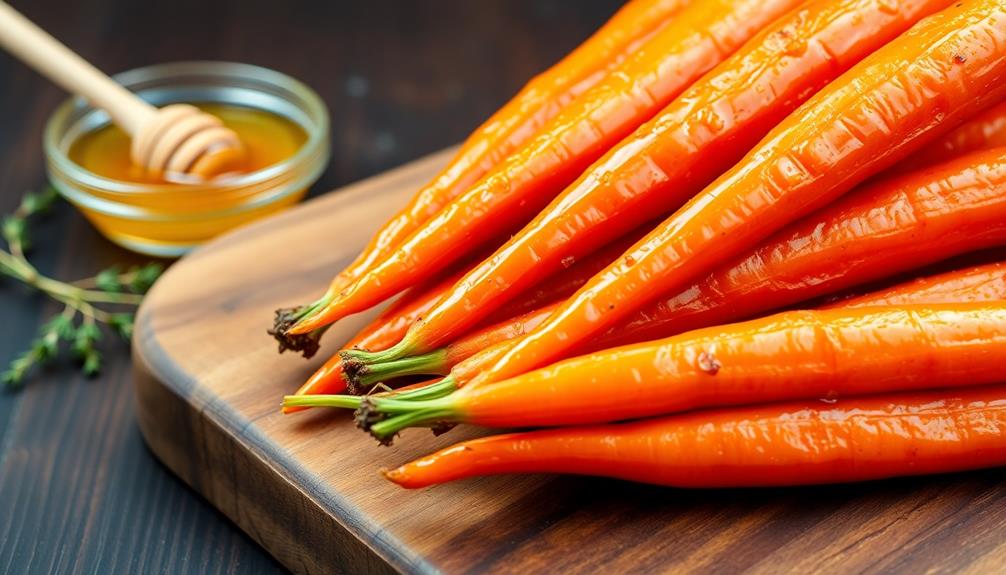
During winter, visiting your local farmer’s market for root vegetables like carrots, beets, turnips, and parsnips allows you to enjoy fresh, flavorful, and nutrient-rich ingredients while supporting sustainable farming practices. These vegetables are hardy, naturally sweet, and easy to prepare, making them perfect for hearty winter meals. Choosing local, in-season produce reduces environmental impact and boosts local economies. Keep exploring to discover more about how these root veggies can elevate your seasonal dishes.
Key Takeaways
- Winter root vegetables like carrots, beets, and parsnips are seasonal, locally grown, and support sustainable farming practices.
- They develop natural sweetness and flavor during cold months, making them perfect for hearty, nourishing meals.
- These vegetables require minimal seasoning, ideal for simple preparations like roasting, steaming, or mashing.
- Buying root veggies at winter markets reduces transportation emissions and supports local farmers and economies.
- Incorporating seasonal root vegetables enhances nutritional value, promotes eco-friendly eating, and fosters a connection to land and seasonality.
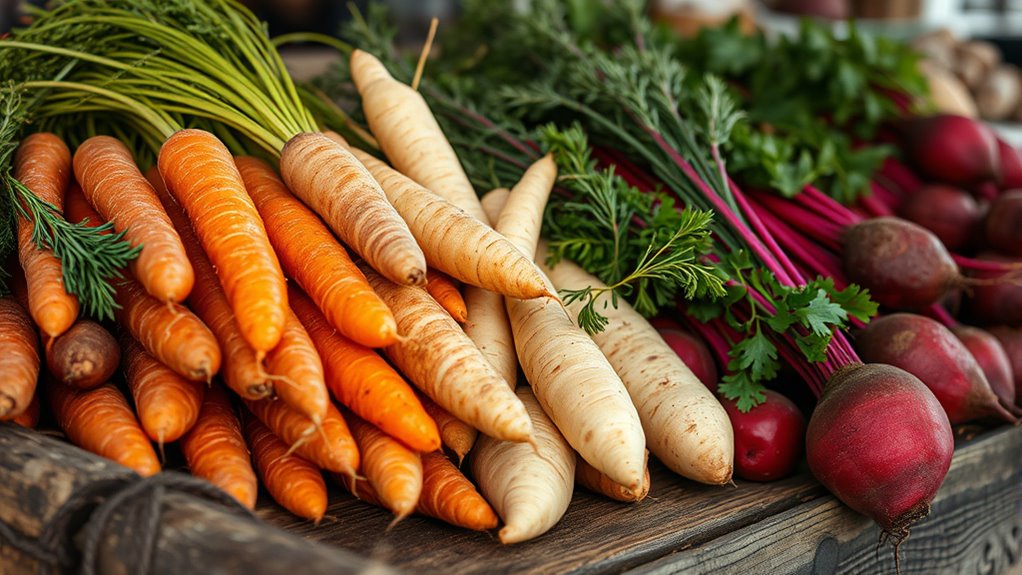
Even in the depths of winter, your local farmer’s market is bursting with vibrant root vegetables that bring warmth and flavor to your table. These hardy treasures—such as carrots, parsnips, beets, and turnips—are more than just comforting ingredients; they represent a commitment to sustainable farming and seasonal eating. When you choose these vegetables directly from local growers, you’re supporting practices that prioritize soil health, reduce transportation emissions, and promote biodiversity. By focusing on seasonal produce, you naturally align your diet with what’s best for the environment and your health, ensuring that each bite is fresh, flavorful, and nutrient-rich.
Choosing seasonal, local root vegetables supports sustainable farming and enriches your diet with fresh, flavorful, nutrient-dense produce.
Winter root vegetables thrive because they’re built to withstand cold weather, making them a reliable source of sustenance during the colder months. Their natural sweetness intensifies as they grow underground, meaning you get a richer flavor without needing excessive seasoning or additives. When you incorporate these seasonal gems into your meals, you’re not only savoring their wholesome taste but also participating in a cycle that respects the land and its rhythms. This approach to eating encourages you to plan meals around what’s available, reducing food waste and supporting local farmers who prioritize sustainable farming methods.
Preparing root vegetables for winter meals is straightforward and rewarding. Roasting carrots and parsnips caramelizes their natural sugars, creating a comforting side dish. Beets can be roasted, grated raw into salads, or turned into vibrant soups. Turnips add a hearty touch to stews or can be mashed with butter and herbs. By choosing these vegetables in season, you maximize their nutritional value and minimize your carbon footprint, reinforcing your commitment to environmentally conscious eating. Plus, buying directly from farmers often means you get fresher produce at better prices, which encourages a more mindful, sustainable approach to food consumption.
Eating seasonally also means embracing the flavors that winter offers, helping you create hearty, satisfying meals that nourish your body and soul. It’s about more than just flavor; it’s a way to connect with the land, support local economies, and reduce your environmental impact. As you explore the options at your winter farmer’s market, consider how each vegetable fits into this sustainable cycle. By making mindful choices rooted in seasonal eating, you’re helping to preserve the integrity of farmland and promote a healthier planet. So, next time you visit the market, pick up those root vegetables—your taste buds, your community, and the environment will thank you.
Frequently Asked Questions
How Should Root Veggies Be Stored for Long-Term Freshness?
You should store root veggies in a cool, dark, well-ventilated place to keep them fresh longer. Use storage techniques like placing them in mesh bags or boxes with sand or sawdust to prevent moisture loss. Preservation methods such as refrigeration can work for short-term storage, but for long-term freshness, avoid washing them until use. Proper storage helps maintain their flavor, texture, and nutritional value.
Which Root Vegetables Are the Sweetest During Winter?
You’ll find that carrots, beets, and parsnips tend to be the sweetest during winter. Their sweetness varies with seasonal changes, often peaking after a frost, which enhances their natural sugars. Carrots, especially heirloom varieties, offer a rich, sugary flavor, while beets develop a deep, sweet earthiness. Parsnips also become sweeter as winter progresses. Pay attention to seasonal variations, as they can markedly boost the natural sweetness of these root veggies.
Are There Organic Options Available for Winter Root Veggies?
Yes, organic options are available for winter root veggies. When shopping, look for organic certification labels to guarantee you’re choosing produce grown with sustainable farming practices. These farmers prioritize soil health and minimize chemical use, giving you healthier, tastier roots. Many local markets and farms offer certified organic root vegetables during winter, so you can enjoy seasonal, nutritious, and environmentally friendly options straight from sustainable farming methods.
How Can I Tell if Root Veggies Are Fresh at the Market?
You can tell if root veggies are fresh at the market by checking color indicators—bright, vibrant hues usually mean freshness. Conduct a firmness test by gently squeezing; fresh roots should feel firm and heavy for their size, not soft or shriveled. Avoid veggies with cracks, blemishes, or sprouting eyes. These signs suggest they’re past their prime. Trust your senses to select the best, freshest root veggies for your winter meals.
What Are Some Creative Ways to Cook Winter Root Vegetables?
You can get creative with winter root vegetables by trying vegetable roasting, which brings out their sweetness and adds depth to your dishes. Toss them with olive oil, herbs, and spices, then roast until caramelized. For a fresh twist, make root vegetable salads by julienning or roasting them and combining with tangy dressings, nuts, or dried fruits. These methods keep your meals vibrant and flavorful during winter months.
Conclusion
Just like the heroes of old who found strength in humble roots, you can turn these winter treasures into hearty, comforting meals. Embrace the seasonal bounty, and let each root veggie remind you that sometimes, the simplest ingredients hold the greatest potential. As the wise say, “Good things come to those who wait”—and with these farm-fresh finds, you’re well on your way to creating delicious, nourishing dishes that warm both body and soul.