
Growing herbs like basil, mint, and chives on your windowsill is a great way to enjoy fresh flavors year-round and add natural beauty to your home. Place your herbs where they get plenty of light, and water them regularly without overdoing it. Use proper care practices like pruning and fertilizing for healthy growth. Keep in mind, companion planting can boost their strength and flavor—if you continue exploring, you’ll find even more ways to maximize your indoor garden.
Key Takeaways
- Select herbs like basil, mint, and chives suited for indoor growth and place them on a sunny windowsill for optimal light.
- Use well-draining pots with quality potting soil, and water regularly to keep herbs healthy without overwatering.
- Practice companion planting, such as pairing basil with chives, to enhance flavor and deter pests naturally.
- Rotate herbs seasonally and supplement with grow lights during low sunlight months to maintain continuous growth.
- Regularly prune and fertilize herbs to promote bushier growth and maximize harvests indoors.
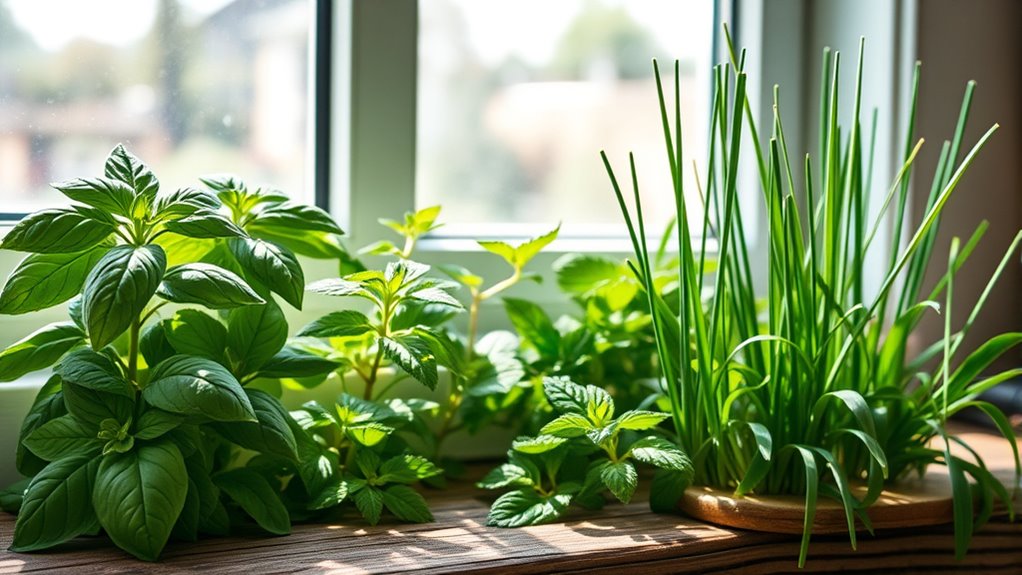
Growing herbs indoors is a rewarding way to enjoy fresh flavors year-round. When you set up a small herb garden on your windowsill, you gain easy access to basil, mint, chives, and more, enhancing your cooking and adding a touch of nature to your home. To maximize your success, understanding companion planting can help you choose which herbs to grow together, boosting their growth and flavor while deterring pests naturally. For example, basil and chives make excellent companions; basil can improve the flavor of chives, and both benefit from similar watering and light conditions. Mint, however, is vigorous and can spread quickly, so it’s best to plant it separately to prevent it from overtaking other herbs. Incorporating companion planting into your indoor herb garden ensures healthier plants and more bountiful harvests. Proper plant care practices, including watering, pruning, and fertilizing, are essential for maintaining healthy herbs indoors.
Seasonal planting is another key aspect that can help you keep your indoor garden thriving throughout the year. While herbs like basil and chives love warm, sunny conditions, they may struggle during colder months when sunlight diminishes. To address this, you can rotate your herbs in accordance with seasonal changes or supplement natural light with grow lights. During winter, you might focus on herbs that tolerate lower light levels, such as mint or parsley, or even experiment with different herbs suited to the season. This approach ensures you’re continuously harvesting fresh herbs regardless of the time of year, making your indoor gardening more sustainable and enjoyable.
Frequently Asked Questions
How Often Should I Water Indoor Herbs for Optimal Growth?
You should water your indoor herbs when their soil moisture drops to about a 50-70% level, usually every 2-3 days. Check the soil regularly by touching the surface; if it feels dry, it’s time to water. Maintain a consistent watering schedule to prevent over- or underwatering, which can stress your herbs. Proper soil moisture guarantees healthy growth and flavorful herbs on your windowsill.
Can I Grow Multiple Herbs Together Without Cross-Contamination?
Imagine your windowsill as a lively neighborhood, where compatible herbs like basil, mint, and chives coexist peacefully through companion planting. You can grow multiple herbs together without cross-contamination if you choose herbs with good herb compatibility. Keep their roots separated with individual pots or dividers, and make certain of proper spacing. This way, they thrive harmoniously, sharing their fragrant personalities without interfering with each other’s growth or flavors.
What Are Common Pests That Affect Indoor Herb Gardens?
You might face pests like aphids, spider mites, or whiteflies in your indoor herb garden. To prevent these pests, practice regular pest prevention by inspecting your herbs and maintaining good airflow. Herb-specific pests target particular plants: basil may attract aphids, mint can get spider mites, and chives might face thrips. Keep your herbs healthy and monitor closely to catch infestations early, ensuring your herbs stay vibrant and pest-free.
How Do I Prevent Herbs From Becoming Leggy Indoors?
To prevent your herbs from becoming leggy indoors, you should focus on proper light management and pruning techniques. Guarantee they receive at least 6 hours of bright, direct sunlight daily or supplement with grow lights. Regularly prune your herbs, pinching back the top growth to encourage bushier, healthier plants. This promotes dense foliage and prevents leggy, spindly stems, keeping your herbs vibrant and productive.
What Are the Best Fertilizing Practices for Indoor Herbs?
You should fertilize your indoor herbs every 4-6 weeks using organic fertilizer options like compost tea or fish emulsion. Incorporate composting techniques by adding small amounts of well-aged compost into your soil mix for natural nutrients. Avoid over-fertilizing, which can cause legginess, and always water after fertilizing to help nutrients absorb. Regular feeding keeps your herbs lush, flavorful, and healthy indoors.
Conclusion
Growing herbs indoors is simple and rewarding, transforming your windowsill into a lush, fragrant oasis. With just a few pots of basil, mint, or chives, you can enjoy fresh flavors anytime. Do you really need to head to the store when your own garden is just a windowsill away? Embrace the joy of indoor herb gardening and elevate your cooking with minimal effort and maximum freshness. Why not start today and see how thriving your herbs can really be?