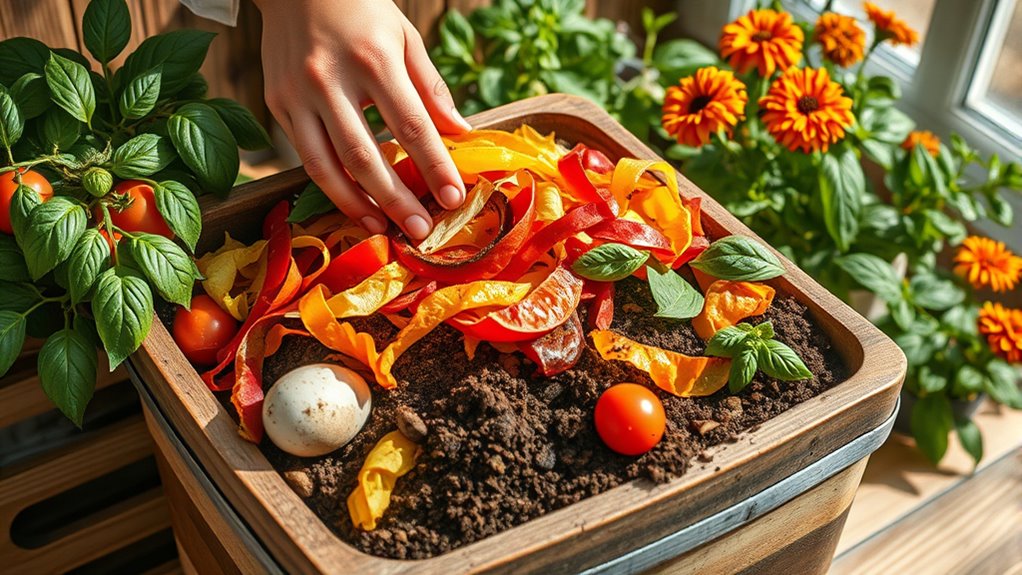

Composting kitchen scraps is a great way to enrich your garden soil and reduce waste. Keep your compost bin in a dry, shady spot and turn it weekly to speed up decomposition. Balance greens like vegetable scraps with browns such as leaves or shredded paper for ideal results. Maintaining proper moisture and monitoring temperature helps microbes do their work efficiently. If you want to learn more, you’ll find simple tips to turn scraps into garden gold.
Key Takeaways
- Balance greens and browns to ensure proper decomposition and prevent odors.
- Keep the compost bin in a dry, shady spot to maintain optimal conditions.
- Regularly turn or mix the compost weekly to boost microbial activity and aeration.
- Monitor temperature to ensure it stays between 135°F and 160°F for active composting.
- Be patient; with consistent maintenance, kitchen scraps will transform into nutrient-rich compost.

Have you ever wondered what to do with your kitchen scraps instead of tossing them in the trash? Composting is a fantastic way to recycle those food leftovers while enriching your garden’s soil. When you start composting, you’re not just reducing waste—you’re actively improving soil health. Healthy soil leads to stronger plants, better yields, and a more sustainable garden. But to achieve that, you need to understand the basics of compost bin maintenance and how to keep your compost pile balanced and thriving.
First, keep your compost bin in a dry, shady spot. Proper placement prevents it from overheating or becoming too wet, which can slow down decomposition. Regular maintenance is key; you’ll want to turn or mix your compost at least once a week. This aerates the pile, providing oxygen that microbes need to break down organic matter efficiently. When you turn the compost, you help distribute moisture and heat evenly, preventing foul odors and ensuring the materials break down uniformly. Remember, a well-maintained compost bin is less likely to attract pests and will produce rich, dark compost faster.
Keep your compost bin in a dry, shady spot and turn it weekly for faster, odor-free compost.
Incorporating a good balance of greens and browns is vital for soil health and compost bin maintenance. Greens—such as vegetable scraps, coffee grounds, and fresh grass clippings—are nitrogen-rich, fueling microbial activity. Browns—like dry leaves, shredded paper, and cardboard—provide carbon, which helps build the structure of your compost. Maintaining this balance prevents your compost from becoming slimy or smelling bad. Too many greens can cause excess moisture and odors, while too many browns slow down decomposition. Aim for about equal parts of each, and add water if your compost feels dry.
Monitoring temperature is another important aspect of compost bin maintenance. When your pile heats up to between 135°F and 160°F, it indicates active microbial activity and effective decomposition. If the temperature drops, it’s time to turn the compost and add more greens or moisture to jump-start the process. Keeping an eye on these factors ensures that your compost remains biologically active, producing nutrient-rich humus that enhances your garden’s soil structure and fertility. Additionally, understanding the role of pH balance can help you troubleshoot common composting issues and ensure optimal microbial health.
Finally, patience is essential. Composting takes time, but with consistent maintenance, you’ll soon have nutrient-dense compost ready to enrich your garden beds. This process not only reduces waste but also promotes healthier soil, ultimately leading to a more vibrant, productive garden. So, embrace the routine of compost bin maintenance, and watch your kitchen scraps transform into garden gold that benefits your plants and the environment alike.
Top picks for "compost kitchen scrap"
Open Amazon search results for this keyword.
As an affiliate, we earn on qualifying purchases.
Frequently Asked Questions
Can I Compost Cooked Food Scraps Safely?
You can compost cooked food scraps safely, but you should do so cautiously. Cooking scraps can introduce unwanted bacteria, so maintaining high microbial activity is essential to break down the material properly. Mix cooked scraps with yard waste like leaves or paper to balance nitrogen and carbon. Turning the compost regularly also helps heat it up, killing off pathogens and speeding up decomposition. Just guarantee the compost reaches adequate temperatures for safe composting.
How Do I Prevent Pests in My Compost Bin?
Pest control is like fencing off a treasure chest—you want to keep intruders out. To prevent pests, use effective pest deterrent methods like burying kitchen scraps deep in the compost and avoiding meat or dairy. Also, place your compost bin in a sunny, breezy spot away from your home. Regular turning and keeping the lid tight help, too, making your compost unappealing to pests.
What Is the Ideal Composting Temperature?
You should aim for an ideal composting temperature between 135°F and 160°F (57°C to 71°C). This range ensures active decomposition and helps kill pathogens and weed seeds. Monitoring your compost temperature regularly allows you to maintain the ideal composting conditions. When the temperature drops, turn the pile to aerate it, helping to boost microbial activity and keep the compost hot enough for efficient breakdown.
How Often Should I Turn My Compost?
You should turn your compost every 1-2 weeks, or whenever it starts to look like a fluffy, aerated masterpiece. Regular turning keeps your compost aerobic and speeds up decomposition. Use aeration techniques like turning with a pitchfork or stirring with a compost aerator. Place your compost bin in a sunny, well-drained spot to maintain warmth and moisture, making sure it’s accessible for easy turning and ongoing airflow.
Can I Compost Dairy and Meat Products?
You can compost dairy and meat products, but it’s not always recommended because they decompose slowly and can attract pests. Dairy decomposition produces strong odors, while meat breakdown can create bacteria and attract critters. If you decide to compost these, use a dedicated, enclosed compost bin and keep it well-managed with plenty of browns and aeration. This helps minimize odors and pests while allowing the decomposition process to occur safely.
Conclusion
By composting your kitchen scraps, you’re not only nurturing your garden but also embracing a timeless practice that dates back centuries. It’s a simple yet powerful way to reduce waste and enrich your soil. Think of it as your personal alchemy—transforming everyday leftovers into gold for your plants. So, get your hands dirty and start composting today; your garden—and the environment—will thank you, as they have for generations past.