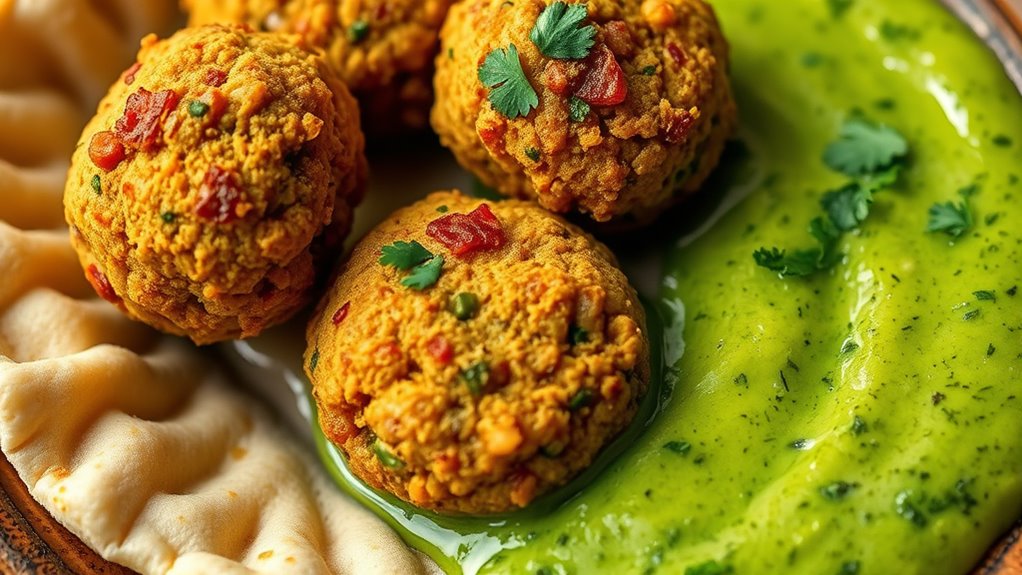

To make Egyptian ta’ameya, soak dried fava beans overnight or use canned beans, then coarsely pulse them with herbs like parsley and cilantro. Shape the mixture into balls or patties and deep-fry in hot oil until crispy. Serve with a bright green sauce made from herbs, garlic, and lemon. Adjust seasonings and shape as you prefer—if you’d like to master authentic techniques and flavors, there’s more to learn below.
Key Takeaways
- Traditional Egyptian ta’ameya uses soaked or canned fava beans, blended with herbs like parsley and cilantro for authentic flavor.
- Deep frying at 350°F until golden creates the crispy exterior characteristic of street-style ta’ameya.
- Fresh herbs and garlic are essential for the green sauce, typically a blend of parsley, cilantro, garlic, lemon, and olive oil.
- Shaping ta’ameya with wet hands or a scoop ensures uniform size and shape before frying.
- Alternative baking offers a softer version, while the green sauce enhances the dish’s freshness and flavor.

Egyptian Ta’ameya, also known as fava bean falafel, is a beloved street food that captures the vibrant flavors of Egypt. When making it at home, understanding proper cooking techniques and ingredient substitutions can elevate your dish and make it more adaptable to what you have on hand. The process begins with the key ingredient: dried fava beans. Soaking them overnight softens the beans and guarantees they blend smoothly. If you’re short on time, you can use canned fava beans, but be sure to drain and rinse them thoroughly to remove excess salt and preservatives. The consistency of your mixture is essential, so avoid over-processing; pulse the beans until they’re coarsely ground, maintaining some texture. This helps the ta’ameya hold together during frying and gives it that authentic crumbly interior.
When it comes to cooking techniques, deep frying is traditional for achieving that crispy exterior, but you can also pan-fry or use an air fryer for a healthier option. If frying, heat your oil to about 350°F (175°C) and don’t crowd the pan—fry in small batches to maintain the oil’s temperature. Use a slotted spoon to remove the ta’ameya once golden brown and drain on paper towels. For a more uniform shape, wet your hands or use a cookie scoop before frying. If you prefer a softer texture, baking the ta’ameya in the oven at 375°F (190°C) for about 20 minutes can work, though it won’t be as crispy.
Ingredient substitutions are also straightforward. If fava beans aren’t available, you might try using split peas or chickpeas for a different flavor, but keep in mind that it will alter the traditional taste. Fresh herbs like parsley and cilantro add brightness, but dried herbs can be used in a pinch. For added flavor, some cooks include cumin, garlic, or onion powder; if you don’t have fresh garlic, garlic powder works well. To bind the mixture, traditionally, soaked bread or flour is used, but you can substitute with oat flour, chickpea flour, or even ground oats if you’re gluten-free. These substitutions help maintain the consistency necessary for forming the falafel. Additionally, understanding the refrigeration cycle principles can help in storing ingredients properly, ensuring freshness and safety.
Mastering these techniques and substitutions allows you to customize the ta’ameya while keeping its authentic essence. Whether you prefer it crispy from deep frying or softer from baking, your efforts will result in a flavorful, satisfying street-food experience right in your kitchen.
Top picks for "egyptian ameya fava"
Open Amazon search results for this keyword.
As an affiliate, we earn on qualifying purchases.
Frequently Asked Questions
What Are the Origins of Egyptian Ta’Ameya?
You might not realize it, but Egyptian Ta’ameya has roots in ancient Egyptian cuisine, dating back thousands of years. Its origins are intertwined with Middle Eastern culinary history, where fava beans have been a staple ingredient. Over time, Egyptians perfected this flavorful dish, making it a beloved street food. You can see its influence in regional variations across the Middle East, reflecting a rich culinary tradition that continues to evolve today.
How Is Ta’Ameya Different From Traditional Falafel?
You’ll notice that ta’ameya differs from traditional falafel mainly in ingredients and texture. While falafel typically uses chickpeas, ta’ameya is made with fava beans, which give it a softer, fluffier texture. The ingredients also include herbs like parsley and cilantro, making it more flavorful. Overall, ta’ameya’s unique bean base and lighter, more delicate texture set it apart from the denser, crunchier falafel.
Can Ta’Ameya Be Made Vegan or Gluten-Free?
You can definitely make ta’ameya vegan and gluten-free. Think of it as a chameleon, adapting to your dietary needs. Swap out any gluten-containing ingredients with gluten-free options like rice flour or chickpea flour, and guarantee your seasonings are plant-based. With vegan adaptations, skip eggs or dairy, and enjoy a delicious, inclusive dish that’s flexible enough to suit your lifestyle. It’s a tasty way to stay true to your diet!
What Are Common Side Dishes Served With Ta’Ameya?
You’ll often find traditional accompaniments like fresh vegetables, pickles, and warm pita alongside ta’ameya. Dipping sauces, such as tahini or spicy chili sauce, add flavor and contrast. These side dishes complement the crispy falafel and enhance your eating experience. Incorporate a variety of textures and flavors with these common side dishes, making your meal more satisfying and authentic, just like in Egyptian street food markets.
How Long Does It Take to Prepare the Green Sauce?
Preparing green sauce takes about 10 to 15 minutes—perfect if you’re craving a quick burst of flavor. You’ll want to blend fresh herbs, garlic, lemon, and olive oil, then store it in an airtight container if not using immediately. For best results, keep it refrigerated and use within a couple of days. Yes, it’s that simple, and surprisingly fast, so you can enjoy fresh, vibrant sauce anytime.
Conclusion
Now that you’ve tasted Egyptian ta’ameya paired with that vibrant green sauce, you’ve discovered a flavor combo as lively as a bustling market. This dish isn’t just a meal; it’s a journey into Egypt’s rich culinary soul. So next time you crave something fresh and flavorful, remember, this falafel and sauce duo will turn your kitchen into a vibrant street scene, full of colors, aromas, and unforgettable tastes. Immerse yourself and enjoy the magic!