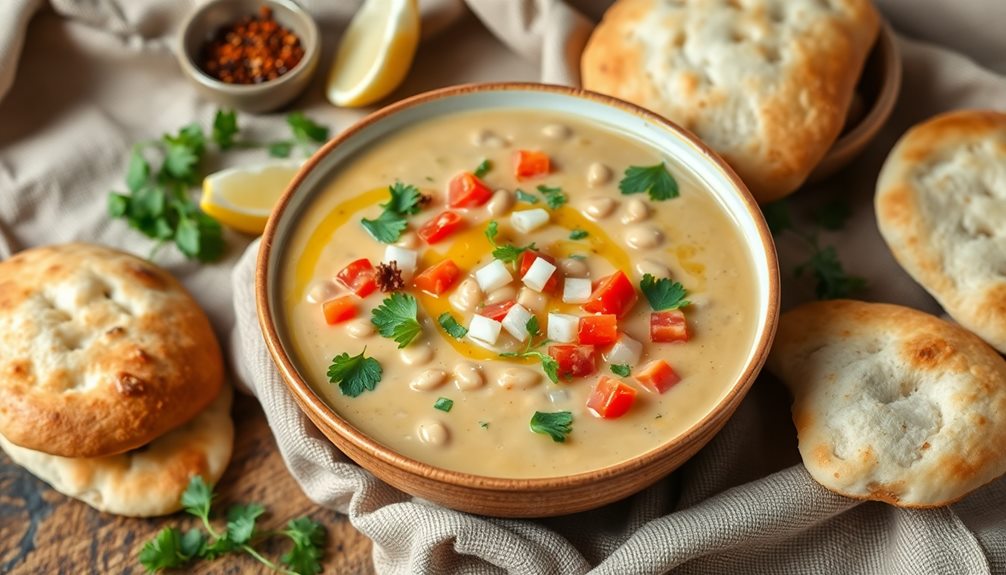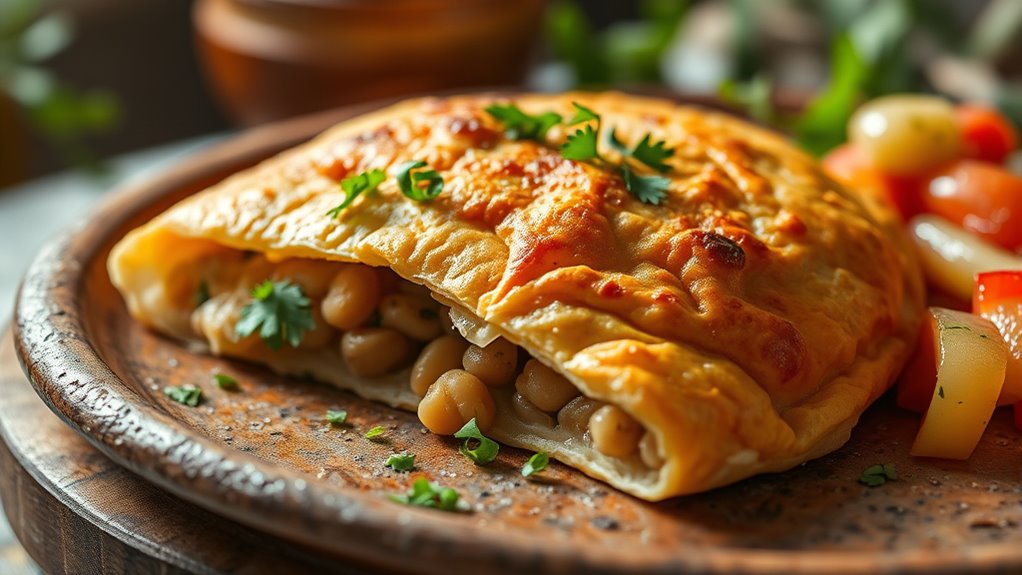

During Coptic Christmas on January 7, Egyptians celebrate with fasting and special foods like Ta’ameya, a delicious fava bean falafel. Made from soaked and seasoned fava beans mixed with herbs, it’s a staple during this spiritual season, symbolizing resilience and tradition. This humble dish reflects Egypt’s rich culinary and cultural heritage, bringing families and communities together. If you want to explore more about this festive food and its meaningful role, keep going.
Key Takeaways
- Ta’ameya is a traditional Egyptian fava bean falafel, commonly prepared during the fasting period leading up to Coptic Christmas on January 7.
- It symbolizes resilience, cultural identity, and spiritual reflection, embodying Egypt’s culinary heritage during festive celebrations.
- During fasting, Ta’ameya is made without meat or dairy, focusing on plant-based ingredients like fava beans, herbs, and spices.
- The dish fosters community bonding through shared meal preparation, highlighting faith, tradition, and cultural pride.
- Ta’ameya’s flavorful, textured profile makes it a central, beloved dish in Coptic Christmas festivities across Egypt.
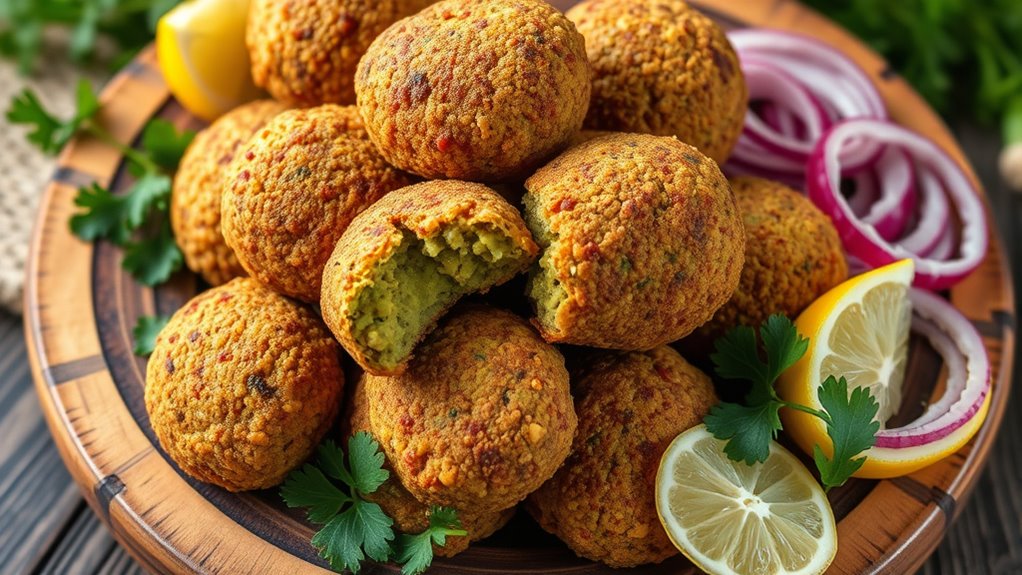
Coptic Christmas, celebrated by Egypt’s Coptic Christian community, is a vibrant occasion marked by fasting, prayer, and festive gatherings. During this period, many adhere to Lenten traditions that emphasize spiritual reflection and self-restraint. For approximately 43 days leading up to January 7, you’ll find that the community observes a strict fast, refraining from meat, dairy, and certain fats, emphasizing simplicity and purity. This period isn’t just about abstaining; it’s a time to deepen your faith and prepare your heart for the joyous celebration of Christ’s birth. As you observe these Lenten traditions, you’ll notice the culinary heritage of Egypt coming alive in the form of special dishes that are both humble and flavorful. These recipes often center around plant-based ingredients, reflecting the fasting requirements and the cultural importance of nourishing the body with wholesome, natural foods.
One of the most iconic symbols of this culinary heritage is the Egyptian fava bean falafel, known locally as Ta’ameya. Unlike the more widespread chickpea falafel, Ta’ameya is made primarily from fava beans, which give it a distinct flavor and texture. During the fasting period, you’ll find that Ta’ameya takes center stage in many households and street food stalls. You might be surprised at how these small, crispy patties can be so satisfying, especially when paired with fresh vegetables, tahini, or tangy pickles. The preparation of Ta’ameya is an art passed down through generations, with soaking, grinding, and seasoning the fava beans to perfection. The addition of herbs like parsley, cilantro, and dill enhances its vibrant flavor, making it a true reflection of Egypt’s rich culinary repertoire.
As you indulge in Ta’ameya during Coptic Christmas, you’re also experiencing a piece of Egyptian cultural identity. These dishes are more than just food—they are a testament to resilience and tradition, woven into the fabric of the community’s spiritual life. The fasting period and the resulting culinary practices foster a sense of togetherness, as families gather to prepare and share meals that honor their faith and heritage. Whether enjoyed at home or on the bustling streets, this humble falafel embodies the warmth, spirituality, and enduring culinary craftsmanship that define Egypt’s unique cultural tapestry during the Christmas season.
Frequently Asked Questions
What Are the Origins of Coptic Christmas Traditions?
You can trace Coptic Christmas traditions back to Coptic history, which blends early Christian practices with Egyptian customs. These traditions often include Christmas symbolism like fasting, prayer, and special foods such as Egyptian fava bean falafel (Ta’ameya). You actively celebrate by attending midnight church services and sharing meals, highlighting the spiritual significance of the holiday and honoring the faith’s deep roots in Egypt’s cultural heritage.
How Is Ta’Ameya Different From Regular Falafel?
You’ll notice ta’ameya has a unique charm, blending fava beans instead of chickpeas, giving it a richer flavor. The falafel ingredients often include herbs like parsley and cilantro, creating vibrant culinary variations. Unlike regular falafel, ta’ameya is typically softer and greener, reflecting its traditional roots. Its subtle differences symbolize a deeper cultural story, inviting you to savor more than just a snack—an experience of history and tradition.
Are There Specific Customs Associated With Egyptian Christmas Celebrations?
During Egyptian Christmas celebrations, you’ll notice special customs like singing Christmas carols door-to-door and gathering with family for festive meals. You might also see people lighting candles in churches and exchanging gifts. These traditions create a warm, communal atmosphere, emphasizing the importance of family and faith. Participating in these customs helps you connect with Egyptian culture and celebrate the holiday in a meaningful, joyful way.
Can Ta’Ameya Be Made Vegan or Gluten-Free?
Like a blank canvas awaiting vibrant colors, you can easily make ta’ameya vegan and gluten-free. Swap out traditional ingredients with vegan substitutions, such as flaxseed or chia seeds for binding, and use gluten-free flour or chickpea flour instead of wheat. These adjustments preserve the savory essence while accommodating dietary needs, letting you enjoy this classic dish without compromise, just like an artist creating a masterpiece from simple, wholesome ingredients.
Where Can I Find Authentic Egyptian Ta’Ameya Recipes?
You can find authentic Egyptian ta’ameya recipes in cookbooks dedicated to Middle Eastern or North African cuisine, or on trusted culinary websites that focus on authentic recipes. Look for sources that emphasize culinary traditions, such as food blogs run by Egyptian chefs or cultural centers. Additionally, YouTube channels specializing in Egyptian cooking often demonstrate traditional techniques, helping you capture the true flavor and texture of authentic ta’ameya.
Conclusion
As you savor the golden crunch of ta’ameya, imagine it as a tiny celebration of faith and tradition, bursting with history and hope. Each bite is like a whisper from ancient Cairo streets, weaving past and present into a flavorful tapestry. Let this festive dish remind you that, just like the resilient fava bean, your spirit can flourish even in the hardest soil. Embrace the warmth, and carry its story with you long after the last crumb.