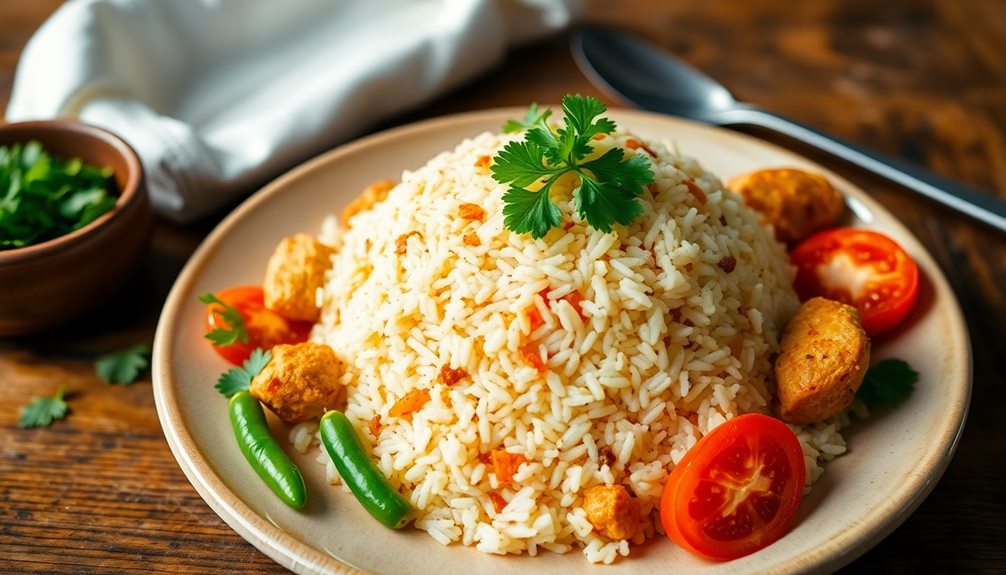
Kenyan Pilau Rice and Kachumbari Salad combine fragrant, spice-infused rice with a fresh, tangy tomato and onion salad. To make it authentic, toast spices like cardamom and cloves before cooking the rice, then layer flavors for a rich aroma. The Kachumbari adds a cooling, zesty contrast, balancing the hearty pilau. These dishes showcase Kenya’s vibrant culinary heritage, and exploring their details reveals even more delightful flavors.
Key Takeaways
- Kenyan Pilau rice features fragrant, spice-infused rice with toasted cardamom, cloves, and cinnamon for rich flavor.
- Proper preparation involves sautéing onions and garlic, then toasting spices before adding rice and stock.
- Kachumbari salad combines chopped tomatoes, onions, chili, and cilantro, seasoned with lemon or lime juice for freshness.
- Serving the warm, spiced pilau alongside the cool, zesty kachumbari creates a balanced, flavorful meal.
- Toasting spices enhances aroma and depth, making authentic Kenyan pilau distinct and flavorful.

Kenyan Pilau Rice and Kachumbari Salad are flavorful staples that perfectly showcase the vibrant tastes of Kenyan cuisine. When you prepare pilau, you’re embracing a dish that combines fragrant rice with a rich blend of spices, a testament to Kenya’s rich culinary heritage. The secret to an authentic pilau lies in the use of fusion spices—cardamom, cloves, cinnamon, and cumin—that create a complex aroma and depth of flavor. You’ll find that these spices are often toasted in a little oil to release their essential oils, a step that enhances their aroma and guarantees each grain of rice absorbs the spicy richness. While some modern cooks might experiment with shortcuts, traditional methods emphasize patience and care, allowing the spices to bloom fully and infuse every ingredient with their essence. You start by sautéing onions and garlic in a sturdy pot, then adding your spice blend, which is carefully toasted to open its full potential. This process is vital for achieving the layered flavors that distinguish Kenyan pilau from other rice dishes. Toasting spices is a crucial step that maximizes their flavor release and enhances the overall dish.
As you cook, you’ll notice how the spices turn fragrant and slightly darker, signaling it’s time to add the rice and broth. Using traditional methods, you pour in seasoned water or stock, letting the rice absorb all those vibrant flavors as it cooks. The rice should be fluffy and aromatic, with each grain coated in the spice mixture. When done right, your pilau will be a celebration of aroma and taste, capturing Kenya’s history of spice trade and culinary ingenuity.
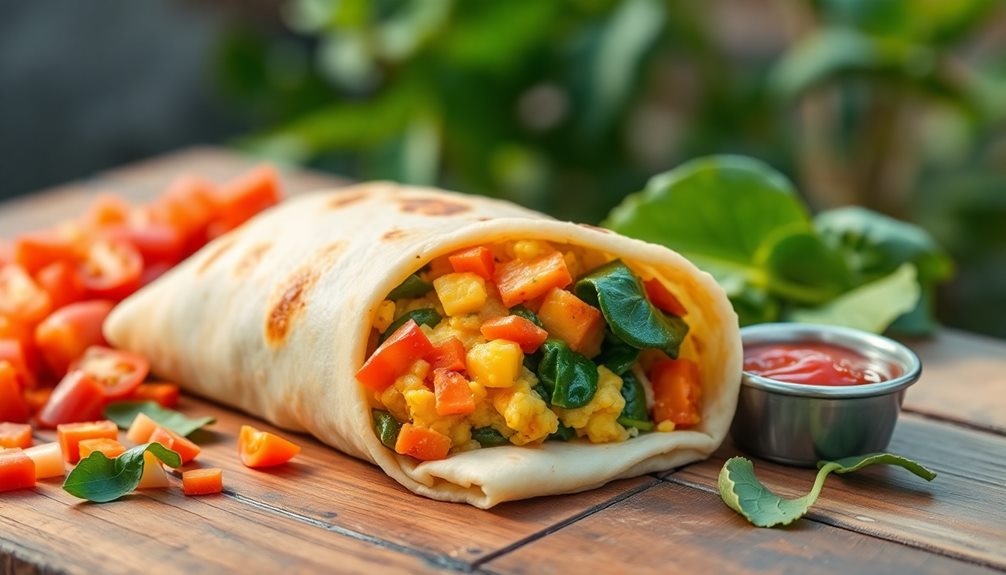
Meanwhile, the Kachumbari Salad offers an invigorating contrast that highlights the simplicity and freshness characteristic of Kenyan cuisine. Made with chopped tomatoes, onions, chili peppers, and cilantro, it’s seasoned with lemon juice or lime for a tangy kick. This salad is quick to prepare and embodies the use of fresh ingredients, often assembled in minutes with minimal fuss. The vibrant colors and crisp textures provide a perfect balance to the spiced richness of the pilau, creating a harmonious dish that’s both hearty and invigorating. When you serve these dishes together, you experience a delightful contrast—warm, fragrant rice paired with cool, zesty salad—that embodies the essence of Kenyan flavor.

Shan Pilau Biryani Recipe and Seasoning Mix 1.76 oz (50g) – Spice Powder for Mughal Style Meat Layered Pilaf – Suitable for Vegetarians – Airtight Bag in a Box (Pack of 6)
Quantity – Shan Pilau Biryani Recipe and Seasoning Mix comes packaged and sealed in a box containing a…
As an affiliate, we earn on qualifying purchases.
As an affiliate, we earn on qualifying purchases.
Frequently Asked Questions
Can I Substitute the Meat in Pilau Rice With Vegetables?
Yes, you can substitute the meat in pilau rice with vegetables. Vegetable alternatives like carrots, peas, bell peppers, and potatoes work well, adding flavor and texture. For vegan substitutions, skip animal proteins altogether and focus on hearty vegetables or plant-based protein sources like tofu or tempeh. Just sauté the vegetables before adding them to the rice, and adjust seasoning to guarantee your pilau remains flavorful and satisfying.
What Are the Best Spices for Authentic Kenyan Pilau Rice?
To make authentic Kenyan pilau rice, use a spice blending of cumin, cardamom, cinnamon, cloves, and bay leaves for rich flavor enhancement. These spices create a warm, aromatic base that defines the dish’s unique taste. You can also add a touch of black pepper or turmeric for extra depth. The key is to toast the spices to release their full aroma, ensuring your pilau rice is flavorful and authentic.
How Long Does Kachumbari Salad Stay Fresh?
Kachumbari salad stays fresh for about 1 to 2 days when stored properly. To preserve its freshness, keep it in an airtight container in the refrigerator and avoid mixing it with other foods that release moisture. Use fresh ingredients and store it immediately after preparation. For ideal freshness, consume it within this timeframe and always check for any signs of spoilage before eating.
Is There a Vegan Version of Kenyan Pilau Rice?
Yes, you can enjoy a vegan version of Kenyan pilau rice by using vegan alternatives like vegetable broth instead of meat-based broth. You can also incorporate plant-based proteins such as chickpeas, tofu, or tempeh to boost protein content. Simply sauté your spices and vegetables, then cook the rice with these vegan ingredients. This way, you get a flavorful, satisfying vegan pilau rice that’s perfect for plant-based diets.
What Are Traditional Accompaniments for These Dishes?
Oh, the thrill of dining without the usual side dishes! Traditional accompaniments for these dishes include hearty ugali or chapati, which soak up all that flavorful rice. You might also enjoy a revitalizing glass of traditional Kenyan tea or a chilled soda to balance the spices. These side dishes and beverage pairings elevate your meal from simple to spectacular, making every bite a celebration of Kenyan culinary heritage.

FOR REAL Amazin' Asian Seasoning – Toasted Sesame Tamari Blend – Umami Flavor Booster for Meat & Rice – Gluten Free, Kosher, No Seed Oils or MSG, Bold Asian-Inspired Spice Mix – 6oz
Umami, Flavorful Blend: Put the “mmm” in umami with a savory blend of toasted sesame, tamari soy sauce,…
As an affiliate, we earn on qualifying purchases.
As an affiliate, we earn on qualifying purchases.
Conclusion
Now that you’ve mastered making Kenyan pilau rice and kachumbari salad, you’re all set to impress your friends and family. These dishes come together easily and burst with flavor, turning any meal into a celebration. Remember, a well-prepared meal is like a refreshing gust—sure to warm hearts and bring people together. So, don’t be afraid to experiment and put your own spin on these recipes. Happy cooking!
Kenyan Kachumbari salad ingredients
As an affiliate, we earn on qualifying purchases.
As an affiliate, we earn on qualifying purchases.

Kenyan Royco Beef Mchuzi Mix Spicy – Large 500g Jar – Authentic East African Stew Seasoning – Savory Spice Blend for Beef, Soups, Curries – African Cooking Essentials, Value Size
Authentic Kenyan Stew Seasoning: Bold, traditional East African spice blend delivers rich umami and herbaceous warmth with a…
As an affiliate, we earn on qualifying purchases.
As an affiliate, we earn on qualifying purchases.