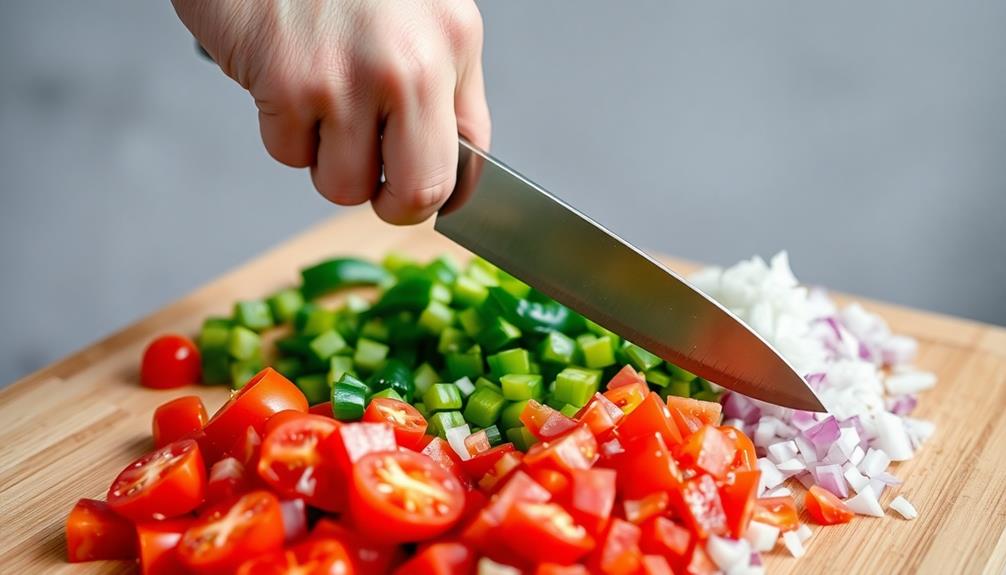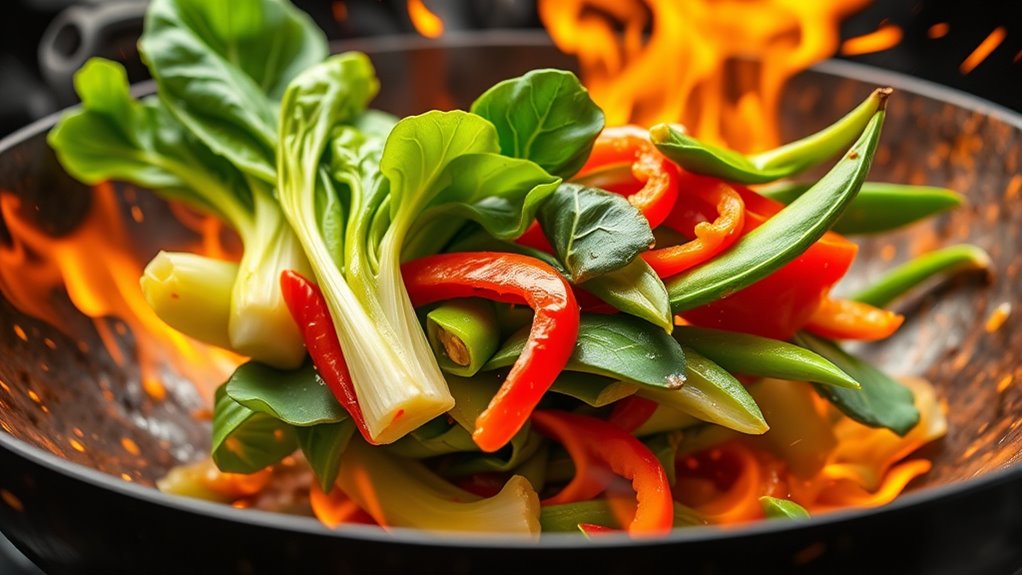

To master stir-fry, focus on making a balanced, flavorful sauce with soy, oyster, rice vinegar, sesame oil, and cornstarch for shine and coating. Properly seasoning your wok develops wok hei, adding smoky depth and preventing sticking. Keep the heat high and ingredients moving quickly for authentic flavor and aroma. If you want to open up more tips and techniques for achieving perfect sauces and wok flavor, there’s plenty more to discover.
Key Takeaways
- Balance salty, sweet, sour, and savory flavors in homemade stir-fry sauces for authentic taste.
- Add sauce after proteins and vegetables are nearly cooked to ensure proper coating and gloss.
- Proper wok seasoning creates a non-stick surface, imparts smoky wok hei, and enhances flavor development.
- Use high heat and quick stirring techniques to build wok hei and prevent burning.
- Achieve the perfect sauce consistency with cornstarch to create a glossy, silky texture that clings to ingredients.
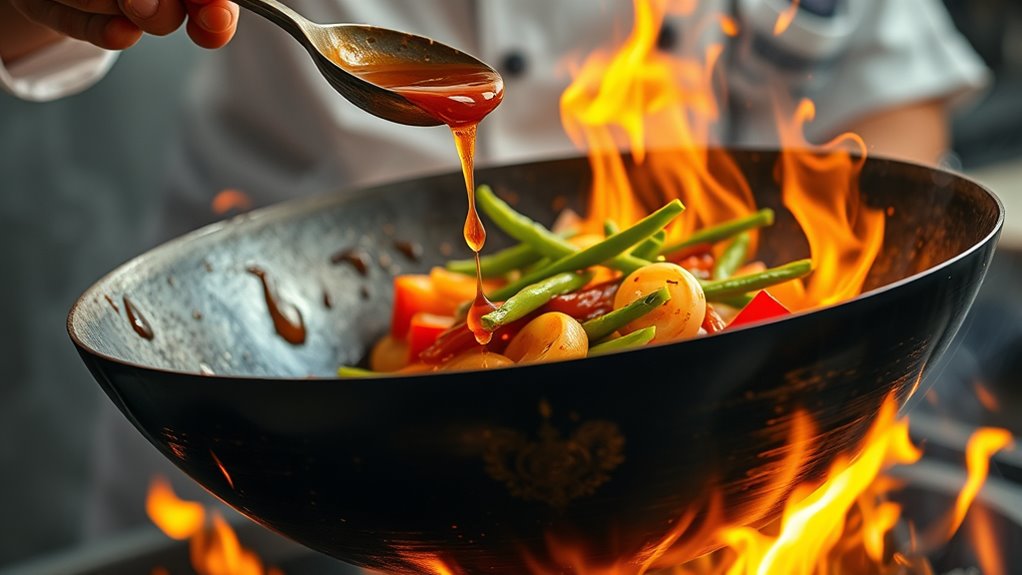
Have you ever wondered what makes a stir-fry stand out? It’s not just about chopping vegetables or tossing everything together—it’s about mastering the art of sauce techniques and understanding wok seasoning. When you get these elements right, your stir-fry transforms from ordinary to extraordinary, bursting with flavor and authentic appeal.
First, let’s talk about sauce techniques. The sauce is the flavor backbone of your stir-fry. Instead of relying on store-bought bottled sauces, consider making your own. Combining soy sauce, oyster sauce, rice vinegar, sesame oil, and a little cornstarch creates a glossy, flavorful coating that clings perfectly to your ingredients. The key is balancing salty, sweet, sour, and savory elements to suit your taste. When you cook, add the sauce at the right moment—usually after your proteins and vegetables are nearly cooked but still crisp. This allows the sauce to thicken slightly and coat everything evenly, giving your dish that restaurant-quality shine. Remember, a good stir-fry sauce isn’t just about flavor; it’s about texture too. Using cornstarch helps achieve that desirable sheen and a silky mouthfeel, pulling all the flavors together in each bite.
Master your stir-fry by balancing flavors and adding sauce at just the right moment for perfect shine and texture.
Next, wok seasoning plays a *vital* role in elevating your stir-fry. If you’re using a new wok, it needs to be seasoned properly before cooking. A seasoned wok develops a natural non-stick surface and imbues a subtle, smoky flavor that enhances every dish. To season your wok, heat it over high heat until it starts to smoke, then rub it with a thin layer of oil. Repeat this process several times, allowing the oil to polymerize and create a durable coating. Over time, your wok will develop a dark, smooth patina—this is the wok seasoning you want to achieve. A well-seasoned wok not only prevents sticking but also helps you achieve that coveted wok hei—an elusive, smoky aroma that defines authentic stir-fry. When you stir-fry, keep the heat high and move ingredients quickly to prevent burning and to build up that flavor-packed, smoky essence. Proper airless paint sprayer maintenance can ensure your equipment performs consistently, just like maintaining a wok keeps it in top condition for flavor.
Incorporating these techniques into your cooking routine makes a dramatic difference. Focus on perfecting your sauce techniques and properly seasoning your wok, and you’ll notice how your stir-fries become more flavorful, aromatic, and visually appealing. It’s a skill that’s worth honing because once you master it, every stir-fry can taste like it came from a professional kitchen. With practice, you’ll be able to control the flavors, achieve that perfect wok hei, and create dishes that truly impress.
Frequently Asked Questions
What Are Common Mistakes to Avoid When Stir-Frying?
To avoid common stir-frying mistakes, don’t overcrowd the wok, as it lowers the heat and causes ingredients to steam rather than sear. Also, use high heat properly; it’s essential for quick cooking and developing wok hei. Avoid adding too much sauce at once, which can make ingredients soggy. Keep ingredients moving constantly to ensure even cooking, and prep everything beforehand to prevent delays.
How Do I Choose the Best Wok for Stir-Frying?
Choosing the right wok is like selecting a trusted partner in your culinary journey. Opt for a carbon steel wok because it’s durable and heats quickly, giving you that perfect wok hei. Consider a size that fits your cooking style—12 to 14 inches work well for most home kitchens. Avoid non-stick woks; they don’t develop the necessary seasoning and heat retention. Your ideal wok enhances your stir-fry mastery effortlessly.
Can I Make Stir-Fry Sauces Ahead of Time?
Yes, you can prep stir-fry sauces ahead of time. Simply mix your ingredients, then store the sauces in an airtight container or jar. Use prepping sauces in small batches to maintain freshness and flavor. Keep them refrigerated, and always give them a quick stir before using. Following storing tips guarantees your sauces stay flavorful and ready to add that perfect touch to your stir-fry whenever you cook.
How Do I Clean and Maintain My Wok Properly?
Remarkably, maintaining your wok aligns with your seasoning techniques and storage tips. After each use, wash it with hot water, avoiding soap, then dry thoroughly to prevent rust. To keep it in top shape, occasionally heat it and rub with oil—a perfect opportunity to build seasoning. Store it in a dry place, and if rust appears, scrub gently and re-season. Proper care ensures your wok stays non-stick and flavorful for years.
What Are Some Vegetarian Protein Options for Stir-Fry?
You should try tofu with varied textures like firm or silken, depending on your preference, for a great vegetarian protein. Incorporate bean options such as edamame, chickpeas, or black beans to boost protein content and add flavor. These options cook quickly and absorb sauces well, making your stir-fry more satisfying. Experiment with different textures and beans to find what works best for your taste and dietary needs.
Conclusion
Now that you’ve uncovered the secrets of perfect stir-fry and mastered those essential sauces and wok hei, aren’t you enthusiastic to put your skills to the test? With your newfound knowledge, you can create restaurant-quality dishes right at home. Remember, practice makes perfect, so keep experimenting and refining your technique. Why settle for takeout when you can craft a vibrant, flavorful stir-fry anytime? Your culinary adventure starts now—are you ready to stir things up?