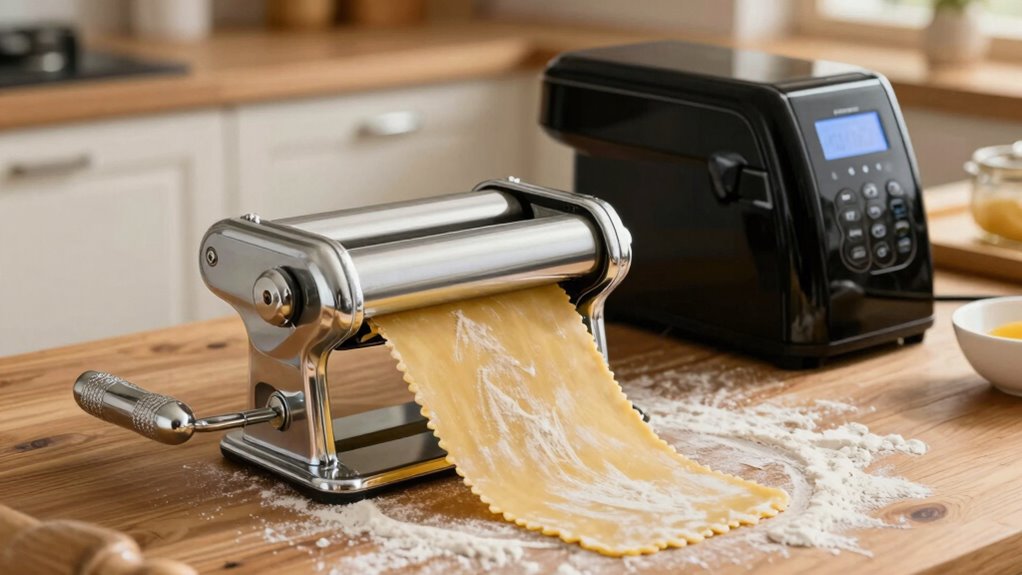
Choosing between a manual pasta roller and an electric pasta maker depends on what you value most. If you prefer an authentic, hands-on experience and have limited space, a manual roller offers control and tradition. But if you want quick, consistent results and have a busy schedule, an electric model simplifies the process. To find out which suits your lifestyle and kitchen best, explore the different benefits and features further.

Get kitchen staples and gadgets delivered free with Prime
- Fast, free delivery on millions of items
- Prime Video, Amazon Music and more included
- Member-only deals all year
Key Takeaways
- Consider your budget: manual rollers are cheaper and require minimal maintenance, while electric models are more costly but offer convenience.
- Assess available space: manual rollers are compact and suitable for small kitchens, whereas electric models need dedicated counter space.
- Determine your priority: for authentic, traditional pasta-making, choose manual; for speed and consistency, opt for electric.
- Evaluate your skill level: beginners may prefer electric for ease, while experienced cooks might enjoy manual craftsmanship.
- Think about usage frequency: frequent pasta-making favors electric for efficiency; occasional use suits manual tools.
As an affiliate, we earn on qualifying purchases.
Manual vs. Electric Pasta Makers: What’s the Main Difference?

While both manual and electric pasta makers serve the same purpose, their main difference lies in how they operate. Manual pasta makers rely on traditional tools and handcrafted techniques, giving you control over each step. You turn a handle to roll and thin the dough, which can be satisfying and allows for a more hands-on experience. Electric pasta makers, on the other hand, automate the process, saving you time and effort. They typically feature motorized rollers that quickly flatten the dough with minimal manual input. If you appreciate traditional tools and enjoy crafting pasta by hand, a manual machine suits you. Conversely, if convenience and speed matter more, an electric model might be the better choice. Both serve their purpose, but their operation styles differ markedly. Additionally, some electric models include dough mixing capabilities, which can streamline the entire pasta-making process. Understanding the differences in operation can help you choose the right machine for your needs. For those seeking efficiency, considering technological advancements can be beneficial.
Benefits of Using a Manual Pasta Roller at Home
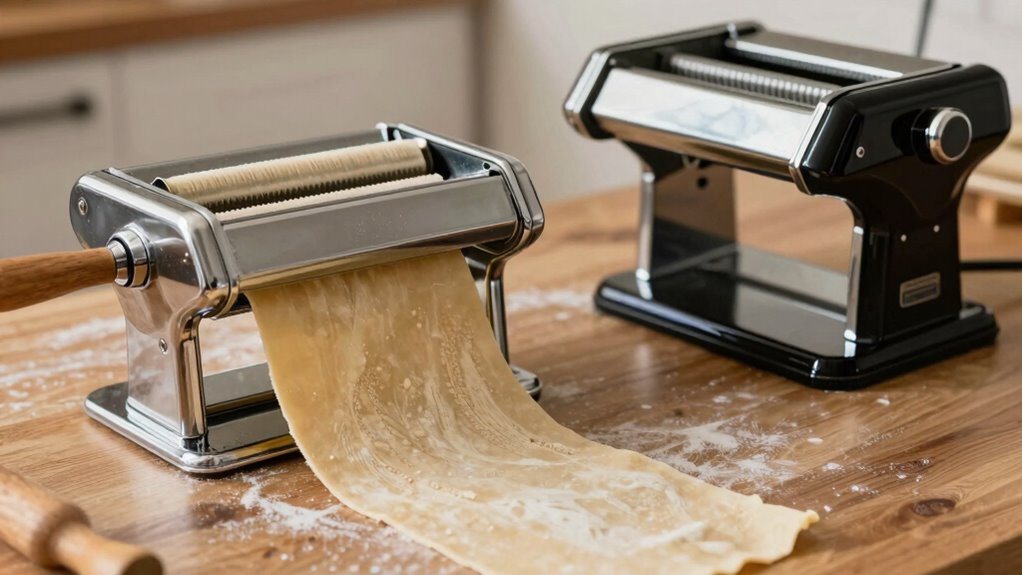
Using a manual pasta roller at home offers a hands-on experience that many home cooks find rewarding. It connects you to the handmade tradition of pasta-making, allowing you to appreciate the craftsmanship behind each sheet of dough. This process enhances your kitchen aesthetics, giving your space a warm, authentic feel that celebrates culinary artistry. Using a manual roller encourages patience and attention to detail, resulting in pasta with a unique texture and flavor that’s hard to replicate with machines. It also provides a satisfying sense of accomplishment as you witness the transformation from simple ingredients to fresh, homemade pasta. Incorporating traditional tools like this can also deepen your appreciation for culinary craftsmanship, adding value to your home cooking endeavors. Plus, engaging with manual tools can help create a pet-friendly kitchen environment, especially when paired with easy-to-clean equipment and pet-safe materials. Additionally, the tactile nature of manual rollers can enhance your kitchen mindfulness, making the pasta-making process a calming and meditative activity. Developing hand-eye coordination through this craft can further enrich your cooking experience and skill set. A well-designed manual pasta roller can also contribute to the overall kitchen ergonomics, making your pasta preparation more comfortable and efficient.
Advantages of Electric Pasta Makers for Busy Kitchens

Electric pasta makers are a game-changer for busy kitchens, offering quick and consistent results with minimal effort. Their electric speed allows you to prepare pasta faster than manual methods, saving valuable time during hectic meal prep. Plus, unlike hand crank durability concerns, electric models are built for frequent use, ensuring longevity. Here are some key advantages:
Electric pasta makers save time, deliver consistent results, and are built for frequent, reliable use in busy kitchens.
- Faster pasta production, perfect for tight schedules
- Consistent thickness and texture every time
- Less physical effort, reducing fatigue
- Easy to operate, even for beginners
- Connected technology can further enhance your experience with features like automatic settings and maintenance alerts. Additionally, their precision controls help achieve perfect pasta every time, which is especially important for maintaining quality in busy kitchens. Many models also include easy cleaning features, making cleanup after cooking even more straightforward. Incorporating durable materials ensures that your electric pasta maker remains reliable over years of frequent use.
Furthermore, the user-friendly design of many electric models makes them accessible for cooks of all skill levels, streamlining your pasta-making process. With these benefits, electric pasta makers help you meet tight deadlines and serve fresh pasta without sacrificing quality. They’re ideal for those who want efficiency and reliability in their busy kitchens.
Which Factors Should Influence Your Pasta Maker Choice?

Choosing the right pasta maker depends on several key factors that align with your cooking habits and kitchen needs. Your cultural traditions can influence whether you prefer a traditional manual roller or an electric machine, especially if making pasta is a family ritual passed down through generations. Consider the historical evolution of pasta-making tools—manual rollers have a timeless appeal rooted in history, while electric models reflect modern convenience. Think about how much time you want to spend preparing pasta and whether authenticity or efficiency matters most. If you enjoy hands-on craftsmanship and cultural heritage, a manual pasta roller might suit you. Conversely, if you prioritize speed and ease, an electric pasta maker could be the better fit for your lifestyle.
Cost and Maintenance: Manual vs. Electric
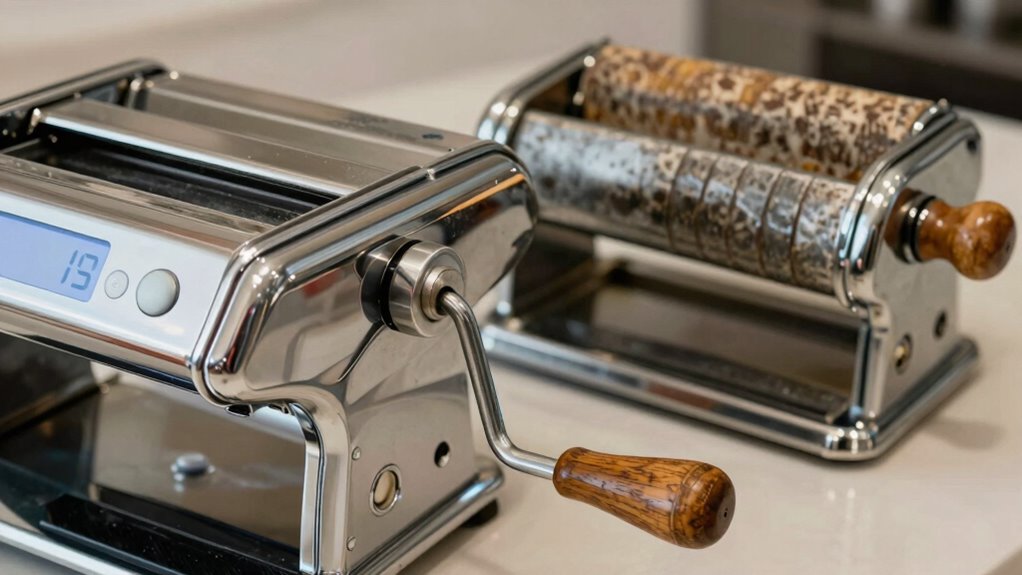
When considering cost and maintenance, you’ll notice that manual pasta rollers usually have a lower upfront price and minimal ongoing expenses. Electric models tend to cost more initially and may require regular maintenance or replacement parts over time. It’s important to check the availability of repair services and parts for both options to avoid surprises later on. Additionally, choosing a model that integrates well with your outdoor kitchen setup can enhance overall convenience and functionality. Ensuring that the repair and warranty services are accessible in your area can also help reduce potential long-term costs. Considering the water resistance features of some models might be beneficial if your outdoor kitchen is exposed to humidity or occasional splashes. Being aware of the long-term durability of each option can help you make a more informed decision for your specific needs. Moreover, understanding the ease of cleaning requirements can save you time and effort in the long run.
Initial Purchase Cost
The initial purchase cost of a pasta roller varies considerably between manual and electric models, and this difference can impact your budget upfront. Generally, manual rollers are more affordable, while electric models tend to be pricier. Here’s a quick cost comparison to evaluate:
- Manual pasta rollers typically cost between $30 and $100.
- Electric pasta makers often range from $150 to $500 or more.
- Durability factors influence long-term value—manual models usually last longer with proper care.
- Higher upfront costs for electric models might be offset by convenience but can be a bigger investment initially.
Choosing between the two depends on your budget and how often you plan to use your pasta machine. Remember, durability factors also play a role in your overall cost benefits.
Ongoing Maintenance Expenses
Manual pasta rollers generally require less ongoing maintenance and incur lower costs over time compared to electric models. You’ll find that flour storage is straightforward, as manual rollers don’t have complex parts that demand special handling. Cleaning routines are simple: just wipe down the rollers and clean any flour residue after each use. A simple design also means there are fewer electrical components, which reduces the risk of breakdowns. Electric models often have additional components, like motors and electronic controls, which may need periodic servicing or replacement, increasing maintenance costs. With manual rollers, you avoid the expense of lubricating motors or replacing electronic parts. Overall, your ongoing expenses stay lower because manual models don’t require regular maintenance beyond basic cleaning, making them a more budget-friendly choice for long-term use. Additionally, manual rollers are less prone to electrical issues, reducing the need for repairs and further lowering maintenance costs. Since manual models lack motors, they eliminate concerns about electrical failures, which can be costly to repair or replace. This simplicity also means there are fewer parts that can break, further minimizing maintenance concerns.
Repair and Parts Availability
Electric pasta makers often have more complex parts that can be harder to repair and may require specialized replacement components, which can drive up costs and make repairs more challenging. Durability concerns also come into play, especially if you frequently use the machine. Finding spare parts might be difficult or expensive, affecting long-term maintenance. Additionally, cloud service dependencies in electric appliances can introduce vulnerabilities, especially if repairs are delayed due to parts shortages or technical issues. The complexity of components can also impact the ease of troubleshooting and servicing the device. Moreover, manufacturing quality can vary significantly, influencing both repairability and lifespan.
What Kitchen Size Fits Each Pasta Maker?
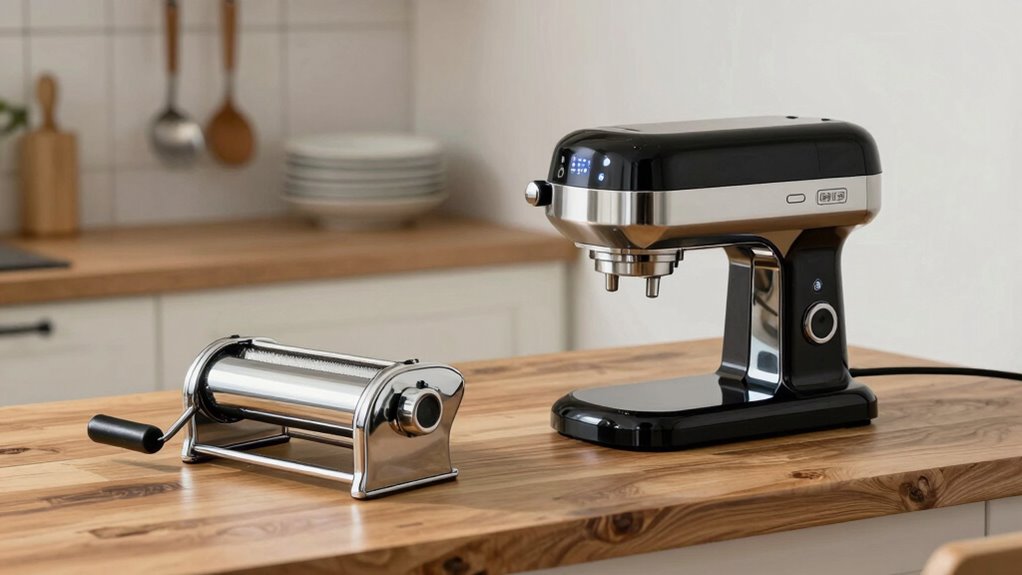
Choosing the right pasta maker often depends on your available kitchen space. Manual pasta rollers are compact and lightweight, making them ideal if you have limited counter space or need portable options. They easily store in cabinets or drawers when not in use, freeing up valuable kitchen storage. On the other hand, electric pasta makers tend to be larger and require dedicated counter space. If your kitchen is spacious enough, they can sit comfortably on your countertop without cluttering the area. Consider how much room you have for setup and storage before choosing. If space is tight, a manual roller offers convenience and flexibility. If you have ample counter space and want quick, effortless pasta, an electric model could be a better fit.
Best Types of Pasta to Make With Manual or Electric Tools

Your choice of pasta tools influences what types you can make easily. Fresh pasta works best with manual or electric machines, especially for shapes like fettuccine and lasagna sheets. Dried pasta, on the other hand, is typically pre-made, but your tools can help shape certain varieties like ravioli or filled pasta.
Fresh Versus Dried Pasta
When deciding between manual and electric pasta makers, it’s important to take into account whether you’re making fresh or dried pasta, as each type benefits from different tools. Fresh pasta is more delicate and benefits from precise control, making manual tools ideal. Dried pasta, which requires uniform thickness and consistency, often benefits from electric machines for efficiency. Consider these points:
- Fresh pasta pairs well with rich sauce pairings and requires gentle handling during cooking techniques.
- Dried pasta needs even thickness, which electric models can easily achieve, suitable for longer storage.
- Fresh pasta cooks quickly and absorbs sauces better, highlighting its tender texture.
- Dried pasta is more durable and better suited for hearty sauces, often used in traditional cooking methods.
Choosing the right tool depends on your pasta type and desired sauce and technique.
Best Pasta Shapes to Make
Different pasta shapes require different handling and equipment, making some more suited to manual tools while others are better with electric machines. For delicate shapes like ravioli or tortellini, manual rollers give you control over thin, even sheets ideal for intricate cooking techniques. Long, consistent strands like spaghetti or linguine are easier to produce with electric pasta makers, especially when dealing with ingredient variations like whole wheat or gluten-free flours. If you prefer experimenting with different dough consistencies, manual tools allow you to better adjust thickness and texture. Conversely, electric machines streamline the process for larger batches and uniform shapes, saving time and effort. Ultimately, your choice depends on the types of pasta you want to make and how much control you desire over the ingredient variations and cooking techniques.
How Easy Is It to Use Each Pasta-Making Method?
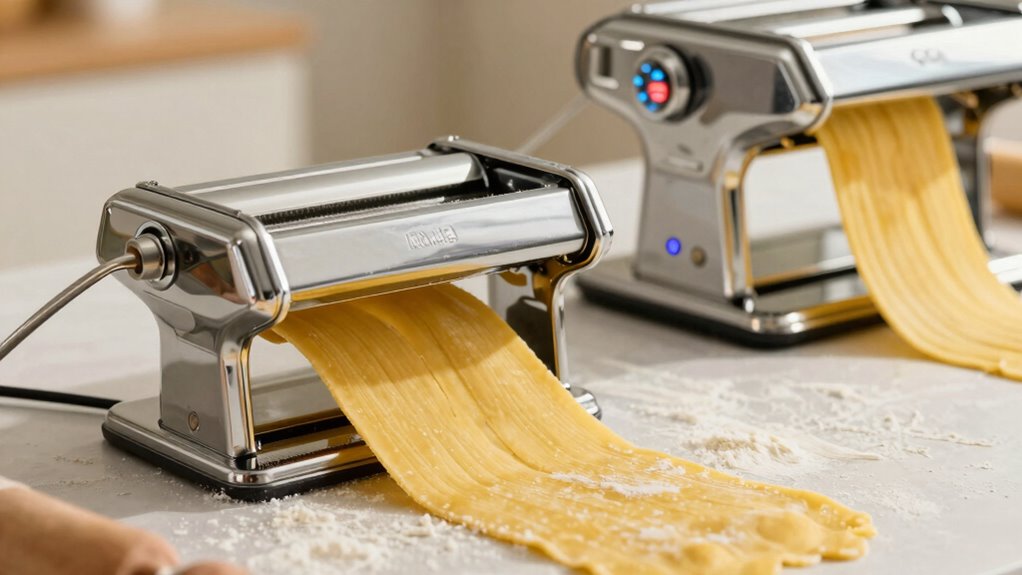
Using a manual pasta roller requires some effort and patience, especially when you’re just starting out. It’s straightforward but demands manual work, so expect a bit of muscle. With practice, you’ll find it easier to create consistent sheets for various flavor variations.
Here are some key points:
- It takes time to master rolling thin, even pasta sheets.
- You’ll need to frequently clean and store the roller, considering your storage options.
- Manual methods give you more control over thickness and texture.
- Electric pasta makers simplify the process, making it quicker and more user-friendly, especially if you prefer convenience over tradition.
Both methods impact how easy it is to experiment with flavors and store your homemade pasta effectively.
Which Pasta Maker Offers the Best Long-Term Value?

Choosing between a manual pasta roller and an electric pasta maker largely depends on their long-term value, which involves considering durability, maintenance costs, and versatility over time. If you prioritize flavor customization, manual rollers often give you more control over dough thickness and texture, allowing for unique pasta varieties. Electric models, however, excel in speed and consistency, reducing effort over many batches. Storage considerations also matter; manual rollers are compact and easier to store, while electric machines are bulkier and may require dedicated space. Over time, longevity is essential—manual tools tend to last longer with proper care, offering better long-term savings. Ultimately, your choice hinges on whether you value flexibility and storage convenience or speed and ease of use for the long haul.
Frequently Asked Questions
Can Both Manual and Electric Pasta Makers Handle Different Pasta Shapes?
Both manual and electric pasta makers can handle a variety of pasta shapes, but their pasta shape versatility varies. Manual machines often excel at producing traditional shapes like fettuccine or lasagna, while electric models can easily switch between shapes with attachments. Regardless of your choice, maintaining consistent dough and dough consistency is key for shaping different pasta types successfully. So, consider how much you want to experiment with pasta shapes when choosing your machine.
How Much Space Does Each Type of Pasta Maker Require?
Think of your kitchen as a stage—manual pasta rollers are like portable actors, requiring minimal storage and easily moved around. They usually fit in small cabinets, making them perfect for limited spaces. Electric pasta makers, akin to a full cast, need more storage and a dedicated spot on your countertop. Consider your storage requirements and portability considerations to decide which fits your kitchen’s layout and lifestyle best.
Are Manual Pasta Rollers Suitable for Beginners?
Manual pasta rollers can be suitable for beginners, especially if you’re looking for beginner-friendly tools. However, they come with manual operation challenges, such as requiring more effort and skill to achieve even thickness. If you’re patient and enthusiastic to learn, a manual roller can be a rewarding choice. But if you prefer ease and speed, an electric pasta maker might be better, especially for those new to pasta-making.
Do Electric Pasta Makers Require Special Cleaning Tools?
Electric pasta makers don’t require special cleaning tools, but proper cleaning techniques are essential to keep them in top shape. You should regularly wipe down the machine with a damp cloth and remove any flour or dough residues. Follow the manufacturer’s maintenance routines, such as disassembling parts for thorough cleaning when needed. Avoid water exposure to motor components, and guarantee all parts are dry before reassembling to prevent damage.
Which Pasta Maker Is Better for Making Gluten-Free Pasta?
An electric pasta maker is better for making gluten-free pasta because it handles gluten-free dough more consistently, ensuring a smooth, even texture. You’ll find it easier to achieve the desired pasta texture with less effort, especially for delicate gluten-free recipes that can be tricky to roll out manually. Plus, electric models often come with adjustable settings, helping you perfect your gluten-free pasta every time.
Conclusion
Ultimately, choosing between a manual or electric pasta maker boils down to your needs and lifestyle. If you want control and enjoy hands-on cooking, a manual roller might be your best bet. For busy kitchens and quick results, an electric model can save time and effort. Remember, it’s not just about the initial cost—consider long-term value too. Whichever you pick, make sure it fits your kitchen and cooking style—because in the end, it’s all about rolling with the punches!
Columbus Day / Indigenous Peoples' Day Picks
long weekend sales
As an affiliate, we earn on qualifying purchases.