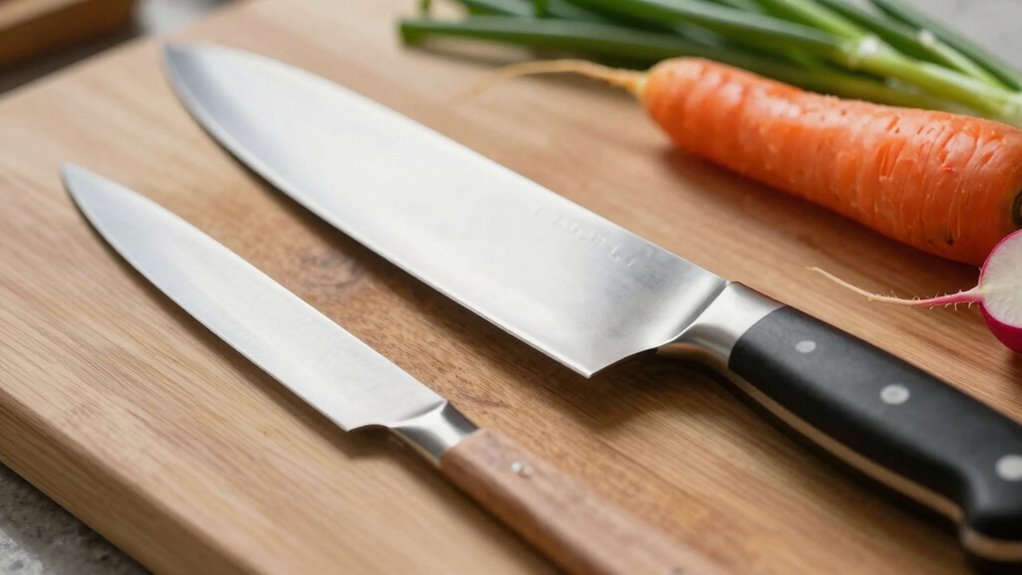

If you prefer precision and delicate cuts, Japanese knives are a great choice—they’re lightweight, sharp, and ideal for fine slicing. On the other hand, if you need durability and heavy-duty performance for chopping dense ingredients, German knives are more robust and easier to maintain. Your cooking style and tasks should guide your selection. Want to discover more about which knife fits your habits? Keep exploring to find the perfect match.
Key Takeaways
- Choose Japanese knives for precise, delicate slicing and finesse-focused cooking; opt for German knives for heavy-duty tasks and durability.
- Japanese knives are lightweight and thin, ideal for fine cuts; German knives are thicker and heavier, suited for chopping tough ingredients.
- Japanese blades offer high sharpness but require careful maintenance; German blades are easier to sharpen and maintain over time.
- Japanese knives are often more expensive and crafted for precision; German knives provide reliable performance at more affordable prices.
- Match knife style to your cooking style: Japanese for finesse and detail, German for versatility and robustness.
As an affiliate, we earn on qualifying purchases.
Japanese vs. German Knives: Which Is Right for You?
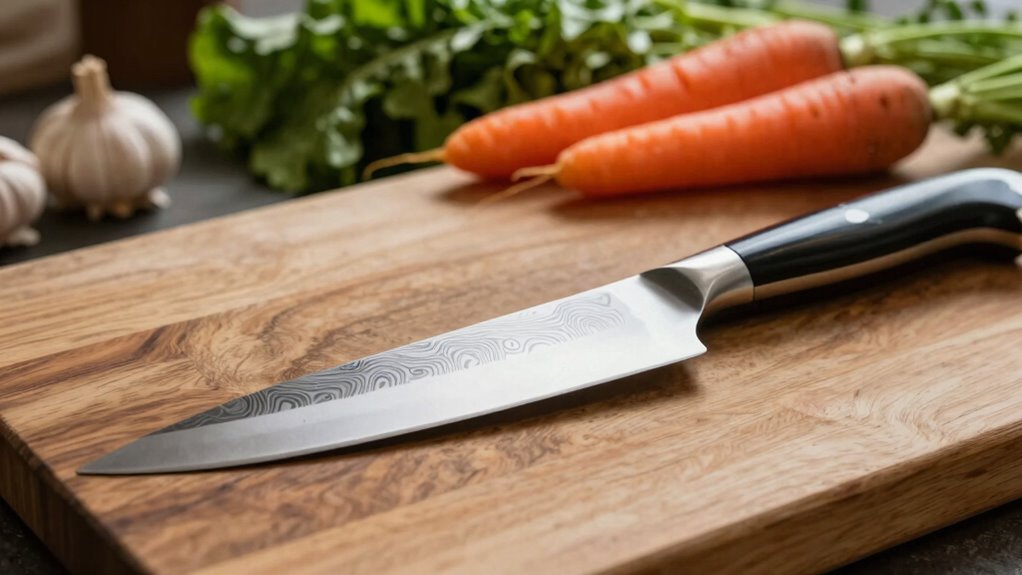
Are you trying to decide between Japanese and German knives? Your choice depends on your cooking style and storage space. Japanese knives are typically lighter and have thinner blades, making them great for precise cuts. They often require careful knife storage and regular knife sharpening to keep their edge sharp. If you prioritize knives with delicate work, Japanese knives might suit you best. But if you need a versatile, durable knife for various tasks, German knives could be a better fit. Consider your storage options and maintenance routine, especially since connected technology can help monitor and improve your knife care practices when integrated into your kitchen. Additionally, understanding knife materials and construction can influence your decision based on durability and performance. Choosing the right knife also involves understanding blade geometry, which affects how the knife performs during different cutting tasks.
What Are the Main Design Differences Between Japanese and German Knives?
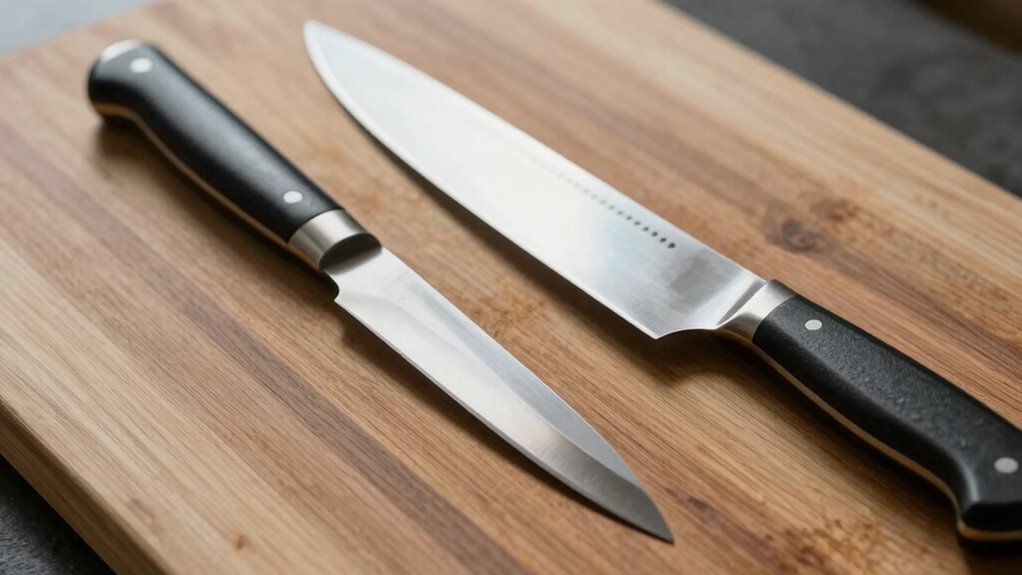
Japanese and German knives differ markedly in their design, reflecting distinct culinary traditions and cutting techniques. Japanese knives typically have a thinner, sharper blade with a pointed tip, ideal for precise cuts and delicate tasks. German knives tend to feature a broader, thicker blade with a more curved edge, designed for chopping and heavy-duty tasks. These design differences influence how you handle knife storage and guarantee kitchen safety; Japanese knives often require a knife guard or dedicated storage to protect their delicate edges, while German knives are sturdier and can be stored in knife blocks more safely. The blade shape and weight impact your grip and control, making it vital to choose a style that complements your cooking habits and promotes safe, efficient use. Additionally, considering the material composition of blades can influence the durability and maintenance requirements of each style.
How Do Japanese and German Knives Differ in Construction and Materials?
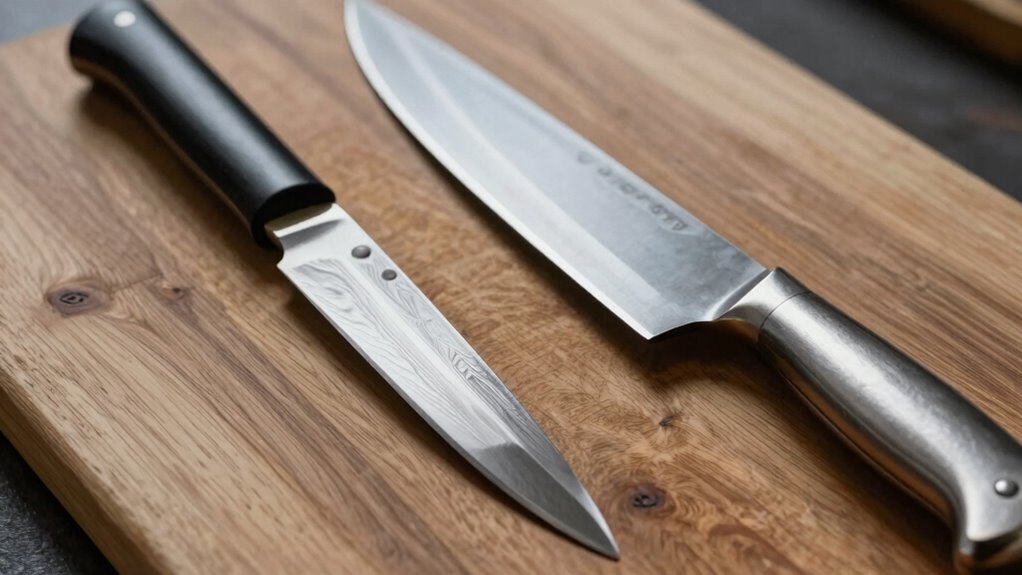
Japanese and German knives differ mainly in their blade materials and handle designs. Japanese blades often use high-carbon steel or layered Damascus steel, while German knives typically feature softer stainless steel. Handles also vary, with Japanese knives favoring lightweight, ergonomic designs, and German knives often using heavier, more robust materials for added durability.
Blade Composition and Steel Types
While both Japanese and German knives are renowned for their quality, they differ considerably in their blade composition and steel types. Japanese knives typically feature harder steel, often with high carbon content, which allows for a sharper, more precise edge. This results in a thinner, more delicate blade that emphasizes knife aesthetics and finesse. German knives, on the other hand, usually use softer, more ductile stainless steel, making their blades more durable and easier to sharpen over time. The blade length varies but tends to be longer and broader in German designs for versatility. Japanese blades often have a shorter, narrower profile suited for detailed cuts. These differences influence not only performance but also the overall look and handling of each style. Steel hardness plays a crucial role in determining the edge retention and sharpening requirements of each type.
Handle Materials and Ergonomics
The construction and choice of handle materials greatly influence how each knife feels in your hand and how comfortable it is to use. Japanese knives often feature lightweight, textured wood or resin handles designed for precise control, emphasizing handle comfort and grip security. German knives typically have full tang construction with heavier, ergonomic handles made of synthetic or composite materials, prioritizing durability and grip stability. Additionally, the handle materials used can also affect maintenance needs and resistance to moisture or temperature changes. The selection of handle materials also impacts the maintenance requirements of the knives, as some materials are easier to clean and more resistant to wear over time. The ergonomic design of handles can significantly enhance comfort during prolonged use, especially for professional chefs or home cooks who spend hours preparing meals.
Cooking Styles That Maximize the Benefits of Japanese Knives
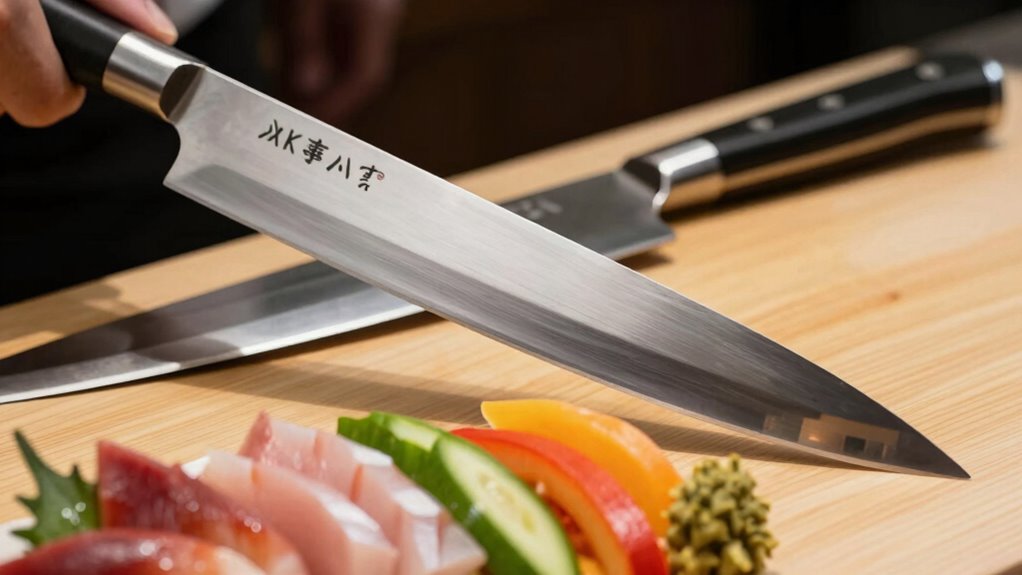
To get the most out of your Japanese knives, focus on precision cutting techniques that leverage their sharpness and lightness. Handle delicate ingredients with care, using gentle, controlled motions to avoid damage. Adapting your style in this way lets you fully enjoy the tools’ precision and finesse. Additionally, selecting the right cutting tools can enhance your experience and ensure safety during use. Understanding chemical properties of different knife materials can also help you maintain and care for your knives effectively.
Precision Cutting Techniques
Mastering precision cutting techniques is essential to fully harness the sharpness and agility of Japanese knives. You should focus on controlled, clean motions, using your wrist and arm to guide the blade rather than relying solely on force. Proper knife storage helps maintain the edge, so store your knife in a protective sheath or a dedicated knife block to prevent dulling. Regular knife sharpening is critical; a well-honed edge ensures smoother cuts and reduces the risk of slipping. Practice slicing through ingredients with minimal pressure, emphasizing finesse over force. This technique maximizes the benefits of the thin, sharp blade, allowing you to achieve uniform cuts that enhance both presentation and cooking consistency. Practicing precision techniques will elevate your cooking and extend your knife’s lifespan. Incorporating proper technique can significantly improve your cutting accuracy and efficiency, especially when combined with knifing skills that focus on finesse and control. Additionally, understanding the care and maintenance of your Japanese knives is vital to preserving their performance over time. Developing a routine for regular honing can further enhance the longevity and sharpness of your blades, ensuring consistent results in your culinary endeavors.
Delicate Ingredient Handling
Handling delicate ingredients with Japanese knives requires a gentle touch and precise control to get the best results. You’ll want to focus on proper knife storage to keep the blade sharp and avoid damage, which is vital for fine slicing. When working with soft or fragile ingredients like sashimi or herbs, your technique should emphasize light, controlled cuts rather than force. You may need to adapt your recipes slightly, using thinner slices to maximize flavor and presentation. Japanese knives excel at these tasks, allowing you to handle delicate ingredients without tearing or crushing them. This careful approach not only preserves ingredient integrity but also enhances the overall dish. Embracing these practices helps you fully realize the benefits of Japanese craftsmanship in your cooking. Recognizing the importance of detecting passive voice can further refine your writing and communication skills in your culinary descriptions.
When Should You Use German Knives in Your Kitchen?

When Should You Use German Knives in Your Kitchen?
German knives excel in situations where precision and durability are vital, making them ideal for everyday kitchen tasks. When you’re preparing hearty meats, dense vegetables, or tackling multiple chores, these knives provide the strength needed for efficient cuts. Use them when maintaining kitchen safety is a priority, as their sturdy construction offers better control and reduces the risk of slips. Proper storage solutions are essential; keep German knives in a knife block or on a magnetic strip to prevent dulling and guarantee quick access. They’re perfect for routines that demand consistent performance, especially if you prefer a reliable, heavy-duty tool for frequent use. Rely on German knives to handle your daily cooking with confidence and safety. Additionally, their high pressure design allows for easier handling of tough ingredients, making your cooking experience more efficient and enjoyable. When selecting knives, consider their material strength to ensure long-term durability and performance. Regular sharpening and maintenance also extend their lifespan, ensuring they remain a reliable kitchen tool over time. Paying attention to knife maintenance practices, such as proper honing and cleaning, can further enhance the longevity and cutting efficiency of your German knives.
Which Knives Stay Sharp Longer and Require Less Maintenance?
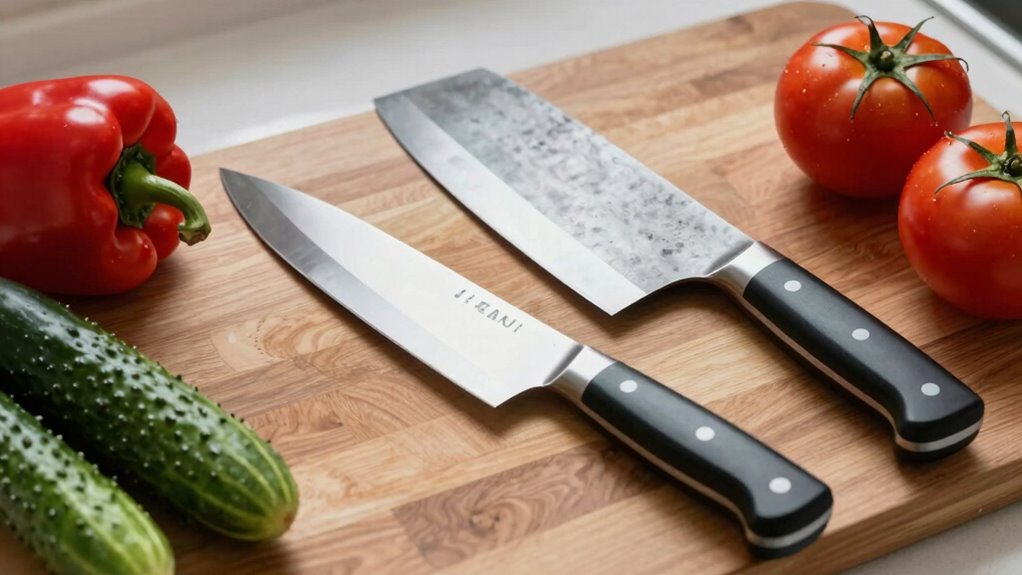
You’ll find that Japanese knives often keep their sharpness longer due to their high-carbon steel blades, which resist dulling better over time. German knives, typically made from softer stainless steel, may need more frequent honing and sharpening. The material composition directly impacts maintenance needs, making it a key factor in choosing a knife that stays sharp longer. Additionally, understanding the yarn weight and stitch type can help in crafting or maintaining items that require precision, much like selecting the right knife for specific culinary tasks. Proper knife care and maintenance can further extend the lifespan and performance of your blades, ensuring they stay effective over time.
Edge Retention Durability
When it comes to edge retention, Japanese knives generally outperform their German counterparts, staying sharp longer with less frequent honing. Their superior durability is often due to the harder steel used, which maintains a keen edge through more cutting sessions. The blade shape also plays a role; Western-style German knives tend to have a thicker, more robust blade that can be slightly less sharp over time, while the thinner Japanese blades keep their edge longer. Additionally, the knife handle influences how you handle and apply force, impacting edge wear. A well-designed handle allows better control, reducing unnecessary strain on the blade. Overall, Japanese knives offer excellent edge retention, especially if you value precision and a sharper cut over frequent sharpening.
Maintenance Frequency Needed
Japanese knives generally require less frequent maintenance because their sharper edges stay effective longer. Their fine, precise blades maintain cutting performance without constant honing, reducing the need for frequent sharpening. To keep your Japanese knives in top shape, focus on proper knife storage—using a knife block or magnetic strip prevents dulling caused by knocking or jostling. Additionally, follow simple cleaning routines; hand wash with mild soap and dry immediately to prevent corrosion. German knives, with their thicker, more durable edges, might need more regular honing and sharpening, especially if used heavily. Overall, Japanese knives stay sharper longer, meaning you’ll spend less time on maintenance, provided you store them carefully and maintain a consistent cleaning routine.
Material Composition Impact
The material composition of a knife considerably influences how long it stays sharp and how much maintenance it requires. For example, high-carbon content blades tend to stay sharper longer but may require more careful maintenance to prevent rust. Ceramic knives are renowned for their durability and sharpness retention, often staying sharp for years with minimal upkeep.
| Material Type | Durability & Maintenance |
|---|---|
| High-carbon | Sharpness lasts longer; needs rust prevention |
| Ceramic | Extremely durable; low maintenance |
| Stainless Steel | Easier to care for, less prone to rust |
If you prioritize longevity and low maintenance, ceramic knives excel, but they can chip more easily. High-carbon blades offer sharpness but need extra care.
How Do Sharpness and Edge Retention Compare?
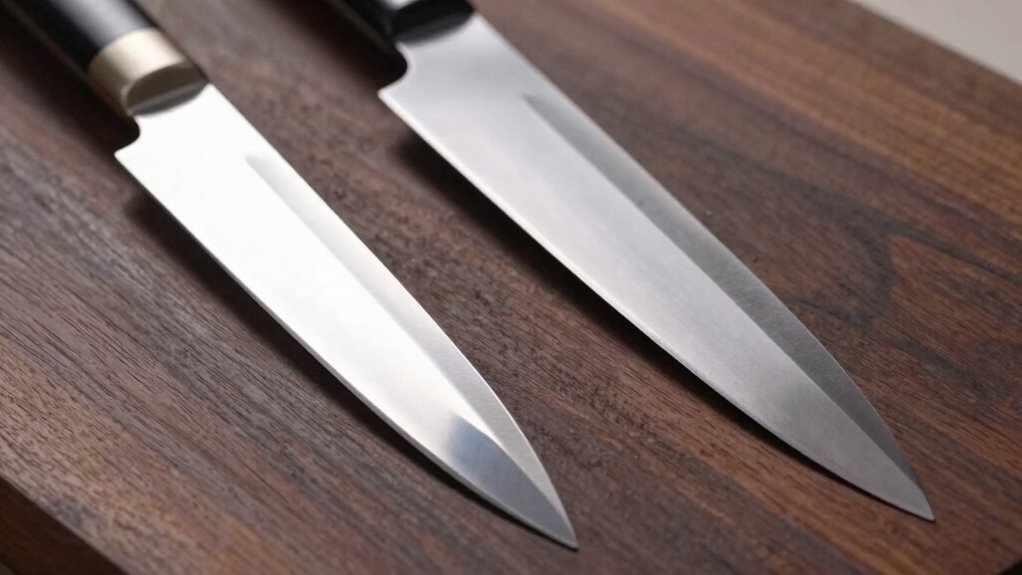
How do sharpness and edge retention differ between Japanese and German knives? Japanese knives typically have a higher blade hardness, often around 60-65 HRC, allowing for a sharper edge initially. This means they cut more precisely but tend to dull faster due to their hardness. German knives usually have a lower blade hardness, around 56-58 HRC, making the edge less sharp initially but more durable over time. Sharpening techniques also vary; Japanese knives often require more delicate, precise sharpening to maintain their fine edge, while German knives are generally easier to sharpen and maintain. Consequently, Japanese knives excel in sharpness but need more frequent touch-ups, whereas German knives prioritize longevity and ease of maintenance. Your choice depends on whether you value initial sharpness or sustained edge retention.
Best Practices for Maintaining and Sharpening Your Kitchen Knives
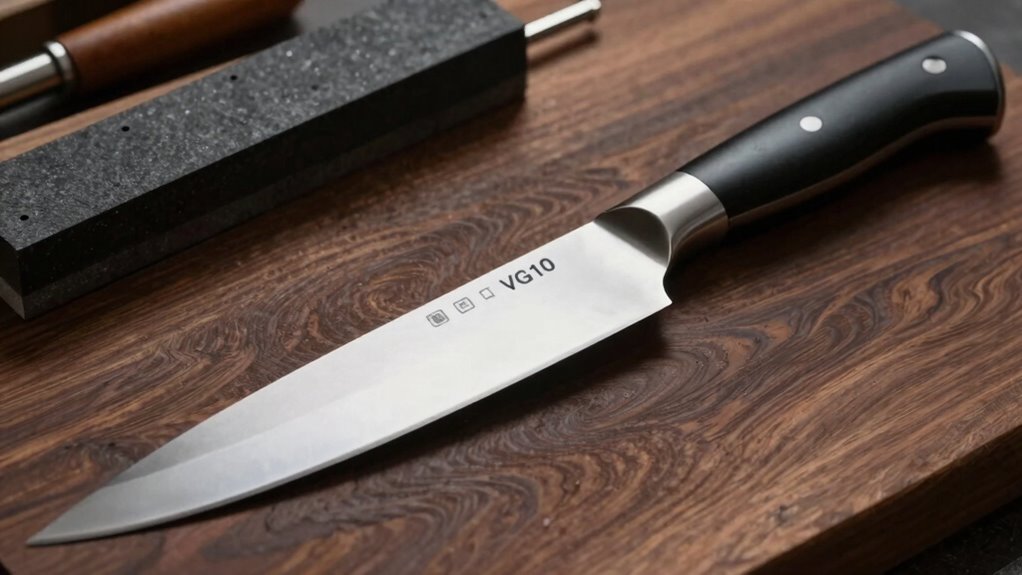
Maintaining and sharpening your kitchen knives properly can guarantee excellent longevity and peak performance. Regular knife sharpening keeps the blade’s edge sharp, making cutting safer and more efficient. Use a quality sharpening stone or a professional sharpening service to preserve the blade’s integrity. Always sharpen in a consistent angle, following the manufacturer’s recommendations. Keep your knives clean and dry to prevent rust and corrosion. When cutting, focus on cutting safety by avoiding excessive force that can damage the edge or cause accidents. Hone your knives regularly with a honing rod to maintain their edge between sharpenings. Proper storage, like a knife block or magnetic strip, prevents dulling and protects the blade. Following these best practices helps your knives stay sharp, safe, and effective in your kitchen.
Are Japanese or German Knives More Cost-Effective for Your Budget?
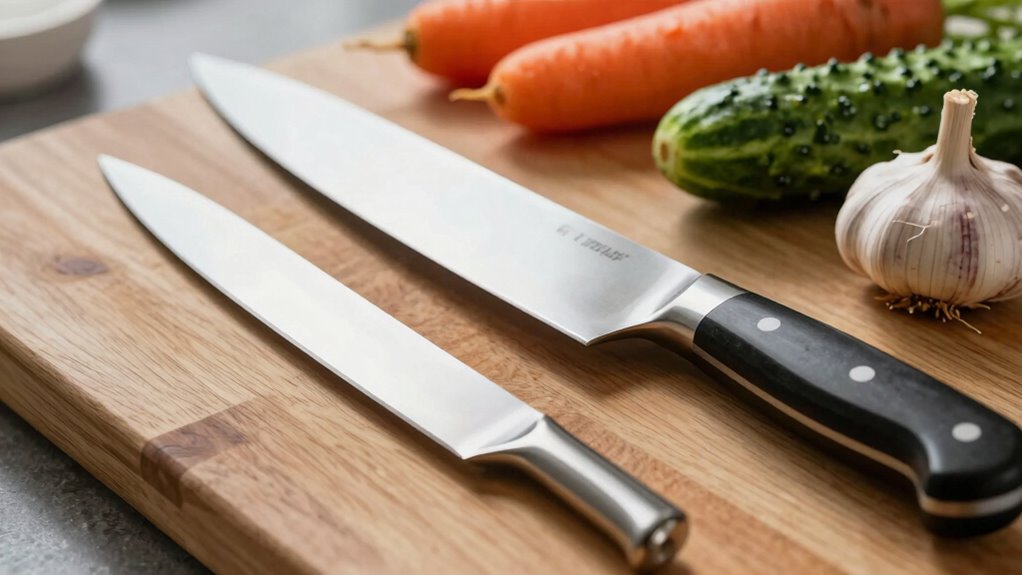
Choosing between Japanese and German knives often comes down to your budget, as their prices can vary considerably. Japanese knives tend to be more expensive, especially high-end options, but there are budget options available if you know where to look. German knives generally offer good quality at more affordable prices, making them a practical choice for most home cooks. When doing brand comparisons, you’ll notice that reputable brands like Global or Shun may cost more, but they often deliver superior craftsmanship. Conversely, brands like Wüsthof or Henckels provide reliable German options at lower prices. If you’re budget-conscious, consider entry-level models or lesser-known brands that still meet your needs without breaking the bank.
Choosing the Right Knife Style Based on Your Cooking Skills and Needs
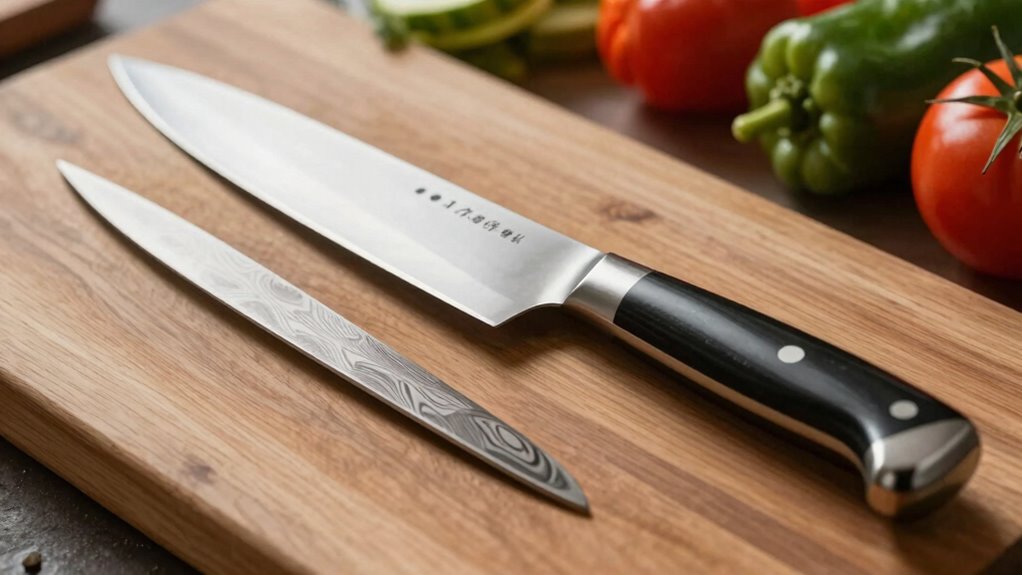
Selecting the right knife style depends heavily on your cooking skills and the types of dishes you prepare most often. Cultural influences and historical development have shaped Japanese and German knives, affecting their design and function. If you’re a beginner or focus on delicate slicing and precise cuts, Japanese knives, with their sharp edges and lightweight feel, may suit you best. Conversely, if you prefer versatile tools for heavy-duty tasks and hearty meals, German knives, known for their durability and balanced weight, could be more appropriate. Consider your comfort with knife handling and the cuisines you enjoy cooking. Understanding these factors helps you choose a style that complements your skills and culinary needs, making your cooking experience more efficient and enjoyable.
Frequently Asked Questions
Which Knife Style Is Better for Beginner Cooks?
For beginner cooks, a German knife is better because it’s versatile and easier to handle. Its cultural design differences favor comfort and durability, making knife maintenance simpler for novices. German knives typically have a thicker, more robust blade, which helps with control and reduces the risk of chipping. This makes them ideal for someone just starting out, allowing you to focus on developing your skills without worrying about delicate maintenance.
How Do Japanese and German Knives Handle Different Types of Food?
Japanese and German knives handle different foods with precision, reflecting their culinary traditions and craftsmanship. Japanese knives excel at slicing delicate fish and vegetables, offering sharpness and finesse. German knives handle hearty meats and robust vegetables, providing strength and durability. You’ll notice Japanese blades cut thin and clean, while German blades power through tougher textures. Their craftsmanship shapes their performance—delicate for Japanese, sturdy for German—helping you master a variety of cooking tasks.
Are Japanese or German Knives More Suitable for Professional Kitchens?
You’ll find Japanese knives more suitable for professional kitchens because of their exceptional craftsmanship and precision, which cater to delicate cuts and fine food presentation. Their cultural influences emphasize sharpness and balance, making them ideal for detailed work. German knives, with their robust build and durability, suit heavy-duty tasks. Depending on your kitchen needs, you might prefer the refined craftsmanship of Japanese knives or the sturdy reliability of German ones.
Can Japanese Knives Be Used for Heavy-Duty Chopping?
Like a samurai facing a storm, Japanese knives can handle heavy-duty chopping, but they require careful care. Their blades are sharp and precise, yet less durable for brutal tasks. You need to watch blade durability and edge maintenance closely, sharpening regularly to keep them effective. While they excel in finesse, for relentless chopping, consider a more robust German-style knife designed for durability and heavy-duty use.
What Safety Features Are Available on Japanese and German Knives?
Japanese and German knives feature safety elements like blade craftsmanship and handle ergonomics. Japanese knives often have razor-sharp blades with precise craftsmanship, reducing slips, while their handles are designed for a secure grip, preventing accidents. German knives typically feature thicker blades and ergonomic handles that offer control and comfort, minimizing fatigue. Both styles prioritize safety through balanced weight distribution and quality materials, helping you cut confidently and safely in the kitchen.
Conclusion
Ultimately, choosing between Japanese and German knives depends on your cooking style and skills. Consider comfort, craftsmanship, and your culinary needs to make a confident choice. Whether you prefer precision or power, your perfect knife aligns with your appetite for accuracy and adventure. Embrace the experience, enhance your expertise, and elevate every meal with a knife that truly matches your mastery. Your culinary journey begins with the right cut—so select smartly and savor success.


