To keep your knives sharp and safe, regularly sharpen using a sharpening stone, honing rod, or electric sharpener, following the manufacturer’s instructions. Clean them thoroughly after use with warm, soapy water and dry immediately to prevent rust. Store your knives in a magnetic strip, knife block, or with guards to avoid dulling and accidents. Proper maintenance and storage are key—stick with these practices, and you’ll ensure your knives stay in top condition. Find out more below.
Key Takeaways
- Regularly sharpen knives using appropriate tools like stones or electric sharpeners to maintain a sharp, safe edge.
- Clean knives thoroughly after use with gentle soap and dry immediately to prevent rust and corrosion.
- Inspect blades frequently for dullness or damage, sharpening or replacing them as needed.
- Store knives safely in a knife block, magnetic strip, or protective guards to prevent dulling and accidents.
- Handle knives carefully during storage and retrieval, keeping hands dry for secure use and safety.
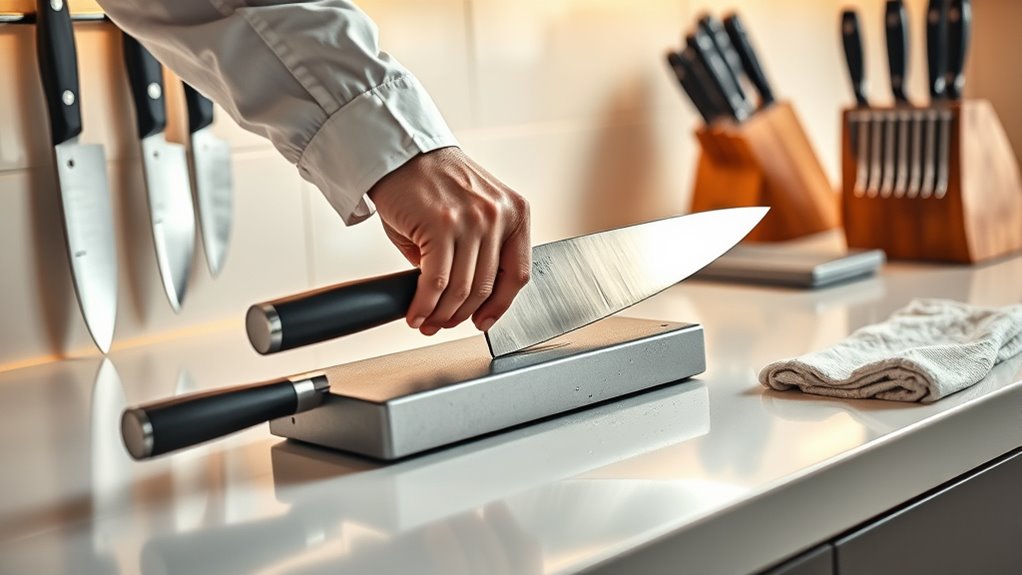
Are you taking the right steps to keep your knives sharp and safe? Proper blade maintenance is essential not only for the longevity of your knives but also for your safety in the kitchen. Dull knives require more force to cut through food, increasing the risk of slips and injuries. That’s why sharpening your blades regularly should be part of your routine. When you focus on blade upkeep, you ensure your knives perform efficiently, reducing strain and preventing accidents. Remember, a sharp knife is a safe knife.
To maintain your blades effectively, you need to understand the basics of sharpening. You can use a sharpening stone, honing rod, or an electric sharpener, depending on your comfort level and the type of knives you own. Regular honing with a ceramic rod helps realign the blade edge, keeping it smooth and effective between sharpenings. When it’s time for a more thorough sharpening, a stone or electric sharpener will remove small amounts of metal to restore a fine, razor-sharp edge. Always follow the manufacturer’s instructions to avoid damaging the blade or compromising knife safety. Proper blade maintenance also involves cleaning and drying your knives thoroughly after each use. Residual moisture can cause corrosion, especially with higher-carbon steels. Use a gentle dish soap and warm water, then dry them immediately with a soft towel. Never put knives in the dishwasher, as the high heat and harsh detergents can dull or damage the blades and handles. Regularly inspecting your knives for signs of blade dullness helps you determine when it’s time to sharpen or replace them to maintain optimal performance.
Storing your knives correctly is equally important for blade upkeep and knife safety. Avoid tossing them loosely into a drawer where blades can bump against other utensils, causing dulling or even accidental cuts when retrieving them. Instead, opt for a knife block, magnetic strip, or a dedicated knife guard. These options protect the blades from damage and keep the edges aligned. Proper storage also prevents accidents, especially if you have children or others in the household. Always handle knives carefully when storing or retrieving, keeping the blade away from your fingers, and ensure your hands are dry for a secure grip.
Top picks for "knife care sharpen"
Open Amazon search results for this keyword.
As an affiliate, we earn on qualifying purchases.
Frequently Asked Questions
How Often Should I Replace My Kitchen Knives?
You should replace your kitchen knives when they become too dull or damaged, typically every 5-10 years depending on usage. Pay attention to the knife material, as high-quality steel lasts longer, and check the knife handle—if it’s cracked or loose, it’s time for a new one. Regular sharpening and proper storage extend their life, but eventual replacement guarantees safety and efficiency in your cooking.
Can I Sharpen Knives With Household Tools?
Sharpening knives with household tools is like trying to fix a watch with a hammer—you might do more harm than good. While DIY techniques using household tools like ceramic mugs or fine-grit sandpaper can work temporarily, they’re not ideal for maintaining a sharp edge. For best results, invest in a proper sharpening stone or honing rod. This guarantees your knives stay safe, effective, and last longer.
What Is the Best Way to Prevent Rust on Knives?
To prevent rust on your knives, you should regularly dry them thoroughly after each use, especially if they’re exposed to moisture or acidic ingredients. Apply a light coat of mineral oil or specialized knife oil for rust prevention, and store your knives in a dry, ventilated place. Proper knife maintenance also involves avoiding dishwasher cleaning, which can cause corrosion. These steps keep your knives sharp, shiny, and rust-free longer.
Are Ceramic Knives Easier to Maintain Than Steel?
Ceramic knives are generally easier to maintain than steel because of their superior durability and resistance to rust and staining. You won’t need to sharpen them as often, and they don’t require oiling or special storage like steel blades do. Just be careful with their brittleness, and avoid using them on hard surfaces. Overall, ceramic durability makes cleaning and caring for them more straightforward, saving you time and effort.
How Do I Safely Dispose of Dull or Damaged Knives?
Did you know thousands of injuries happen each year due to improper knife disposal? To safely dispose of dull or damaged knives, wrap the blade in heavy paper or cardboard, securing it with tape. Place it in a sturdy, puncture-proof container or a dedicated sharps container. Always handle knives with care during disposal to prevent accidents. Proper knife disposal guarantees safe handling for everyone and keeps your trash safe.
Conclusion
By mastering the art of knife sharpening and proper storage, you’ll open the secret to culinary greatness that even professional chefs envy. Imagine wielding a blade so sharp it slices through anything like butter—transforming your kitchen into a gourmet paradise. With just a little care, your knives will become legendary, lasting a lifetime and beyond. Take charge of your knife game today, and watch your cooking elevate to extraordinary heights you never thought possible.