
To upgrade your knife skills for filleting fish at home, start with a sharp, comfortable knife and keep it clean and dry between uses. Practice smooth, deliberate strokes, focusing on precision and control to get clean, even fillets and avoid tearing flesh. Maintain your knife’s edge with honing and sharpening regularly. Work calmly and organize your space for safety and efficiency. Keep improving your technique, and you’ll master professional results—keep exploring to learn more tips and tricks.
Key Takeaways
- Use a sharp, well-maintained fillet knife for precise, clean cuts and better control.
- Properly prepare and chill the fish to enhance safety and ease of filleting.
- Follow correct techniques: make smooth strokes, work slowly around fins and bones.
- Keep your workspace organized and dry to improve safety and efficiency.
- Regularly hone and clean your knife to maintain sharpness and extend its lifespan.
Have you ever wondered how professional chefs achieve perfectly even slices every time? The secret often lies in their skillful fish preparation and, just as importantly, their knife maintenance. When it comes to filleting fish at home, your ability to handle your knife properly can make all the difference. A sharp, well-maintained knife ensures clean cuts, minimizes fish waste, and makes the process safer and more efficient. The first step is understanding that a dull or poorly cared-for knife can hinder your progress, causing uneven slices and increasing the risk of slips that could lead to injury.
Maintaining your knives is essential for achieving precise fish preparation. Regularly honing your knife with a honing steel realigns the blade’s edge, keeping it sharp between sharpenings. When it’s time to sharpen, use a quality whetstone or a professional sharpening system designed for your knife’s edge. Proper knife maintenance also involves cleaning and drying your blades thoroughly after each use to prevent rust and corrosion, especially since fish can be oily and sticky. A well-maintained knife not only performs better but also lasts longer, saving you money and effort over time.
Regular honing, proper cleaning, and drying extend knife life and ensure precise, safe fish filleting.
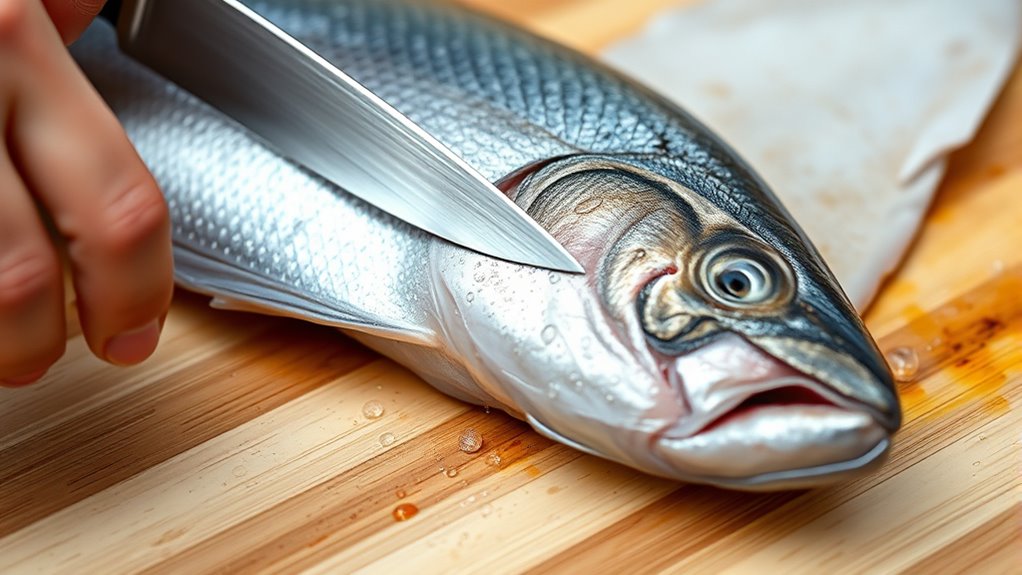
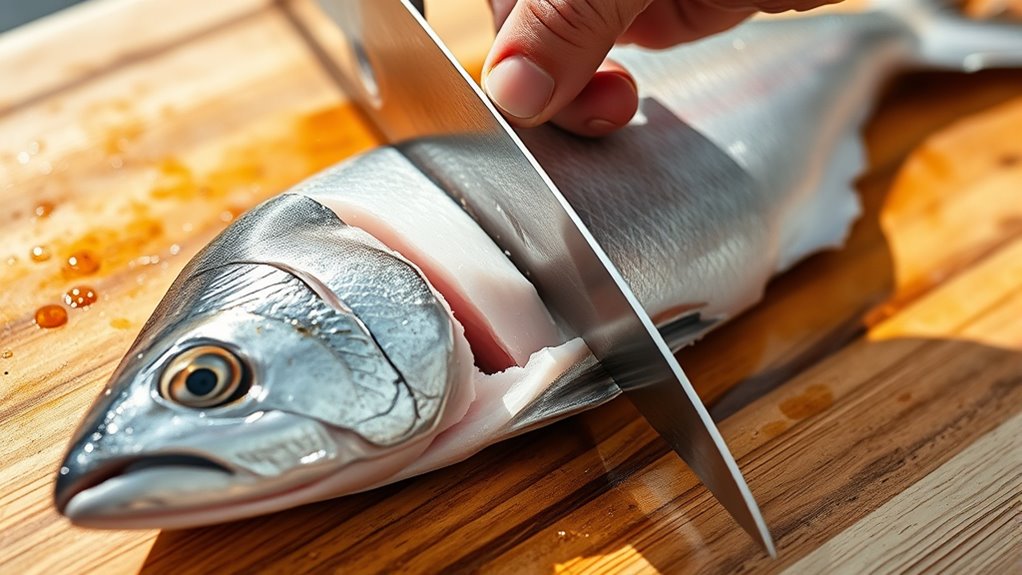
When filleting fish, your knife’s sharpness directly impacts your control and the quality of your cuts. A sharp, flexible boning or filleting knife is ideal for this task. Before starting, ensure your knife is properly sharpened and feels comfortable in your hand. Keep your grip firm but relaxed, and use smooth, deliberate strokes to glide the knife along the fish’s bones. This technique reduces the chance of tearing the flesh and produces clean, even fillets. Remember to work slowly and carefully, especially around delicate areas like the belly or fins.
Practice is key to mastering fish preparation. As you become more familiar with your knife, you’ll develop a better sense of how much pressure to apply and how to angle the blade for ideal results. Also, always keep your workspace organized and your fish properly iced or chilled, which makes cutting easier and safer. When you finish, wash and dry your knife thoroughly, then hone or sharpen again if needed. Over time, you’ll build confidence, transforming what seems difficult at first into a seamless process. With proper knife maintenance and a focus on fish preparation, you’ll elevate your home filleting skills, achieving restaurant-quality results every time.
Frequently Asked Questions
What Type of Knife Is Best for Filleting Fish at Home?
For fish preparation at home, a flexible, sharp fillet knife is your best choice. It allows precise cuts and easily navigates around bones. Make certain to maintain the knife’s sharpness with regular honing and proper cleaning to guarantee safety and efficiency. A well-maintained fillet knife makes fish filleting smoother, helping you achieve professional results while keeping your workspace safe and clean.
How Do I Choose the Right Fish for Filleting?
Choosing the right fish for filleting is like selecting a treasure from the ocean’s bounty. You want fish that’s fresh, with clear eyes and firm, shiny flesh, ensuring ideal fish freshness. Focus on popular species like salmon, snapper, or trout, which are easier to handle and perfect for filleting. Your goal is to pick fish that’s vibrant and healthy, making your filleting adventure smooth and rewarding.
Can I Fillet Fish With a Regular Kitchen Knife?
Yes, you can fillet fish with a regular kitchen knife, but specialized fish cleaning techniques and proper fish preparation tools make the job easier. Use a sharp, flexible fillet knife for precision and safety. While a regular knife can work, investing in a dedicated fillet knife improves accuracy and reduces the risk of tearing the fish. Remember to keep your tools sharp and follow proper fish cleaning techniques for the best results.
How Do I Store Fish After Filleting?
Think of storing fish like keeping a prized jewel safe. After filleting, you should refrigerate your fish promptly to keep it fresh. Use proper storage containers with tight-fitting lids to prevent odors from escaping and contaminating other foods. Keep the fish on ice or in the coldest part of your fridge, ideally at 32°F to 39°F. Consume within 1-2 days for ideal freshness and safety.
What Safety Precautions Should I Take When Filleting Fish?
When filleting fish, prioritize safety by handling fish carefully to avoid slips and cuts, and always use a sharp, well-maintained knife to reduce accidents. Keep your fingers away from the blade and cut on a stable surface. Wear cut-resistant gloves if needed, and work in a well-lit area. Proper fish handling and knife safety prevent injuries and ensure a smooth, safe filleting experience.
Conclusion
Now that you’ve mastered filleting fish, think of your knife as a trusted compass guiding you through uncharted waters. With each careful cut, you’re steering the depths of your skill and confidence. Remember, every successful fillet symbolizes growth and mastery—like discovering hidden treasures beneath the surface. Keep practicing, and soon, your kitchen will be your own personal ocean, full of endless possibilities. Bon voyage on your culinary adventure!