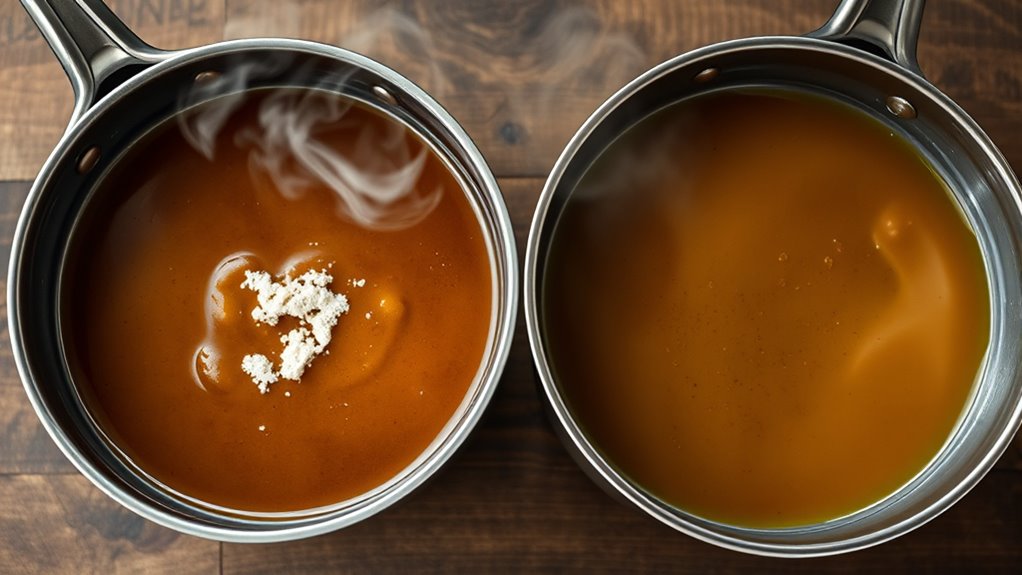

When mastering gravy, choose flour for a hearty, rustic texture and a richer flavor, best achieved by cooking a roux before adding liquids. Opt for cornstarch if you want a glossy, smooth, and quick-thickening sauce with neutral taste. Flour tends to create an opaque, thicker gravy, while cornstarch keeps it delicate and clear. Understanding these differences helps you control both texture and flavor — explore more to perfect your gravy skills.
Key Takeaways
- Use flour for a hearty, opaque gravy with a nutty flavor, ideal for rustic dishes like roast beef.
- Choose cornstarch for a quick, glossy, smooth gravy that preserves natural flavors with a delicate finish.
- Incorporate flour by making a roux and simmering to develop flavor and eliminate raw taste.
- Mix cornstarch with cold liquid before adding to hot gravy for even thickening and a silky texture.
- Adjust thickening gradually: simmer flour-based gravy or add small amounts of cornstarch to prevent over-thickening.
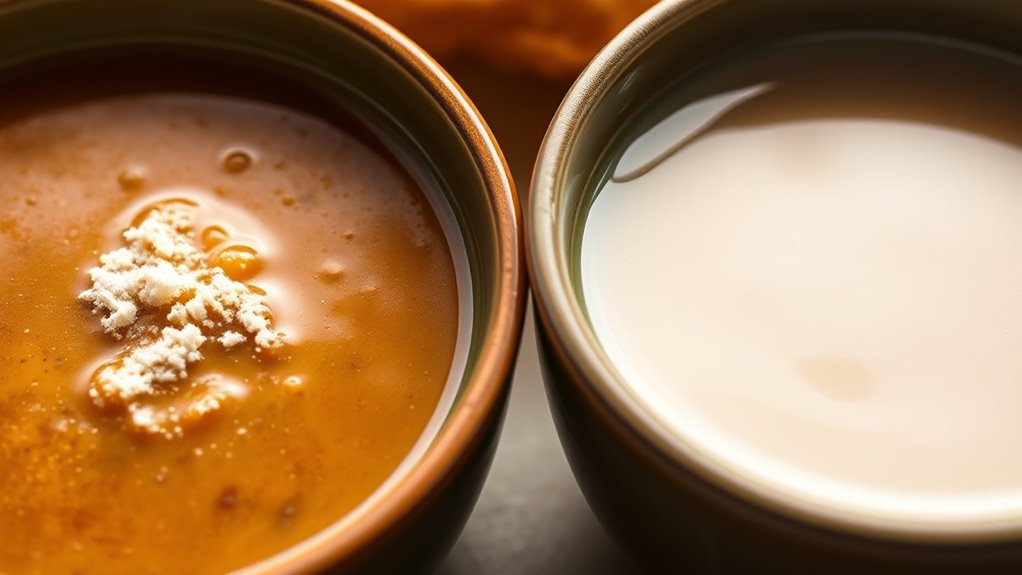
Have you ever wondered how to turn simple drippings into rich, velvety gravy that elevates any meal? Achieving the perfect sauce consistency is key to making your gravy both appealing and flavorful. The choice of thickening agent plays a significant role in this process, and understanding the differences between flour and cornstarch can help you master the art of gravy-making. Each has its unique properties that influence not just texture but also flavor enhancement.
Master the art of gravy with flour for richness or cornstarch for quick, silky perfection.
When you use flour, typically in the form of a roux, it creates a hearty, slightly opaque gravy. Flour thickening tends to produce a more traditional, rustic sauce consistency, which is ideal for hearty dishes like roast beef or chicken and dumplings. It also adds a subtle, nutty flavor that complements the richness of the drippings. To achieve the right sauce consistency, you usually start by cooking equal parts flour and fat until they form a smooth paste, then gradually whisk in your stock or pan juices. This method allows the flour’s thickening power to develop gradually, giving you more control over the final texture. Keep in mind, flour-thickened gravy benefits from simmering for a few minutes, which helps eliminate any raw flour taste and enhances the overall flavor profile.
On the other hand, cornstarch offers a different approach. When you mix cornstarch with cold liquid and add it to your hot gravy, it creates a clear, glossy sauce with a smooth, velvety texture almost instantly. This makes cornstarch an excellent choice for a quick-thickening process when you’re short on time or want a more refined sauce consistency. Because cornstarch thickens rapidly, you need to be cautious—over-thickening can lead to a gloopy or overly stiff gravy. When used correctly, cornstarch provides a light, silky finish that enhances the flavor without overpowering the natural drippings. Its neutral taste means it won’t interfere with the gravy’s savory notes, allowing the flavor enhancement from the meat and seasonings to shine through. Additionally, the texture of the final sauce can be more delicate and elegant with cornstarch, making it a preferred choice for certain dishes.
Both flour and cornstarch have their strengths, and your choice depends on the type of gravy you’re aiming for and how quickly you want to achieve it. Flour tends to produce a more traditional, hearty sauce with a richer flavor, while cornstarch offers a quicker, more delicate finish. Mastering these methods allows you to control sauce consistency precisely, ensuring your gravy complements your dish perfectly and truly enhances the overall flavor experience.
Frequently Asked Questions
Can I Use Gluten-Free Flour for Gravy?
Yes, you can use gluten-free flour for gravy. It’s a great option if you’re avoiding gluten, and it works well in gluten free baking. Just keep in mind that gluten-free flour may require a bit more stirring or a longer cooking time to prevent clumping. As an alternative thickener, you might also consider cornstarch or arrowroot powder, which can give your gravy a smooth, glossy finish.
How Do I Prevent Lumps When Thickening With Cornstarch?
Think of cornstarch as a delicate dancer; you need smooth mixing to keep it graceful. To prevent lumps, whisk cornstarch into a small amount of cold water to create a slurry before adding it to your hot liquid. Stir constantly as you add the slurry, ensuring a smooth mixing process. This technique helps you achieve a consistent texture, avoiding lumps and creating a silky, well-thickened gravy every time.
Which Thickener Is Better for Freezing Gravy?
When it comes to freezing gravy, cornstarch is your best bet for maintaining freezing consistency. It holds up better during storage and reheating without breaking down as much as flour does. To guarantee quality, let the gravy cool completely, then store it in airtight containers, leaving some space for expansion. Reheat gently, stirring well, and add a bit of fresh cornstarch slurry if needed to restore thickness.
How Does Thickening Affect Gravy’s Flavor?
Think of thickening as a chef’s brush on a canvas, transforming flavor and texture. When you thicken gravy, it enhances the overall flavor, making it richer and more cohesive. It also modifies the texture, giving it that luscious, velvety feel. Whether you use flour or cornstarch, your choice influences how the flavors meld and how smooth or glossy the gravy appears, elevating your dish to a more refined level.
Can I Combine Flour and Cornstarch in One Recipe?
Yes, you can combine flour and cornstarch in one recipe, but it’s important to use the right thickening techniques. Mix them separately with cold water or broth first to prevent lumps, then add to your gravy gradually. This combination allows you to customize the thickness and stability, providing ingredient substitutions that balance out each other’s strengths. Just be mindful of cooking times to avoid over-thickening.
Conclusion
Whether you choose flour or cornstarch, mastering gravy is all about knowing the right technique. Some worry cornstarch might turn gravy cloudy, but with proper mixing and cooking, it stays clear and silky. Don’t be afraid to experiment—each thickener has its perks. With a little practice, you’ll confidently create rich, velvety gravy every time, no matter which thickener you prefer. Just keep tasting and adjusting, and your gravy game will be unbeatable.