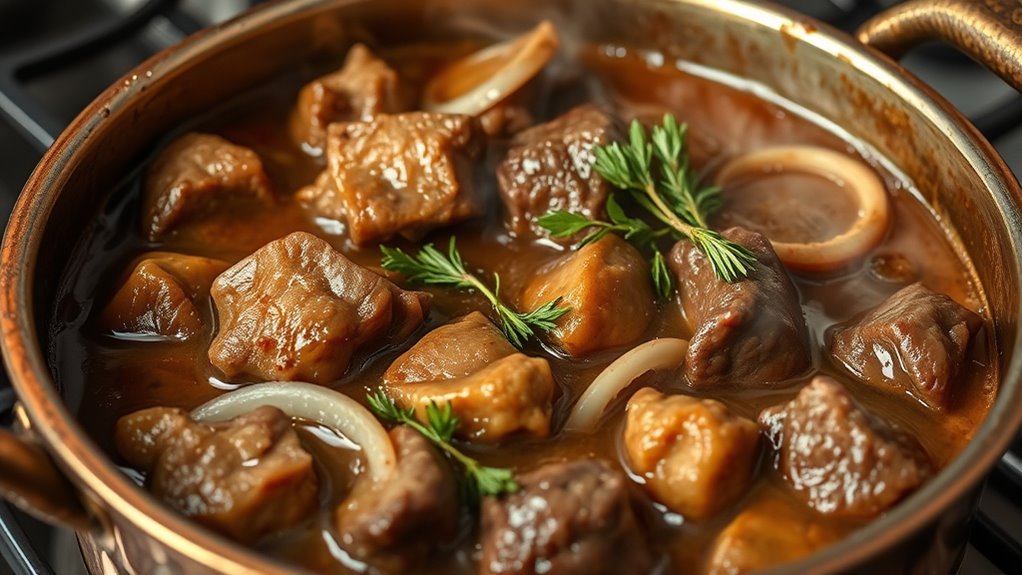

To master braising, you should start by selecting tough, connective tissue-rich cuts of meat. Sear them in a hot pan to develop flavor, then add aromatic liquids like broth or wine. Keep the heat low and cover tightly, allowing the meat to slowly cook until tender and bursting with flavor. Patience is key—over time, the ingredients meld into a rich, melt-in-your-mouth dish. Continue exploring to uncover all the secrets behind perfect braising.
Key Takeaways
- Sear meat thoroughly in a hot, heavy-bottomed pot to develop rich flavor and lock in juices.
- Use a flavorful liquid such as broth or wine, covering the meat partially for even, gentle simmering.
- Maintain low heat for a slow, steady cook, ensuring the temperature stays just below boiling to tenderize tough cuts.
- Cover the pot tightly to trap moisture, allowing connective tissues to break down and flavors to meld.
- Patience and consistent temperature control are essential for achieving tender, flavorful braised meats.
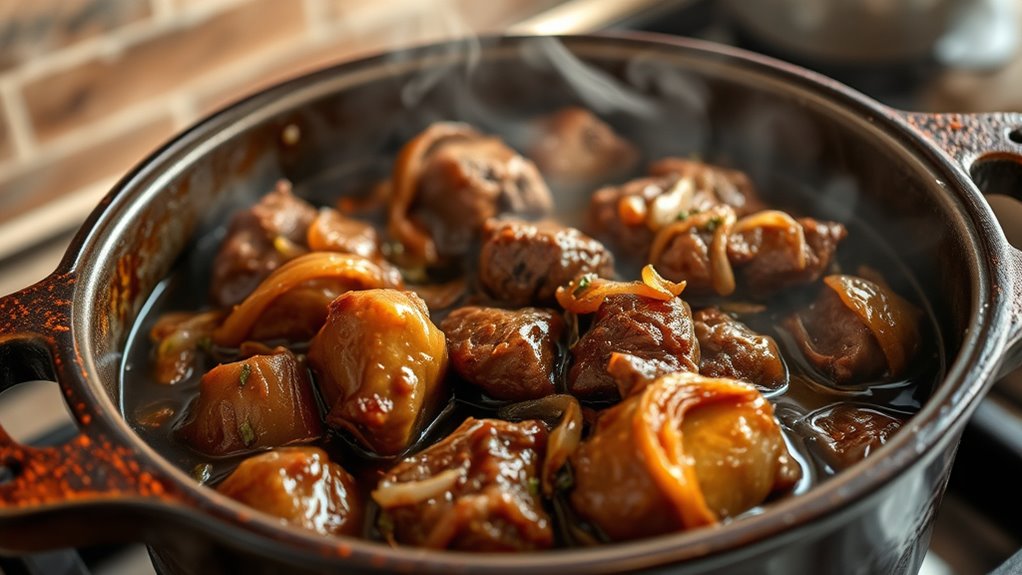
Have you ever wondered how chefs turn simple ingredients into delicious dishes? One of the secrets lies in mastering the art of braising meats, a technique that combines slow cooking with careful flavor development. Braising involves first searing the meat to lock in juices, then cooking it slowly in a flavorful liquid. This slow cooking process allows the meat to become incredibly tender while absorbing the rich flavors of the ingredients it’s cooked with. It’s a technique that transforms tough cuts into melt-in-your-mouth masterpieces, all without rushing the process.
When you braise, you’re essentially giving the meat time to break down connective tissues, which is key to achieving that perfect, fall-apart tenderness. The slow cooking phase is vital because it allows flavors to meld and deepen over time. As the meat gently simmers in the liquid, which might include broth, wine, herbs, or spices, it develops a complex taste profile that’s hard to replicate with quick cooking methods. The longer the braising, the more the flavors intensify, filling your kitchen with mouthwatering aromas and creating a dish that’s rich and satisfying.
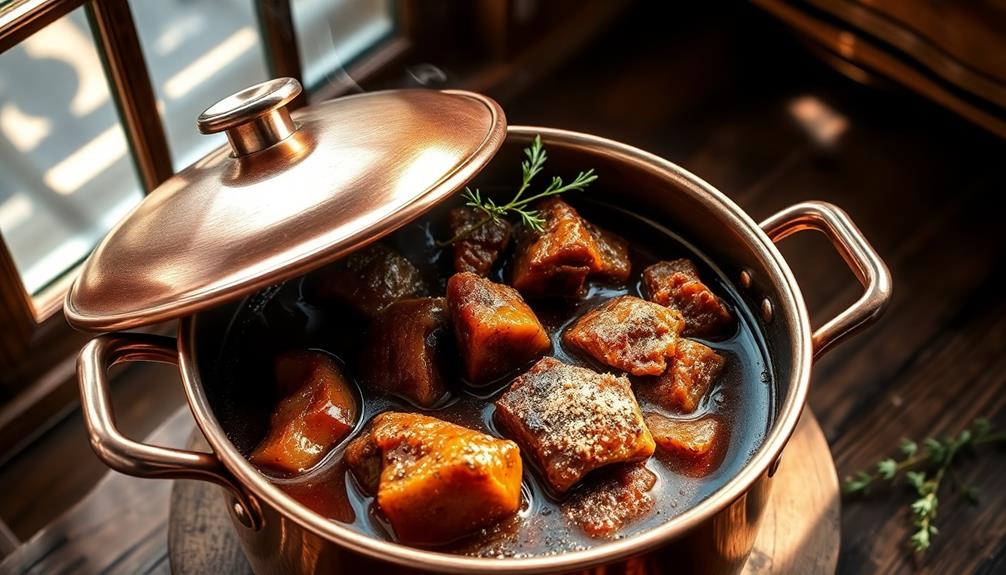
You don’t need fancy equipment to master braising; a heavy-bottomed pot or Dutch oven works perfectly. Start by seasoning and searing your meat over high heat until it develops a deep, caramelized crust. This step is indispensable because it adds a layer of flavor that will carry through the entire dish. Once browned, you add your cooking liquid and perhaps some vegetables or aromatics, then reduce the heat to low. Cover the pot tightly, and let it simmer gently. It’s important to keep the temperature low and avoid rushing, as this slow cooking process is what allows the flavors to develop fully and the meat to become tender.
Throughout the braising process, you’ll notice how the texture changes and the flavors intensify. The slow cooking not only tenderizes but also creates a concentrated richness that’s impossible to achieve quickly. As you become more comfortable with this technique, you’ll learn how different ingredients and cooking times influence the final taste and texture. Whether you’re making classic pot roast or hearty beef stew, mastering braising will elevate your cooking by ensuring every bite is packed with complex, developed flavors. In the end, it’s all about patience and understanding how slow cooking can turn humble ingredients into extraordinary dishes.

Enameled Cast Iron Dutch Oven – Umite Chef 5QT Pot with Lid & Cotton Potholders – Heavy-Duty Cookware for Bread Baking, Braising, Stews, Roasting(Cream White)
Even Heat Distribution Retention: This Umite Chef Dutch oven Made with heavy-duty enameled cast iron, ensures even heat…
As an affiliate, we earn on qualifying purchases.
As an affiliate, we earn on qualifying purchases.
Frequently Asked Questions
What Cuts of Meat Are Best for Braising?
You should choose tough cuts of meat with plenty of connective tissue for braising. Cuts like beef chuck, brisket, short ribs, pork shoulder, and lamb shanks work best because the slow, moist cooking breaks down their tough fibers, making them tender and flavorful. These cuts respond well to braising, transforming tough meat into a melt-in-your-mouth dish by rendering the connective tissue into rich, savory juices.
How Do I Prevent My Meat From Drying Out?
Did you know that properly seared meat can retain up to 50% more moisture? To prevent drying out, focus on good searing techniques—get your pan hot and brown the meat quickly. This locks in juices and enhances flavor. Also, keep the meat partially submerged in liquid during braising. Cover your pot tightly, and avoid overcooking; these steps help moisture preservation and ensure tender, juicy results.
Can I Braise in a Slow Cooker?
Yes, you can braise in a slow cooker. Its benefits include consistent low heat and hands-off cooking, which help tenderize the meat. To achieve perfect braising, add enough braising liquid to cover at least part of the meat, ensuring it stays moist and flavorful. The slow cooker’s gentle heat prevents drying out, making it a convenient option for flavorful, tender braised dishes.
What Are Common Mistakes to Avoid When Braising?
When braising, avoid overcooking the meat, which can make it tough or mushy. Keep an eye on the cooking time and temperature to guarantee tender results. Also, don’t use too much liquid, as it can dilute flavors and prevent proper browning. Instead, add just enough to partially cover the meat, allowing it to simmer gently and develop rich flavors without losing moisture or texture.
How Do I Adjust Braising Times for Different Meats?
You should adjust cooking times based on the type and size of the meat to ensure ideal tenderness. Thinner cuts need less time, while tougher, larger cuts require longer braising. Keep an eye on the meat’s tenderness and check periodically. Use a fork to test if it’s easily shredded. Remember, overcooking can make meat dry, so aim for the perfect balance to achieve tender, flavorful results.
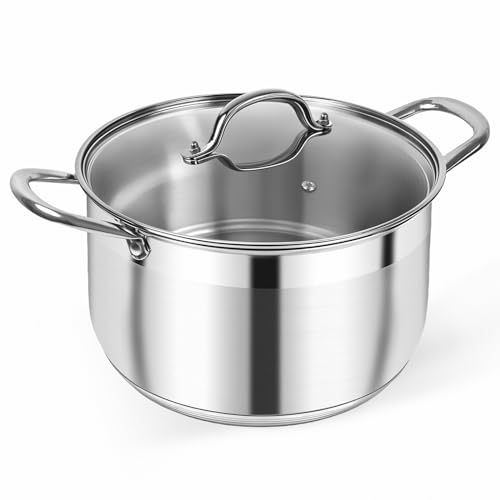
Kirecoo Stainless Steel Stock Pot – 8 Quart Heavy Duty Induction Cooking Pot with Visible Lid for Pasta, Soup, Spaghetti, Nonstick Thick Bottom Big Stockpot, Deep Cookware for Canning, Boiling, Simmer
Stainless steel and 5 layers bottom: Kirecoo 8-Quart Stainless Steel Stockpot with Lid is an essential kitchen cookware,…
As an affiliate, we earn on qualifying purchases.
As an affiliate, we earn on qualifying purchases.
Conclusion
Think of braising as tending a garden—you must nurture and patience to release its full flavor. Just as a gardener waits for seeds to bloom, you let the meat simmer gently, transforming tough cuts into tender treasures. With care and time, you’ll harvest rich, flavorful results that satisfy every craving. Master this technique, and you’ll cultivate a culinary masterpiece, turning simple ingredients into a symphony of taste—proof that patience truly pays off in the art of cooking.

Crock-Pot Crock Pot Artisan Enameled Cast Iron Braiser W/Lid, 5 Quart, Slate Gray
The original slow cooker distributes and retains heat evenly and has generous sized handles
As an affiliate, we earn on qualifying purchases.
As an affiliate, we earn on qualifying purchases.

ESLITE LIFE 9.5 Inch Nonstick Grill Pan for Indoor Cooking, Versatile Induction Square Large Grilling Skillet Steak Pan for Stove Tops, PTFE & PFOA Free, Black
Eco-friendly Non-Stick Granite Coating & Super Easy to Clean – Our grill pan interior is coated by non-stick…
As an affiliate, we earn on qualifying purchases.
As an affiliate, we earn on qualifying purchases.